 Ferndale
 Bellingham's Climate Is Harder on Siding Than It Looks
Bellingham sits right on the water, and that proximity to Bellingham Bay and the greater Salish Sea shapes everything about how a house ages here. Salt-laden air drifts inland on a regular basis, especially in neighborhoods closer to the waterfront and along the exposed ridgelines that catch wind off the bay. Add in Whatcom County's long, wet winters and the shoulder seasons that never seem to fully dry out, and you have a climate that quietly tests every exterior material on a home, year after year, whether the homeowner notices or not.
Most of the damage isn't dramatic. It's slow. Paint that used to last eight years starts failing in five. Caulk lines shrink and crack a season early. North-facing walls develop a green tint that keeps coming back no matter how many times it's pressure washed off. None of this happens because a house was built badly — it happens because standard siding materials weren't engineered with this specific combination of salt, moisture, and shade in mind.
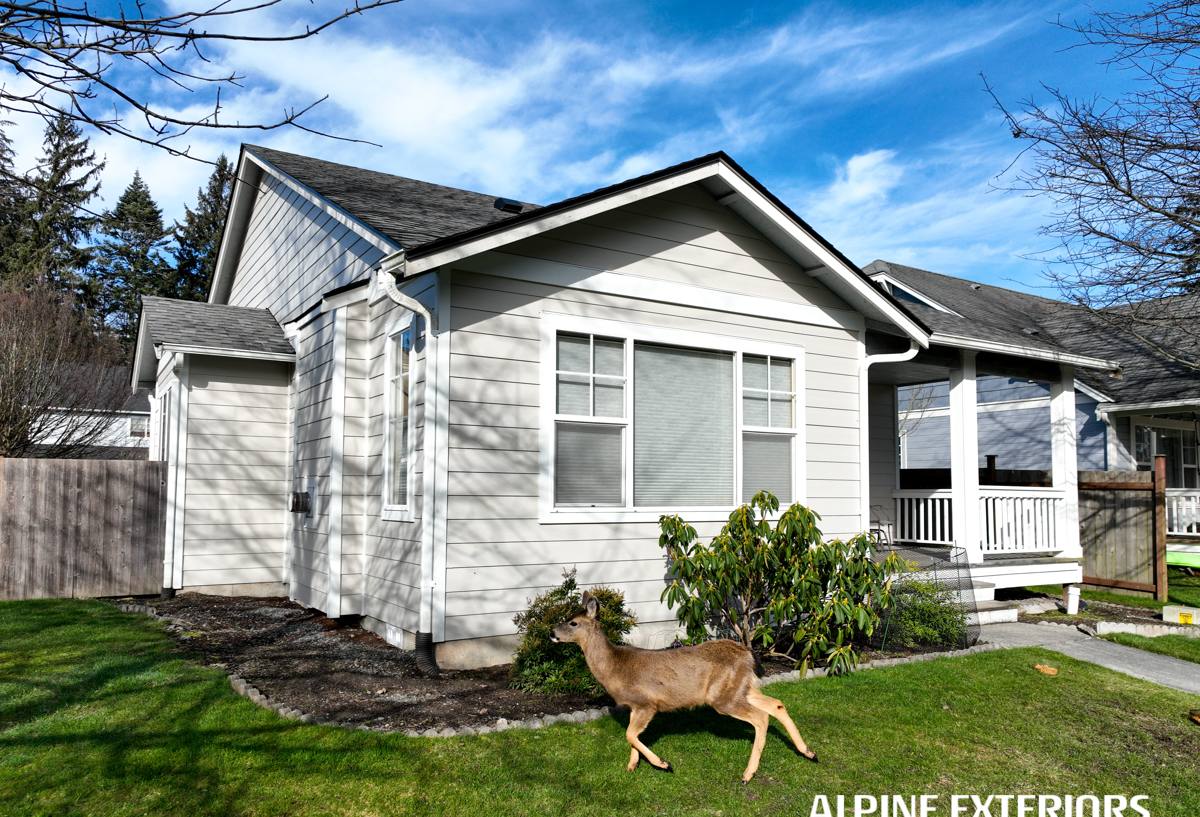
What Salt Air Actually Does to a Home's Exterior
Salt air isn't just a coastal curiosity — it's a chemical stressor. Airborne salt is hygroscopic, meaning it pulls moisture out of the air and holds it against whatever surface it lands on. That's a problem for fasteners, flashing, and any siding material that relies on paint film or factory coatings to keep moisture out.
- Metal fasteners and trim accessories corrode faster in salt-exposed zones, which can lead to streaking and eventually loose components.
- Paint and lower-grade factory finishes break down quicker under salt exposure, shortening the repaint cycle.
- Wood-based products absorb the moisture that salt air holds onto, accelerating swelling, checking, and rot at seams and edges.
- Homes closer to open water or elevated, wind-exposed lots see this wear faster than sheltered inland lots, even within the same neighborhood.
None of this means a home near Bellingham can't have durable, good-looking siding. It means the material and the finish need to be chosen with salt exposure as a real design factor, not an afterthought.
Driving Rain and Moss: The Other Half of the Equation
Whatcom County doesn't get the heaviest rainfall totals in the state, but it gets something arguably tougher on siding: long stretches of low-intensity rain pushed sideways by wind off the water. That driving rain finds every gap in flashing, every under-caulked seam, and every spot where a wall doesn't get enough sun to dry out between storms. Combine that with tree cover — a lot of Bellingham-area lots have mature conifers providing shade — and you get the ingredients for a moss season that can run eight months or more.
Moss and algae aren't just cosmetic. On porous or poorly sealed siding, sustained moisture retention behind a moss mat can soften substrate material over time, especially at butt joints and lower courses near grade where splashback keeps things wet even longer. A siding material that resists moisture absorption at its core — rather than just at the surface — handles this kind of prolonged dampness far better than one that depends entirely on paint film staying intact.
Where Moss and Moisture Problems Show Up First
- North- and northwest-facing walls that get the least direct sun
- Lower courses of siding near grade, foundation planting beds, or downspout splash zones
- Areas shaded by mature trees or neighboring structures
- Butt joints, corner boards, and anywhere caulk has started to shrink or separate
- Roof-to-wall transitions where flashing details are marginal
Why We Only Install James Hardie Fiber Cement
We made a deliberate call as a company: we install James Hardie fiber cement siding, and nothing else. Not vinyl, not LP SmartSide, not Cemplank or Allura, not primed spruce or cedar. That's not a marketing angle — it's a standard we hold because of what we see on homes in this climate over time.
Fiber cement is cement, sand, and cellulose fiber. It doesn't absorb water the way wood-based products do, and it doesn't soften, expand, or invite rot the way engineered wood siding can if a seam gets compromised. It's also non-combustible, which matters more each year given regional wildfire smoke seasons and insurance conversations. James Hardie's HZ5 product line is specifically engineered for climates like ours — cold, wet, and prone to freeze-thaw cycling in the colder snaps — with a formulation designed to resist moisture-related damage better than generic fiber cement.
The factory-applied ColorPlus finish is a big part of why we trust it in a salt-air environment. It's baked on under controlled conditions, cures harder than field-applied paint, and comes with its own finish warranty — which matters when you're trying to avoid a five-year repaint cycle on a house two miles from open water.
How James Hardie Compares to Alternatives We Don't Install
| Material | Moisture Behavior | Salt-Air Durability | Maintenance Burden |
|---|---|---|---|
| James Hardie fiber cement | Doesn't absorb/swell; core material is moisture-resistant | Strong; ColorPlus finish holds up well near water | Low — occasional wash, no regular repainting needed |
| Vinyl siding | Doesn't absorb, but seams and panels can warp/rattle with temperature swings | Can chalk and fade faster under coastal UV/salt exposure | Low, but limited repair options; panels are hard to color-match once faded |
| LP SmartSide / engineered wood | Wood-strand core; vulnerable if edges or seams aren't perfectly sealed | Moderate; performance depends heavily on installation quality | Moderate — edge sealing and caulk maintenance are critical |
| Cedar / primed spruce | Natural wood; absorbs moisture, prone to swelling and rot at end grain | Lower; salt air accelerates weathering and finish breakdown | High — regular refinishing or staining required |
This isn't a knock on every homeowner who has one of these products on their house today — plenty perform fine for years with diligent maintenance. It's why, when we're the ones installing new siding, we standardize on the material that gives homeowners the best odds of a low-maintenance, long-lived exterior in this specific climate.
Roofing, Windows, and Decks: The Same Climate Logic Applies
Siding doesn't work in isolation. A house near Bellingham that has excellent siding but a roof that's letting moisture into the wall assembly, or windows with failing seals letting driving rain track down behind the trim, will still develop problems. That's why we handle roofing, windows, and decks alongside siding — not as unrelated add-on services, but because they all interact at the same flashing details, the same eaves, and the same moisture pathways.
A deck built with the wrong ledger flashing against the house, for instance, can quietly feed water into a wall cavity for years before anyone notices staining inside. A roof with worn valley flashing can send water down behind siding it was never designed to handle. When we look at a project, we're looking at the building envelope as a whole, not just the siding panels.
What Working With a Local Crew Actually Gets You
There's a practical reason local experience matters here beyond hometown loyalty. A crew that works Whatcom County lots regularly knows which walls in a given neighborhood tend to stay damp longest, which older subdivisions were built with flashing details that don't hold up to modern driving-rain expectations, and how far south the salt-air effect realistically extends from the water. That's the kind of judgment that doesn't show up in a manufacturer's install manual — it comes from doing the work here, on these lots, in this weather, repeatedly.
It also means faster response if something needs a look after a big wind event, and a crew that isn't guessing at permitting or code requirements specific to the county.
What to Expect From an Estimate
A thorough estimate isn't just a tape measure and a number. For a Bellingham-area home, we're looking at sun and wind exposure on each elevation, existing moss or moisture staining, the condition of flashing and trim, and how close the lot sits to open water or heavy tree cover — all factors that affect both material choice and installation approach.
Questions Worth Asking Any Contractor Before You Sign
- What siding material and product line are you proposing, and why for this specific home?
- Are you certified to install that material, and what does that certification actually involve?
- How will you handle flashing at windows, doors, and roof-to-wall transitions?
- What's the warranty structure — on the material, the finish, and your labor — and who backs each one?
- Can you point to specific climate factors (moisture, sun exposure, salt air) that shaped your recommendation for my house?
If you're seeing early moss return, paint that's failing ahead of schedule, or soft spots near the bottom courses of your current siding, those are worth a look regardless of whether you're ready to replace anything yet. We're happy to come take a look, walk the exterior with you, and put together a free, no-pressure estimate — no obligation either way.