 Ferndale
 Why Two Siding Quotes for the Same House Can Be Thousands Apart
If you've called around for siding estimates in Ferndale, you've probably noticed the numbers don't line up. One contractor quotes a number that seems too good to be true, another comes in well above it, and you're left wondering what you're actually paying for. The honest answer is that siding pricing isn't really about the siding — it's about a dozen variables stacked on top of each other, and most homeowners only see the final total, not what built it.
This page walks through the real cost drivers on a siding replacement in Whatcom County, so you can read a quote and understand what's behind it instead of just comparing bottom-line numbers.
The Biggest Variable: What's Underneath the Old Siding
Before a single new panel goes up, a contractor has to remove what's there now, and that's where estimates can shift the most. A house with sound sheathing and a clean weather barrier is a straightforward tear-off. A house that's been fighting moisture for years — which is common here given how much of the year Ferndale spends under rain — can turn up rotted sheathing, soft framing around windows, or trapped moisture behind house wrap that was never installed correctly.
This is not a scare tactic; it's just what driving rain and long stretches of damp weather do to a wall system over 20-30 years, especially on the west and south-facing walls that catch the worst of it off the water. A contractor who tells you a firm final price before removing the old siding is either guessing or planning to hit you with change orders later. A fair quote should say plainly that the base price assumes normal sheathing, with a clear per-sheet or per-hour rate if repairs are needed.
What Typically Gets Found
- Soft or delaminated sheathing near window and door corners
- Missing or torn weather-resistive barrier under old siding
- Rot at the bottom plate where siding met grade too closely
- Moss and organic buildup trapped against wood trim
- Improperly flashed windows allowing slow water intrusion
Material Choice: The Single Biggest Line Item
Material is the most visible cost factor, but the sticker price of the siding itself is only part of the story — installation method, expected lifespan, and ongoing maintenance all ride along with whatever you choose. Here's how the common options actually compare, not just on price per square foot but on what you're signing up for afterward.
| Material | Relative Material Cost | Maintenance Burden | Moisture Behavior |
|---|---|---|---|
| Vinyl | Low | Low, but limited repair options | Can trap moisture behind panels; warps in heat, cracks in cold |
| Primed spruce/pine boards | Low-Moderate | High — repainting every few years | Absorbs water at end grain and joints; prone to rot without diligent upkeep |
| LP SmartSide (engineered wood) | Moderate | Moderate — caulking and touch-up paint required at seams and cuts | Resin-treated but still wood-based; edge sealing is critical and easy to miss |
| Cedar | Moderate-High | High — staining/sealing on a recurring cycle | Naturally rot-resistant but still absorbs moisture; performance depends heavily on upkeep |
| Fiber cement (James Hardie) | Moderate-High | Low — factory finish, no repainting cycle for years | Non-combustible, engineered for wet climates, dimensionally stable |
We install James Hardie fiber cement exclusively, and that's a deliberate standard, not a sales position. We've made the call not to install vinyl, LP SmartSide, cedar, primed spruce, or other fiber cement brands like Cemplank or Allura on homes we're responsible for. Each of those products has real strengths — vinyl is inexpensive and low-maintenance in mild conditions, cedar looks beautiful, engineered wood is workable and affordable — but each also carries a trade-off around moisture sensitivity, installation tolerance, or long-term upkeep that we think matters more in this climate than it does somewhere drier. Hardie's ColorPlus factory finish, HZ5 climate-engineered formulation, and strong transferable warranty are why it's what goes on every house we side.
House Size, Shape, and Complexity
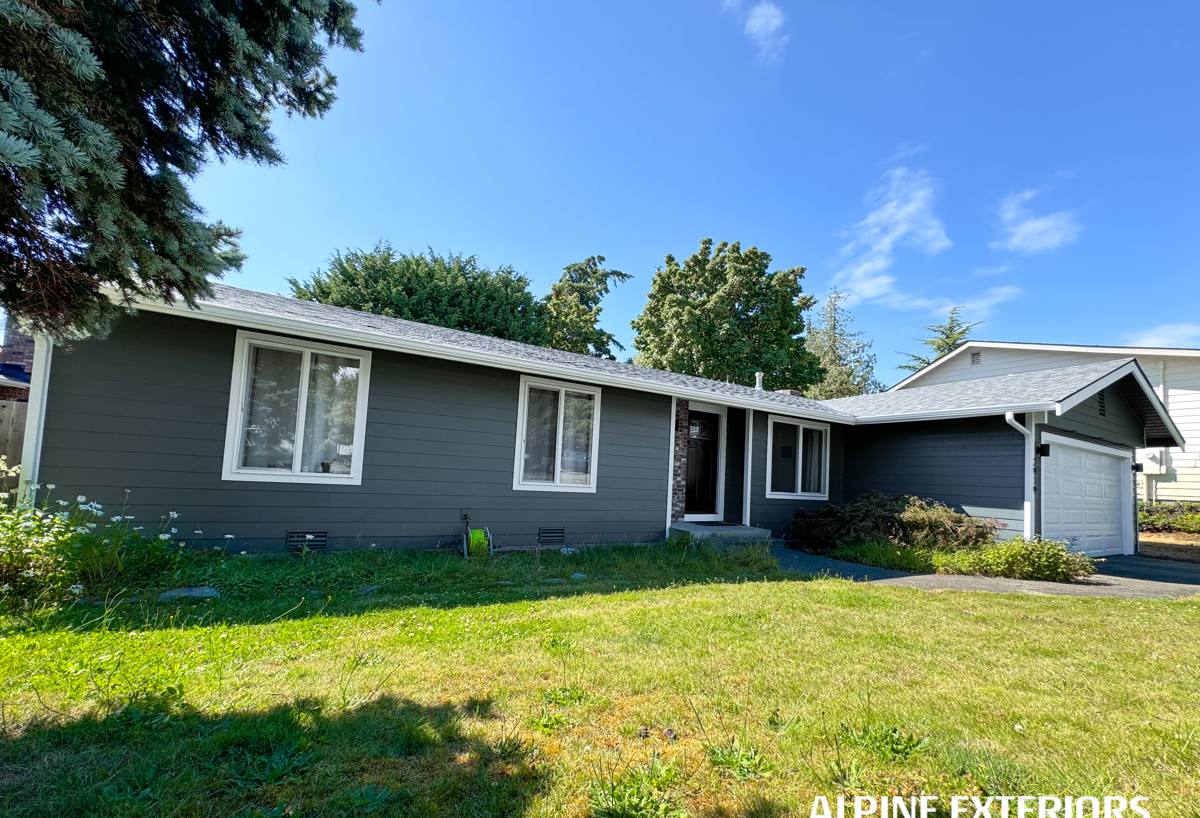
Square footage sets the baseline, but shape is what actually moves labor hours. A simple rectangular ranch sides faster and cheaper per square foot than a home with multiple gables, dormers, bump-outs, or a lot of window and door trim to cut around. Two-story homes also cost more per square foot than single-story ones because of the scaffolding, staging, and safety setup required to work at height safely.
Complexity Factors That Add Labor Time
- Number of corners, dormers, and roof intersections
- Window and door count (each one needs precise trim and flashing work)
- Steep roof pitches that require staging rather than ladders
- Existing architectural trim you want matched or replicated
- Site access — tight side yards, fences, or landscaping near the walls
Labor and Installation Quality
Fiber cement is an unforgiving material to install badly. Improper fastening, wrong nail placement, missing flashing at butt joints, or insufficient clearance from grade and roof lines won't necessarily show up in month one — but they show up in year three or four as water intrusion, and by then the damage is behind the wall, not on top of it. That's why labor on a correctly installed Hardie job costs more than a rushed one: proper installation means factory-specified fastener patterns, correctly lapped and caulked joints, rainscreen or drainage plane details where called for, and flashing integrated with window and door openings rather than just caulked over gaps.
When you're comparing bids, ask directly how each contractor handles flashing details and clearance from grade — the answer tells you more about long-term cost than the quote itself does.
Paint, Trim, and Color System
Hardie's ColorPlus finish is baked on at the factory and comes with its own finish warranty, which is part of why it costs more upfront than field-painted siding — you're paying once for a finish that's supposed to last, rather than budgeting for repainting on a cycle. If you choose primed panels instead and have them painted on-site, you save a bit on material but take on the maintenance schedule and cost of a paint job that Ferndale's rain and salt air will start working on immediately.
Trim material matters too. Matching trim boards, corner posts, and fascia in the same fiber cement system keeps expansion, contraction, and moisture behavior consistent across the whole exterior — mixing materials at trim joints is a common place for future problems to start.
Permits, Disposal, and the Costs Homeowners Forget
A full siding tear-off in Ferndale typically requires a building permit, and disposal of the old material — especially if it's old cedar, painted lap siding, or anything with lead paint on a pre-1978 home — adds a real cost that shows up as a line item, not an afterthought. Dumpster rental, disposal fees, and any required lead-safe handling should be spelled out in the quote rather than buried in the total.
Warranty Structure: The Cost You Pay Later If You Skip It
The cheapest bid up front isn't cheap if the warranty is thin or non-transferable. James Hardie's product warranty is one of the stronger ones in the industry when the installation is done to spec, and it's transferable to a future buyer — which matters if you sell the home within the warranty period. A vinyl or engineered wood job with a shorter or installer-only warranty can look like savings today and cost you the difference at resale.
What a Ferndale Climate Adds to the Equation
Whatcom County's proximity to the water means siding here deals with salt-laden air, long stretches of driving rain off the Strait, and a moss season that can run most of the year on shaded, north-facing walls. None of that changes what siding costs to buy, but it changes what cutting corners costs you later. Salt air accelerates corrosion on fasteners and trim if the wrong hardware is used. Persistent moisture pressure punishes any siding system that isn't detailed correctly at the joints. And moss buildup against wood-based products holds water against the surface far longer than it would in a drier region. These aren't reasons to panic — they're reasons the installation details matter as much as the material choice.
A Practical Checklist for Getting an Accurate Quote
- Ask whether the price assumes normal sheathing, and what the rate is for repairs if rot is found
- Confirm what disposal and permit costs are included versus billed separately
- Ask specifically how flashing is handled at windows, doors, and butt joints
- Get the manufacturer warranty terms in writing, including whether it's transferable
- Compare bids on the same material — a vinyl bid and a fiber cement bid aren't the same product
- Ask how fastener and trim materials are chosen for coastal/salt-air exposure
Getting a Number You Can Actually Trust
The most useful thing an estimate can do isn't hit a low number — it's tell you clearly what's driving the price so you're not guessing later. If you'd like a straightforward look at your home's siding, tear-off condition, and what a correctly installed James Hardie system would run, we're happy to walk the exterior with you and put together a free, no-pressure estimate.