 Ferndale
 Why We Only Install One Brand of Siding
Most siding contractors keep a menu: vinyl for the budget jobs, LP SmartSide for a wood look at a lower price, fiber cement for the higher end. We don't. Every home we side gets James Hardie fiber cement, full stop. That's not a marketing gimmick — it's a decision we made after years of watching how different siding products actually perform once they've spent a few Whatcom County winters absorbing rain off Bellingham Bay and a few summers under salt-laden marine air.
Running one product line means our crews install it correctly every single time, our warranty conversations are simple, and we're not learning the quirks of five different manufacturers on the job site. It also means we can say no to products we don't think hold up here — even when they're cheaper — instead of selling a homeowner something we wouldn't put on our own house.
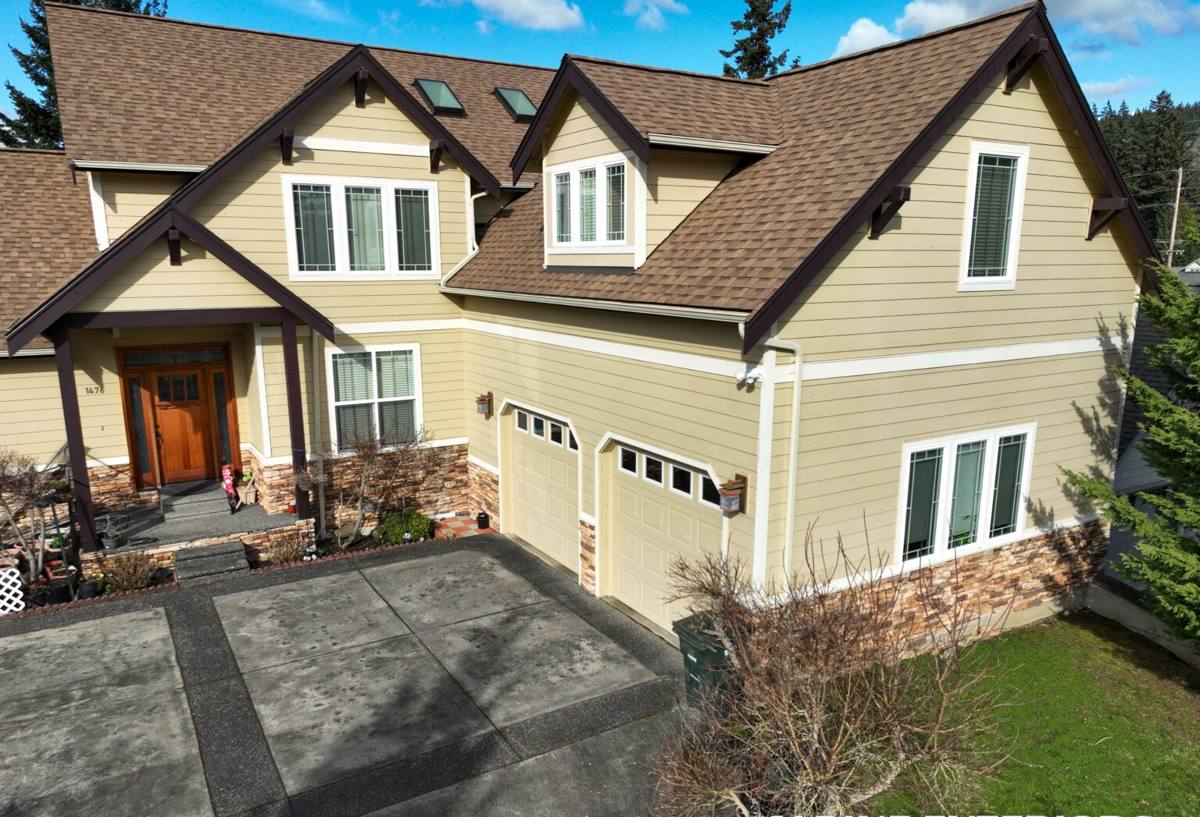
What James Hardie Fiber Cement Actually Is
James Hardie siding is cement, sand, and cellulose fiber formed under pressure and cured. It's not a wood product with a coating, and it's not a plastic extrusion. That composition is what gives it three properties that matter most in a wet coastal climate: it doesn't rot, it doesn't support moss and mildew growth the way wood-based products do, and it's non-combustible.
Fiber cement isn't new — it's been on homes across the country for decades — but the manufacturing and engineering behind James Hardie's specific product lines is where the real difference shows up, especially for a region like ours.
Non-Combustible Matters Even in a Rainy Climate
Homeowners sometimes assume fire resistance is only relevant east of the Cascades. But insurance underwriting increasingly looks at siding material regardless of region, and a non-combustible exterior is one more thing that doesn't cost you anything and only helps — whether that's a wildfire ember landing on a wall during a dry August or a fire starting on an adjacent structure.
The Ferndale Climate Problem, Specifically
Ferndale sits close enough to the Strait of Georgia and Bellingham Bay that salt air is a real factor on exterior materials here, not just a coastal talking point. Combine that with the driving, wind-pushed rain that Whatcom County gets much of the year, and a long stretch — often five or six months — where north-facing and shaded walls barely dry out between storms, and you get a climate that's genuinely hard on siding.
That combination is exactly what grows moss. Moss needs moisture, shade, and a surface it can get a foothold on. Wood-based siding products, especially in their seams, fastener heads, and cut edges, give moss exactly that. Once moss establishes, it holds moisture against the siding surface, which accelerates whatever the underlying material is already prone to — rot in wood, delamination in some composite products, finish failure in painted surfaces.
Fiber cement doesn't feed moss the way organic wood fiber does, and Hardie's factory-applied finish gives algae and mildew less to grip onto than a field-applied paint film. It's not moss-proof — nothing mounted on a house in this climate is — but it doesn't accelerate its own damage the way a wood-based product can once moss takes hold.
Why We Don't Install the Alternatives
We get asked about LP SmartSide, vinyl, cedar, and primed wood siding regularly, and we're happy to talk through each one honestly rather than just steering people away.
LP SmartSide and Other Engineered Wood Products
Engineered wood siding uses treated wood strand material, and manufacturers have improved its moisture resistance significantly over the years. It's a legitimate product and it has its place. Our concern is specific to this climate: it's still wood fiber at its core, and wood fiber that stays damp for long stretches — which is exactly what happens on shaded, moss-prone walls in Whatcom County — is where we've seen the product struggle most, particularly at cut edges and butt joints that aren't perfectly sealed and maintained. Maintaining that seal is an ongoing homeowner responsibility, not a one-time install detail.
Vinyl Siding
Vinyl is inexpensive and low-maintenance in the sense that it doesn't need painting. But it's a thin plastic product that expands and contracts with temperature, can crack in impact or in a hard freeze, and fades over time with no way to refinish it short of replacement. It also doesn't offer the fire resistance or the solid, substantial feel that fiber cement does. For a region with real weather extremes across the seasons, we don't think it's the strongest long-term investment.
Cedar and Primed Spruce
Real wood siding, whether cedar or primed spruce, looks great when it's new and can look great for a long time if a homeowner keeps up with refinishing on a strict schedule. That's the catch — in a climate this wet, that schedule is demanding, and skipping even one cycle lets moisture in behind the paint or stain film, which is where rot starts. We've replaced a lot of wood siding that failed not because it was a bad product, but because the maintenance commitment it requires didn't match what the climate demands.
Comparing the Options Side by Side
| Material | Moisture/Moss Resistance | Maintenance | Fire Resistance | Typical Lifespan |
|---|---|---|---|---|
| James Hardie Fiber Cement | Strong | Occasional wash, no repainting for decades with ColorPlus | Non-combustible | 30-50+ years with proper install |
| LP SmartSide / Engineered Wood | Moderate — vulnerable at cut edges/joints | Regular caulk/seal inspection | Combustible | 20-30 years, install-dependent |
| Vinyl | Doesn't rot, but can trap moisture behind it | Low, but no refinishing option | Combustible, can melt/warp | 20-30 years |
| Cedar / Primed Spruce | Weak without diligent upkeep | Repaint/restain every 3-7 years | Combustible | Highly variable, upkeep-dependent |
ColorPlus Technology: Why the Finish Matters as Much as the Board
One of the biggest differences between Hardie and a field-painted product isn't the substrate — it's how the color gets applied. Hardie's ColorPlus finish is baked on in a controlled factory environment in multiple coats, which produces a harder, more UV- and moisture-resistant finish than paint applied on-site with a brush or sprayer in variable weather. It also means color-matched caulk and touch-up products are engineered specifically for that finish.
Field-painted siding — whether it's wood, primed spruce, or fiber cement painted after installation — depends entirely on the conditions the day it's painted and the quality of that specific paint job. In a climate where you rarely get a long stretch of dry, moderate-temperature days, that's a real disadvantage.
Built for This Climate: The HZ5 Product Line
James Hardie engineers its products by climate zone, and homes in our region fall into the HZ5 category — formulated for areas with significant moisture exposure and freeze-thaw cycling. That's a meaningful distinction from siding that's engineered as a one-size-fits-all national product. It's part of why we don't treat "fiber cement" as a generic category; the specific product line and how it's matched to the region it's installed in matters.
Warranty Structure
James Hardie backs its siding with a non-prorated limited warranty on the substrate, and the ColorPlus finish carries its own separate finish warranty. Both are transferable to a new owner if the home sells, which matters for resale — buyers and their inspectors increasingly ask what's on the exterior and how it's warrantied. We can walk through the specific terms and what voids them during your estimate, since installation method affects warranty coverage.
What Correct Installation Actually Involves
Fiber cement's reputation depends heavily on installation quality. A product engineered this well can still underperform if it's hung wrong. Before we start a job, our process includes:
- Confirming proper water-resistive barrier and flashing details behind every board, especially at windows, doors, and roof intersections
- Correct fastener type, spacing, and depth per Hardie's published installation specs
- Proper clearance from grade, decks, roof lines, and other siding terminations to keep water moving away from the wall assembly
- Factory-mitered or properly caulked joints using color-matched, manufacturer-approved sealant
- Verifying the correct HZ product and profile for the specific wall's sun and rain exposure
Skipping any one of these can undercut everything the material itself is good at. It's why we don't subcontract installation out to whoever's available — our crews install one product, and they install it the same correct way on every wall.
What This Means for Your Project
If you're comparing quotes and another contractor is offering a cheaper alternative, that's worth understanding on its own terms — we're not going to tell you every other product is bad. What we can tell you is why we stopped installing them: in this specific climate, with this much rain and salt air and moss pressure, the maintenance burden and long-term risk didn't match what we wanted to put our name behind.
If you'd like to see how James Hardie siding would look on your home, talk through colors and product lines, or just get a straight answer about cost, we're happy to come take a look. The estimate is free, there's no pressure, and we'll tell you honestly what your home needs.