 Ferndale
 Siding, Roofing, Windows, and Decks for Birch Bay Homes
Birch Bay sits right on the water in Whatcom County, and that location shapes everything about how a home ages here. Homes a few blocks from the beach deal with a different set of conditions than homes even a short drive inland in Ferndale or Lynden. Salt-laden air, near-constant onshore wind, driving rain that comes in sideways during winter storms, and a moss season that seems to stretch longer every year all take a toll on exterior materials. We work throughout Whatcom County, and Birch Bay is one of the areas where the difference between a properly specified exterior and a builder-grade one shows up fastest.
Ferndale Siding handles siding, roofing, windows, and decks. For most Birch Bay homeowners, siding is the piece that takes the most direct abuse from the marine environment, so that's where we'll spend most of this page — but the same climate logic applies to everything on the outside of the house.
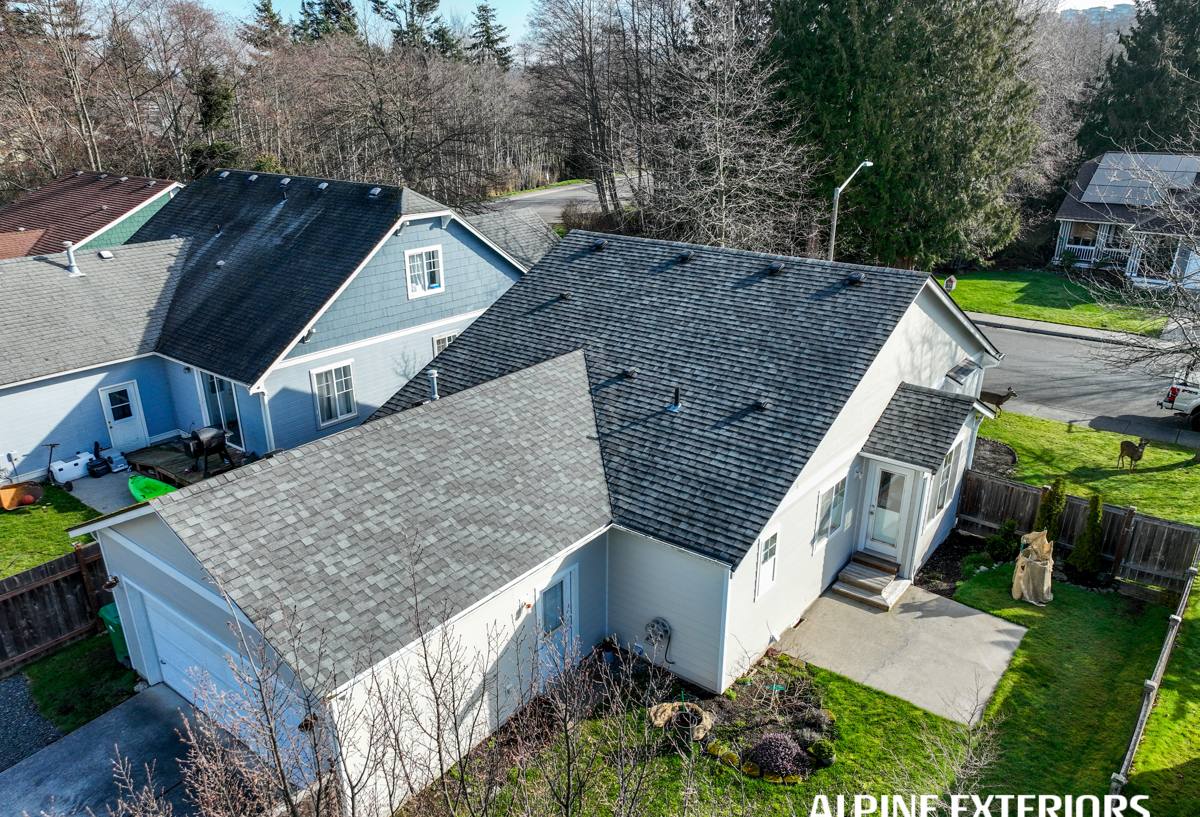
What the Birch Bay Climate Actually Does to a House
Salt Air and Coastal Corrosion
Homes close to Birch Bay itself, Semiahmoo Bay, or the broader Strait of Georgia shoreline are exposed to airborne salt that settles on every exterior surface. Salt accelerates corrosion on fasteners, flashing, and hardware, and it's hard on paint films and finishes that aren't formulated to resist it. Over years, a siding product with a weak factory finish will chalk, fade, or develop surface breakdown faster near the water than the same product would ten miles inland.
Wind-Driven Rain
Birch Bay gets exposed to wind off the water in a way that pushes rain sideways into wall assemblies, not just straight down. That matters because a lot of siding failures aren't caused by water landing on a wall — they're caused by water getting behind it, at laps, seams, and penetrations, and then having nowhere to dry out. Wind-driven rain finds every weak lap, gap, and poorly flashed penetration, so both the material and the installation detailing have to account for it.
Moss, Mildew, and a Long Damp Season
Northwest Washington's long wet season means moss, algae, and mildew growth are a fact of life, and shaded, north-facing, or tree-lined walls in Birch Bay stay damp longer than sun-exposed ones. Materials that hold moisture in their surface — or that need periodic painting to keep moisture out — are fighting an uphill battle against a season that just doesn't let up.
Why We Only Install James Hardie Fiber Cement
We standardized on James Hardie fiber cement siding for every home we side, including in Birch Bay, and we don't install vinyl, LP SmartSide, primed spruce, cedar, or other fiber cement brands like Allura or Cemplank. That's a deliberate professional standard, not a sales pitch, and it's worth explaining why.
- Non-combustible core: Fiber cement doesn't burn, melt, or contribute fuel to a fire the way vinyl or wood products can.
- Factory-applied ColorPlus finish: The color is baked on in a controlled factory environment rather than field-painted, which gives more consistent UV and weather resistance than most site-applied paint jobs, and it holds up well against the salt exposure that's common near Birch Bay.
- Engineered for Pacific Northwest moisture: Hardie's HZ10 product line is formulated specifically for wetter climates like ours, which matters more here than it would in a dry inland region.
- Dimensional stability: Fiber cement doesn't expand and contract with moisture and temperature the way wood-based products do, so laps and seams stay tighter over time — which matters directly for keeping wind-driven rain out.
- Strong transferable warranty: Hardie's warranty coverage is a meaningful part of the value, especially for homeowners who may sell within the warranty period.
None of this means other products are worthless — vinyl is inexpensive and low-maintenance in mild conditions, and cedar has a look some homeowners genuinely prefer. But when we weigh moisture behavior, fire performance, finish durability, and long-term maintenance against a coastal Whatcom County climate, fiber cement is what we're willing to put our name behind and warranty our workmanship on.
How We Handle Siding Installation Near the Water
Material selection is half the equation. The other half is installation detail, which matters even more in a wind-driven-rain environment like Birch Bay.
Weather Barrier and Flashing
We install a continuous weather-resistive barrier behind the siding, with flashing detailed at every window, door, and penetration so that any water that does get past the siding has a clear path back out instead of pooling against the sheathing. This is standard practice, but it's exactly the kind of detail that gets rushed on lower-bid jobs — and it's the detail that determines whether a house stays dry through a real Birch Bay winter storm.
Fastening and Clearances
Hardie siding has specific fastener spacing, nail-set depth, and clearance requirements from grade, roofing, and decks — all published in the manufacturer's installation manual. Following those specs isn't optional if you want the product warranty to hold, and it's also what keeps the siding performing the way it's designed to in high-wind, high-moisture conditions.
Caulking and Sealant Strategy
Over-caulking is a common shortcut that traps moisture rather than shedding it. We follow Hardie's sealed-joint guidance rather than relying on caulk to do a flashing detail's job.
Roofing, Windows, and Decks in a Coastal Whatcom County Setting
Siding doesn't work in isolation — it's one part of a building envelope, and the same coastal conditions that stress siding stress the rest of the exterior too.
Roofing
Wind exposure near the water means roofing has to be installed with attention to fastening patterns and edge details, not just the field of the roof. Moss growth on roofs is a year-round maintenance concern in this climate, and roof-to-wall flashing is one of the most common places we find water intrusion on older Birch Bay homes.
Windows
Window flashing and integration with the siding weather barrier is where a lot of leaks actually originate, not the glass or frame itself. Replacing windows without correcting the flashing underneath them just seals a new window into an old problem.
Decks
Decks facing the water take direct sun, salt, and rain with no roof overhang to shield them, which shortens the service life of both the decking surface and the structural framing underneath if it isn't detailed for drainage and ventilation.
Comparing Siding Options for a Birch Bay Home
| Factor | Vinyl | Wood / Primed Spruce / Cedar | James Hardie Fiber Cement |
|---|---|---|---|
| Salt air resistance | Can become brittle and fade over time | Prone to moisture absorption, rot risk near coast | Engineered finish holds up to coastal UV and salt exposure |
| Wind-driven rain performance | Depends heavily on lap and fastening detail | Swells and shrinks, opening seams over time | Dimensionally stable, holds tight seams |
| Fire performance | Can melt or contribute fuel | Combustible | Non-combustible core |
| Maintenance | Low, but limited repair options if damaged | Regular repainting/sealing required | Factory finish reduces repainting cycle |
| Typical upfront cost | Lower | Mid to high depending on species/grade | Mid to high |
What to Ask Before Hiring a Siding Contractor in Birch Bay
A lot of exterior work in coastal Whatcom County looks fine for the first year or two regardless of quality — the problems that come from bad flashing or wrong fastener spacing usually show up three, five, or ten years later, after the crew is long gone. That's exactly why the vetting questions matter more here than in a mild inland climate.
- Is the crew factory-trained and does the company have direct experience with Hardie's HZ10 product line for this climate zone?
- Will they show you the flashing and weather-barrier detailing before siding goes on, not just the finished look?
- Do they carry manufacturer certification that keeps the material warranty intact?
- Are they local to Whatcom County, with a track record on homes actually exposed to this coastline, not just general regional experience?
- Does the estimate specify the exact Hardie product line and profile, not just "fiber cement siding"?
Why a Local Crew Matters in Birch Bay
A contractor based in Whatcom County knows that a Birch Bay home a block from the water needs different flashing attention than a Ferndale home set back from the coast, even though they're only a few miles apart. That's not a generic sales point — it's the difference between a crew that treats every job the same and one that adjusts fastener spacing, clearance, and flashing detail based on actual site exposure. We're a Whatcom County contractor working in the same weather our customers live in year-round, which is part of why we settled on one material system we trust rather than offering a menu of products with very different long-term outcomes.
Get a Free, No-Pressure Estimate
If you're weighing a siding, roofing, window, or deck project for a home in Birch Bay, we're happy to walk the property, look at your specific exposure to wind and water, and give you a straight answer on what it needs. Use the form below to request a free estimate — no pressure, no obligation.