 Ferndale
 Why Board & Batten Is Having a Moment in Whatcom County
Board and batten has been showing up on more homes around Ferndale over the last several years, and it's not just a farmhouse trend. The style — wide vertical panels with narrow battens covering the seams — reads as clean, modern, and a little bit Pacific Northwest at the same time. It works on a full rebuild, a single accent gable, or a porch surround. But the look is only half the story. Board and batten is a vertical siding profile, which means it handles water differently than horizontal lap siding, and in a climate like ours — salt air off Bellingham Bay, driving rain, and a moss season that can run half the year — those differences matter more than they would somewhere dry.
This page covers what board and batten actually is as a system, why we install it exclusively in James Hardie fiber cement, and what separates a batten job that lasts decades from one that fails at the seams in five years.
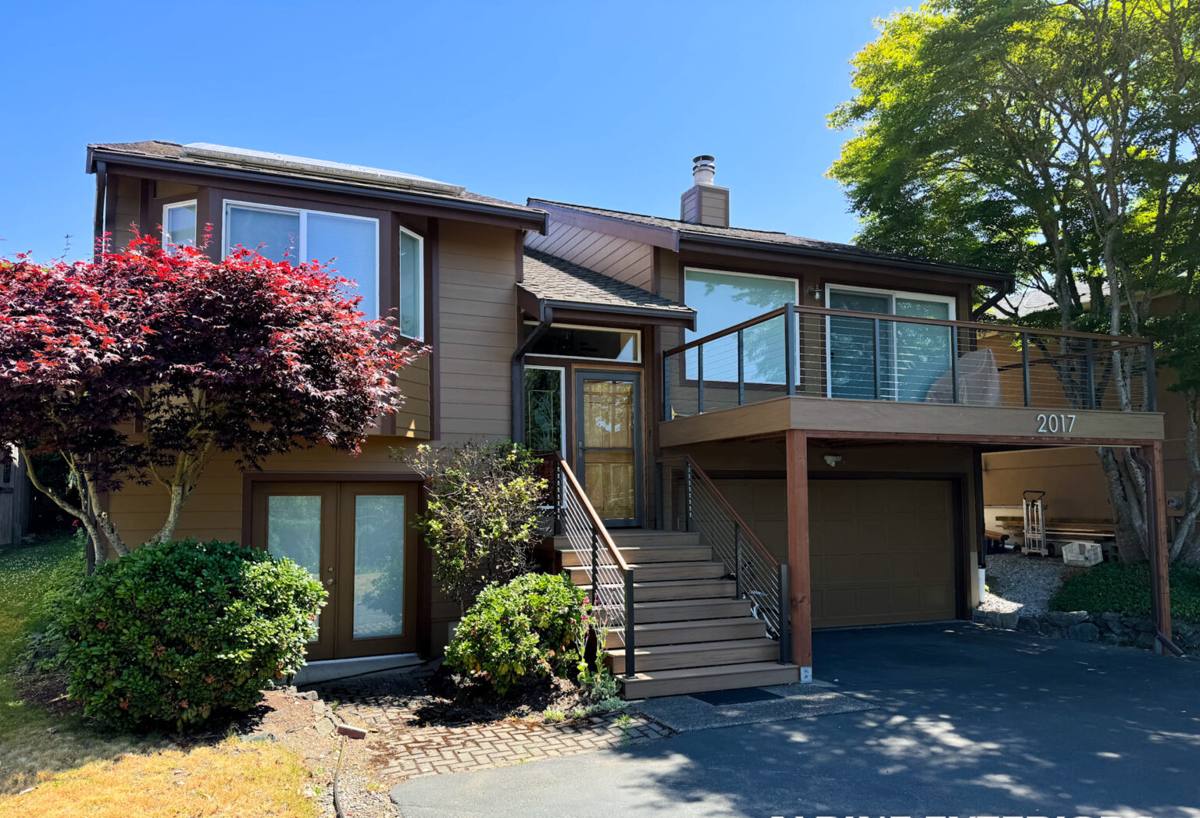
What Board & Batten Actually Is
Traditionally, board and batten referred to wide boards installed vertically with narrow strips (battens) nailed over the joints between them to shed water. Modern fiber cement versions replicate that look in a few different ways:
- Vertical panel siding with applied battens — large sheet panels installed vertically, with separate batten strips fastened over the seams
- Board and batten panel systems — pre-engineered panels manufactured with the batten reveal already built in, reducing field seams
- Accent-only applications — board and batten used on gables, dormers, or entry surrounds while the rest of the home is lap siding
Each approach has different seam counts, different fastening patterns, and different long-term maintenance needs. That's a decision worth making with a contractor before materials get ordered, not after.
Why the Vertical Orientation Changes the Rules
Horizontal lap siding is designed around gravity — each course overlaps the one below it, so water runs down and off. Board and batten runs the opposite direction. Water travels down the face of the panel and can find its way into any horizontal seam, panel-to-trim joint, or improperly sealed batten. That's not a flaw in the style; it just means the installation details — flashing, seam treatment, fastener placement — carry more weight than they do on a standard lap job. Get those details right and board and batten performs beautifully for decades. Get them wrong and you're chasing moisture problems behind the battens within a few years.
Why We Install This in James Hardie, Not Other Materials
Board and batten is available in vinyl, engineered wood, and fiber cement from several manufacturers. We install James Hardie exclusively, and the vertical-panel application is actually where the material differences show up the most.
| Material | How It Handles the Vertical Seam Problem |
|---|---|
| Vinyl board and batten | Panels expand and contract significantly with temperature swings; battens can visibly shift or gap over time, and the material softens and becomes brittle with UV and age |
| Engineered wood (e.g. LP SmartSide) | Wood-based core is more vulnerable to moisture intrusion at any seam that fails; edge swelling is a known failure mode if water gets behind the panel |
| Primed spruce or cedar board and batten | Real wood, real seams, real maintenance — repainting, caulking, and periodic replacement of individual boards over the home's life |
| James Hardie fiber cement | Dimensionally stable across temperature and moisture swings, factory-primed or ColorPlus finished, engineered specifically for our wet climate zone |
We're not going to tell you every other product on that list is unusable — plenty of homes wear vinyl or wood board and batten without incident. But when the whole point of the style is a crisp, flat, shadow-line look, a material that can warp, cup, or visibly shift at the seams over time works against the design as much as it works against the weather. Fiber cement holds its shape and its line.
What Correct Board & Batten Installation Requires
This is the part most homeowners never see, and it's the part that determines whether the siding lasts 30-plus years or starts showing problems in year six.
Weather-Resistive Barrier and Rainscreen
Every Hardie board and batten job should start with a code-compliant weather-resistive barrier behind the panels, and in a climate as wet as Whatcom County's, we strongly recommend a rainscreen gap — a small air space between the barrier and the siding that lets any moisture that does get behind the panels drain and dry out instead of sitting against the wall sheathing.
Seam and Joint Treatment
Vertical panel seams need to be treated correctly — whether that's a shiplap-style panel edge, a Z-flashing detail, or a properly caulked and battened joint following Hardie's published installation specs. This is the single biggest point of failure on amateur board and batten jobs. A batten that's just face-nailed over a butt joint with no flashing behind it is a leak waiting to happen.
Fastener Pattern and Batten Spacing
Battens need consistent spacing, correct fastener type and length for the substrate, and blind- or face-nailing done to Hardie's specification for the specific product line. Inconsistent spacing isn't just a cosmetic issue — it usually signals inconsistent attachment underneath, too.
Flashing at Windows, Trim, and Transitions
Every point where board and batten meets a window, door, corner board, or the foundation needs proper flashing and integration with the weather-resistive barrier. This is true of any siding, but on a vertical profile there's less overlap to forgive a shortcut here.
- Weather-resistive barrier installed and lapped correctly, seams taped
- Rainscreen or drainage gap behind the panels
- Manufacturer-specified panel and batten fastening pattern followed exactly
- Flashing integrated at every window, door, and trim transition
- Seams and butt joints treated per Hardie installation instructions, not just caulked over
- Minimum ground clearance maintained at the base of the wall
- Factory-finished ColorPlus edges field-touched with Hardie's matched touch-up product where cut
How Our Local Climate Factors In
Ferndale sits close enough to Bellingham Bay and the Strait of Georgia that salt-laden air is a real factor on north and west-facing walls, especially on homes closer to the water. That air accelerates corrosion on the wrong fastener types and speeds up finish breakdown on materials not engineered for it. Add Whatcom County's long stretch of driving rain from fall through spring, plus a moss and algae season that can linger on shaded, north-facing siding for much of the year, and you've got a climate that's genuinely tougher on exterior materials than a lot of homeowners moving here from drier regions expect.
James Hardie's HZ5 product line is engineered for exactly this kind of climate zone — freeze-thaw cycling, sustained moisture exposure, and coastal air. That's part of why it's the product we standardized on rather than treating region as an afterthought.
Color, Texture, and Batten Spacing Choices
Board and batten gives you more design flexibility than most homeowners realize:
Reveal Width
Wider panel widths with more batten spacing read as more modern and minimal; tighter spacing with narrower panels leans more traditional farmhouse. Both are common in this area — the right call usually comes down to the rest of the home's architecture.
Texture
Hardie panels come in smooth and cedar-textured finishes. Smooth reads more contemporary; the woodgrain texture reads more traditional and tends to hide minor surface dust or pollen better between washings.
Color and ColorPlus Finish
ColorPlus factory-applied finish is baked on and backed by a longer finish warranty than field-applied paint. Given how much UV and moisture cycling this region's siding goes through year-round, we lean toward ColorPlus over site-painted primed panels whenever the color selection supports it.
Board & Batten as an Accent vs. Whole-House Application
Not every home needs full board and batten. A lot of the most successful projects we see use it selectively — a gable end, a dormer, a porch surround, or a single accent wall — paired with horizontal lap siding on the rest of the house. This gives you the visual texture of board and batten without the added seam count of a full vertical application, and it's often the more budget-conscious way to get the look. Whole-house board and batten is absolutely doable and looks great done right, but it's worth discussing scope honestly before committing to it everywhere.
What This Tends to Cost
Board and batten in fiber cement generally runs somewhat higher than standard lap siding for the same square footage, mainly due to the added labor of individual batten installation and more detailed seam work. Exact pricing depends on how much of the home is board and batten versus accent-only, existing wall condition, trim complexity, and site access. We'll always walk the specific project and give you real numbers rather than a generic per-square-foot estimate that doesn't reflect your home.
Questions Worth Asking Before You Hire Anyone for This
- Will the crew installing this be Hardie-trained specifically for vertical panel and batten applications, not just general lap siding?
- What's the seam and joint treatment plan at every butt joint and panel transition?
- Is a rainscreen or drainage gap included behind the panels?
- How will flashing be handled at windows, doors, and corner transitions?
- What warranty covers workmanship separately from the manufacturer's material warranty?
If a contractor can't answer these clearly and specifically for board and batten — as opposed to siding in general — that's worth noticing before you sign anything.
If you're considering board and batten for a home in Ferndale or elsewhere in Whatcom County, we're happy to walk the project with you, talk through where it makes sense on your home, and give you a straightforward, no-pressure estimate.