 Ferndale
 Siding, Built for a Peninsula Climate
Point Roberts sits on its own small peninsula, jutting into the Strait of Georgia and bordered by Boundary Bay, cut off from the rest of Whatcom County by an international border. That geography shapes everything about how a house ages here. Homes get more direct exposure to marine wind and salt spray than most inland Ferndale neighborhoods, more sustained damp shade from tree cover and ocean humidity, and a longer moss season than homeowners further from the water tend to expect. Siding, trim, roofing, and windows all take that exposure on the chin, year after year.
We work throughout Whatcom County, and Point Roberts is one of the more demanding stops on our route precisely because the climate doesn't let up. Salt-laden air corrodes fasteners and finishes faster. Wind-driven rain gets pushed sideways into seams, laps, and trim joints that would stay dry in a calmer inland yard. And the same mild, wet winters that keep the peninsula green also keep moss, algae, and mildew active on north-facing and shaded walls for a good chunk of the year. None of that is unusual for a Pacific Northwest coastal community — but it does mean the margin for error on materials and installation is smaller than it is elsewhere.
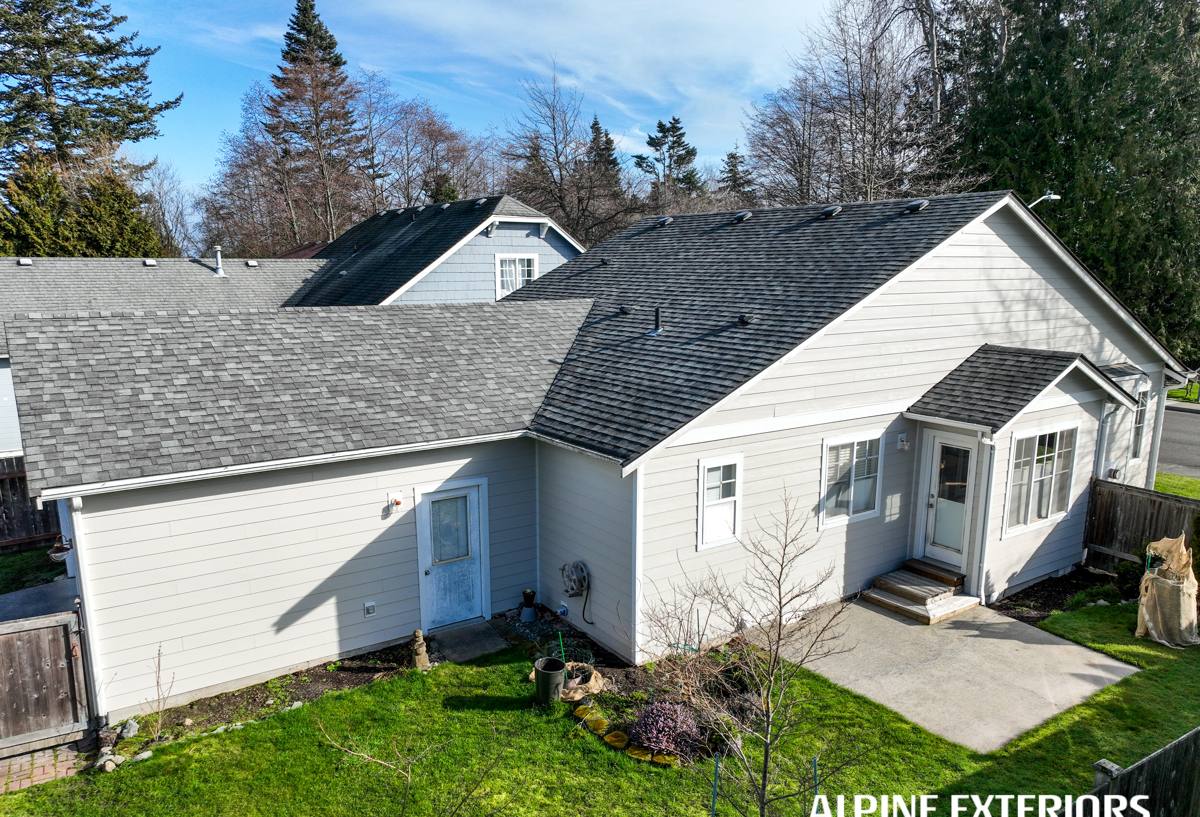
What Salt Air and Driving Rain Actually Do to a House
Salt Air
Airborne salt from the Strait of Georgia and Boundary Bay settles on exterior surfaces and accelerates corrosion of anything metal — nails, flashing, hose bibs, light fixtures, even lower-grade fasteners hidden behind siding. On painted wood or composite products, salt residue combined with moisture also speeds up finish breakdown, leading to chalking, fading, and peeling well ahead of the manufacturer's stated timeline.
Driving Rain
Storms coming off the water don't fall straight down — they come in at an angle, with real wind behind them. That kind of weather finds every weak seam, gap, or poorly lapped joint in a siding system and pushes water behind it. Over time, that's how you get soft trim, stained sheathing, and rot that starts from the inside of a wall long before it shows on the outside.
Moss and Sustained Dampness
Shaded walls, roof valleys, and north-facing elevations near mature trees stay damp longer here than they would in a drier, sunnier location. That extended dampness is exactly what moss, algae, and mildew need to take hold — on roofing, on siding, and in the gaps around windows and decking. Left unaddressed, sustained moisture against a wall assembly is one of the more common paths to hidden rot.
Why Material Choice Matters More on the Water
Every siding product handles moisture and salt exposure differently, and in a climate like Point Roberts', those differences show up faster than they would in a milder setting. This is why Ferndale Siding installs exclusively James Hardie fiber cement siding — not vinyl, not LP SmartSide, not primed wood, not competing fiber cement brands. It's a standard we hold across every job, and it matters even more on a coastal exclave where the weather doesn't give a house a break.
| Material | Common Coastal Weak Point | Why We Don't Install It Here |
|---|---|---|
| Vinyl siding | Warps and becomes brittle under UV and temperature swings; seams can allow wind-driven rain behind panels | Not built to resist the combination of coastal wind and moisture intrusion at the level we require |
| Primed wood / cedar | Absorbs moisture, swells, and is a preferred surface for moss and mildew growth | High ongoing maintenance burden in a persistently damp, shaded climate |
| LP SmartSide | Engineered wood strand product; edges and cut ends are moisture-sensitive if not sealed and maintained precisely | Moisture behavior doesn't match our standard for a marine-exposed install |
| James Hardie fiber cement | Non-combustible, engineered for moisture and climate resistance, factory-applied ColorPlus finish | This is what we install — see below |
Why We Install James Hardie Fiber Cement
James Hardie's fiber cement siding is engineered specifically for the kind of punishment a marine climate hands out. It doesn't absorb moisture the way wood-based products can, it's non-combustible, and Hardie's HZ5 product line is formulated for cold, wet, high-moisture regions like ours. The factory-applied ColorPlus finish is baked on under controlled conditions rather than field-painted, which means better adhesion and better resistance to fading, chalking, and peeling from salt air and UV exposure than a site-applied paint job typically achieves.
It also carries a strong, transferable warranty — a real consideration on a home near the water, where the wrong siding can mean a maintenance headache within a decade instead of a multi-decade exterior. We're not going to tell a homeowner that other products don't work anywhere. We are telling you that after years of installing and maintaining exteriors around Whatcom County, Hardie is the product we trust enough to put our name behind, especially in a location as exposed as Point Roberts.
How We Approach a Point Roberts Siding Job
The install itself follows the same disciplined process we use everywhere, with extra attention paid to the details that matter most in a marine environment:
- Full inspection of existing sheathing and framing for hidden moisture damage before any new siding goes on
- Correct water-resistive barrier and flashing details at every window, door, and penetration — the places wind-driven rain actually gets in
- Stainless or coated fasteners appropriate for salt-air exposure, installed to Hardie's specifications
- Proper clearance between siding and grade, decks, and roof lines to reduce standing moisture contact
- Factory-finished ColorPlus panels installed per manufacturer spec to keep the warranty intact
Installation quality matters as much as the product itself. Fiber cement siding installed with the wrong fastener pattern, insufficient clearances, or poor flashing will underperform no matter how good the material is — and that gap shows up faster in a coastal climate than almost anywhere else in the county.
Beyond Siding: The Full Exterior Envelope
Siding doesn't work in isolation. On a home exposed to this much wind, rain, and salt air, roofing, windows, and decking all interact with the same moisture pressures — and a weak point in one often shows up as damage in another.
Roofing
Roof condition directly affects how much water ends up running down your walls. Moss buildup, aging flashing, and worn shingles in a shaded, damp environment like this one accelerate wear and can send water into places siding alone can't protect against.
Windows
Window flashing and seals are one of the most common failure points for wind-driven rain intrusion. Old or poorly sealed windows let moisture behind the wall assembly regardless of how good the siding is.
Decks
Decks facing the water take the same salt and rain exposure as siding, plus foot traffic and standing water. Ledger board connections and flashing where a deck meets the house are a frequent source of hidden rot if not detailed correctly.
Because we handle all four — siding, roofing, windows, and decks — we can look at a Point Roberts home as one connected system instead of treating each trade as a separate problem, which matters when the goal is keeping water out for good.
Why a Local Crew Matters Here
Point Roberts is geographically part of Whatcom County but physically separated from it — reaching it by land means crossing into Canada and back. That logistical reality means fewer contractors treat it as routine service territory, and homeowners there can end up with less contractor competition and less local accountability than the rest of the county gets. We factor Point Roberts into our scheduling and route planning as a normal part of doing business in Whatcom County, not a special trip, so estimates, material delivery, and crew scheduling aren't an afterthought.
A crew that regularly works this stretch of coastline also just sees more of what marine exposure does to a house — which fastener types hold up, which flashing details actually keep driving rain out, where moss takes hold first. That's the kind of pattern recognition that only comes from doing the work here repeatedly, not from a one-off job.
What Drives Cost on a Coastal Job
| Factor | Why It Matters in Point Roberts |
|---|---|
| Extent of hidden moisture damage | Coastal homes are more likely to have sheathing or framing repair needed before new siding goes on |
| Home size and complexity | More corners, dormers, and trim details mean more flashing and joint work in a wind-driven-rain climate |
| Fastener and flashing upgrades | Salt-air-rated hardware costs more than standard fasteners but avoids early corrosion |
| Siding profile and color | Hardie offers multiple plank widths, textures, and ColorPlus colors at different price points |
| Access and logistics | Site access and material delivery timing factor into scheduling for any exclave property |
Simple Maintenance That Extends the Life of Your Exterior
- Rinse salt residue off siding and windows periodically, especially on water-facing elevations
- Keep gutters and downspouts clear so roof runoff doesn't overload wall areas below
- Trim back vegetation that keeps walls shaded and damp, encouraging moss growth
- Inspect caulking and trim joints annually for gaps that could let wind-driven rain in
- Address small moss or algae growth early, before it spreads and holds moisture against the surface
If you're weighing a siding, roofing, window, or deck project for a home in Point Roberts, we're glad to walk the property, talk through what your specific exposure looks like, and give you a straightforward, no-pressure estimate.