 Ferndale
 Exterior Work in Fairhaven: What the Climate Really Does to a House
Fairhaven sits close to the water, and that proximity shapes everything about how a house ages here. Salt-laden air moves off Bellingham Bay and settles on siding, trim, and roofing day after day. Add Whatcom County's long wet season — months of driving rain pushed sideways by wind off the water — and a short, mild summer that never fully dries things out, and you get a climate that is quietly hard on exteriors even though it rarely produces a dramatic storm. The damage in Fairhaven is almost always slow and cumulative: swelling seams, soft trim, moss creeping across north-facing roof slopes, and paint that fails years before it should.
We work on homes throughout Ferndale and the surrounding Whatcom County area, and Fairhaven's combination of salt exposure, rain volume, and shade from mature trees makes it one of the tougher micro-climates we build for. That's the lens we bring to every project here — siding, roofing, windows, and decks alike.
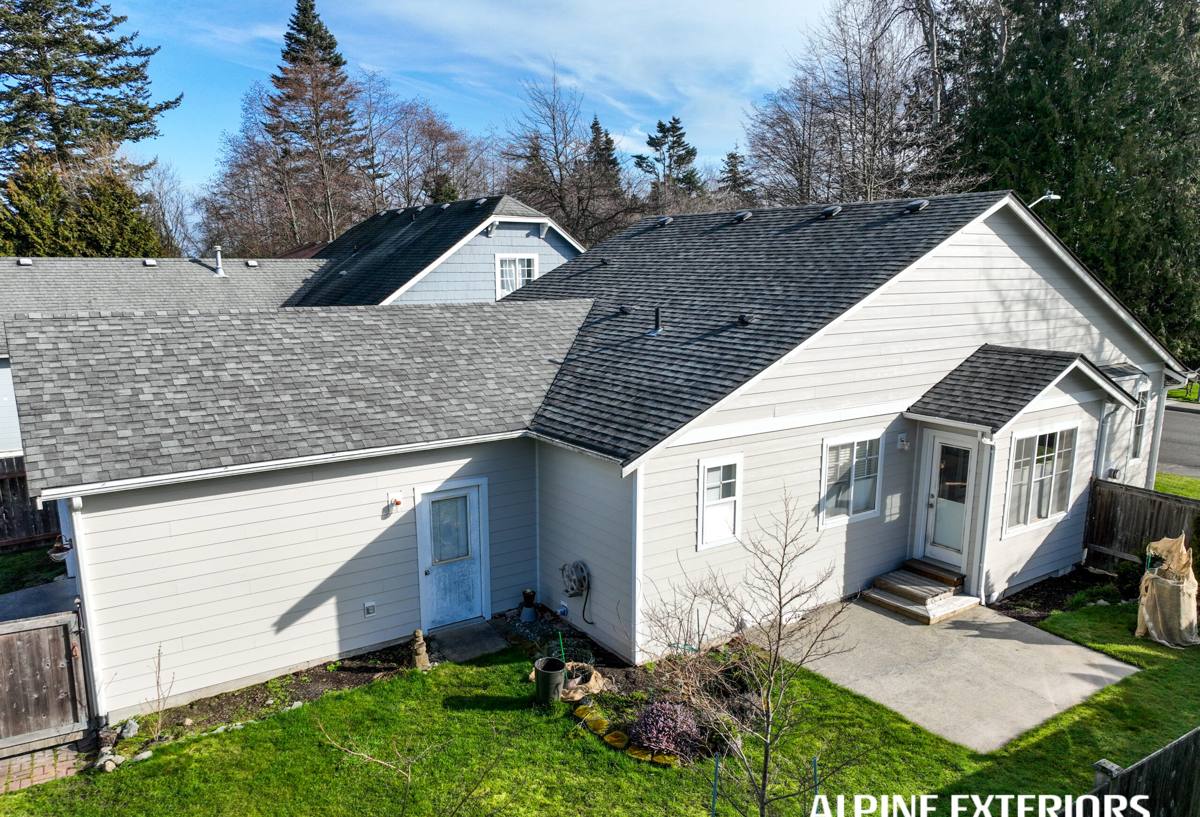
Salt Air: The Slow, Invisible Attacker
Salt air doesn't announce itself the way a storm does. It works quietly, in ways that show up over years, not weeks.
What salt exposure actually does
- Accelerates corrosion on exposed fasteners, flashing, and metal trim
- Draws moisture into porous or wood-based siding materials, keeping them damp longer between rain events
- Breaks down cheaper paint and factory finishes faster than the same products would fail inland
- Leaves a fine residue on surfaces that, combined with moisture, becomes a foothold for mildew and algae
None of this is unique to Fairhaven — any home close to Puget Sound or the Strait deals with some version of it. But it's a real factor when you're choosing exterior materials, and it's one reason generic siding advice that works fine in a dry inland climate doesn't always hold up here.
Driving Rain and a Long Wet Season
Whatcom County doesn't get the heaviest single-storm rainfall totals in the state, but it makes up for that with duration. Rain here often comes horizontally, pushed by wind off the water, which means it hits vertical siding surfaces and window trim far more directly than a straight-down rain would. Over a wet season that can stretch from fall through spring, that adds up to a lot of water contact time on every exterior surface of a house.
This matters most at the details: seams, corners, window and door trim, and anywhere two materials meet. A siding system that handles occasional rain fine can still fail here if its joints, caulking, and water management weren't built for sustained, wind-driven exposure. Roofing underlayment, valley flashing, and gutter capacity matter more in this kind of climate than they do somewhere drier.
What we look for on a Fairhaven exterior
| Area | Common Issue in Fairhaven's Climate | Why It Happens |
|---|---|---|
| Siding seams and corners | Swelling, gapping, paint failure | Sustained wind-driven rain finds any weak joint |
| North and shaded roof slopes | Moss and algae buildup | Slower drying time under tree cover and marine humidity |
| Window trim | Soft or rotting wood, caulk failure | Direct rain exposure plus salt air degrading finishes |
| Deck boards and rail posts | Graying, splintering, fastener corrosion | Constant moisture cycling and salt exposure |
| Fasteners and metal flashing | Rust staining, early corrosion | Salt air accelerates oxidation on exposed metal |
Moss: More Than a Cosmetic Problem
Moss gets treated as a minor annoyance, but in a climate like this it's a real maintenance issue. Moss holds moisture against whatever it's growing on, extending the amount of time a roof or a shaded stretch of siding stays wet. On a roof, unmanaged moss growth can work under shingle edges and shorten the roof's service life. On siding, it usually shows up on north-facing walls and anywhere overhanging trees keep a surface shaded and damp longer than the rest of the house.
You can't design moss away entirely in a heavily wooded, water-adjacent area like Fairhaven, but material choice and installation detail make a real difference in how fast it takes hold and how easily it's dealt with. Smooth, factory-finished surfaces with proper drainage behind them resist moss and mildew far longer than absorbent or textured materials that hold moisture at the surface.
Why We Install Only James Hardie Fiber Cement Siding
Given everything above, we've made a deliberate choice: we install James Hardie fiber cement siding exclusively. We don't install vinyl, LP SmartSide, primed spruce, cedar, or other fiber cement brands like Cemplank or Allura. That's not a marketing position — it's a standard we hold because of what we see on real homes in this climate over time.
Fiber cement is non-combustible and dimensionally stable, meaning it doesn't swell and contract with moisture the way wood-based products do — a real advantage in a climate defined by long, sustained wet periods. Hardie's ColorPlus factory finish is baked on under controlled conditions, which holds color and resists the fading and chalking that field-applied paint struggles with, especially with sustained salt air exposure. Hardie also engineers specific product lines (their HZ5 line, for example) for wetter, harsher climates — a distinction that matters when you're a few hundred yards from saltwater. Backed by a strong transferable warranty, it's the system we're comfortable standing behind on a Fairhaven home for the long haul, provided it's installed to spec — proper clearances, correct fastening, and sound flashing details, since siding is only as good as its installation.
We're happy to talk through the trade-offs of other materials if you're weighing options — but on our own installs, Hardie is what goes up.
Roofing: Built for Moss and Wind-Driven Rain
Roofing in a climate like this comes down to two things: keeping wind-driven rain out at every seam and joint, and limiting how much moss and organic growth the roof accumulates over its life. That means attention to underlayment quality, valley and flashing detail, and ventilation that lets a roof deck dry out between rain events instead of staying damp for weeks at a stretch. We also talk with homeowners about realistic moss maintenance — what's normal upkeep versus what signals a bigger problem underneath.
Windows: Where Leaks Actually Start
Most window-related water problems aren't about the window unit itself — they're about the flashing and trim detail around it. In a climate with sustained horizontal rain, a window that isn't flashed correctly will eventually let water behind the trim, even if the glass and frame are fine. When we replace windows, we treat the flashing and trim integration as seriously as the window itself, because that's usually where failures actually originate in a place like Fairhaven.
Decks: Standing Up to Constant Moisture Cycling
Decks in this area deal with near-constant moisture cycling — wet from rain, briefly dry, wet again — plus salt air on fasteners and hardware. That combination is hard on lower-grade lumber and hardware over time. We build decks with attention to drainage under the deck surface, fastener and hardware selection suited to a coastal-adjacent environment, and material choices that hold up to graying, splintering, and moisture absorption better than a bargain-grade board will.
Why a Local Crew Matters Here
Fairhaven's exterior challenges aren't dramatic, which is exactly why they're easy for an out-of-area or inexperienced crew to underestimate. A contractor who mostly works drier inland jobs may not think twice about the flashing detail on a shaded north wall, or why moss on a roof deserves more attention than it would somewhere less humid. We work throughout Ferndale and Whatcom County, and that regular exposure to marine climate conditions shapes how we detail every project — not as an afterthought, but as the baseline.
What to Look For When Hiring for Exterior Work Here
- A contractor who can explain, specifically, how their approach accounts for salt air and sustained wet weather — not just a generic sales pitch
- Clear detail on flashing, drainage, and clearances, not just the visible siding or roofing material
- Manufacturer certification or documented installation training for the products they're putting on your home
- A written, transferable warranty on materials and workmanship
- References or completed work in the immediate area, where the same climate conditions apply
- Straight answers about maintenance realities — moss, moisture, and salt exposure don't disappear after installation
What to Expect Working With Us
We start with an honest look at your home's actual exposure — how much shade, how close to the water, which walls take the worst of the wind-driven rain — and walk you through what that means for material choice and installation detail. From there it's a straightforward process: a clear scope, a real timeline, and work that accounts for the climate instead of ignoring it. Whether it's siding, roofing, windows, or a deck, the goal is the same: an exterior that's still doing its job ten and twenty years from now, not just on move-in day.
If you're planning siding, roofing, window, or deck work on a home in the Fairhaven area, we'd be glad to take a look and talk through what your specific property needs. Reach out for a free, no-pressure estimate using the form below.