 Ferndale
 Exterior Work Built for Sandy Point's Coastal Conditions
Sandy Point sits right up against the water in Whatcom County, and that location shapes everything about how a house ages out here. Homes in this community take a steadier beating from the weather than houses just a few miles inland in Ferndale proper — more salt in the air, more wind-driven rain hitting the walls sideways, and a longer stretch of damp, shaded months where moss and algae get a foothold and don't let go. If you own a home in Sandy Point, you've probably already noticed that exterior materials wear differently here than they do elsewhere in the county.
We're a local crew that works this area regularly, and we handle the full exterior envelope — siding, roofing, windows, and decks. That matters in a place like Sandy Point because these systems don't fail in isolation. A roof that's shedding water poorly will eventually soak the siding beneath it. Trim and window flashing that's failed lets water track behind the cladding no matter how good the siding itself is. Treating the house as one connected system, rather than a pile of separate trades, is how you actually keep a coastal home dry.
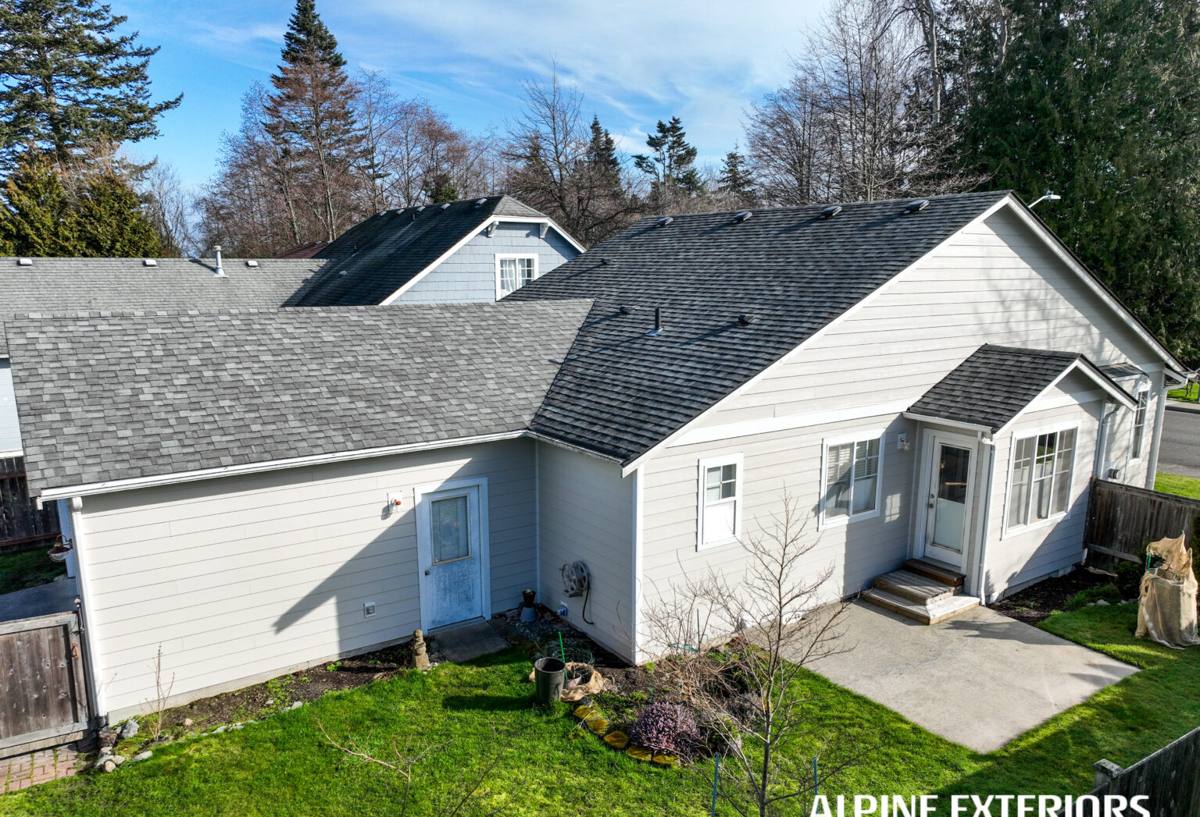
What Salt Air, Rain, and Moss Actually Do to a House
It's worth being specific about the mechanisms, because the "why" drives what we recommend.
Salt Air
Airborne salt from Puget Sound settles on every exterior surface — siding, trim, fasteners, roof flashing, window hardware. It accelerates corrosion on anything metal that isn't rated for a marine or coastal environment, and it can leave a fine residue on painted or coated surfaces that holds moisture against them longer than it would inland. Fastener choice and flashing material matter more here than they do a few miles east.
Driving Rain
Sandy Point gets wind off the water, and wind-driven rain doesn't just fall on a house — it pushes sideways into every seam, lap, and penetration. Siding systems that rely on caulk or paint film alone to stay sealed tend to show it first in a spot like this. What holds up is a system with real water-shedding geometry (proper laps, correct flashing, drainage behind the cladding) rather than one that depends on a perfect, permanent seal.
Moss and Algae
The extended damp season in this part of Whatcom County means north-facing walls, shaded siding, and roof valleys stay wet longer between dry spells. That's exactly the environment moss and algae need. Beyond looking bad, moss holds moisture against the surface underneath it, and on the wrong substrate that constant dampness is what eventually causes rot or delamination.
Siding: What We Install and Why
We install James Hardie fiber cement siding exclusively. We don't install vinyl, LP SmartSide, Cemplank, Allura, or wood products like cedar or primed spruce, and we think homeowners deserve an honest explanation of why — not just a sales pitch for what we happen to sell.
Vinyl is affordable and low-maintenance in mild conditions, but in a driving-rain, salt-air environment it can flex, gap at the laps under wind pressure, and fade faster with sun and salt exposure over time. Wood siding — cedar or primed spruce — can look great, but it needs real upkeep (recoating, caulking, moisture monitoring) to hold up in a damp coastal climate, and skipping that upkeep even one season can let rot start behind the paint film where you won't see it right away. Engineered wood products like LP SmartSide perform well in many climates but are more sensitive to sustained moisture exposure at cut edges and joints, which is a real consideration this close to the water. Other fiber cement brands, like Cemplank or Allura, are legitimate products, but we've standardized on one manufacturer so we can guarantee installation quality, warranty coverage, and factory finish consistency across every job — rather than juggling multiple systems with different specs and different failure points.
James Hardie fiber cement is non-combustible, dimensionally stable in wet-dry cycling, and available in HZ5 product lines engineered for Pacific Northwest moisture exposure. The factory-applied ColorPlus finish resists the fading and chalking that painted siding is prone to, which matters when your walls are getting steady sun-and-salt exposure off the water. It also comes with a strong, transferable warranty — but that warranty only means something if the installation is done to spec, which is why correct flashing, gapping, and fastening detail matters as much as the product itself.
| Factor | What to Weigh in Sandy Point |
|---|---|
| Salt exposure | Corrosion-resistant fasteners and flashing, finish that resists chalking/fading |
| Wind-driven rain | Proper lap geometry, drainage plane behind cladding, correctly integrated flashing |
| Moss/algae season | Surface that doesn't trap moisture long-term and can be gently cleaned without damage |
| Long-term upkeep | Factory finish vs. field-painted surfaces that need recoating on a schedule |
| Fire consideration | Non-combustible cladding vs. combustible wood-based products |
Roofing in a Coastal, Moss-Prone Climate
Roofs in Sandy Point deal with the same moss and moisture pressure as siding, plus direct exposure to wind-driven rain at every valley, penetration, and edge. We look at ventilation, underlayment quality, and flashing detail as closely as the roofing material itself — a good roof covering installed over poor ventilation or weak flashing will still leak or grow moss prematurely. Regular moss removal and gutter maintenance go a long way here, and we can flag early warning signs (soft decking, granule loss, failing flashing) during a siding or exterior estimate even if roofing isn't the reason for the call.
Windows: The Weak Point in Any Coastal Envelope
Windows are where a lot of coastal water intrusion actually starts, not at the siding field itself. Failed flashing around a window opening, degraded sealant, or an aging window unit that's no longer sealing well can let water track behind the wall assembly — and by the time you see a stain inside, the damage has usually been happening for a while. When we replace siding, we treat window flashing and integration as part of the job, not an afterthought, because a new siding job installed around a leaking window just buries the problem.
Decks: Built to Handle Rain and Salt Exposure
Outdoor living space near the water takes a different kind of abuse — standing water, salt exposure on fasteners and hardware, and UV combined with damp conditions that speeds up wear on decking boards and structural framing alike. Ledger board flashing and proper drainage away from the house are the details that actually determine whether a deck stays solid for decades or starts showing rot at the connection points within a few years. We build and repair decks with those coastal-specific failure points in mind, not just a generic deck spec.
Why a Local Crew Matters Here
Sandy Point isn't a huge community, and it isn't a typical suburban subdivision either — lot conditions, wind exposure, and sun/shade patterns can vary a lot from one property to the next depending on how close you are to the water and which direction the house faces. A crew that works this specific area regularly knows what to expect before they even walk the property: where moss tends to build up fastest, which sides of a house typically take the worst of the wind-driven rain, and what corrosion-resistant hardware and flashing details actually hold up out here versus what's fine a few miles inland. That local knowledge shows up in the estimate, not just the finished work — fewer surprises, and a scope that's sized to what your specific home actually needs.
Being local also means we're not disappearing after the job. If something needs a warranty follow-up or a maintenance check a few years down the road, we're still working in Whatcom County and still reachable.
What to Check Before You Hire Anyone for Exterior Work in Sandy Point
- Do they have current Washington contractor licensing and insurance, and will they show it to you without hesitation?
- Do they specify corrosion-resistant fasteners and flashing appropriate for a coastal environment, or just "standard" materials?
- Will they explain their flashing and water-management details in plain language, not just the visible siding product?
- Do they handle the roof-siding-window intersection as one connected system, or only their own narrow scope?
- Can they explain, specifically, why they recommend one siding product over another for your situation?
- Do they offer a written, itemized estimate rather than a vague lump-sum number?
Getting Started
Every Sandy Point property is a little different depending on its exposure to wind and water, so we don't quote exterior work off a generic price list. If your siding, roof, windows, or deck are showing wear from the salt air, rain, or moss that comes with living this close to the water, we're happy to take a look and give you a straightforward, no-pressure estimate — just fill out the form below to get started.