 Ferndale
 Siding in Marietta: Built for Salt Air and Driving Rain
Marietta sits low and close to the water on the edge of Bellingham Bay, just outside Ferndale in Whatcom County. It's a quiet, older community, and a lot of the homes here have been standing through decades of Pacific Northwest weather — which means decades of salt air drifting in off the bay, wind-driven rain hammering the west- and south-facing walls, and long, damp stretches of the year when nothing on the exterior really gets a chance to dry out. That combination is hard on siding. It's especially hard on the wrong siding.
We're a local exterior contractor, and we install one siding product: James Hardie fiber cement. That's not a marketing gimmick — it's a standard we settled on after years of watching what actually holds up in this climate and what doesn't. On a page like this, we want to walk through what Marietta's exposure actually does to a house, how our process works, and why we'd rather turn down a vinyl or wood siding job than install something we don't think will last here.
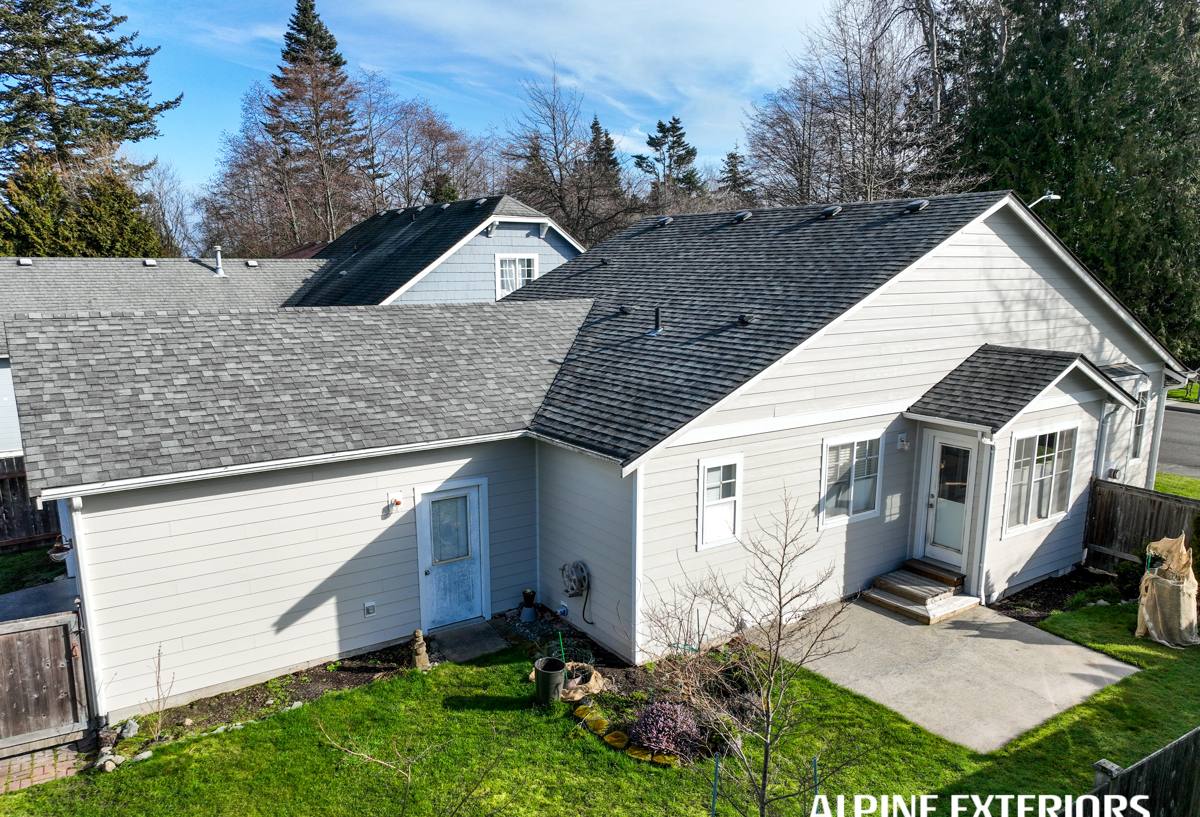
What Marietta Homes Face Year-Round
Salt Air and Coastal Moisture
Being close to the bay means airborne salt settles on exterior surfaces more than it would a few miles inland. Salt is corrosive to fasteners and hardware, and it accelerates the breakdown of finishes that aren't engineered to handle it. Homes closer to the water tend to show wear on their siding, trim, and metal flashing years before comparable homes further from the coast.
Driving Rain and Wind-Driven Exposure
Whatcom County storms don't always come straight down. Wind off the water pushes rain sideways into wall assemblies, which puts real pressure on seams, laps, and butt joints — the places where water intrusion actually starts. Siding that isn't dimensionally stable, or that wasn't installed with the right clearances and flashing details, is where that pressure finds its way in.
Moss, Mildew, and a Long Damp Season
Western Washington's growing season for moss and algae is long, and Marietta's shaded, moisture-retaining microclimate near the water doesn't help. Any siding material that holds moisture at the surface — or that has seams and grooves where organic growth can get a foothold — is going to need more scrubbing, more staining, and more maintenance than a homeowner should have to sign up for.
Why We Install James Hardie — and Not Vinyl or Wood
Homeowners in Marietta are often comparing three broad options: vinyl, wood-based products (cedar or engineered wood like LP SmartSide), and fiber cement. Each has a place in the market. Here's our honest read on why we don't install the first two.
Vinyl siding is inexpensive and easy to install, and in the right setting it does an adequate job. But it's a thin plastic product that expands and contracts significantly with temperature swings, can warp or crack in wind exposure, and its color is baked into the material rather than applied as a factory finish — so it fades over time with no way to refresh it short of replacement. In a coastal wind zone, we've seen vinyl take a beating that better-engineered materials simply don't.
Wood and wood-based siding (including engineered products like LP SmartSide, and traditional cedar or primed spruce) can look great when new, but wood is organic material, and organic material in a wet, shaded, salt-air climate is fighting an uphill battle. Moisture intrusion at cut edges, fastener holes, and seams can lead to swelling, rot, and delamination over time, and the maintenance burden — recaulking, repainting, watching for soft spots — never really ends. We'd rather not put a homeowner in that position when a better-suited material exists.
James Hardie fiber cement is a blend of cement, sand, and cellulose fiber, engineered specifically for climates like ours. It's non-combustible, it doesn't feed moss and mildew the way wood does, it holds its shape in wind and temperature swings, and it comes with a factory-applied ColorPlus finish that's baked on and warranted against fading and peeling — not something a crew brushes on after the fact. Hardie also builds region-specific product lines (their HZ5 line is engineered for climates with more moisture exposure, which fits Whatcom County well), and backs the product with a strong transferable warranty. That's the whole reason we standardized on it: it's the product we're comfortable putting our name behind in this exact climate.
Our Siding Process for Marietta Properties
Every home is different, but our process generally follows the same sequence:
- Inspection and assessment. We look at the existing siding, sheathing, and trim, and check for moisture damage, especially around windows, corners, and low-clearance areas near grade — common trouble spots in a damp coastal microclimate.
- Removal and substrate check. Old siding comes off and we evaluate what's underneath. If there's rot or water damage in the sheathing, that gets addressed before anything new goes up — covering a compromised substrate just hides the problem.
- Weather-resistive barrier and flashing. Proper house wrap and flashing at every penetration, window, and door is what actually keeps wind-driven rain out of the wall assembly. This step matters as much as the siding itself.
- Hardie installation to manufacturer spec. Correct fastener placement, clearances from grade and roofing, and joint treatment are what make the difference between a fiber cement installation that lasts and one that fails early. This is a product that rewards a crew that knows it well.
- Final detailing and cleanup. Trim, caulking where appropriate, and a walkthrough so you know what you're looking at and what (if any) maintenance to expect.
Beyond Siding: Roofing, Windows, and Decks
Siding doesn't work in isolation — it's one piece of a home's exterior envelope, and in a climate this wet, the pieces need to work together. We also handle roofing, window replacement, and deck construction, which means we can look at a Marietta home holistically: a roof that's shedding water onto a wall section, a window that's no longer sealing correctly, or a deck ledger board that's trapping moisture against the house are all things that affect how well new siding performs. When it makes sense, addressing more than one of these at once saves homeowners from redoing work later.
Cost Factors for Siding Replacement in Marietta
We don't publish fixed prices because every home is different, but these are the factors that most often move the number up or down:
| Factor | Why It Matters |
|---|---|
| Home size and wall complexity | More square footage and more corners, gables, and trim details mean more material and labor |
| Substrate condition | Rot or moisture damage found during tear-off adds repair work before new siding can go up |
| Siding profile and finish selected | Hardie's lap, shingle, and panel lines, plus ColorPlus color options, carry different material costs |
| Access and site conditions | Tight lots, multi-story walls, or landscaping close to the house can affect labor time |
| Trim and flashing scope | Full trim replacement and upgraded flashing details add cost but reduce future water intrusion risk |
Choosing a Local Contractor
Whatcom County has plenty of siding and general contractors, but the ones who work well in a marine climate tend to share a few traits. Before hiring anyone for exterior work in Marietta, it's worth checking:
- Washington state contractor licensing and active insurance, verifiable through the state's L&I lookup
- Manufacturer-specific installation training or certification for the siding product being used
- A clear, written scope of work — including flashing and moisture-barrier details, not just "siding"
- Willingness to explain why they recommend a specific product for your home, not just their default offering
- Local references or completed work in the immediate area, since coastal and inland homes in the same county can face different exposure
- A warranty that covers both the product and the labor, in writing
A crew that's worked on homes near the bay knows where water tends to find its way in, and that experience shows up in the details — flashing laps, caulk joints, clearance at grade — that aren't always visible once the job is done but matter enormously over the following twenty years.
Maintenance in a Marine Climate
One of the practical advantages of fiber cement in a place like Marietta is how little ongoing maintenance it asks for compared to wood or aging vinyl. It won't rot, it resists moss and mildew better than organic materials, and the factory finish means you're not on a repainting cycle. That said, no exterior material is maintenance-free near salt water — periodic rinsing to clear off salt residue and organic buildup, and keeping gutters and drainage clear so water isn't pooling against the base of the walls, go a long way toward getting the full lifespan out of the installation.
If you're weighing your options for a Marietta or Ferndale-area home — whether it's a full siding replacement, a roof that needs attention, or windows and decking to go along with it — we're happy to come take a look and put together a straightforward, no-pressure estimate based on what your house actually needs.