 Ferndale
 Siding Installation Built for Bellingham's Climate
Bellingham sits close enough to the water that salt-laden air, wind-driven rain, and a moss season that runs most of the year all work against a home's exterior at the same time. Siding here doesn't just need to look good — it needs to shed water fast, resist the slow biological growth that thrives in shade and moisture, and hold up to salt air that corrodes weaker materials over the decades. A siding installation job that's correct for a dry inland town isn't automatically correct for Bellingham. The flashing details, the water management behind the cladding, and the material choice itself all need to account for what this specific stretch of Whatcom County throws at a house year-round.
We're based in Ferndale and work Bellingham regularly, which matters more than it might sound. A crew that installs siding in a dozen different microclimates a year doesn't build the same instinct for this area's specific failure patterns — where moss tends to establish first, which wall orientations take the worst wind-driven rain, how the marine layer changes drying times for a job. Local, repeat experience in one climate zone shows up in the small decisions that determine whether siding lasts 10 years or 40.
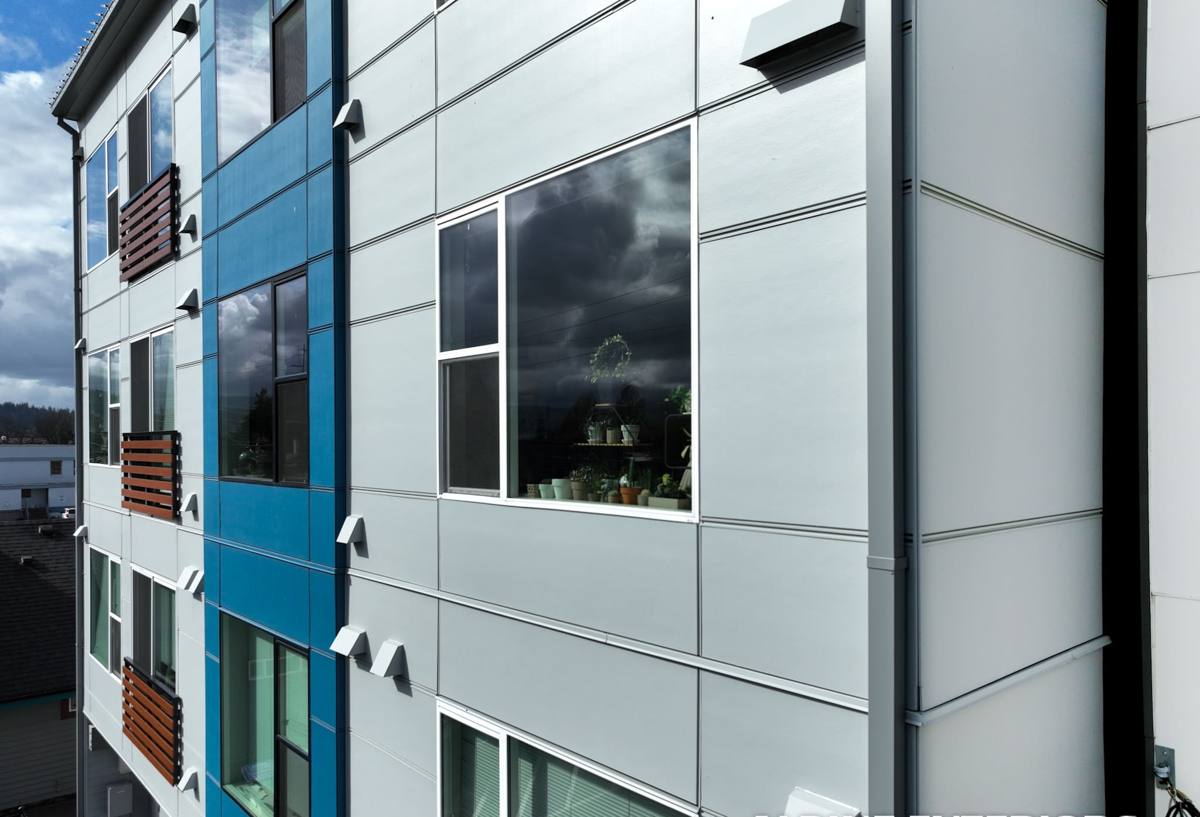
Why Bellingham Homes Are Hard on Siding
Three regional factors combine to make Bellingham a demanding environment for exterior cladding:
- Salt air: Proximity to Bellingham Bay means airborne salt reaches homes well inland of the immediate waterfront, accelerating corrosion of fasteners, flashing, and any siding material with metal components or weak factory coatings.
- Driving rain: Winter storms off the Sound push rain sideways into wall assemblies, not just straight down. Siding and the water-resistive barrier behind it need to handle rain that's actively being forced into seams and laps, not just falling rain.
- Moss and organic growth: Shaded, north-facing, and tree-adjacent walls in this region stay damp long enough for moss and algae to establish on materials that don't shed water and dry quickly. Once established, that growth holds moisture against the siding surface and accelerates whatever the underlying material is prone to.
None of these factors are unique to Bellingham individually, but the combination — salt exposure plus sustained moisture plus a long cool season with limited drying — is a specific regional profile that should shape both the material and the installation approach.
What This Means for Material Choice
A siding material that performs fine in a drier climate can struggle here. Wood-based products can swell, delaminate at cut edges, or feed moss growth if the surface isn't consistently shedding water. Vinyl can become brittle over time and doesn't offer much resistance to the kind of grime and organic buildup that's common on shaded Bellingham walls. This is the core reason our company installs only James Hardie fiber cement siding — it's a non-combustible material engineered specifically for demanding, moisture-heavy climates, and Hardie's HZ5 product line is formulated for exactly the freeze-thaw and moisture conditions the Pacific Northwest sees.
What a Correct Installation Actually Involves
The siding panel itself is only part of the system. In a climate like Bellingham's, the water management behind the siding is just as important as the material in front of it. A correct installation includes:
Water-Resistive Barrier and Flashing
A properly lapped, sealed weather-resistive barrier goes on before any siding. Every window, door, and penetration gets flashed so that water is directed out and down, never trapped behind the cladding. Given how much wind-driven rain this area sees, sloppy flashing work is one of the most common causes of hidden rot behind siding that looks fine from the curb.
Rainscreen Gap
A ventilated gap between the back of the siding and the water-resistive barrier lets any moisture that does get past the cladding drain and dry instead of sitting against the wall sheathing. This detail matters more in a marine climate with limited summer drying than it would in a drier region, and it's a detail that gets skipped on rushed jobs.
Fastener Selection
Given salt air exposure, fastener corrosion resistance is not optional. Hardie's installation specifications call for specific corrosion-resistant fasteners, and in a coastal-influenced area like Bellingham, following that spec — rather than using whatever is on the truck — is what keeps fastener heads from staining or failing years before the siding itself would.
Proper Clearances
Siding installed too close to grade, roofing, or decking traps moisture and invites the kind of sustained dampness that accelerates moss growth and, on the wrong material, rot. Manufacturer-specified clearances aren't a formality — they're what keeps the bottom courses of siding from being the first thing to fail.
Why We Install Only James Hardie
We don't install LP SmartSide, vinyl, Cemplank, Allura, primed spruce, or cedar. That's a deliberate standard, not a limitation of what we're capable of installing. Each of those alternatives asks a homeowner to accept a trade-off — more frequent maintenance, more sensitivity to moisture, a less predictable factory finish, or a warranty structure that doesn't hold up as well over time — and in a climate as tough on siding as Bellingham's, those trade-offs show up faster than they would somewhere drier.
James Hardie fiber cement is non-combustible, holds its factory ColorPlus finish far longer than field-applied paint on wood products, and is engineered in climate-specific HZ formulations rather than a one-size-fits-all product. It comes with a strong transferable warranty when installed to Hardie's specification, which is part of why correct installation — not just correct material — is the whole point of this page.
Comparing Siding Materials for a Marine Climate
| Factor | James Hardie Fiber Cement | Vinyl | Wood / Engineered Wood |
|---|---|---|---|
| Moisture resistance | Engineered for wet climates (HZ5 line) | Doesn't absorb, but can trap moisture behind panels | Prone to swelling and rot without diligent maintenance |
| Salt air / coastal durability | Strong; non-combustible cement composition | Can become brittle over time | Finish and fasteners vulnerable to corrosion/wear |
| Moss/algae resistance | Sheds water well when installed with proper rainscreen | Moderate; smooth surface but poor drainage detailing common | Higher risk if surface stays damp |
| Finish longevity | Factory ColorPlus finish, long fade resistance | Color molded in but can fade/chalk | Requires repainting/staining on a recurring cycle |
| Fire resistance | Non-combustible | Combustible | Combustible |
Our Process for a Bellingham Siding Installation
1. On-Site Assessment
We look at wall orientation, existing moisture or moss damage, current flashing condition, and how the home's specific site conditions — tree cover, proximity to the water, prevailing wind — will affect the new siding's performance.
2. Tear-Off and Substrate Check
Old siding comes off and we inspect the sheathing underneath for hidden rot or moisture damage before anything new goes on. Covering up a compromised substrate is one of the fastest ways to have a siding job fail early, and it's not something we skip to save time.
3. Water Management Installation
Weather-resistive barrier, flashing at every penetration, and a rainscreen gap go in before a single piece of Hardie siding is hung.
4. Hardie Installation to Manufacturer Spec
Panels, fasteners, clearances, and caulking joints are all installed per James Hardie's published specifications — the same specifications that back the manufacturer's warranty.
5. Final Walkthrough
We walk the finished job with the homeowner, checking sightlines, seams, and trim details before calling it complete.
Signs Bellingham Homeowners Should Watch For
- Moss or dark streaking establishing on shaded or north-facing walls
- Soft spots, bubbling, or visible swelling in existing siding
- Peeling or chalking paint that keeps returning within a year or two of repainting
- Gaps or separation at seams, corners, or window trim
- Rust staining running down from fastener heads
- A musty smell near exterior walls, which can indicate moisture behind the siding
Cost Factors for a Siding Installation Project
Every home is different, but the factors that typically move the price of a siding installation in this area include the size and complexity of the home's exterior, the condition of the substrate once old siding is removed, the amount of trim and window/door detail work involved, and the specific James Hardie product line and finish selected. We'll walk through these specifics on-site rather than quoting a number without seeing the home, but broadly, projects with straightforward wall geometry and a sound substrate come in at the lower end of the range, while homes needing substrate repair, extensive trim work, or complex rooflines cost more.
Why Local, Repeat Experience Matters
Siding installed correctly in Bellingham accounts for salt air, driving rain, and moss in ways that a generic installation doesn't. A crew that works this area regularly has already seen which details cause problems specific to Whatcom County's marine climate, and builds those lessons into every job rather than relearning them on a homeowner's house. That's the value of hiring a contractor based nearby who already knows the region, rather than a crew passing through.
If you're planning a siding project in Bellingham, we're happy to take a look at your home and walk you through what a correct James Hardie installation would involve for your specific situation. Reach out for a free, no-pressure estimate using the form below.