 Ferndale
 Building for the Semiahmoo Climate
Semiahmoo sits right up against the water in northern Whatcom County, and that location shapes everything about how a home's exterior holds up. Homes here deal with a combination most inland Ferndale neighborhoods don't see in the same intensity: salt-laden air blowing off the bay, wind-driven rain that doesn't just fall but gets pushed sideways into wall assemblies, and a moss season that can stretch for most of the year on shaded and north-facing surfaces. Any one of those factors will eventually find the weak point in a siding system. Together, they make material choice and installation quality the two things that matter most.
We've worked on homes throughout this part of the county long enough to know that what looks fine on a spec sheet doesn't always hold up once it's facing a real marine environment for a decade or two. That's the lens we use when we talk to homeowners in this area about siding, roofing, windows, and decks.
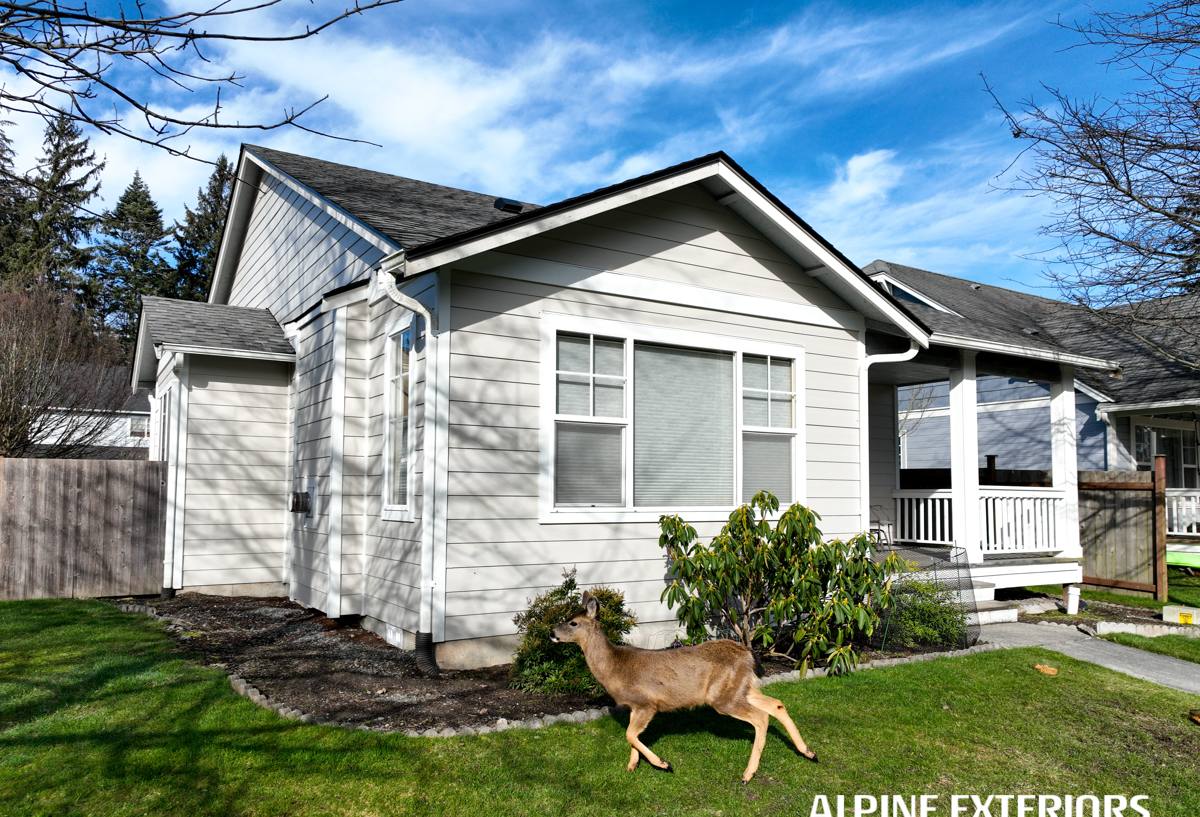
Salt Air: The Slow, Quiet Damage
Salt air doesn't announce itself the way a storm does. It works gradually — settling into seams, fasteners, and any exposed edge of a building material, then accelerating corrosion and breakdown over years. On a coastal or near-coastal property, this affects more than just siding:
- Metal fasteners and flashing corrode faster than they would a few miles inland
- Painted and coated surfaces chalk and fade sooner under salt exposure
- Wood-based products absorb moisture more readily when salt air keeps humidity elevated
- Caulk and sealant joints break down faster, opening the door to water intrusion
This is why we don't treat every Whatcom County job the same. A home a few blocks from Semiahmoo Bay needs different attention to flashing details, fastener selection, and joint sealing than a home well inland — even if the siding material is identical.
Driving Rain and Wind-Loaded Walls
Ferndale and the surrounding coastal communities get plenty of straight-down rain, but the wind off the water changes the equation. Driving rain hits siding at an angle, works its way under poorly lapped courses, and tests every seam and penetration — around windows, at trim boards, behind deck ledgers. A siding system that's rated fine for a sheltered inland lot can still fail here if it wasn't detailed for wind-driven moisture.
That's a big part of why installation matters as much as material. Proper lap, correctly flashed penetrations, and the right gap and sealant strategy at trim are what actually keep water out — not just the product itself.
Moss Season and Shaded Exteriors
Whatcom County's long wet season, combined with mature tree cover common around Semiahmoo, means moss and algae growth on siding, roofing, and decking is a near-constant maintenance issue for a lot of homeowners. North-facing walls and anything shaded by trees or a neighboring structure stay damp longer, and that moisture is what moss needs to take hold.
Some siding materials handle this better than others. Products that absorb moisture readily give moss and mildew something to grow into, not just sit on top of. That's a maintenance burden homeowners are often signing up for without realizing it when they choose a cheaper or more moisture-sensitive material.
Why We Install James Hardie Fiber Cement — and Nothing Else
We made a deliberate decision as a company: we install James Hardie fiber cement siding, exclusively. We don't install vinyl, LP SmartSide, cedar, primed spruce, or other fiber cement brands. That's not a marketing angle — it's a standard we hold because of what we've seen happen to exterior materials in exactly this kind of coastal, wet, moss-prone climate.
Fiber cement is dense, non-combustible, and doesn't feed moss and mildew the way wood-based siding can. James Hardie's HZ5 product line is specifically engineered for climates like ours, with freeze-thaw and moisture performance suited to the Pacific Northwest. The ColorPlus factory finish is baked on and warranted separately from the panel, which matters in salt air where field-applied paint tends to break down faster. It's a system built for exactly the conditions Semiahmoo homes are up against — not a compromise we're asking homeowners to accept.
We're upfront that this means we're not the right contractor for someone set on vinyl or cedar. But for homeowners who want a siding system that's going to perform for decades in a marine environment with minimal maintenance, it's the product we stand behind.
How Coastal-Climate Materials Compare
| Material | Salt Air / Moisture Behavior | Moss & Algae Resistance | Typical Maintenance | Fire Rating |
|---|---|---|---|---|
| James Hardie Fiber Cement | Engineered for wet, coastal climates (HZ5) | Dense composition resists moss intrusion better than wood-based products | Occasional wash; factory finish reduces repainting | Non-combustible |
| Vinyl | Won't rot, but can warp and lose color faster under salt/UV | Grows moss on surface in shaded areas; harder to clean without damage | Low, but panels can crack and aren't repairable in sections | Combustible |
| LP SmartSide (engineered wood) | Wood-based; vulnerable if seams or cuts aren't fully sealed | More susceptible to moisture-related growth if maintenance lapses | Requires diligent caulking and repainting on a schedule | Combustible |
| Cedar | Natural wood; absorbs moisture, especially in shaded/damp spots | High — needs regular treatment to resist moss and rot | High — refinishing, sealing, and moss treatment on a recurring cycle | Combustible |
Beyond Siding: Roofing, Windows, and Decks for Coastal Homes
A home's exterior works as a system, and that's especially true near the water. We handle roofing, window replacement, and deck construction alongside siding because these components all interact — a roof that's shedding water poorly will eventually stain or damage siding below it, windows that aren't flashed correctly are one of the most common sources of hidden water intrusion, and a deck ledger tied into the wall is a spot where a lot of rot problems start if it wasn't built and flashed correctly the first time.
What we look at on a coastal property
- Roofing material and condition, and how well it's shedding wind-driven rain
- Window flashing and seals, especially on walls facing prevailing weather
- Deck ledger connections and any wood-to-wall contact points
- Siding condition on shaded, north-facing, or tree-covered walls where moss takes hold first
- Trim and penetration details — the spots where most water intrusion actually starts
Why a Local Crew Matters Here
Contractors who don't work this area regularly often price and detail jobs the same way they would anywhere else in Western Washington. A crew that's out here often knows which walls take the worst of the weather off the bay, understands why moss shows up on some homes faster than others just a short distance away, and doesn't need to relearn Whatcom County's permitting and inspection process on every job.
That local familiarity shows up in small decisions — where extra flashing attention gets paid, how joints are sealed, which details get extra care because we've seen what happens when they're skipped in this climate. It's the difference between a generic installation and one that's actually built for where it's going.
Signs Your Exterior Needs a Closer Look
Homeowners in this area often wait too long to address exterior issues simply because the damage isn't obvious from the ground. A few things worth checking, especially on shaded or water-facing walls:
- Moss or dark streaking building up on siding or roofing, even after cleaning
- Soft spots, bubbling, or visible warping on wood-based or vinyl siding
- Paint that's chalking, peeling, or fading noticeably faster on one side of the house
- Caulk that's cracked or pulled away from trim, windows, or corner boards
- Any staining or discoloration below window sills or at deck ledger connections
None of these are emergencies on their own, but they're worth having looked at before they turn into a larger repair.
What to Expect from an Estimate
When we come out to a Semiahmoo-area property, we're looking at the whole exterior — siding, roofing, windows, and any deck structures — because problems in one area often trace back to another. We'll walk the shaded and weather-exposed sides of the house specifically, since that's where this climate does the most damage, and give a straightforward assessment of what's holding up and what isn't.
If you're dealing with moss buildup, aging siding, or just want an honest read on how your home's exterior is holding up against the salt air and rain here, we're happy to take a look. Reach out for a free, no-pressure estimate using the form below.