 Ferndale
 Building Decks for a Neighborhood That Sees Real Weather
Cordata is one of the fastest-growing residential areas in the greater Ferndale-Bellingham corridor, and a lot of the homes here are newer builds with builder-grade decks that were never really designed for the long haul. A deck in Cordata doesn't just have to look good for a summer barbecue season — it has to survive eight or nine months a year of Whatcom County's version of weather: low grey skies, driving rain that comes in sideways off Bellingham Bay, salt-tinged air, and a moss season that can start in October and not let go until May. A deck built the way it would be built in a dry inland climate simply won't hold up out here.
We build and rebuild decks specifically with this climate in mind. That means different fastener choices, different framing details, different material recommendations, and a maintenance plan that actually matches what a Cordata deck experiences year-round — not a generic checklist pulled from a national franchise manual.
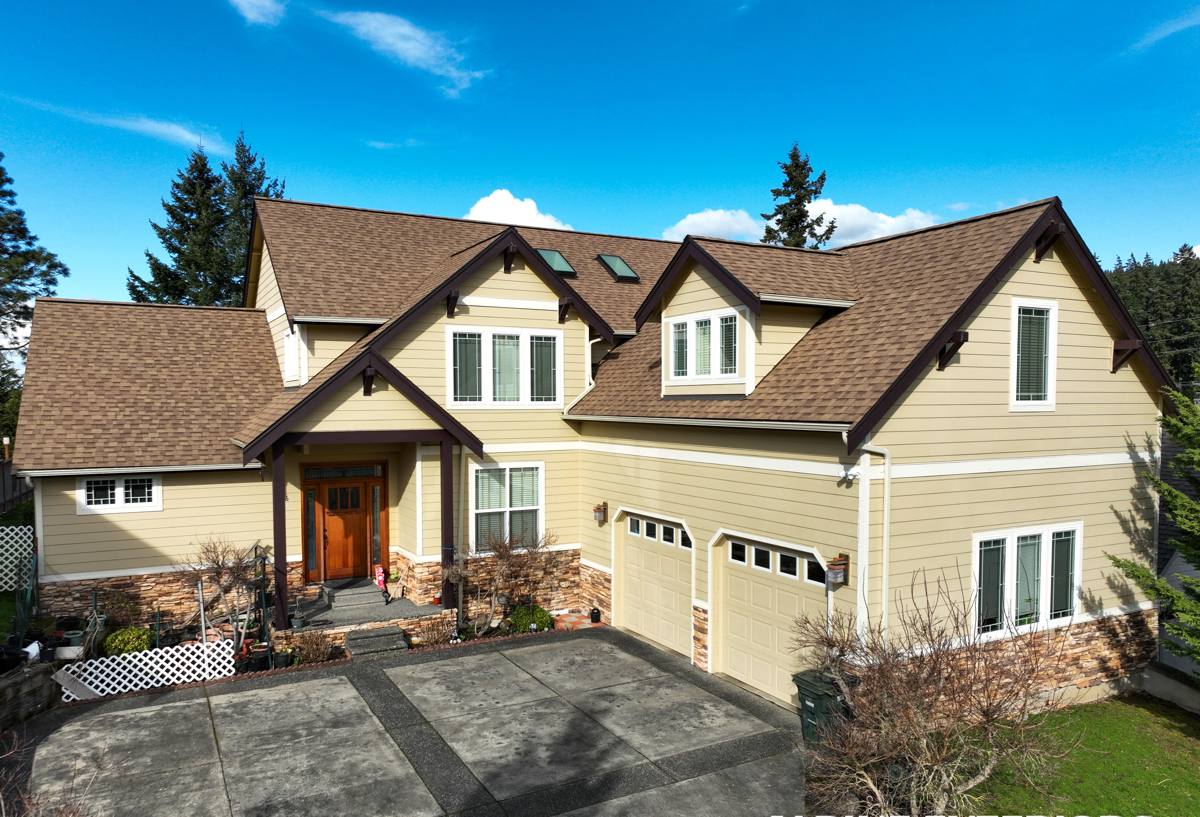
What Whatcom County Weather Actually Does to a Deck
Moss and Standing Moisture
Moss doesn't just look bad on a deck surface — it holds moisture directly against the wood or composite cap, which accelerates rot underneath and makes boards slick and dangerous underfoot. Decks with poor drainage, tight board spacing, or shade from nearby trees and structures are the worst offenders. In our experience, the decks that fail early in this area almost always have one thing in common: water that had nowhere to go.
Salt Air and Fastener Corrosion
Being close to Bellingham Bay means the air carries a fine salt content that most homeowners never think about until they see rust bleeding through their deck boards or streaking down a fascia. Standard interior-grade screws and nails corrode faster here than they would forty miles inland. Once a fastener starts to fail, it can compromise the structural connection long before the wood around it shows obvious damage.
Freeze-Thaw and Saturation Cycles
Whatcom County winters aren't brutally cold, but they're wet, and the freeze-thaw cycles we do get are hard on any wood or concrete that's been sitting saturated. Footings poured without proper drainage, or ledger boards that trap water against the house, are common points of failure that show up as soft spots, heaving, or separation a few years down the road.
Choosing the Right Decking Material for This Climate
There's no single "best" decking material for every home — the right choice depends on budget, how much upkeep you're willing to do, and how the deck is used. Here's how the common options actually perform in a wet, moss-prone climate like ours.
| Material | How It Handles Our Climate | Maintenance Reality |
|---|---|---|
| Cedar | Naturally rot- and insect-resistant, breathes well, ages to a silver-grey patina if left unsealed | Needs re-staining or sealing every 2-3 years to prevent graying, cracking, and moss uptake |
| Pressure-Treated Pine/Fir | Good structural performance for framing; surface boards are more prone to splitting and moss growth than cedar | Annual cleaning recommended; sealing every 1-2 years extends life significantly |
| Composite Decking | Resists rot and moss adhesion far better than wood; performance varies a lot by brand and core construction | Occasional washing; no staining or sealing, but drainage beneath boards still matters |
| PVC / Capped Polymer | Fully sealed surface handles standing moisture and moss the best of any option | Lowest upkeep; higher upfront cost |
We don't push one product line over another as a rule — we walk homeowners through the honest trade-offs. Composite and capped polymer boards cost more upfront but remove most of the moss and rot maintenance headaches that wood decks bring in this climate. Cedar and treated lumber cost less initially but only perform well if the homeowner keeps up with sealing on a real schedule, not "whenever I get around to it."
Framing and Structure: Where Deck Failures Actually Start
Most deck problems in this area don't start with the decking boards — they start underneath, where nobody looks until something gives. A correct deck build in Whatcom County's climate means paying close attention to:
Ledger Board Flashing
The ledger board — where the deck attaches to the house — is the single most common source of hidden rot on decks in wet climates. Proper flashing, a moisture barrier behind the ledger, and correct fastener spacing keep water from wicking into the house rim joist. This detail is invisible once the deck is finished, which is exactly why it's the one corner some builders cut.
Footings and Post Bases
Footings need to be set below frost depth and designed for our often-saturated soil, with post bases that keep wood posts off standing water rather than sitting directly on or in concrete. This single detail adds years to the life of the structure.
Joist Spacing and Fastener Grade
Joist spacing should match the decking material's actual span rating — composite and PVC boards often require tighter joist spacing than solid wood to avoid flexing or "trampolining." All structural fasteners and hangers should be rated for treated lumber and exterior/coastal exposure, not standard interior-grade hardware.
Permits, Setbacks, and Railing Code
Most new decks and significant deck rebuilds in Whatcom County require a permit, particularly once the deck exceeds a certain height above grade or is structurally attached to the house. Railing height, baluster spacing, and stair requirements are governed by the state building code, and inspectors do check these details on final sign-off. We handle the permit submission and coordinate inspections as part of the build so homeowners aren't left navigating that process alone, and so the finished deck is something you can sell or insure without a fight down the road.
Our Deck Building Process
- On-site assessment — we look at drainage, sun/shade exposure, soil condition, and how the deck ties into the existing structure before recommending anything.
- Design and material selection — sizing, layout, and an honest conversation about which decking material fits your budget and maintenance tolerance.
- Permitting — we prepare and submit what's required for your specific project and scope of work.
- Demolition or removal of the old deck, if applicable, with attention to what condition the ledger and framing are actually in underneath.
- Framing and flashing — footings, posts, ledger flashing, and joists built to span and exposure ratings appropriate for this climate.
- Decking, railing, and stairs — installed per manufacturer spec and local code.
- Final walkthrough and inspection — we confirm everything with you and coordinate any required building department sign-off.
Keeping a Cordata Deck in Good Shape Year After Year
A well-built deck still needs some seasonal attention in this climate — the goal is to make that upkeep light and predictable instead of a surprise repair bill.
- Sweep debris and standing leaves off the deck surface regularly through fall, especially between boards where moisture collects.
- Rinse or wash the surface at least once or twice a year to knock back early moss growth before it establishes.
- Check and re-seal wood decking on the schedule appropriate to the species — don't wait until it's visibly gray and cracked.
- Inspect fasteners and hardware annually for early rust or corrosion, particularly on railings and stair stringers.
- Keep gutters and downspouts near the deck clear so runoff isn't dumping directly onto or under the structure.
- Trim back overhanging vegetation that keeps the deck surface shaded and damp longer than necessary.
What Affects the Cost of a Cordata Deck Project
| Factor | Why It Moves the Price |
|---|---|
| Decking material | Wood is generally the lowest upfront cost; composite and PVC cost more but reduce long-term maintenance spending |
| Deck height and footing depth | Taller decks and deeper frost-depth footings mean more structural work and material |
| Railing style | Cable, glass, and custom railing systems cost more than standard wood or metal baluster railing |
| Demolition of existing deck | Removing and hauling away an old structure adds labor before the new build even starts |
| Access to the site | Tight side yards or elevated lots can slow material staging and increase labor time |
We give real numbers based on your actual property and material choice rather than a rough phone quote — a deck built to hold up to Whatcom County weather is worth pricing accurately from the start.
Why It Matters That We Already Work in Cordata
A contractor who's worked in Cordata and the surrounding Ferndale area already knows how the local soil drains, how much moss pressure a north-facing deck gets compared to one with more sun exposure, and which framing and flashing details actually hold up here versus what's written in a generic national spec sheet. That local knowledge shows up in fewer callbacks, fewer surprises during permitting, and a deck that's genuinely built for the conditions it has to survive — not just the conditions it was designed for on paper.
If you're planning a new deck or need to replace one that's showing its age, we're happy to take a look and put together a free, no-pressure estimate. There's no obligation — just an honest read on what your project actually needs.