 Ferndale
 Everson's Climate Is Harder on Siding Than It Looks
Everson sits inland along the Nooksack River, but it doesn't escape Whatcom County's marine climate. Homes here still take on months of driving rain, low winter sun that never quite dries out north-facing walls, and a moss season that can run from October through May in shaded yards and tree-lined lots. Add the salt-tinged air that moves up the county from the Strait of Georgia and Bellingham Bay, and you've got a slow, steady set of conditions working against whatever is on the outside of your house.
None of this is dramatic on its own. It's cumulative. A siding product that's rated fine for a dry climate can still fail early here — not because it's a bad product everywhere, but because it wasn't built for this much sustained moisture exposure. That's the lens we use on every Everson project: not "will this look good on install day," but "will this still be doing its job in fifteen years."
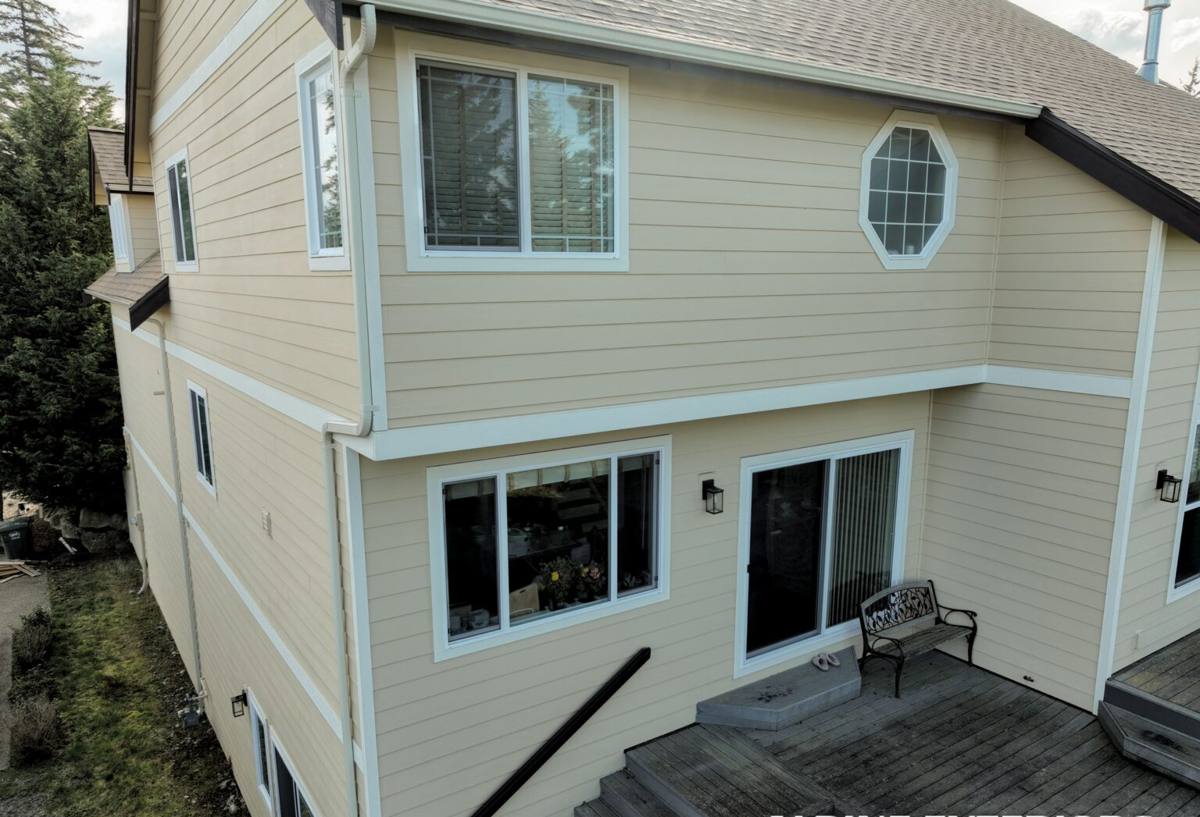
Signs an Everson Home Needs Siding Replacement, Not Just Repair
Some siding problems are cosmetic. Others are structural warnings. Knowing the difference saves homeowners from either overspending on a full tear-off they don't need yet, or patching over damage that's already reached the sheathing.
- Soft or spongy spots when you press on the siding, especially near the bottom courses and around windows
- Paint that keeps failing within a couple of years no matter how well it was applied
- Persistent moss or algae staining that comes back within a season of cleaning
- Visible gaps, warping, or cupping in individual boards or panels
- Cracking at butt joints or corners that keeps reopening after caulking
- Musty smell or discoloration on interior walls that share an exterior wall with damaged siding
- Siding that's original to a home built more than 20-25 years ago, especially with wood-based products
If you're seeing two or more of these, it's worth having someone look at the sheathing underneath, not just the surface. A siding replacement done right addresses what's happening behind the panels, not just what's visible from the street.
What a Correct Siding Replacement Actually Involves
It starts with what comes off, not what goes on
A quality replacement isn't just swapping old panels for new ones. The old siding comes off entirely so the crew can inspect the sheathing, framing, and any existing moisture barrier. In a climate that sees as much rain as Whatcom County, this step matters more than in drier regions — trapped moisture behind old siding is one of the most common causes of hidden rot, and you won't find it without pulling the wall open.
The water management layer does the real work
Siding is the visible layer, but the weather-resistive barrier and flashing details underneath are what actually keep water out of the wall assembly. This includes house wrap or building paper installed correctly (lapped the right direction, sealed at seams), proper flashing at every window, door, and roof intersection, and rainscreen or drainage gaps where the siding line calls for it. Skipping or rushing this layer is the single biggest reason siding jobs fail early — the siding itself can look perfect and the wall can still be rotting behind it.
Then the siding itself, installed to spec
Fastener type, fastener spacing, joint treatment, caulking at penetrations, and clearance from grade and roof lines all have to match the manufacturer's installation requirements — not just "close enough." Fiber cement in particular has specific nailing and gapping requirements that, if ignored, void the warranty and shorten the product's real-world life regardless of how good the material is.
Why We Only Install James Hardie Fiber Cement
We get asked why we don't offer vinyl, LP SmartSide, or other fiber cement brands like Allura or Cemplank. It's a fair question, and the honest answer is that we chose to standardize on one product system because we've seen what holds up in this climate and what doesn't over time.
Vinyl siding is affordable and low-maintenance in the sense that it doesn't need painting, but it expands and contracts more than fiber cement, can crack in impact or cold, and isn't fire-resistant. Engineered wood products like LP SmartSide are wood-based at the core, which means their long-term performance depends heavily on the wood's exposure to moisture — a real concern in a county that sees this much sustained rain. Other fiber cement brands may be reasonable products, but we don't have the same volume of long-term installation experience with them in this specific climate that we have with Hardie.
James Hardie's HZ5 product line is engineered specifically for climates like ours — colder, wetter regions where moisture cycling and freeze-thaw matter. It's non-combustible fiber cement, which matters for wildfire-adjacent insurance considerations even in a wet climate, and the ColorPlus factory finish is baked on under controlled conditions rather than field-painted, which gives it better fade and moisture resistance than a job-site paint job. The warranty is also transferable to a new owner, which matters if you ever sell.
Comparing Siding Materials for a Whatcom County Home
| Material | Moisture Behavior in Wet Climates | Maintenance | Typical Lifespan |
|---|---|---|---|
| Vinyl | Doesn't absorb water, but seams and panels can allow water intrusion behind the wall if installed loosely | Low, but can crack or fade and isn't repairable in sections | 20-30 years, variable |
| Engineered wood (LP SmartSide) | Wood-based core; performance depends on edge sealing and ongoing maintenance in high-moisture areas | Moderate — edges and cut ends need attention | 25-30 years with diligent upkeep |
| Primed spruce/cedar | Natural wood movement and moisture absorption; needs a sound paint film maintained continuously | High — repainting cycles, caulking, rot checks | Highly variable, often 15-25 years |
| James Hardie fiber cement | Dimensionally stable, doesn't swell or rot from moisture exposure | Low — occasional wash, no repainting for years with ColorPlus | 30+ years with correct installation |
Our Process for an Everson Siding Replacement
- On-site assessment: We walk the exterior, check for soft spots, and talk through what we're seeing before any numbers get discussed.
- Written estimate: Clear scope, product line, color, and what's included — no vague allowances.
- Tear-off and inspection: Old siding comes off, sheathing gets inspected, and any rot or damage gets flagged and discussed before we cover it back up.
- Water management install: Weather barrier, flashing, and drainage details go in first and get done right, since this is the layer nobody sees again.
- Hardie installation: Installed to manufacturer spec — proper fastening, gapping, and joint treatment — by a crew trained on the product.
- Final walkthrough: We go around the house with you before calling the job finished.
What Siding Replacement Typically Costs in This Area
Every home is different, but the main cost drivers are consistent. This isn't a quote — it's a way to understand what you're paying for when estimates come in.
| Cost Factor | Why It Moves the Price |
|---|---|
| Square footage and wall complexity | More corners, dormers, and cutouts mean more labor and material waste |
| Sheathing/rot repair needed | Damage found during tear-off adds material and labor that couldn't be priced sight-unseen |
| Siding profile and trim package | Lap width, board-and-batten accents, and trim detail all affect material and labor time |
| Color and finish | Factory ColorPlus finishes cost more upfront than field paint but eliminate a repaint cycle |
| Access and site conditions | Steep grades, tight lot lines, or multi-story walls affect staging and labor time |
Why It Matters to Hire a Crew That Already Works This Area
Installation quality is the biggest variable in how long any siding job lasts — more than the brand, and more than the price. A crew that regularly works in and around Ferndale and Everson has already seen how Whatcom County's rain and moss season expose weak flashing details, poor drainage planning, and rushed water barrier work. That experience shows up in the details: how flashing is lapped at a window, how much gap is left at a horizontal joint, where a rainscreen matters and where it doesn't.
It also means someone is nearby if a question comes up after the job is done — not a crew that installed once in the area and moved on. For a product like James Hardie, correct installation is what makes the difference between a wall that performs for thirty years and one that runs into problems in ten, regardless of how good the material itself is.
If your Everson home is due for new siding, or you're just not sure whether what you have needs repair or full replacement, we're happy to take a look. The estimate is free, there's no pressure, and you'll get a straight answer about what your home actually needs.