 Ferndale
 Lummi Island Homes Face Some of Whatcom County's Toughest Siding Conditions
Lummi Island sits out in the salt water of Whatcom County, and that location shapes everything about how siding ages there. Homes on the island get more direct exposure to salt-laden air than most inland Ferndale properties, more sustained wind-driven rain off the water, and a longer moss and mildew season thanks to the shade, humidity, and tree cover that come with island living. None of that means island homes need different siding in theory — it means the siding they already have takes a harder beating, fails in more predictable places, and needs repair work that actually accounts for why it failed instead of just covering the damage back up.
We do siding repair work across Ferndale and the surrounding Whatcom County shoreline, and Lummi Island jobs get treated differently from day one — not because the techniques change, but because the diagnosis has to be sharper. A crack that would be purely cosmetic on a sheltered inland wall can be a moisture entry point on an island wall that's catching salt spray and driving rain six months out of the year.
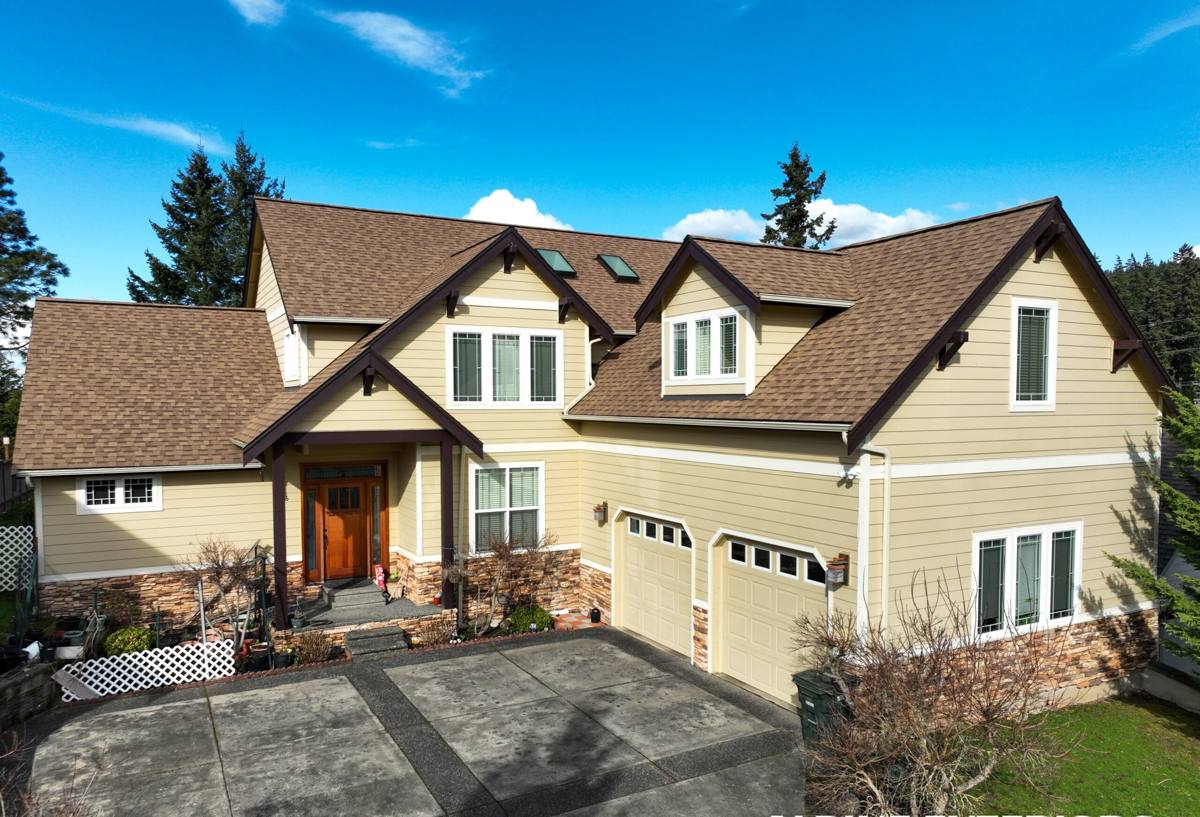
Common Siding Repair Problems We See on Lummi Island
Every material fails a little differently, but the patterns we see on island homes tend to repeat:
- Butt joint and seam failure. Wherever two pieces of siding meet, caulk and sealant break down faster under constant moisture and salt exposure. Once a seam opens, water gets behind the siding.
- Fastener corrosion. Nails and screws that aren't rated for coastal exposure can rust, streak the siding, and eventually lose their grip — leaving panels loose or hanging.
- Moss and mildew staining. Shaded, damp walls hold moisture longer, and organic growth isn't just cosmetic — it holds water against the surface and accelerates whatever's underneath it.
- Wind-driven rain intrusion. Storms coming off the water push rain sideways into gaps, trim joints, and anywhere flashing was installed short. This shows up later as soft spots, bubbling paint, or interior staining, not obvious exterior damage.
- Cracked or split panels. Impact damage, freeze-thaw cycling, or simple material fatigue can crack panels, especially at corners and around openings.
- Rot at the bottom courses. Splash-back from grade, gutters that overflow in heavy storms, and prolonged dampness at the base of the wall are common failure points on any coastal property.
The common thread is moisture. On Lummi Island, the question behind almost every repair call isn't just "what's broken" — it's "how did water get in, and is it still getting in."
What a Correct Siding Repair Actually Involves
A repair that only addresses what's visible from the ground is a repair that gets called back out in a year or two. Doing it right means treating every repair as a small investigation:
Diagnose before you patch
We pull damaged siding rather than caulking over it whenever there's any sign of moisture behind the surface. That means checking the house wrap or building paper, looking for soft or discolored sheathing, and confirming flashing at windows, doors, and penetrations is doing its job. Patching a crack without checking what's behind it just hides a problem that keeps working.
Match the material and the method
Repairs need to match not just color and profile, but how the original siding was installed — nailing pattern, gap spacing, flashing details. A patch that's installed differently than the surrounding wall often fails first, because it's the weak point in an otherwise consistent system.
Fix the cause, not just the symptom
If rot showed up because a gutter's been dumping water onto a wall for years, or because grade slopes toward the foundation, replacing the damaged siding without addressing that cause means paying for the same repair again. We flag those issues when we see them, even when they're outside the original scope of the job.
Use fasteners and materials rated for the exposure
Coastal and near-coastal work calls for corrosion-resistant fasteners and sealants rated for sustained moisture exposure — not whatever happens to be in the truck. This is a small cost difference that matters a lot over a ten-year horizon.
Repair or Replace? How We Help You Decide
Not every damaged wall needs a full re-side, and not every repair is worth doing. We walk every homeowner through the same honest framework:
| Factor | Repair Usually Makes Sense | Replacement Usually Makes Sense |
|---|---|---|
| Extent of damage | Isolated panels, corners, or seams | Damage spread across multiple walls or elevations |
| Material condition overall | Rest of the siding is sound and well-adhered | Siding is brittle, delaminating, or failing broadly |
| Moisture behind the wall | Localized, source identified and fixable | Widespread sheathing or framing damage found |
| Age of existing siding | Well within expected service life | Near or past the material's realistic lifespan |
| Color and profile match | Close match available or repair area is unobtrusive | Discontinued color/profile makes patching visually obvious |
We won't push a full replacement when a targeted repair will genuinely hold up — but we also won't quietly patch a wall we know is going to keep failing. If a repair visit turns into a conversation about replacement, it's because the wall told us that, not because it's the bigger job.
Getting the Job Done on an Island Job Site
Working on Lummi Island means planning around a ferry crossing to get crews, materials, and equipment on and off the island — that's simply part of the logistics of any project out there, siding or otherwise. It affects scheduling more than it affects the work itself: we plan trips to batch tasks efficiently, confirm material lists before we load up so we're not making a second crossing mid-job, and build in a little more buffer around weather, since a storm that would just mean a wet afternoon on the mainland can affect ferry service too. Homeowners who've had island contractors underestimate this before know the frustration of a job that stalls out because nobody planned for the crossing. We plan for it up front.
Our Lummi Island Repair Process
- Assessment. We look at the damaged area and the surrounding siding, check for signs of moisture intrusion, and identify the likely cause — not just the visible symptom.
- Honest scope and estimate. We tell you what we found, what we recommend, and why — including if we think the smart move is smaller (or bigger) than what was originally called in.
- Material and crossing plan. We confirm materials, fasteners, and sealants rated for coastal exposure, and plan the ferry logistics so the job runs on the schedule we quote.
- Repair. Damaged material comes out, the substrate gets checked and addressed if needed, and the repair goes in matched to the existing siding's material, profile, and installation method.
- Root cause check. If drainage, flashing, or grading contributed to the damage, we flag it — even if fixing it is a separate, smaller job.
- Walkthrough. We show you what was done and what to watch for, so you know what a healthy wall looks like going forward.
Keeping Repaired Siding From Failing Again
A good repair buys you years, but a little seasonal attention buys you more. This is the same checklist we'd give any Lummi Island homeowner, repair job or not:
- Walk the exterior after major storms and look for loose, cracked, or missing pieces
- Check caulking at seams, corners, and trim once a year — it's usually the first thing to give out
- Keep gutters clear so overflow isn't running down or splashing back onto walls
- Trim back vegetation and branches that keep a wall shaded and damp
- Rinse off moss and mildew buildup before it has a chance to hold moisture against the surface
- Watch for soft spots, bubbling paint, or discoloration — early signs of moisture behind the siding
- Address small issues promptly; a small repair now is almost always cheaper than what it becomes in two more wet seasons
Why We Only Install James Hardie When Replacement Is the Right Call
We repair whatever siding is already on a home — that's not a Hardie-only service. But when a repair conversation turns into a replacement conversation, whether it's one wall or the whole house, we install James Hardie fiber cement and nothing else. That's a standard we hold across every job we do, and it's especially relevant on a property that's already shown us how tough the salt air, driving rain, and long moss season out here really are on siding materials.
James Hardie's fiber cement is non-combustible, doesn't absorb moisture the way wood-based products can, and comes with a factory-applied ColorPlus finish that's built to hold color and resist the fading and streaking that coastal exposure causes faster than it should. The HZ5 product line in particular is engineered for the freeze-thaw and moisture cycling common to this climate. We've chosen not to install vinyl, LP SmartSide, or primed wood siding, because on repeat coastal repair calls, those are the products we see coming back with moisture and maintenance issues fastest. That's our professional standard, not a knock on every homeowner who has one of those products — we'll still repair what you have. It's just what we put on a home ourselves when the decision is up to us.
Why Hiring a Crew That Already Works Lummi Island Matters
Island jobs punish guesswork. A contractor who's never worked out there will underestimate the scheduling, may not think twice about fastener corrosion resistance, and won't necessarily know what a wall exposed to that much salt air and driving rain actually looks like when it's failing versus when it's just weathered. Working Lummi Island regularly means we already know what to check for, how to plan the crossing so the job doesn't stall, and what "correct" looks like on a wall built for this specific exposure — not a generic inland repair job.
If you've got damaged, aging, or failing siding on Lummi Island, we're glad to take a look and give you a straight answer about whether it's a repair, a partial replacement, or something bigger — no pressure either way. Reach out for a free estimate using the form below.