 Ferndale
 Building a Deck That Actually Holds Up in Nooksack
Nooksack sits close enough to Bellingham Bay and the Georgia Strait that salt-laden air reaches homes here year-round, and it sits far enough inland to catch the long, wet stretches of Whatcom County winter and shoulder-season rain. That combination is hard on outdoor structures. A deck built the way it might be built in a drier inland climate will show problems here within a few years — soft spots, corroded fasteners, slick green surfaces, and rot at the points where wood meets wood or wood meets ground. A deck built correctly for this specific area can go decades before it needs more than routine upkeep. The difference isn't the design on paper; it's the material choices, the fastener hardware, the drainage detailing, and the framing decisions made before a single board goes down.
This page covers what we've learned building and repairing decks for homes in and around Nooksack and greater Ferndale — what the climate actually does to a deck over time, what a correct build involves, and what our process looks like from first visit to final walkthrough.
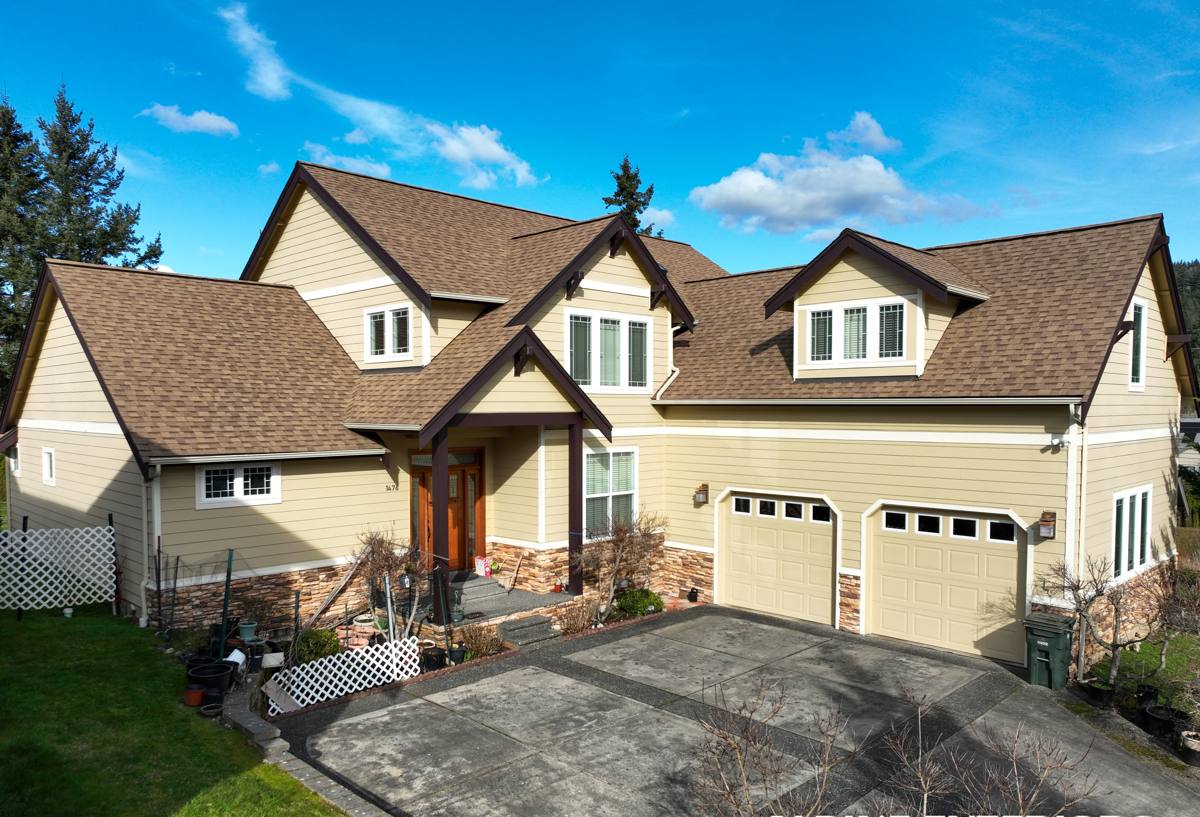
What Salt Air, Driving Rain, and Moss Season Do to a Deck
Salt Air and Corrosion
Even a few miles from the water, airborne salt accelerates corrosion on any metal component that isn't rated for it. On decks, that means fasteners, joist hangers, post bases, and railing hardware. Standard electro-galvanized screws and hangers can start rusting within a couple of seasons in this environment, and once a fastener corrodes it weakens the connection long before the wood around it shows any visible damage. That's a structural issue as much as a cosmetic one.
Driving Rain
Whatcom County rain doesn't always fall straight down — wind-driven rain gets pushed sideways into ledger boards, under railing caps, and into any gap where flashing was skipped or done poorly. Water that gets behind a ledger board or into an unsealed post base doesn't dry out quickly in our climate; it sits, and that's where rot starts from the inside out, often invisible until a board fails.
Moss Season
Nooksack's moss and algae season runs long — realistically most of the year on any deck surface that doesn't get direct sun and airflow. Moss holds moisture against decking boards, breaks down wood fiber over time, and turns walking surfaces genuinely slippery. Composite and wood decking both grow moss under the right conditions; the difference is how much it damages the material underneath and how hard it is to remove without also damaging the surface.
What a Correctly Built Deck Involves Here
A deck that's going to perform in this climate needs a handful of details done right, none of which are visible once the project is finished:
- Ledger board flashing that actually sheds water away from the house rim joist, not just a bead of caulk behind the board
- Stainless steel or high-grade coated fasteners and structural hardware, sized for coastal/marine-adjacent exposure rather than standard interior-grade hardware
- Joist tape or flashing membrane on the tops of framing lumber so fasteners don't sit in standing water
- Post bases that hold posts above grade and away from standing moisture, rather than posts set directly into or against wet soil
- Proper board spacing and airflow beneath the deck so surfaces can actually dry between rain events instead of staying damp
- A slight, consistent slope away from the house for drainage, planned into the framing rather than corrected after the fact
None of these add much to a project's cost relative to the whole job, but skipping any one of them is exactly how a deck that looks fine at handoff starts failing in year three or four.
Choosing a Decking Material for This Climate
There's no single "right" material for every home — budget, look, and how the deck is used all factor in. But in a climate with this much moisture and moss pressure, some materials require more diligence than others to stay ahead of the problems above.
| Material | Moss/Moisture Behavior | Maintenance Needed | Realistic Lifespan Here |
|---|---|---|---|
| Pressure-treated wood | Absorbs moisture readily; moss and algae take hold quickly without regular cleaning | Annual cleaning, periodic sealing/staining | 10–15 years with upkeep, less without it |
| Cedar | Naturally more rot-resistant than PT lumber but still surface-vulnerable to moss over time | Regular cleaning, sealing every couple of years | 15–20 years with consistent care |
| Composite decking | Doesn't absorb moisture into the board core, but surface texture can still hold moss film if not cleaned | Occasional washing; no sealing or staining | 25+ years, manufacturer-warrantied |
| Capped/PVC decking | Fully sealed surface, most resistant to moisture intrusion and staining | Lowest maintenance of the group | 25+ years, manufacturer-warrantied |
We install all of the above depending on what a homeowner wants, but for Nooksack projects we generally steer people toward composite or capped decking when budget allows, simply because the maintenance burden of wood in a near-constant-moisture environment is real — it's not a one-time seal-and-forget job, it's an ongoing commitment that a lot of homeowners underestimate when they're comparing sticker prices.
Railings and Hardware
Whatever decking material is chosen, the railing posts, brackets, and fasteners matter just as much for longevity. We spec corrosion-resistant hardware as standard on Nooksack-area builds rather than treating it as an upgrade, because replacing a rusted-through post bracket means tearing into finished decking to fix it — far more disruptive than paying a modest difference for the right hardware up front.
Drainage and Airflow: The Details That Prevent Moss Buildup
Moss doesn't grow because a material is "bad" — it grows wherever moisture sits still. The single biggest factor in how much moss trouble a deck gives you over its life is airflow underneath and around it. Decks built low to the ground, tight against foundation walls, or in heavily shaded yards need extra attention to gapping and substructure ventilation, or they'll stay damp long after a rain event ends elsewhere in the yard. Where a design allows it, we build in enough clearance and gapping to let the underside breathe. Where the site doesn't allow much clearance — a common situation on sloped or tight Nooksack lots — we compensate with material choice and drainage detailing rather than hoping for the best.
Our Process for a Nooksack Deck Project
- Site visit and assessment — we look at sun exposure, drainage patterns, soil conditions, and how the deck ties into the house before any design talk starts
- Design and material selection — layout, decking and railing material, and hardware spec based on the site and your budget
- Permitting — most decks in Whatcom County above a certain height or attached to the structure require a permit; we handle that paperwork rather than leaving it to the homeowner
- Framing and flashing — the structural work that determines whether the deck lasts, done to the details above
- Decking, railing, and finish work — the visible layer, installed to manufacturer spec so warranties stay valid
- Final walkthrough — we go over the finished deck and what upkeep, if any, it needs going forward
Permits and Local Requirements
Whatcom County generally requires a permit for decks above a certain height off grade or that attach structurally to the home, and elevated decks often need engineered footings depending on soil and span. Requirements shift depending on exact location and lot, so we confirm what applies to your specific property rather than assuming — this is one of the areas where having a crew familiar with local jurisdiction actually saves time, because we're not learning the process for the first time on your project.
Living With a Deck Through Moss Season
Even a well-built deck benefits from some routine care in a climate like this. A short seasonal checklist goes a long way:
- Sweep debris and standing leaves off the deck surface regularly, especially in fall
- Rinse or gently wash the surface a couple of times a year to keep moss and algae from establishing
- Check railing posts and hardware annually for early rust staining, which shows up before structural weakening does
- Keep gutters and downspouts near the deck clear so runoff isn't dumping extra water onto or under it
- Trim back vegetation that's shading the deck and keeping it from drying out between rains
None of this is heavy work, but skipping it for a few years in a row is usually what turns a minor moss problem into a slippery, deteriorating surface.
Why It Matters That We Already Work in Nooksack
A lot of deck problems we get called to fix started with a crew that built a perfectly reasonable deck for a drier or milder climate and installed it here without adjusting for it. Fastener grade, flashing detail, and drainage planning aren't things you can tell are wrong by looking at a finished deck — they show up as failures two, three, or five years later. Working regularly in Nooksack and the surrounding Ferndale area means we're not guessing at how this specific stretch of Whatcom County treats outdoor structures; we're building to what we've actually seen hold up and what we've seen fail.
If you're planning a new deck or trying to figure out whether an existing one is aging the way it should, we're happy to take a look. Reach out for a free, no-pressure estimate using the form below.