 Ferndale
 Siding in Nooksack Has to Work Harder Than Siding Almost Anywhere Else
Nooksack sits in a stretch of Whatcom County that gets hit from more than one direction. You've got the marine air pushing in off the Salish Sea carrying salt that settles on every exterior surface in the region, rain that doesn't just fall but drives sideways during winter storms, and a wet season that stretches long enough for moss and algae to get a real foothold on anything that stays damp. None of these are dramatic, one-time events. They're a slow, constant load on a home's exterior that either gets managed correctly or turns into rot, staining, and premature siding failure within a decade.
Siding installation here isn't just a cosmetic upgrade. It's the first line of defense between that climate and your framing, sheathing, and insulation. A siding job that would hold up fine in a drier inland climate can fail in a few years in Nooksack if it isn't detailed for this specific set of conditions. That's the lens we use on every project in this area.
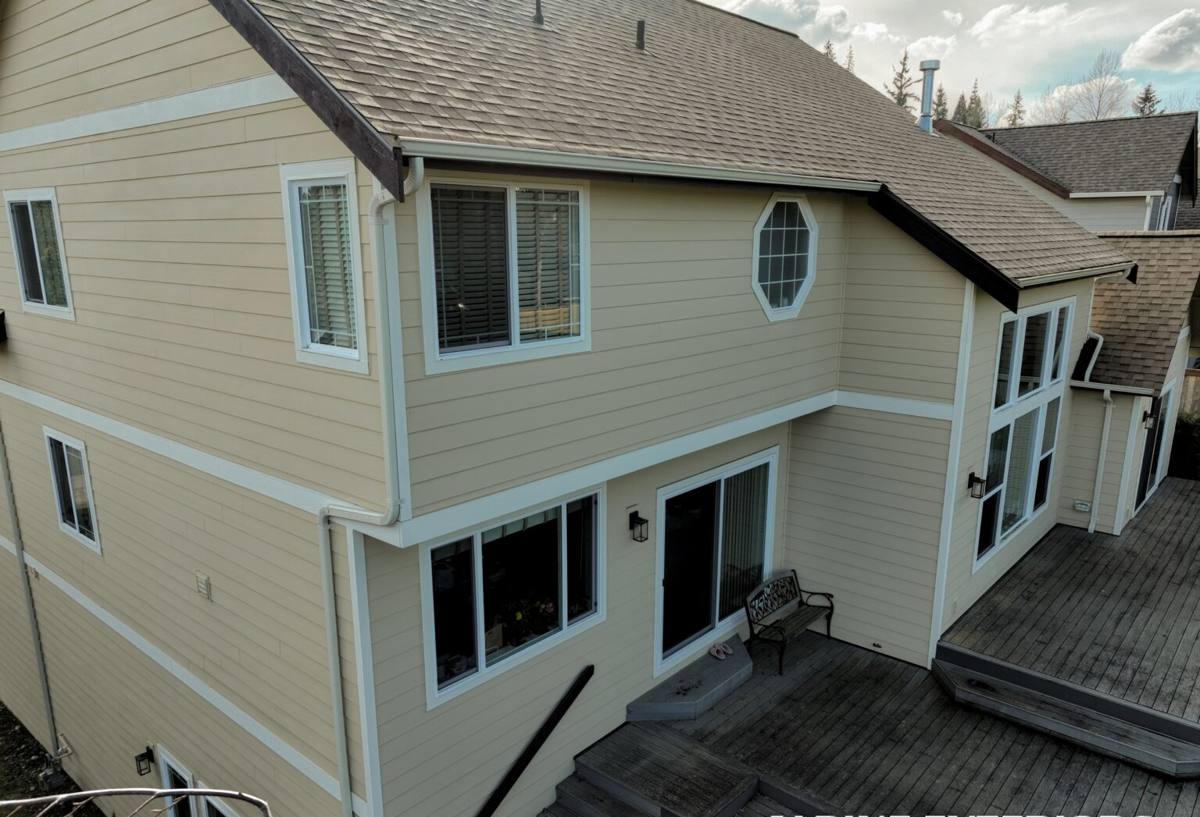
What Nooksack's Climate Actually Does to a Home's Exterior
Salt Air and Moisture Cycling
Even well inland from the coastline, homes in this part of Whatcom County pick up airborne salt and moisture that cycles through wet and dry conditions constantly. That cycling is hard on paint finishes, fasteners, and any siding material that isn't dimensionally stable. Materials that swell and shrink with moisture content — like some wood-based products — loosen fasteners and open up seams over time.
Driving Rain
Wind-driven rain doesn't behave like a gentle vertical rainfall. It gets pushed up under laps, into seams, and behind poorly flashed penetrations. A siding system that only manages water moving straight down will eventually let moisture in around windows, at butt joints, and at inside corners.
Long Moss and Algae Season
Whatcom County's wet season runs long, and shaded, north-facing walls in Nooksack often stay damp for weeks at a stretch. That's exactly the environment moss, algae, and mildew need to establish themselves on a siding surface. Some materials resist this better than others, and the finish matters as much as the substrate.
What a Correct Siding Installation Involves Here
A siding job is really a water-management system with a finished surface on top. Getting it right in Nooksack means paying close attention to details that are easy to skip and impossible to see once the job is buttoned up.
- A continuous water-resistive barrier installed shingle-style so every layer drains outward, not inward
- Properly lapped and sealed house wrap at every seam, corner, and penetration
- Correct flashing at windows, doors, and any roof-to-wall intersections, integrated with the WRB rather than just caulked over it
- A rain screen or drainage gap where conditions call for it, so bulk water and vapor have somewhere to go besides into the wall
- Fastener placement and spacing that matches the manufacturer's specification exactly — not "close enough"
- Field-cut edges primed or sealed so the substrate isn't left exposed to moisture
- Caulking used only where it's meant to be a secondary defense, never as a substitute for proper flashing
Skip any one of these and the siding might look fine for a year or two before problems start showing up as staining, soft spots, or paint failure — usually right around the time it's expensive to fix.
Why We Install Only James Hardie Fiber Cement
We made a decision to install one siding system, and we install it correctly every time rather than juggling installation methods across half a dozen different products. James Hardie fiber cement is engineered specifically for this kind of climate:
- Non-combustible — a real advantage during Whatcom County's dry summer stretches when wildfire smoke and regional fire risk are a concern
- Dimensionally stable — it doesn't swell, shrink, or warp the way wood-based siding can with constant moisture cycling
- HZ5 engineered product line — Hardie makes climate-specific formulations, and the HZ5 line is built for the freeze-thaw and moisture demands of the Pacific Northwest
- ColorPlus factory finish — a baked-on finish that holds up to UV and moisture far better than field-applied paint, which matters when your siding is fighting salt air and long wet seasons every year
- Strong transferable warranty — backed by the manufacturer, not just by us
We don't install LP SmartSide, vinyl, Cemplank, Allura, primed spruce, or cedar, and we're upfront about why. Each of those products has real strengths — vinyl is inexpensive and low-maintenance in mild climates, cedar has a look a lot of homeowners love, engineered wood has come a long way. But in a climate that combines salt air, driving rain, and long wet seasons, we've seen the trade-offs that come with those materials: wood-based products are more sensitive to moisture intrusion at cut edges and seams, vinyl can warp and fade under UV and temperature swings and offers less impact resistance, and warranty structures vary a lot in what they actually cover in a marine climate. We'd rather install one product well than install several products with compromises we'd have to explain later.
Comparing Siding Options for a Nooksack Climate
| Factor | James Hardie Fiber Cement | Vinyl | Engineered Wood (LP-type) | Cedar |
|---|---|---|---|---|
| Moisture resistance | Excellent — cement-based, not organic | Good, but seams can trap moisture | Moderate — sensitive at cut edges | Requires ongoing sealing/staining |
| Fire resistance | Non-combustible | Melts/deforms under heat | Combustible | Combustible |
| Finish longevity | Factory-baked ColorPlus, long-lasting | Color molded in but fades over time | Field-painted, needs repainting | Needs repainting/staining every few years |
| Salt air / coastal performance | Strong — designed for it in HZ5 line | Fair — can chalk and fade faster | Fair — moisture is the weak point | Weak without diligent maintenance |
| Typical lifespan when installed to spec | Decades, long warranty backing | 15–25 years | 15–25 years, moisture-dependent | 15–20 years with heavy upkeep |
Our Installation Process for Nooksack Homes
1. On-Site Assessment
We look at wall orientation, moisture exposure, existing sheathing condition, and any trouble spots — north-facing walls, areas near ground contact, spots that have historically held moss or shown staining.
2. Tear-Off and Sheathing Check
Old siding comes off and we inspect the sheathing underneath. This is where hidden moisture damage from a prior installation often shows up, and it needs to be addressed before anything new goes back on.
3. Water-Resistive Barrier and Flashing
We install the WRB and integrate flashing at every window, door, and penetration before a single piece of siding goes up. This step is invisible once the job is done, which is exactly why it can't be rushed.
4. Hardie Installation to Manufacturer Spec
Fastener spacing, joint treatment, and clearances (grade, roofline, deck) are all installed to James Hardie's published specifications — not general contractor habit. That's what keeps the manufacturer's warranty intact.
5. Final Detailing
Caulking at appropriate joints, touch-up on any field-cut edges, and a final walkthrough so you know exactly what was done and why.
Signs a Nooksack Home Needs New Siding
- Persistent moss or algae growth that comes back within a season of cleaning
- Soft spots or visible warping, especially on north-facing or shaded walls
- Paint that's peeling or bubbling rather than just fading evenly
- Staining or dark streaking near seams, corners, or under windows
- Visible gaps or separation at butt joints and trim
- A noticeable draft or higher energy bills that point to a compromised building envelope
Why Hiring a Crew That Already Works in Nooksack Matters
Siding details that work in a dry inland climate aren't automatically right for Whatcom County. A crew that already installs in this area knows which walls need extra attention to flashing, understands how far wind-driven rain can travel up a wall during a winter storm, and has already worked through the moss and algae patterns that show up here every wet season. That familiarity shows up in the small decisions — where a rain screen gets prioritized, how a corner gets detailed, how much clearance is left at grade — long before it shows up as a problem five years down the road.
Maintenance After Installation
Correctly installed James Hardie siding is low-maintenance, not no-maintenance. In this climate we recommend an occasional rinse to keep salt residue and organic growth from building up, a yearly walk-around to check caulking at trim and penetrations, and prompt attention to any landscaping that's grown up against the siding and is holding moisture against it. That's a fraction of the upkeep wood-based siding demands, but it's still worth doing.
If your Nooksack home's siding is showing its age or you're planning ahead for a replacement, we're happy to take a look and give you a straightforward, no-pressure estimate — just fill out the form below.