 Ferndale
 Why Point Roberts Decks Wear Out Faster Than You'd Expect
Point Roberts sits out on its own peninsula, exposed to marine air on nearly every side. That exposure is part of what makes the area beautiful, and it's also exactly what breaks decks down faster than homes just a few miles inland. Salt-laden air corrodes metal fasteners and hardware, driving rain off the water finds every seam and gap in aging deck boards, and the long, damp moss season here in northwest Washington keeps wood surfaces wet for weeks at a stretch. None of that is dramatic on its own — it's just steady, cumulative wear. But add it up over a few Whatcom County winters and you get soft boards, rusted-out fasteners, and ledger connections that need a real look before they become a real problem.
We're a Ferndale-based crew, and we've done deck repair work out at Point Roberts long enough to know it's not the same job as a repair in a dry, sheltered backyard closer to town. The fixes are the same trade, but the failure patterns, the materials that hold up, and the timing of the work are different. This page is about that specific job — deck repair for Point Roberts homes — not a generic rundown of deck maintenance.
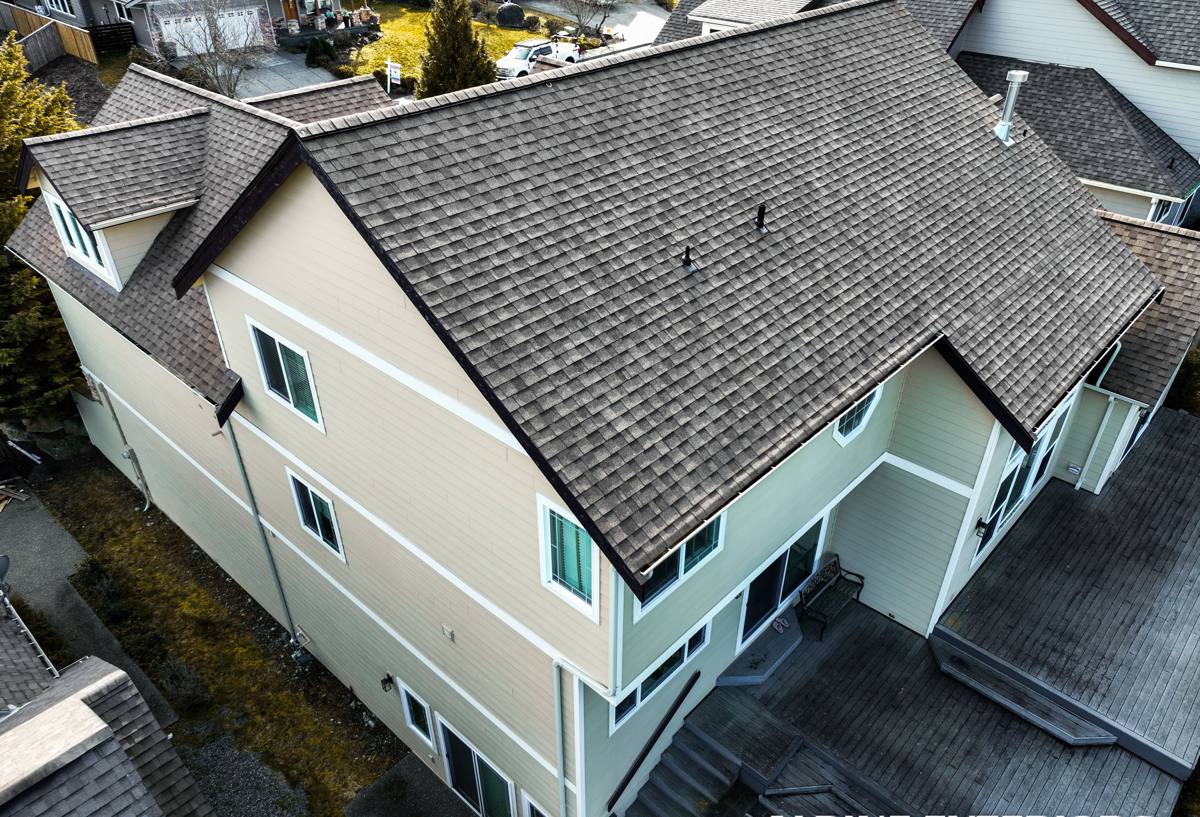
What's Actually Failing on a Point Roberts Deck
The usual suspects
When we get called out for a deck repair in this area, the damage almost always falls into one of a handful of categories:
- Rusted or corroding fasteners — screws, nails, and joist hangers that were fine a few years ago but are now bleeding rust streaks or losing their grip
- Soft or spongy decking boards, usually where water pools or where debris and moss have held moisture against the wood
- Ledger board separation — the point where the deck attaches to the house, which takes the brunt of wind-driven rain and is the single most important connection to get right
- Railing post rot at the base, where end grain sits closest to standing water or wet soil
- Moss and algae buildup on horizontal surfaces, which isn't just cosmetic — it holds moisture against the wood and accelerates everything above
Cosmetic wear vs. structural concern
Not every gray board or moss patch means trouble. Weathered, silvery wood that's still solid when you press a screwdriver into it is a cosmetic issue — cleaning, brightening, and sealing usually solves it. The concern is when a board flexes underfoot, when you can push a screwdriver into the wood more than a quarter inch or so without much resistance, or when you see daylight or rust staining around a ledger connection. That's a structural conversation, and it's worth having before it turns into a safety issue rather than after.
Materials and Fasteners That Actually Hold Up Here
A repair is only as good as what goes into it. In a salt-air, high-moisture environment, the fastener matters as much as the board.
| Component | What works in this climate | What to avoid |
|---|---|---|
| Fasteners | Stainless steel or high-grade coated exterior screws rated for coastal/marine use | Standard galvanized screws — they can corrode and streak within a few seasons out here |
| Structural hardware | Corrosion-resistant joist hangers and connectors matched to the fastener type | Mixing metals (e.g., mismatched hanger and screw coatings), which accelerates corrosion |
| Decking boards | Pressure-treated lumber, cedar, or composite — each has trade-offs, but all need proper drainage below | Reusing warped or already-soft boards just to save a few dollars on the repair |
| Sealant/finish | A quality exterior sealant or stain reapplied on a real schedule, not "when I remember" | One-time sealing and forgetting about it — this climate breaks that promise down fast |
We don't push composite decking on every job. It has real upsides — no staining or sealing, strong moisture resistance — but it's a bigger investment and not always the right call for a partial repair on an otherwise sound wood deck. We'll tell you honestly which direction fits your situation and your budget, not just what pays us more.
How We Approach a Point Roberts Repair
1. On-site assessment
We walk the whole deck, not just the spot you called about. Probe boards for softness, check the ledger connection, look under the deck if access allows, and check railing posts at the base. A lot of the damage that matters is easier to feel with a screwdriver than to see with your eyes.
2. Honest scope of work
You get a written explanation of what's failing, what's still sound, and what your realistic options are — spot repair, section replacement, or (in rare cases) a recommendation to rebuild if the structure underneath is compromised. We're not going to sell you a full rebuild for a problem that's actually three boards and a handful of fasteners.
3. The repair itself
Depending on scope, that typically means removing and replacing failed boards, sistering or replacing compromised joists, re-securing or rebuilding the ledger connection where needed, swapping corroded hardware for marine-grade fasteners, and addressing the drainage or airflow issue that let the damage happen in the first place. Fixing the symptom without fixing the cause just means we're back in two years.
4. Cleanup and finish
Once structural work is done, we address the surface — cleaning off moss and algae, sanding as needed, and sealing or staining so the repaired sections hold up alongside the rest of the deck.
Repair or Replace? How That Decision Actually Gets Made
This is the question every homeowner asks, and the honest answer is "it depends on what's underneath," not on the age of the deck alone.
| Factor | Leans toward repair | Leans toward replacement |
|---|---|---|
| Framing condition | Joists and ledger are solid; damage is isolated to boards or railings | Multiple joists soft or the ledger connection has failed |
| Extent of damage | Under roughly 20-25% of decking affected | Damage is spread across most of the surface |
| Age and material | Newer deck, quality lumber, isolated failure | Original construction is old and undersized fasteners were used throughout |
| Budget timing | You want to extend the deck's life a few more years affordably | You're already planning to upgrade materials or footprint |
Most of what we see at Point Roberts falls into the repair category — targeted fixes to the boards, hardware, and connections that took the worst of the weather, while the framing underneath is still sound. Full replacement is the exception, not the default, and we'll say so plainly if that's the case for your deck.
Keeping a Repaired Deck From Failing Again
A repair without a maintenance plan just resets the clock. In this climate, that clock runs faster than it does further inland, so a little seasonal attention goes a long way.
- Sweep debris and moss off the deck surface regularly, especially through the wet months
- Keep gutters and downspouts clear so runoff isn't dumping directly onto or under the deck
- Check railing post bases and fastener heads once or twice a year for early rust or looseness
- Reapply sealant or stain on the schedule the product actually calls for, not just when it looks faded
- Trim back vegetation that's shading the deck and keeping it damp longer than it needs to be
- Address soft spots or rust staining as soon as you notice them — small fixes now are cheaper than section replacement later
Why It Matters That We Already Work Out at Point Roberts
Point Roberts is its own peninsula, separated from the rest of Whatcom County — getting a crew and materials out there isn't as simple as driving across town, and some contractors either skip the area entirely or treat it as an afterthought with rushed scheduling. Because we already run jobs out there regularly, we plan for that logistics reality up front: material orders, crew scheduling, and timing around weather windows are worked out before we show up, not figured out on the fly. That matters for a deck repair specifically, since fresh cuts and hardware installs need a reasonably dry stretch to go in right and seal properly.
We also know what actually fails on decks in this specific environment because we've seen it repeatedly — which fasteners hold up, which board species handle standing moisture better, and where ledger connections tend to need extra attention given the wind and rain patterns off the water. That's a different starting point than a crew doing its first job in the area.
Permits and Local Considerations
Deck repair work in Whatcom County can require permitting depending on the scope — generally, cosmetic board replacement and hardware swaps don't trigger the same requirements as structural rebuilds, ledger reattachment, or changes to the deck's footprint or height. We'll flag if your project falls into permit territory as part of the initial assessment, rather than leaving you to figure that out after work has started. Beyond permitting, homes at Point Roberts are also worth checking for any HOA or community guidelines that may apply to exterior work, which we're happy to work around once you let us know what applies to your property.
Get a Straight Answer on Your Deck
If your deck at Point Roberts has soft boards, rust streaks, a ledger connection that doesn't look right, or you're just not sure whether it's a repair or a bigger project, we'll come take an honest look. No pressure, no upsell — just a clear assessment and a straightforward estimate. Fill out the form below to get started.