 Ferndale
 Roofing on the Semiahmoo Side of Whatcom County
Homes near Semiahmoo sit close enough to open water that the roof takes a different kind of beating than a house ten miles inland in Ferndale proper. Salt-laden air corrodes fasteners and flashing faster, wind off the water drives rain sideways under poorly lapped shingles, and the shaded, damp winters here keep moss and algae growing on north-facing slopes for months at a time. None of this is unusual for Whatcom County — it's just a different combination of stresses than most roofing crews plan for if they don't work this area regularly.
A roof replacement done right in this part of the county accounts for all three factors at once: the metal, the moisture, and the moss. Skip any one of them and you're looking at premature rusting, hidden leaks, or a roof that looks fine from the street but is losing granules and shingle life underneath the moss.
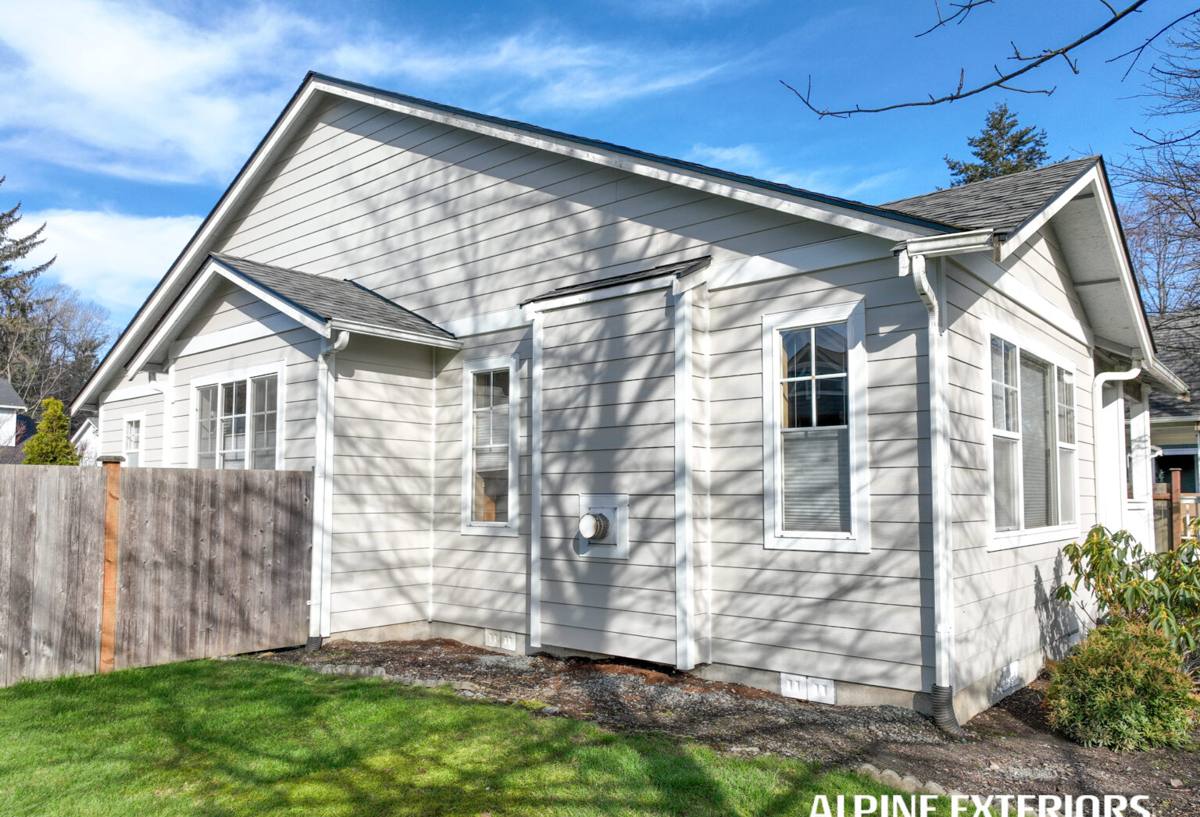
How Coastal Exposure Shortens Roof Life
Salt Air and Metal Components
Every roof has metal in it somewhere — nails, flashing, drip edge, vent caps, valley metal. Standard galvanized fasteners and thin flashing hold up fine inland but corrode noticeably faster within a mile or two of saltwater. Once flashing starts rusting through, it stops shedding water properly at the exact seams and penetrations where leaks start.
Driving Rain and Wind
Storms coming off the water tend to push rain at an angle rather than straight down. That matters because shingle roofs are designed to shed water moving downhill, not water being forced sideways or upward under a shingle tab. Proper nailing pattern, sealant strip activation, and starter course installation all become more important on exposed, wind-facing slopes than they would be on a sheltered inland roof.
Moss Season
Whatcom County's wet season runs long, and shaded or north-facing roof sections rarely dry out completely between rains. That's exactly what moss needs to establish. Moss doesn't just look bad — its root structure lifts shingle edges, holds moisture against the roof deck, and accelerates granule loss, which is the single biggest factor in how long a shingle roof actually lasts.
Signs a Semiahmoo-Area Roof Needs Replacement, Not Just Repair
Not every roof problem near the water calls for a full replacement. But a few signs consistently mean patching is a temporary fix at best:
- Granule loss heavy enough that you can see bare, shiny patches on multiple slopes
- Moss or algae covering large sections rather than isolated spots
- Rusted or visibly deteriorated flashing around chimneys, skylights, and valleys
- Curling, cupping, or cracked shingles across more than one area of the roof
- Soft spots in the decking when walked, or staining on interior ceilings
- A roof already past 20-25 years old (typical asphalt shingle lifespan, often shortened here by salt exposure)
If you're only seeing one or two of these in a localized area, a repair may still make sense. When several show up together, the underlying materials are usually failing as a system, and repair work becomes a short-term patch rather than a real fix.
What a Correct Roof Replacement Actually Involves
A roof replacement is more than swapping old shingles for new ones. Done properly, especially in a coastal-exposed area, it includes:
Full Tear-Off and Deck Inspection
We remove existing roofing down to the deck rather than layering over it. That's the only way to actually see the plywood or plank decking underneath — soft, water-damaged, or delaminated sections get replaced before anything new goes down. Roofing over hidden deck damage just traps the problem.
Underlayment Suited to the Exposure
A synthetic or self-adhered underlayment gives a second line of defense if wind-driven rain gets past the shingles, which matters more on an exposed, water-facing slope than it does on a sheltered one.
Corrosion-Resistant Flashing and Fasteners
In salt-air zones, we treat flashing and fastener quality as part of the core spec, not an upgrade option. Cutting corners here is the single most common reason a coastal roof develops leaks years before the shingles themselves wear out.
Ventilation Correction
Many older homes in this area were built with undersized or blocked attic ventilation. A replacement is the right time to correct intake and exhaust balance, since poor ventilation traps moisture, shortens shingle life from underneath, and can contribute to the exact moss and rot problems the new roof is supposed to solve.
Valley, Penetration, and Edge Detail
Valleys, pipe boots, and roof edges are where the large majority of leaks actually start — not the open field of shingles. These get built with proper layering and sealing, not just caulked over.
Material Options for This Environment
There's no single "best" roofing material for every home — it depends on budget, roof pitch, and how much long-term maintenance you want to take on. Here's how the common options compare for a coastal Whatcom County property:
| Material | Salt Air / Moisture Behavior | Moss Resistance | Typical Lifespan Here |
|---|---|---|---|
| Standard asphalt composition shingle | Good with corrosion-resistant flashing; average without it | Moderate — benefits from algae-resistant granules | 18-25 years |
| Algae-resistant (copper-granule) asphalt shingle | Good | Better — copper granules actively slow algae/moss growth | 20-28 years |
| Standing seam metal | Excellent when properly coated and fastened | Very good — smooth surface sheds moss easily | 40-60 years |
| Composite/synthetic shake or slate | Good | Good — impervious material resists root establishment | 30-50 years |
We'll walk through these trade-offs honestly during your estimate. A higher upfront cost on metal or composite materials often pencils out over the life of the roof for homes with heavy shade or direct water exposure, but it's not the right call for every budget or roof style — that's a conversation, not a sales pitch.
Our Replacement Process, Step by Step
- On-site inspection — we assess the current roof, decking condition, ventilation, and exposure before quoting anything
- Written estimate — clear scope, material options, and pricing, no vague allowances
- Tear-off and deck inspection — old roofing removed, deck checked and repaired where needed
- Underlayment and flashing installation — sized and specified for the exposure level of your particular roof
- Shingle or material installation — installed to manufacturer spec, with attention to nailing pattern on wind-exposed slopes
- Ventilation check and correction — intake and exhaust balanced for the attic space
- Final walk-through — cleanup, magnetic sweep for debris, and a review of the finished work with you
Moss, Algae, and Keeping Your New Roof Looking Right
A new roof in this area will still be exposed to the same shade and moisture that caused moss on the old one — the difference is that a correctly installed roof, with the right materials and ventilation, resists it far longer and sheds what does grow instead of letting it root in. We can also talk through simple maintenance habits, like keeping gutters and valleys clear of debris, that make a real difference in how long a roof stays clean between professional treatments.
We don't recommend pressure washing shingle roofs — it strips granules and does more damage than the moss itself. If moss treatment is needed down the road, a gentler wash or approved treatment product protects the shingle surface instead of accelerating wear.
Why a Local Ferndale Crew Matters for Semiahmoo Work
A crew that only occasionally works this close to the water tends to spec roofs the same way they would anywhere else — standard fasteners, standard flashing, standard ventilation assumptions. We work Whatcom County's coastal-exposed properties regularly enough to know where that approach falls short, and we build the extra corrosion resistance and moisture management into the base plan rather than treating it as an upsell. Being local also means faster response for the inspection, the estimate, and the actual install, without the scheduling gaps that come with crews traveling in from farther away.
Questions Worth Asking Before You Hire
- Does the estimate specify corrosion-resistant flashing and fasteners, or just "standard" materials?
- Is a full tear-off included, or is this a layover job?
- Will attic or roof ventilation be assessed and corrected if needed?
- Are algae-resistant shingles or alternative materials being offered as an option, not just the cheapest default?
- Is the warranty tied to both materials and workmanship, and is it explained clearly in writing?
If a contractor can't answer these plainly, that's worth noticing before you sign anything.
If your roof near Semiahmoo is showing moss buildup, aging shingles, or you're just not sure whether it's a repair or a replacement year, we're happy to take a look. Reach out below for a free, no-pressure estimate — we'll give you a straight assessment of what your roof actually needs.