 Ferndale
 Asphalt Shingle Roofing Built for Lynden's Climate
Lynden sits inland from the salt air that Ferndale and the coastal parts of Whatcom County deal with directly, but that doesn't mean the roof over a Lynden home has it easy. What Lynden gets instead is a long, wet, gray stretch of fall-through-spring weather that sits on a roof for months at a time. Combine that with the shade from mature trees on a lot of older Lynden properties and you get one of the biggest asphalt shingle roofing problems in this part of the county: moss. Add in wind-driven rain that finds its way under poorly sealed shingles, and you've got a roof that's working hard every single day of the year, even when nothing looks obviously wrong from the ground.
We install and repair asphalt shingle roofing on homes throughout Lynden and the surrounding Ferndale service area, and we approach it the same way every time: install it correctly the first time, use materials rated for Pacific Northwest moisture exposure, and be honest with homeowners about what their roof actually needs versus what would just be an upsell.
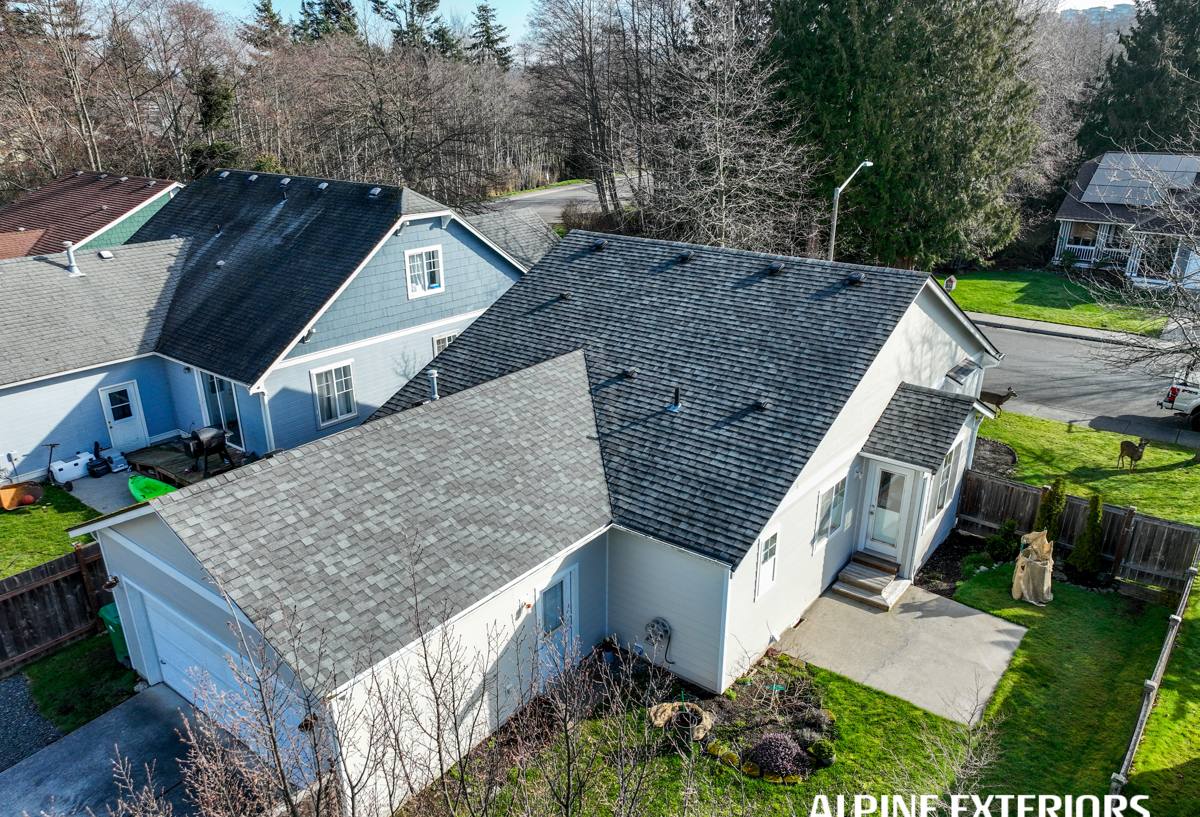
What Lynden Homes Actually Need From a Shingle Roof
Not every asphalt shingle roof needs the same things, but in Lynden there are a few conditions that come up again and again:
- Moss and algae resistance: Shaded roof sections, especially north-facing slopes, stay damp long after the rest of the roof dries. Algae-resistant (AR) shingles with copper or zinc granules help slow this down, but they don't eliminate the need for periodic cleaning.
- Wind and rain sealing: Whatcom County gets its share of driving rain and wind events, particularly in fall and winter. Proper nailing patterns, sealant strip activation, and starter course placement matter more here than in drier climates.
- Ventilation that actually works: A roof that traps moisture underneath the shingles from the attic side will fail early no matter how good the shingles are. This is one of the most overlooked parts of a roofing job.
- Proper underlayment: A synthetic or self-adhered underlayment under the shingle field, and ice-and-water-shield-type protection at eaves and valleys, gives the roof a second line of defense when shingles alone aren't enough during a heavy, sustained rain event.
Common Signs a Lynden Roof Needs Attention
Because Lynden's weather is more about slow, grinding exposure than dramatic storm damage, a lot of roof problems here develop quietly. Homeowners often don't notice until there's a leak inside the house. Some early warning signs worth checking for:
- Dark streaking or green/black patches on the roof surface, especially on shaded slopes
- Granules collecting in gutters or at the base of downspouts
- Shingles that look curled, cupped, or lifted at the edges
- Soft spots or sagging when walked on (a sign of underlying deck damage)
- Daylight visible through the attic roof deck
- Water stains on interior ceilings, particularly near chimneys, skylights, or valleys
If moss has already established itself in patches, it's worth having it looked at rather than waiting. Moss holds moisture against the shingle surface and can work its way under shingle edges over a season or two, which shortens the life of an otherwise sound roof.
Moss Removal Versus Roof Replacement
A common question we get in Lynden is whether a mossy roof needs to be replaced or just cleaned. The honest answer depends on the shingles underneath. Light-to-moderate moss on a roof that's otherwise in good shape can often be treated and cleaned without harming the shingles, as long as it's done carefully — pressure washing asphalt shingles is not the right method and can strip granules and shorten the roof's life. Heavier, longstanding moss growth that has lifted shingle edges or caused visible deck damage is usually a sign the roof is past the point where cleaning alone solves the problem.
What a Correct Asphalt Shingle Installation Involves
A shingle roof is only as good as everything underneath it. Here's what we consider non-negotiable on every asphalt shingle job:
Tear-Off and Deck Inspection
We remove old roofing down to the deck rather than layering over existing shingles. This lets us actually see the plywood or OSB sheathing underneath and replace any sections that have soft spots, delamination, or water damage before new roofing goes down. Skipping this step is one of the most common ways a "new roof" fails early.
Underlayment and Ice/Water Protection
Synthetic underlayment goes down across the full deck, with additional self-adhered waterproof membrane at eaves, valleys, and any roof penetrations — chimneys, plumbing vents, skylights. These are the areas where the vast majority of roof leaks actually start, not in the open shingle field.
Flashing
New step flashing at walls and chimneys, new valley flashing, and properly lapped drip edge at eaves and rakes. Reusing old, rusted, or bent flashing to save time is a shortcut that shows up as a leak within a few years.
Shingle Installation
Correct nail placement (not staples, and not over-driven or under-driven nails), proper offset between courses, and manufacturer-specified exposure. This is where installation quality separates a roof that lasts its full rated life from one that starts showing problems in year eight or ten.
Ventilation
Ridge vents, soffit vents, or a combination, sized correctly for the attic space, so moisture and heat don't get trapped against the underside of the deck. Poor ventilation is one of the leading causes of premature shingle failure and can also void manufacturer warranties.
Our Process for a Lynden Roofing Project
- On-site inspection and estimate: We look at the current roof, attic ventilation, and any problem areas, then give a written estimate that spells out materials and scope.
- Material selection: We walk homeowners through shingle options, warranty tiers, and color choices based on the home and budget — not a one-size-fits-all recommendation.
- Scheduling around weather: Given how much rain this region sees, we plan installation windows carefully and keep the deck protected if weather moves in mid-project.
- Tear-off, deck repair, and installation: Full removal of old roofing, deck inspection and repair as needed, then installation following manufacturer specifications.
- Cleanup and final walkthrough: Magnetic sweep for nails, full site cleanup, and a walkthrough so the homeowner can see the finished work and ask questions.
Comparing Shingle Options for This Climate
| Shingle Type | Typical Lifespan | Best For | Considerations in This Climate |
|---|---|---|---|
| 3-tab asphalt | 15-20 years | Budget-conscious projects | Lower wind resistance; less algae-resistant unless AR-rated |
| Architectural (laminate) asphalt | 25-30 years | Most Lynden homes | Better wind rating and appearance; AR versions recommended for shaded roofs |
| Premium/designer asphalt | 30+ years | Homes wanting a heavier, dimensional look | Higher upfront cost, longer warranty, still needs good ventilation to perform |
For most homes in Lynden, we recommend algae-resistant architectural shingles as the baseline. The upgrade in wind rating and appearance is usually worth the modest cost difference over 3-tab shingles, and the AR granules directly address the moss and algae exposure that's common on shaded lots here.
Cost Factors to Understand Before You Get a Quote
Every roof is different, but the same handful of factors drive most of the price difference between two Lynden homes getting similar-sized roofs:
- Roof pitch and accessibility: Steep roofs or roofs with limited access take longer and require more safety equipment.
- Number of layers to remove: A roof with one existing layer of shingles is faster to tear off than one with two or three layers stacked from past re-roofs.
- Deck condition: Hidden rot or soft sheathing found during tear-off adds material and labor that can't be fully quoted until the old roof is off.
- Roof complexity: Valleys, dormers, skylights, and multiple penetrations all add labor and flashing material.
- Shingle tier: 3-tab, architectural, and premium designer shingles carry different material costs and warranty lengths.
- Ventilation upgrades: Adding or correcting ridge and soffit ventilation during the same project is more efficient than doing it later.
We give written estimates that break these factors out so homeowners can see exactly what's driving the number, rather than a single lump sum with no explanation.
Why It Matters to Hire a Crew That Already Works in Lynden
Roofing crews that work across a wide, varied region sometimes treat every job the same way regardless of local conditions. A crew that regularly works Lynden and the rest of Whatcom County already knows which shingle products hold up to sustained moisture exposure, how much ventilation a typical attic here actually needs, and which roof details — valleys, chimney flashing, shaded north slopes — tend to be the weak points on homes in this area. That local pattern recognition shows up in fewer callbacks and a roof that's built for the conditions it will actually face, not generic conditions from a manufacturer spec sheet written for a different climate.
We also know that Lynden homeowners are dealing with the same rainy season as the rest of Whatcom County, which means scheduling and weather protection during a project matter just as much as the shingles themselves. A roof that's exposed to an unexpected downpour mid-installation, without proper tarping and sequencing, can end up with water damage before it's even finished.
Maintenance That Extends a Shingle Roof's Life
A well-installed roof still needs basic upkeep to reach its full expected lifespan in this climate:
- Keep gutters clear so water doesn't back up under the shingle edge, especially during fall leaf drop
- Trim back overhanging tree branches to reduce shade and debris buildup, which slows moss growth
- Have moss and algae growth treated before it spreads across a large section of roof
- Schedule a roof inspection every couple of years, or after any major windstorm
- Address small flashing or sealant issues promptly rather than waiting for a leak to appear inside
Get a Straightforward Estimate for Your Lynden Roof
If you're dealing with a mossy roof, curling shingles, or you're just planning ahead for a roof that's getting up in years, we're happy to take a look and give you an honest assessment — no pressure, no scare tactics. Fill out the form below to schedule a free estimate for your Lynden home.