 Ferndale
 Siding Repair Near Lummi Nation: A Different Kind of Wear
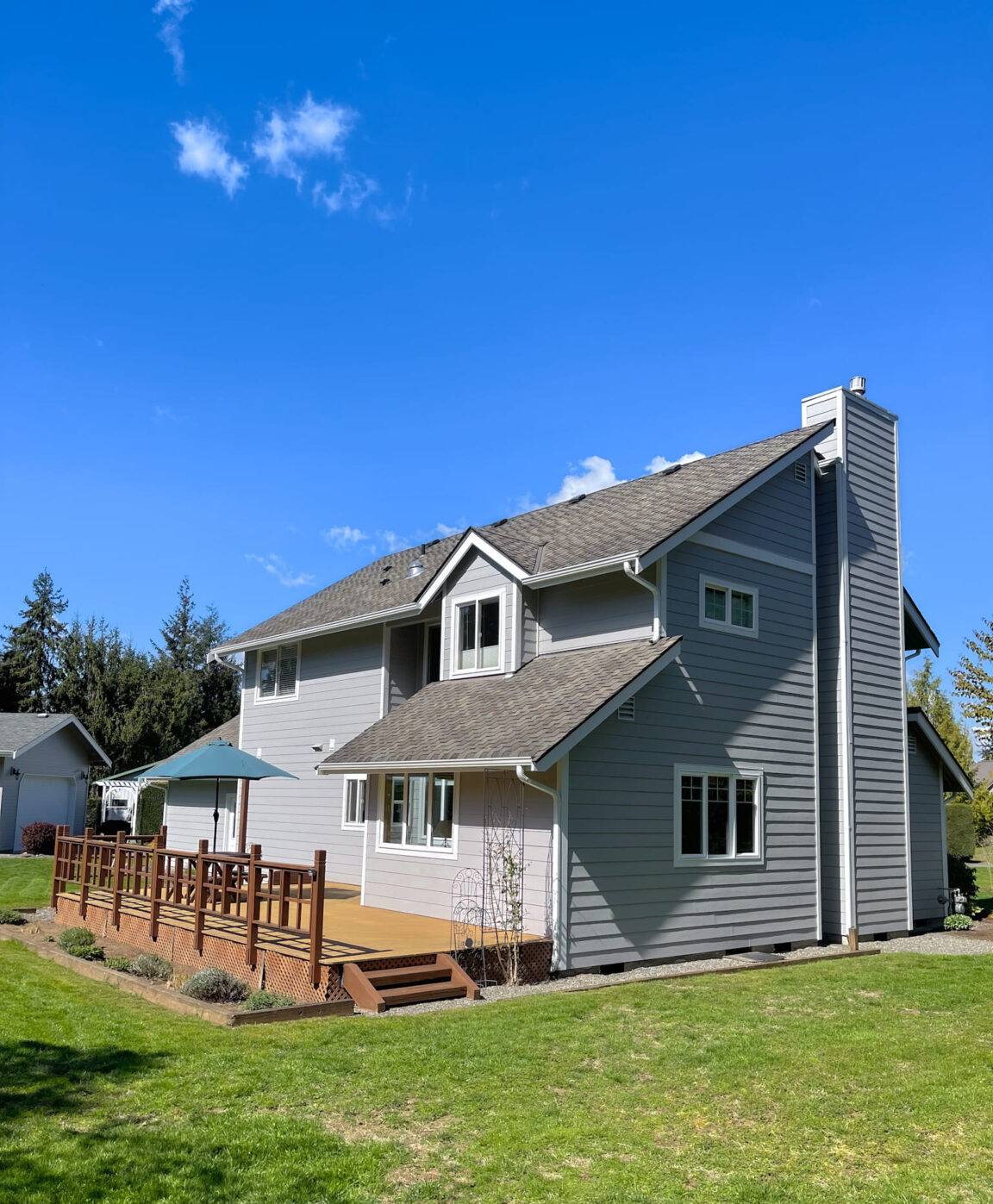
Homes in the Lummi Nation area sit closer to open water and salt spray than almost anywhere else we work out of Ferndale. That proximity to Bellingham Bay and the surrounding shoreline changes how siding ages here compared to homes a few miles inland in Whatcom County. Salt-laden air corrodes fasteners and finishes faster, driving rain off the water finds every gap in a wall system, and the long, damp moss season keeps north-facing and shaded walls wet for weeks at a stretch. None of that is exotic or unusual — it's just what coastal Pacific Northwest exposure does to a house, year after year.
What it means practically is that siding repair calls in this area are rarely about one random crack. They're usually about a wall system that's been absorbing moisture and salt exposure longer than it should have, and the damage shows up in a predictable set of places: corners, low courses near grade, anything under a leaky gutter, and shaded sections where moss and algae never fully dry out. A repair done without understanding that pattern tends to fail again within a season or two.
Signs It's Repair Time, Not "Wait and See"
Early warning signs
- Soft or spongy spots when you press on the siding, especially near the bottom courses
- Paint that's bubbling, peeling, or chalking in patches rather than evenly across the wall
- Persistent dark streaking or moss growth that comes back within weeks of cleaning
- Visible gaps opening at seams, corners, or around trim and window edges
- Small cracks or chips, particularly after a windstorm off the water
Signs it's already past a simple patch
If you can push a screwdriver into the siding and it goes in with little resistance, or if you're seeing damage on the interior wall (soft drywall, a musty smell, stained insulation), the problem has moved past the siding itself. At that point the repair has to include drying out and assessing the wall behind the cladding, not just replacing what's visible from the outside.
Why Salt Air and a Long Moss Season Are a Tough Combination
Individually, salt exposure and moss growth are both manageable. Together, they compound each other. Salt air pulls moisture out of the atmosphere and deposits it on exterior surfaces even on days without rain, which means walls in this area spend more hours wet than the same walls would a few miles inland. That extended dampness is exactly what moss, algae, and mildew need to establish themselves, and once organic growth takes hold it holds even more moisture against the siding surface — a cycle that keeps feeding itself through Whatcom County's long, grey wet season.
Different siding materials respond to that cycle differently. Untreated or improperly sealed wood swells, checks, and rots at a pace that catches homeowners off guard. Vinyl doesn't rot, but it becomes brittle with age and UV exposure and can crack on impact, and salt residue accelerates fading and chalking on the surface. LP SmartSide and other engineered wood products are treated to resist moisture, but any breach in that treated surface — a scuff, a fastener hole, an unsealed cut edge — gives water a path into the wood strand core, and repairs at that breach point are only as good as how well the seal is restored. Fiber cement handles this environment differently: it doesn't rot, doesn't support insect activity, and its factory-applied finish is engineered to hold up to UV and moisture cycling far longer than field-applied paint. That's a large part of why we standardized on James Hardie fiber cement and stopped installing the alternatives — it's simply better matched to what this stretch of coastline puts a wall through.
What a Correct Repair Actually Involves
Diagnose before you touch anything
The first step isn't pulling boards, it's figuring out why that section failed. Was it a flashing gap letting water behind the siding? A gutter overflow soaking one corner for years? A missed caulk joint at a window? Repairing the visible damage without fixing the cause just buys you a repeat call in a year or two — and on a home this close to the water, that cause is very often moisture intrusion rather than simple age.
Address the water path, then the siding
Once we know how water was getting in, that gets corrected first — reflashing, resealing, or redirecting drainage as needed. Only then does it make sense to replace the damaged siding itself, because new boards installed over an unresolved leak just fail again from the same source.
Match materials and finish
Patchwork siding repair with mismatched material or an unmatched paint sheen is one of the most common complaints we hear about past repairs in this area. When we replace a section, we match the profile, exposure, and finish as closely as the existing siding allows, so the repair reads as a repair and not a scar on the wall.
Repair vs. Replace: What We Actually Look At
| Factor | Repair usually makes sense | Replacement usually makes sense |
|---|---|---|
| Extent of damage | Isolated to one or two wall sections | Recurring across multiple elevations |
| Underlying cause | Cause identified and correctable | Chronic moisture issue tied to the original install |
| Siding age | Under roughly 15–20 years, sound elsewhere | Near or past expected service life |
| Material match | Matching product or profile still available | Discontinued profile, mismatch would be visible |
| Sheathing condition | Wall sheathing dry and intact | Sheathing soft, stained, or rotted |
Common Damage We See in This Area, and the Fix
| Damage type | Common local cause | Typical fix |
|---|---|---|
| Bottom-course rot or softness | Splashback and standing moisture near grade | Cut back to sound material, correct clearance, replace with matched siding |
| Corner and seam gaps | Wind-driven rain off the water working joints loose over time | Reseal or refasten properly, replace any swollen board ends |
| Persistent moss and staining | Shaded, slow-drying walls during the long wet season | Clean, correct drainage/airflow issue if present, refinish as needed |
| Fastener corrosion and rust streaking | Salt air accelerating corrosion on exposed hardware | Replace with corrosion-resistant fasteners appropriate to coastal exposure |
| Cracked or impact-damaged panels | Storm debris or brittleness in aged material | Section replacement matched to existing siding profile |
How Our Process Works
- On-site inspection. We walk the exterior, check suspect areas by hand, and look at flashing, gutters, and grading — not just the siding itself.
- Honest scope. We tell you plainly whether this is a repair, a partial re-side, or if a fuller replacement is the more cost-effective long-term call.
- Fix the cause first. Any moisture path gets corrected before new material goes on.
- Repair with matched material. We match profile and finish as closely as possible so the repair blends in.
- Walkthrough. Before we consider the job done, we go over the work with you and point out anything worth keeping an eye on going forward.
Why We Repair and Rebuild With James Hardie
When a repair calls for new siding sections, we use James Hardie fiber cement — the same product we install on full re-sides — rather than mixing in vinyl, LP SmartSide, or another material to save a step. Hardie's factory-applied ColorPlus finish is baked on and warranted separately from the substrate, which means a repaired section holds its color and sheen the same way the surrounding siding does, instead of aging at a different rate and standing out. The HZ5 product line is engineered for the kind of moisture and climate cycling this area sees, and because it's non-combustible fiber cement, it doesn't carry the rot or insect vulnerabilities that make wood-based products a longer-term gamble this close to the water. For a homeowner paying for a repair, that consistency matters — you're not left with a patch that looks and performs differently from the rest of the wall within a few years.
Why It Matters That We Already Work This Area
A crew that regularly works homes near Lummi Nation and along this stretch of the Whatcom County coastline already knows where the moisture problems tend to start on this kind of exposure — which elevations take the worst of the wind-driven rain, which details fail first in salt air, and which repairs actually hold up through another wet season versus which ones are just cosmetic. That local pattern recognition is the difference between a repair that solves the problem and one that looks fine for a photo and fails again in a year. It also means straightforward logistics: we're not routing a crew and materials in from across the county for a single repair call, which keeps scheduling realistic and the job focused.
Keeping Repaired Siding Sound Afterward
- Rinse siding periodically to keep salt residue from building up on the surface
- Keep gutters clear so overflow doesn't repeatedly soak the same wall section
- Trim back vegetation and branches that keep a wall shaded and slow to dry
- Check caulking at trim, windows, and penetrations once a year and touch up as needed
- Address small moss or algae growth early, before it spreads or holds moisture against the wall
- Watch the same trouble spots (corners, bottom courses, shaded elevations) after major storms
If you're seeing soft spots, gaps, or recurring moss on your siding near Lummi Nation, we're happy to take a look and give you a straight answer on what it needs. Reach out for a free, no-pressure estimate — there's a form right below to get started.