 Ferndale
 Why Bellingham Roofs Wear Differently Than Roofs Inland
A roof in Bellingham does not fail the same way a roof does forty miles inland. The combination of marine air off Bellingham Bay, near-constant winter rain, and long stretches of shade from mature evergreens creates a set of stresses that most manufacturers' install guides barely mention. If you've owned a home here for more than a few winters, you already know the symptoms: dark streaking on north-facing slopes, moss creeping up from the eaves, and soft spots developing near valleys or chimney flashing years before the shingles themselves look "old."
None of that is bad luck. It's what happens when a roof system built for a drier, sunnier climate gets installed without adjustments for Whatcom County conditions. A correct install here isn't about using fancier materials — it's about ventilation, underlayment choices, flashing details, and fastening that account for how much water and moisture this roof will actually see over the next 25-40 years.
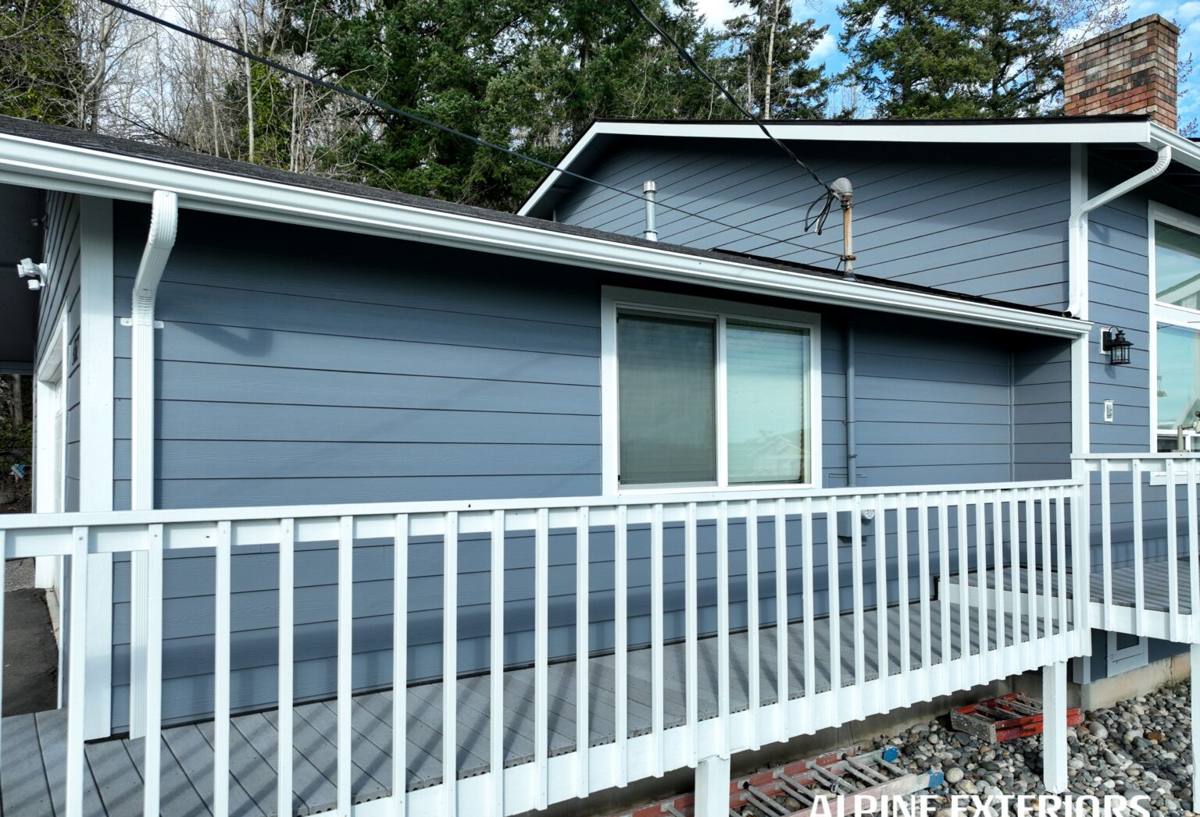
What the Bellingham Climate Actually Does to a Roof
Salt Air and Metal Fatigue
Proximity to the water means airborne salt settles on everything, including roofing nails, flashing, and any exposed metal fasteners. Standard electro-galvanized fasteners corrode faster in this environment than they would fifty miles inland. Over time, corroded nails lose their holding grip, which is a big part of why some older roofs here develop lifted or slipped shingles well before the shingles themselves have worn out.
Driving Rain and Wind-Driven Moisture
Rain in this area rarely falls straight down. Storms off the water push rain sideways into roof edges, under starter courses, and into any gap around penetrations. A roof that would perform fine in a calmer climate can leak here simply because the underlayment laps or flashing overlaps weren't sized for wind-driven water intrusion.
Moss, Shade, and a Long Wet Season
Bellingham's tree cover and extended damp months from roughly October through May give moss and algae a long runway to establish. Moss isn't just cosmetic — its root structure lifts shingle edges, holds moisture against the roof deck, and accelerates granule loss. A roof installed without moss-resistant considerations (proper ventilation, strategic use of zinc or copper strips, and shingles rated for algae resistance) will almost always show moss again within a few seasons.
What a Correct New Roof Installation Involves Here
A proper install in this climate is built in layers, and every layer matters more here than it would in a drier region.
- Tear-off and deck inspection: Full removal of old roofing so the deck can be checked for rot, soft spots, or delamination — common where moss or leaks have been sitting unnoticed.
- Deck repair before anything goes down: Any compromised sheathing gets replaced. Skipping this step is the single most common shortcut that leads to early failure.
- Ice-and-water shield at vulnerable zones: Eaves, valleys, and around all penetrations get a self-adhering waterproof membrane, not just felt, because these are the areas wind-driven rain targets first.
- Synthetic underlayment across the field: More tear-resistant and consistent under wet, humid conditions than old-style felt paper.
- Balanced ventilation: Intake at the eaves and exhaust at the ridge, sized correctly for the attic volume, so moisture doesn't get trapped against the underside of the deck.
- Corrosion-resistant fasteners and flashing: Stainless or high-quality coated fasteners and flashing metals that hold up against salt air rather than standard-grade hardware.
- Algae-resistant shingle or metal selection: Products rated to resist moss and algae growth, matched to the amount of shade the specific roof planes get.
- Proper valley and flashing details: Woven or open valleys installed with enough overlap and correct metal gauge to shed heavy, sideways rain rather than just vertical runoff.
Where Roofs Around Bellingham Fail First
| Failure Point | Common Cause | What a Correct Install Does Instead |
|---|---|---|
| Shingle lifting near eaves | Corroded fasteners, wind-driven rain under starter course | Stainless/coated fasteners, wider starter strip overlap |
| Moss regrowth within 2-3 years | No zinc/copper strip, poor ventilation, shaded slopes ignored | Strategic strip placement, balanced attic airflow, algae-resistant shingles |
| Valley leaks in heavy storms | Undersized flashing overlap, felt-only underlayment | Ice-and-water membrane plus properly lapped metal valleys |
| Soft or spongy deck areas | Slow leaks left unaddressed under old roofing | Full tear-off with deck inspection and replacement where needed |
| Attic moisture/mold | Unbalanced or blocked ventilation | Correctly sized intake and exhaust vents matched to attic volume |
Choosing Roofing Materials for This Specific Climate
There's no single "best" roofing material for every home in Bellingham — the right choice depends on roof pitch, how much shade the home gets, and budget. What we won't do is recommend a product just because it's cheaper to install if it's a poor match for a shaded, damp roof plane. That's a maintenance and moisture-management decision, not a brand judgment.
Asphalt Composition Shingles
Still the most common choice locally, and for good reason — modern algae-resistant architectural shingles hold up well here when installed with proper ventilation and moss-prevention details. They're the most budget-friendly option and the easiest to repair or match later if a section is ever damaged.
Metal Roofing
Increasingly common on homes that get heavy moss pressure or want a longer service life with less maintenance. Metal sheds moss and needles more easily than shingles and handles wind-driven rain very well, but it requires precise installation — seams, fasteners, and flashing details that leave no room for shortcuts, since a poorly installed metal roof can actually trap moisture worse than shingles.
Synthetic and Composite Options
Worth considering on homes with architectural styles that call for a shake or slate look, since they resist moisture absorption better than real wood shakes without the ongoing maintenance wood requires in this climate.
Our Process for a Bellingham Roof Replacement
- On-site inspection: We walk the roof (or use a drone where pitch or access makes that safer) and check the attic from the inside for existing moisture signs, ventilation issues, and deck condition clues.
- Honest scope and written estimate: You get a clear breakdown of what's being replaced, what materials we recommend and why, and what it costs — no vague allowances buried in fine print.
- Material selection walkthrough: We go over shingle or metal options suited to your roof's specific sun/shade exposure and pitch, not a one-size answer.
- Tear-off and deck assessment: Old roofing comes off, the deck gets inspected in daylight, and any needed repairs are confirmed with you before we cover them back up.
- Installation with local-climate details built in: Ice-and-water membrane at vulnerable zones, correct fastener spec, balanced ventilation, and moss-prevention measures as standard practice, not an upsell.
- Final walkthrough: We review the finished roof with you, including ventilation points and any maintenance notes specific to your property's shade and exposure.
Why a Crew That Already Works Bellingham Matters
A roofing crew that primarily works drier, inland regions can still put a technically correct roof on paper — right nail pattern, right shingle count — and still get the details wrong for this specific climate. The difference shows up in things you won't notice for a year or two: how much moss comes back, whether flashing holds up through the first real windstorm off the bay, whether the attic stays dry through a wet Whatcom County winter.
Working locally out of Ferndale means we see the long-term results of installs in this exact climate — including our own work, on roofs we get called back to for routine maintenance, not repairs. That feedback loop is what keeps our install standards tied to what actually holds up here, rather than a generic install checklist.
Questions Worth Asking Before You Hire Anyone
- Do you tear off down to the deck, or install over existing layers?
- What specific moss-prevention steps are included, not offered as an add-on?
- What fastener and flashing materials do you use, and are they rated for coastal/salt-air exposure?
- How is ventilation calculated for my specific attic, not just a standard vent count?
- What's covered under workmanship warranty versus manufacturer material warranty, and for how long?
What Affects the Cost of a New Roof in This Area
Every roof is priced on its own specifics, but a few local factors tend to move the number more than homeowners expect:
| Factor | Why It Matters Here |
|---|---|
| Roof pitch and access | Steeper roofs and limited access (tree cover, tight lots) add labor time and safety equipment needs |
| Deck condition | Moisture-related rot from long-term moss or old leaks often isn't visible until tear-off |
| Material choice | Asphalt, metal, and composite options carry different material and labor costs |
| Ventilation upgrades needed | Older homes often need added intake or exhaust vents to meet proper balanced airflow |
| Valley and flashing complexity | Homes with multiple roof planes or dormers need more flashing work per square |
As a broad range, most full residential roof replacements in this region fall somewhere between a modest single-story asphalt job and a considerably higher figure for steep, complex metal roofs — the only way to get an honest number is a real inspection of your specific roof.
Signs Your Bellingham Roof May Need Replacing Soon
- Granules collecting in gutters or at downspout outlets
- Moss establishing on north-facing or heavily shaded slopes
- Shingles curling, cracking, or showing bald spots
- Daylight visible through the attic roof deck
- Water stains on interior ceilings, especially near valleys or chimneys
- Roof age approaching or past 20-25 years for asphalt shingles
If you're seeing any of these signs, or just want a straight answer on how much roof life you have left, we're happy to take a look. Reach out for a free, no-pressure estimate using the form below — we'll walk your roof, give you an honest assessment, and let you decide from there.