 Ferndale
 Why Board & Batten Suits Birch Bay Homes
Board and batten has become one of the most requested siding styles along the Birch Bay shoreline, and it's not just about looks. The vertical lines read as clean and modern on newer builds, but they also pair naturally with the cottage and cabin-style homes that make up a lot of this stretch of Whatcom County. Where lap siding runs horizontal and gives water a shelf to sit on at every course line, board and batten sheds water straight down the wall. On a property that catches wind off the water, that difference matters more than it does a few miles inland.
We install board and batten for Ferndale-area homeowners regularly, and Birch Bay jobs get their own conversation before we ever pick up a nail gun. The exposure here is different from a sheltered lot in town, and the siding system has to be built for that from the substrate out.
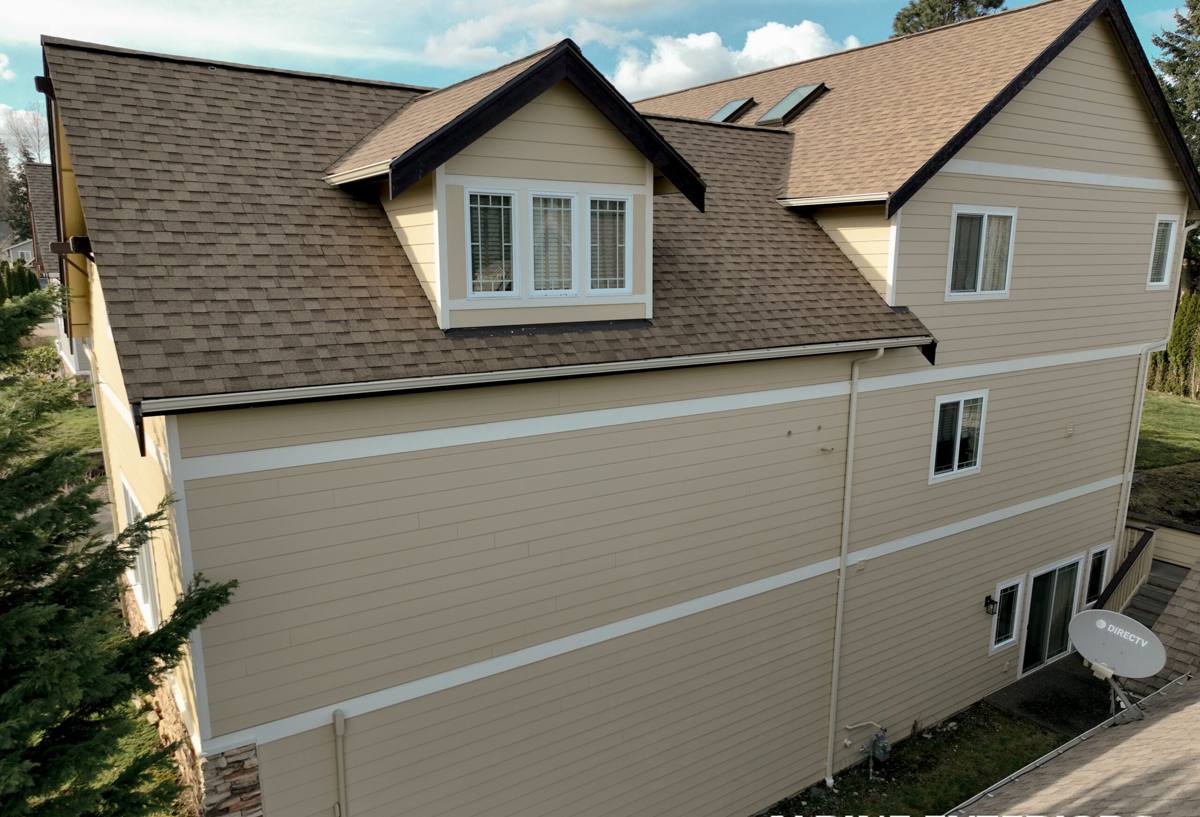
What Birch Bay's Climate Actually Does to Siding
Birch Bay sits close enough to the water that homes take on a combination most inland Ferndale properties don't deal with: salt-laden air, wind-driven rain that hits walls at an angle instead of just falling straight down, and long stretches of shaded, damp conditions that keep moss and algae established most of the year. Any one of these will shorten the life of a poorly built wall assembly. Together, they're unforgiving.
Salt Air and Fasteners
Salt air accelerates corrosion on anything metal — nail heads, flashing, trim fasteners. Once a fastener starts to rust, it weeps, stains the siding around it, and eventually loses its grip. This is one of the more overlooked failure points on coastal siding jobs, and it's entirely preventable with the right fastener spec and installation practices.
Driving Rain and the Wall Behind the Siding
Wind-driven rain doesn't just wet the surface of a wall — it pushes moisture into every gap, seam, and fastener penetration it can find. Board and batten has more vertical seams than a lap profile, which means more opportunities for water to get behind the cladding if the flashing and water-resistive barrier underneath aren't done correctly. The siding itself is only half the job; what's behind it is what actually keeps the house dry.
Moss, Algae, and Shade
Whatcom County's long moss season isn't news to anyone who's scraped a roof or pressure-washed a deck here. Siding in shaded, damp spots — which describes a lot of tree-lined Birch Bay lots — grows moss and algae faster than siding in full sun. That growth holds moisture against the wall surface and, on the wrong material, can work into seams and joints over time.
Why We Only Install Board & Batten in James Hardie Fiber Cement
Board and batten shows up in several materials — vinyl, cedar, engineered wood like LP SmartSide, and fiber cement. We've made a deliberate call to install James Hardie fiber cement exclusively, and on a coastal job like Birch Bay, the reasoning is straightforward.
Vinyl board and batten is affordable and low-maintenance, but it's a thin plastic product that expands and contracts with temperature swings, can warp or fade over the years, and simply isn't built to stand up to the kind of physical durability a shoreline property benefits from. Cedar board and batten looks beautiful when it's new and can look beautiful for years with diligent upkeep, but real wood in a damp, salt-air environment needs consistent refinishing, caulking, and moisture monitoring — skip a cycle or two and you're looking at cupping, splitting, or rot at the battens and butt joints. Engineered wood products like LP SmartSide perform reasonably well in a lot of climates, but they're still wood-based, and wood-based sidings depend heavily on an unbroken factory coating and correct field sealing at every cut edge to keep moisture out over the long run.
James Hardie fiber cement doesn't share those weaknesses. It's non-combustible, dimensionally stable across our temperature swings, and doesn't rot, warp, or feed pests the way wood-based products can. The ColorPlus factory finish is baked on and warrantied against fading and peeling far beyond what field-applied paint typically holds up to, which matters on a house that's fighting salt air and sun exposure at the same time. That's the whole reason we standardized on one manufacturer instead of offering a menu of materials — we'd rather install one system correctly than install several systems, some of which we don't fully trust in this climate.
What We Actually Install
For board and batten specifically, that means Hardie vertical siding panels or individual HardiePanel and batten strips, engineered as a system rather than pieced together from unrelated parts. The reveal, batten spacing, and profile are all things we work out with the homeowner up front, so the finished look matches the style of the home rather than a one-size-fits-all layout.
Material Comparison for a Birch Bay Wall
| Material | Salt Air / Moisture Resistance | Maintenance Burden | Fire Rating | Finish & Warranty |
|---|---|---|---|---|
| James Hardie fiber cement | Strong — engineered for wet climates | Low; occasional wash | Non-combustible | Factory ColorPlus finish, strong transferable warranty |
| Vinyl | Moderate; can warp with heat/cold cycling | Low, but limited repair options | Combustible | Color molded through, but fades over time |
| Cedar | Weak without diligent upkeep | High; refinishing and caulking cycles | Combustible | Field-applied finish, no manufacturer warranty on wood itself |
| LP SmartSide (engineered wood) | Moderate; depends on sealed edges | Moderate | Combustible | Factory treated, but wood-based core |
What a Correct Installation Involves
A board and batten job is only as good as what's underneath it. On a Birch Bay property, we treat the wall assembly with the same seriousness as the siding itself.
- Proper water-resistive barrier installed and lapped correctly, with no gaps at seams or penetrations
- Correct flashing at every window, door, and roofline transition — this is where most water intrusion actually starts
- Rainscreen or furring strip strategy where the exposure calls for it, giving the wall a drainage gap instead of trapping moisture against the sheathing
- Corrosion-resistant fasteners specified for coastal use, not standard-grade nails that will rust and stain over time
- Batten spacing and reveal planned to the home's actual dimensions, not stretched or compressed to make stock lengths fit
- Factory-primed or ColorPlus-finished cut edges sealed per manufacturer spec at every field cut
- Manufacturer-specified nailing pattern and fastener penetration depth — over-driven or under-driven fasteners are a common source of early failure
Our Process on Birch Bay Projects
We start with a walk of the property to look at sun exposure, tree cover, wind direction relative to the water, and the condition of the existing siding and trim. That tells us whether we're dealing with a straightforward re-side or whether there's sheathing or framing damage from years of moisture intrusion that needs to be addressed before new siding goes up — covering up a wet wall is never the right call, even when it would be the faster one.
From there we put together a written scope covering the board and batten layout, trim details, flashing plan, and color selection, so there's no ambiguity about what's being installed before work starts. Installation follows Hardie's fastening and clearance specifications, and we do a final walkthrough with the homeowner to check reveals, caulking, and trim work before calling the job finished.
Maintenance in a Salt-Air, Moss-Prone Environment
Fiber cement board and batten is low-maintenance compared to wood or vinyl, but "low-maintenance" doesn't mean "no maintenance," especially this close to the water.
- Rinse siding once or twice a year to clear salt residue and airborne grime, more often if the home is directly wind-exposed
- Keep gutters clean and downspouts directed away from the wall base to avoid repeated wetting at the foundation line
- Trim back vegetation and tree limbs holding shade and moisture against any wall section growing moss
- Check caulking at trim joints and penetrations annually — caulk is a maintenance item on any siding system, including Hardie
- Address any impact damage or exposed cut edges promptly rather than letting them sit through a wet season
Why Local Experience Matters for This Job
Birch Bay isn't identical to a sheltered lot in downtown Ferndale, and it isn't identical to other coastal spots in Whatcom County either — wind direction, sun exposure, and tree cover vary block by block. A crew that already works this specific area has a feel for which walls take the brunt of driving rain, which lots hold shade long enough to grow moss fast, and where corrosion-resistant fasteners aren't optional. That local pattern recognition is the difference between a siding job that looks right on day one and one that's still performing correctly ten years in.
If you're considering board and batten siding for a Birch Bay home, we're happy to walk the property, talk through the layout and finish options, and give you a straightforward, no-pressure estimate. There's a form below to get that conversation started.