 Ferndale
 Why Birch Bay Siding Takes More Punishment Than Most of Whatcom County
Birch Bay sits right on the water, and that changes what a siding system has to survive. Homes a mile inland deal with rain and moisture cycling. Homes in Birch Bay deal with that same rain and moisture cycling plus a steady dose of salt-laden air coming off the bay, wind-driven rain that hits walls at an angle instead of just falling straight down, and a moss and algae season that runs longer here than almost anywhere else in the county. Any one of those factors is manageable. All three at once, year after year, is what separates siding that looks good after fifteen years from siding that's chalking, staining, and rotting at the corners by year eight.
This page is about one job, done right, in one place: James Hardie fiber cement siding installed on Birch Bay homes. We don't try to sell every product to every neighborhood — we install Hardie exclusively, and we've built our process around what Birch Bay's specific exposure actually demands.
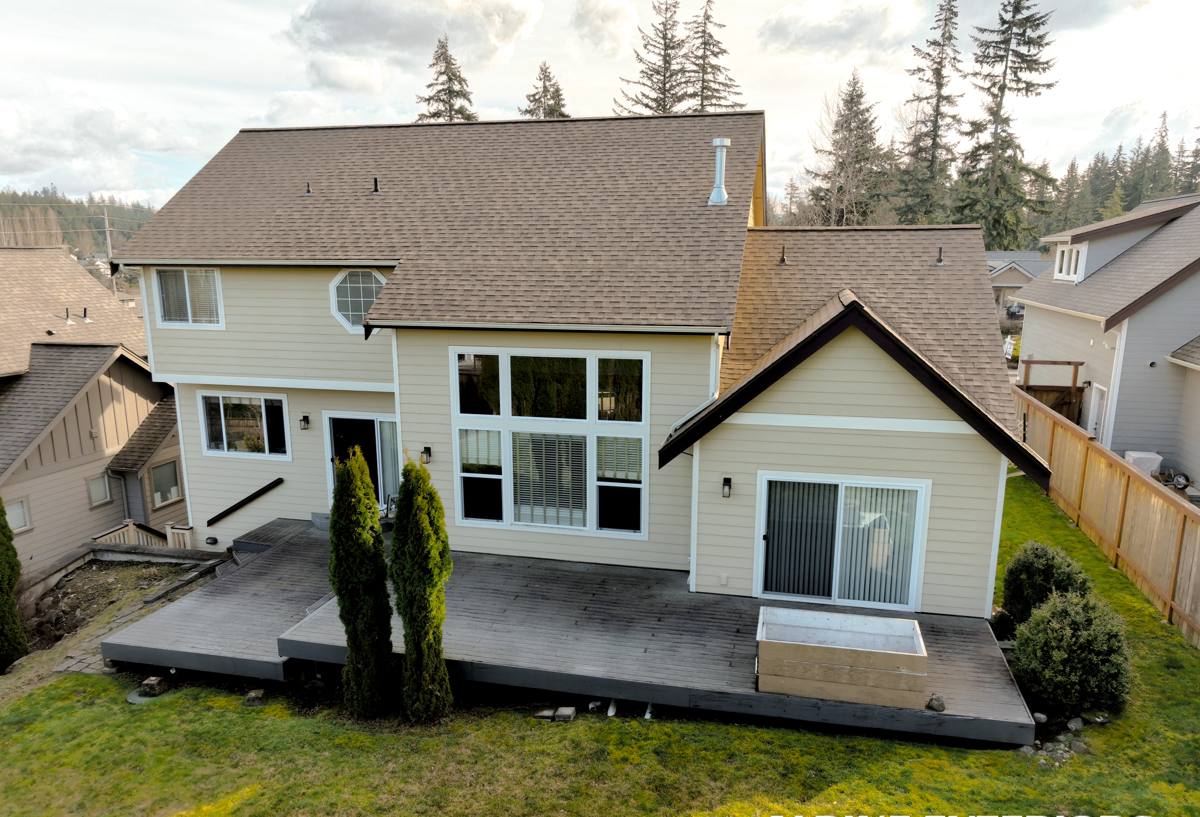
What Salt Air Actually Does to Siding
Salt air isn't just "coastal weather" in a generic sense. Airborne salt is hygroscopic, meaning it pulls moisture out of the air and holds it against whatever surface it lands on. On a wall, that means a thin film of salt-moisture sits against your siding far more often than plain humidity would produce on its own. Over time this accelerates a few specific failure modes:
- Fastener corrosion — nails, screws, and metal trim pieces rust faster in salt air, which is why fastener spec matters more here than in inland installs.
- Finish breakdown — paint films that aren't formulated for salt exposure chalk and fade unevenly, especially on the ocean-facing elevation of a house.
- Caulk and sealant fatigue — sealants dry out and crack faster under repeated salt-moisture cycling, opening small gaps that let water behind the siding.
- Accelerated wood decay — anywhere wood trim, sheathing, or untreated wood siding is exposed, salt-driven moisture speeds up rot dramatically.
Fiber cement doesn't eliminate every one of these mechanisms, but it removes the biggest one: the siding board itself isn't wood, so it isn't rotting from the inside. James Hardie's HZ5 product line is specifically engineered for the kind of high-moisture, freeze-adjacent coastal climate that Birch Bay sits in, and the factory-applied ColorPlus finish is baked on with a UV- and salt-resistant topcoat rather than sprayed on-site — that's a meaningful difference in an environment that's actively working to strip a finish off a wall.
Driving Rain and Wind-Loaded Walls
Birch Bay's exposure to open water means wind-driven rain hits the water-facing walls of a home at an angle, not straight down. That matters because a lot of siding failures aren't caused by rain falling on a wall — they're caused by rain being pushed sideways and upward into laps, seams, and penetrations that were only ever designed to shed water moving downward.
This is where installation detail matters more than the product itself. A correctly installed Hardie job accounts for wind-driven rain through:
- Proper lap spacing and shiplap or overlap alignment so water can't be forced upward into a seam
- A continuous water-resistive barrier behind the siding, lapped correctly at every seam
- Correctly flashed window and door openings, since these are the single most common point of water intrusion on any siding job
- Rain screen or drainage gap detailing where the exposure warrants it, so any water that does get past the face of the siding has somewhere to go besides your sheathing
None of this shows up in a "before and after" photo. It's the part of the job that determines whether the house is dry in year twelve, not just whether it looks good on install day.
Moss Season and Why It's Longer Here
Whatcom County's moss season is already long compared to drier parts of Washington, and Birch Bay's proximity to the water extends it further — the combination of shade, cool temperatures, and near-constant ambient moisture off the bay creates ideal conditions for moss and algae growth on north-facing and shaded walls for a large part of the year. On wood-based siding products, moss isn't just cosmetic. Moss and algae hold moisture directly against the substrate, and on anything with wood content, that sustained moisture is a direct path to soft spots and rot underneath the growth.
Fiber cement is not immune to surface moss and algae growth — nothing exposed to the outdoors in this climate is — but because the substrate itself is cement-based rather than wood-based, surface growth doesn't translate into structural decay the way it can on wood siding or wood-based composite panels. That's a real, practical difference for a Birch Bay home, where shaded north walls can stay damp for weeks at a stretch during fall and winter.
Simple Moss Prevention Steps Any Birch Bay Homeowner Can Take
- Keep tree limbs and shrubs trimmed back from siding to improve airflow and sun exposure on shaded walls
- Clean gutters at least twice a year so overflow isn't running down the wall face
- Rinse visibly mossy or algae-stained sections with plain water on a soft setting — avoid high-pressure washing directly into laps and seams
- Address any standing moss promptly rather than letting it build up over multiple seasons
What a Correct James Hardie Install Looks Like on This Coastline
"James Hardie siding" isn't one fixed spec — the same board installed two different ways can perform completely differently ten years out. For a Birch Bay home, the details we treat as non-negotiable include:
| Install Element | Why It Matters Here |
|---|---|
| Correct fastener type and spacing | Salt air accelerates corrosion on undersized or incorrect fasteners; Hardie's fastening schedule exists for a reason |
| Proper clearance from grade, decks, and roofs | Minimum clearances keep splash-back and standing moisture off the bottom courses, a common failure point near the water |
| Correctly lapped water-resistive barrier | Backup protection if wind-driven rain gets past the face of the siding |
| Factory-primed cut edges sealed on-site | Any field cut exposes raw fiber cement; sealing it keeps moisture from wicking in at trim and corners |
| Manufacturer-approved caulk and sealant | Generic sealants fatigue faster under repeated salt-moisture cycling |
| Rain screen detailing on exposed elevations | Gives incidental moisture a drainage path instead of trapping it against sheathing |
Every one of these is spelled out in James Hardie's own installation instructions, but instructions only matter if the crew on the roof actually follows them. This is the gap between siding that's technically "Hardie" and siding that's Hardie installed to hold up in a coastal climate.
Our Process for a Birch Bay Job
1. On-Site Assessment
We walk the exterior, check current siding condition (if there's tear-off involved), look at drainage, roofline, grade clearance, and note which elevations take the worst weather exposure. Water-facing and shaded north walls often get extra attention in the plan.
2. Product and Line Selection
We'll go over which Hardie plank profile and ColorPlus finish makes sense for the home, factoring in HOA or neighborhood character if relevant, and confirm the HZ5 climate spec is being used given the coastal exposure.
3. Tear-Off and Substrate Check
If we're removing existing siding, we check the sheathing underneath for moisture damage before anything new goes up. Covering over a wet or compromised substrate defeats the purpose of a durable siding upgrade.
4. Weather Barrier and Flashing
Water-resistive barrier goes on correctly lapped, and every window, door, and penetration gets flashed before a single piece of siding goes up.
5. Installation to Spec
Fastening, clearances, lap alignment, and sealant all follow James Hardie's published installation requirements — not a generalized "siding install" approach.
6. Final Walkthrough
We check seams, trim, caulking, and clearances with you before calling the job done.
Cost Factors Specific to a Birch Bay Job
There's no honest flat price for siding — every home is different — but a few things specifically move the number up or down on a Birch Bay project:
| Factor | Effect on Cost |
|---|---|
| Tear-off of existing siding vs. new construction | Removal and disposal adds labor and time |
| Substrate repair from prior moisture damage | Any rotten sheathing found during tear-off needs to be addressed before new siding goes on |
| Home size and number of stories | More square footage and stories mean more material and labor, plus scaffolding needs |
| Trim and architectural detail complexity | Corners, dormers, and multiple roof intersections all add cutting and flashing time |
| Access and site conditions | Waterfront lots with limited access or steep grades can add setup time |
| ColorPlus vs. field-painted finish | Factory finish typically costs more upfront but avoids the ongoing cost of repainting |
Questions Worth Asking Before You Hire Anyone for This Job
- Are you using HZ5 or a comparable climate-specific Hardie line for a coastal-exposed home?
- What fastener type and spacing are you using, and why?
- How are you handling the water-resistive barrier and window flashing?
- What's your plan if you find moisture damage in the sheathing during tear-off?
- Do you carry manufacturer certification for James Hardie installation?
- Can you walk me through your clearance details at grade, decks, and rooflines?
Why a Crew That Already Works Birch Bay Matters
Whatcom County covers a lot of ground with very different exposure conditions — Ferndale proper, inland areas, and the Birch Bay waterfront don't need the same install details. A crew that's worked this specific stretch of coastline knows which elevations to worry about, how far this area's moss season actually runs, and where salt-air corrosion shows up first on a house. That's not something you can fully substitute with a generic installation checklist, even a good one. It comes from having done the work here, repeatedly, and having seen what holds up and what doesn't after a few Birch Bay winters.
If you're planning a siding project on a Birch Bay home, we're happy to come take a look, walk the exterior with you, and talk through what your specific home needs — no pressure, no obligation. Reach out for a free estimate using the form below.