 Ferndale
 Composite Decking Built for Nooksack's Weather, Not Just Its Looks
Nooksack sits up the valley from Ferndale in a part of Whatcom County that stays wet for most of the year. The marine air that moves in off Bellingham Bay and the Salish Sea carries a fine salt content that settles on siding, railings, and deck boards right alongside the region's driving rain and a moss season that can run from October into May. A deck out here isn't just a place to put patio furniture — it's an exterior structure that has to shed water, resist decay, and stay safe underfoot through months of standing moisture. Composite decking, installed correctly, handles that load a lot better than dimensional lumber does. This page covers what that actually means for a project in Nooksack: what the climate does to a deck, what a correct composite install involves, and how we approach the work.
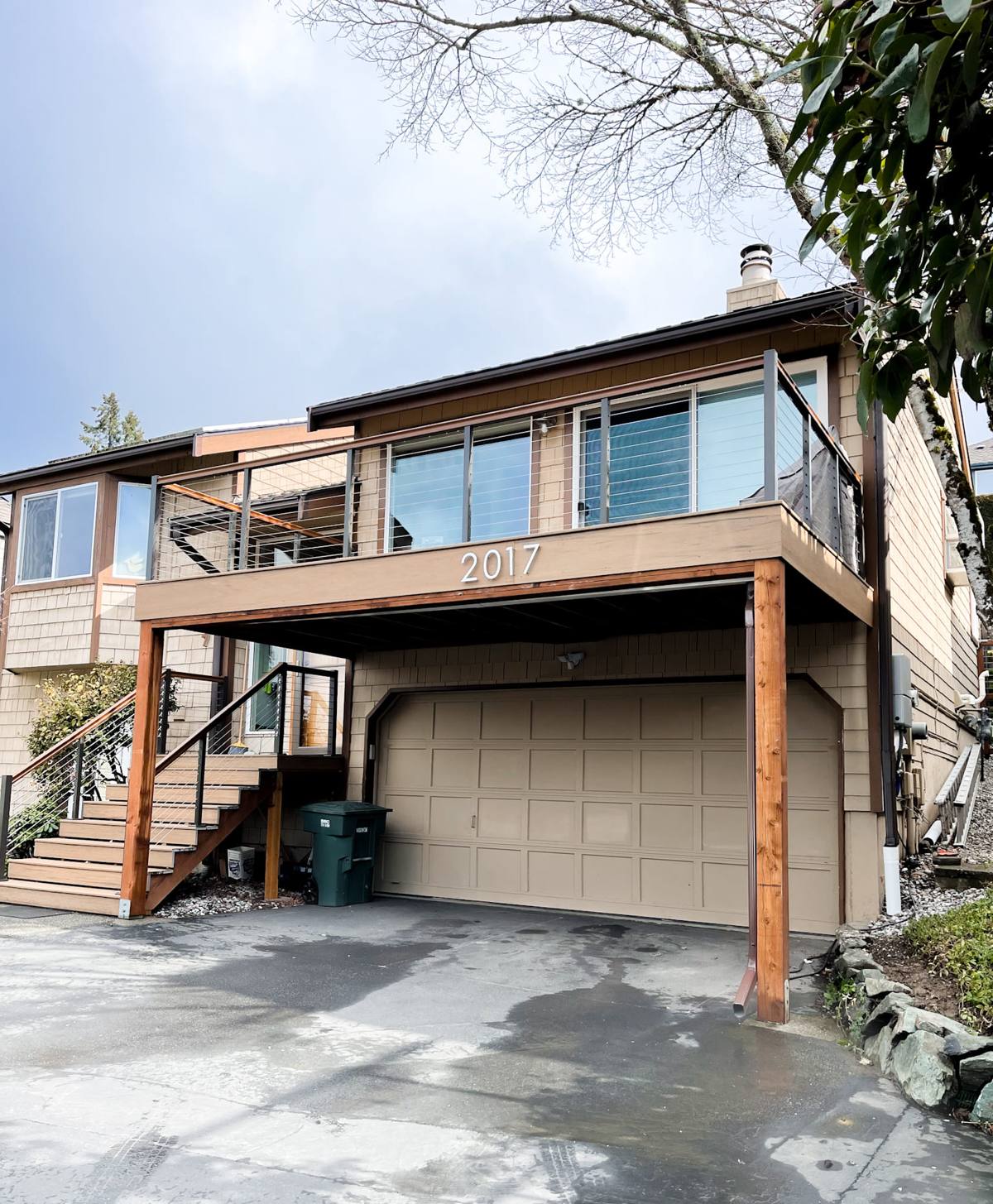
What Nooksack's Climate Actually Does to a Deck
Before talking about materials, it helps to understand the specific stresses a deck faces in this part of Whatcom County. It's not one big event that wrecks a deck out here — it's the accumulation of small, repeated exposure over years.
Moisture that doesn't dry out
Long stretches of overcast, damp weather mean deck surfaces — and more importantly the framing underneath — don't get the drying time they'd get in a drier climate. Wood framing that stays damp against ledger boards, joists, and fasteners is where rot starts, usually out of sight until a board or rail post feels soft.
Moss and algae growth
Shaded decks, north-facing decks, and anything under tree cover in the Nooksack area will grow moss on any surface that holds moisture and organic debris. Moss isn't just cosmetic — it holds water against the board surface, and on top of that it's slick. On stairs and low-clearance areas, that's a real fall hazard, not a maintenance inconvenience.
Salt-tinged air and UV cycling
Even away from the immediate coastline, the fine salt content in valley air combines with sun exposure to accelerate fading and surface breakdown on lower-grade composite and untreated wood alike. Boards that aren't rated for this kind of cycling — wet, dry, salt, UV, repeat — show it within a few seasons: graying, splintering, or surface chalking.
Freeze-thaw swings
Whatcom County doesn't get deep freezes often, but it does get enough freeze-thaw cycling in winter to open up small cracks in wood decking and stress fastener points. Water gets into a crack, freezes, expands it a little more — repeat that over a few winters and a deck that looked fine starts failing in specific spots.
Composite vs. Wood vs. PVC: What Actually Holds Up Here
Every decking material has trade-offs. Given what Nooksack's climate does to exterior structures, here's how the common options compare for a durability-first homeowner.
| Material | Moisture behavior | Moss/algae resistance | Maintenance | Typical lifespan here |
|---|---|---|---|---|
| Pressure-treated wood | Absorbs water, swells and shrinks seasonally | Low — porous surface holds organic growth | Annual sealing/staining recommended | 10–15 years before major repair |
| Cedar | Naturally decay-resistant but still porous | Moderate | Regular oiling or sealing | 15–20 years with upkeep |
| Capped composite | Non-absorbent cap layer sheds water | High — smooth cap resists staining and growth | Periodic washing, no sealing | 25+ years, warrantied |
| PVC decking | Fully non-absorbent | High | Low | 25+ years, warrantied |
We install capped composite decking as our default recommendation for Nooksack homes because it holds up to sustained moisture without the annual sealing schedule wood requires, and the capped surface doesn't give moss and algae the porous texture they need to take hold. PVC is a reasonable alternative where budget allows and a homeowner wants the lightest possible maintenance, but it runs warmer underfoot in direct sun and costs more up front. We'll walk through both honestly rather than pushing one line.
What a Correct Composite Deck Installation Actually Involves
Composite boards are only as good as what's underneath them. Most composite deck failures we get called to look at — squeaking, sagging, boards pulling at the fasteners — trace back to shortcuts in the framing and substructure, not the decking material itself.
Framing and ledger connection
The ledger board where a deck attaches to the house is the single most important moisture-control point on the whole structure. It needs proper flashing that directs water away from the house's siding and wall assembly, not just a bead of caulk. This matters even more on a deck attached to a home already dealing with Whatcom County's wet siding exposure — a bad ledger connection can push moisture problems into the wall itself.
Joist protection
We run joist tape over the top of every joist before boards go down. It's a simple step that a lot of lower-cost installs skip, and it's the difference between framing that sheds water off the top of the joist and framing that lets water pool where the fastener penetrates — which is exactly where rot starts first.
Proper spacing and airflow underneath
Composite boards need gapping for drainage and thermal movement, and the space under the deck needs airflow so moisture doesn't sit trapped against the underside of the boards and the framing. On a low-clearance deck this sometimes means adjusting the framing height or adding ventilation — worth addressing at the design stage, not after the fact.
Fastening method
Hidden fastener systems keep the deck surface free of exposed screw heads, which matters for both appearance and function — every exposed fastener hole is a place water can sit. We use fasteners rated for the specific board profile being installed, since composite systems vary by manufacturer.
Rail posts and stair stringers
These see concentrated load and moisture exposure. Post bases and stringer connections get the same flashing and hardware attention as the ledger — points that carry structural weight can't be an afterthought.
How We Approach a Composite Deck Project in Nooksack
- On-site assessment: We look at existing structure (if replacing boards on existing framing), drainage around the deck footprint, sun/shade exposure, and how the deck ties into the house.
- Framing evaluation: If we're not building new framing, we check joists, ledger, and posts for rot or undersizing before any composite board goes down. Composite decking installed over compromised framing just hides a problem, it doesn't fix it.
- Material selection: We walk through board lines, color options, and fastening systems based on the home's exposure and the homeowner's budget and appearance preferences.
- Installation: Ledger flashing, joist tape, correct spacing, hidden fasteners, and rail/stair hardware installed to manufacturer specification — this is what keeps the warranty valid and the deck performing long-term.
- Site cleanup and walkthrough: We go over care and cleaning specifics for the board line installed before we consider the job done.
Cost Factors on a Composite Deck Project
Composite decking costs more per square foot than pressure-treated lumber up front, and the total for any given project depends on more than just board choice. Here's what actually moves the number:
| Factor | Why it matters |
|---|---|
| Existing framing condition | New or repaired framing adds cost but is non-negotiable if the substructure is compromised |
| Deck footprint and height | Larger footprints and elevated decks need more structural framing and railing |
| Board tier | Entry-level capped composite vs. premium composite or PVC changes material cost significantly |
| Railing and stair complexity | Custom rail systems and multi-level stairs add labor and hardware |
| Site access | Tight or sloped lots common in the Nooksack area can add labor time |
We give homeowners a real number after seeing the site, not a phone estimate — a deck built on a slope with tricky access costs differently than a flat, easy-access footprint of the same size.
Maintaining a Composite Deck Through Whatcom County's Wet Season
Composite decking cuts maintenance dramatically compared to wood, but "low maintenance" isn't "no maintenance," especially given how much moss and organic debris this area produces.
- Sweep leaves and needles off the deck surface regularly through fall — trapped debris holds moisture against the board even on capped composite.
- Rinse the deck surface a few times a year with a garden hose and mild soap; avoid pressure washers on composite unless used on a low setting from a distance, since aggressive pressure can damage the cap layer.
- Check the gap between boards periodically to make sure debris hasn't built up and blocked drainage.
- Look underneath the deck once a year for standing water, moss buildup, or anything blocking airflow around the framing.
- Address any moss on rail posts or stair treads promptly — it's the first place slip hazards show up.
Why Hiring a Crew That Already Works Nooksack Matters
Nooksack isn't a big market, and that's actually the point — a crew that regularly works this stretch of Whatcom County has already seen how the local moisture patterns, tree cover, and soil drainage on specific lots affect a deck's framing and long-term performance. That's different from a crew driving out from outside the area for a one-off job. We know what ledger flashing needs to look like on homes with this region's siding assemblies, we know which board lines actually perform through a Pacific Northwest wet season versus which ones just look good in a showroom, and we stand behind the work because we're not going anywhere — we're already doing siding and decking work up and down this part of the county.
Getting Started
If you're weighing a new composite deck or replacing boards on an existing structure in Nooksack, we're glad to come take a look and give you a straight, no-pressure estimate — including an honest read on your existing framing before we ever talk board colors. Use the form below to get in touch.