 Ferndale
 Blaine's Waterfront Climate Is Hard on Windows
Blaine sits right on the water at the northern edge of Whatcom County, close enough to the Canadian border and the Salish Sea that salt-laden air is a daily fact of life, not an occasional nuisance. That air carries moisture and fine salt onto every exterior surface of a home, including window frames, hardware, and glazing seals. Combine that with the driving rain that comes off the water during fall and winter storms, plus a moss season that can stretch from October well into spring, and you have a climate that is genuinely tougher on windows than what homes just a few miles inland deal with.
None of this means Blaine homes need exotic solutions. It means the details that get overlooked in a rushed or budget install — flashing laps, sealant choice, hardware finish, frame material — matter more here than they would in a drier, calmer part of the state. We've done window work throughout Whatcom County, and the jobs in and around Blaine consistently need that extra attention paid up front.
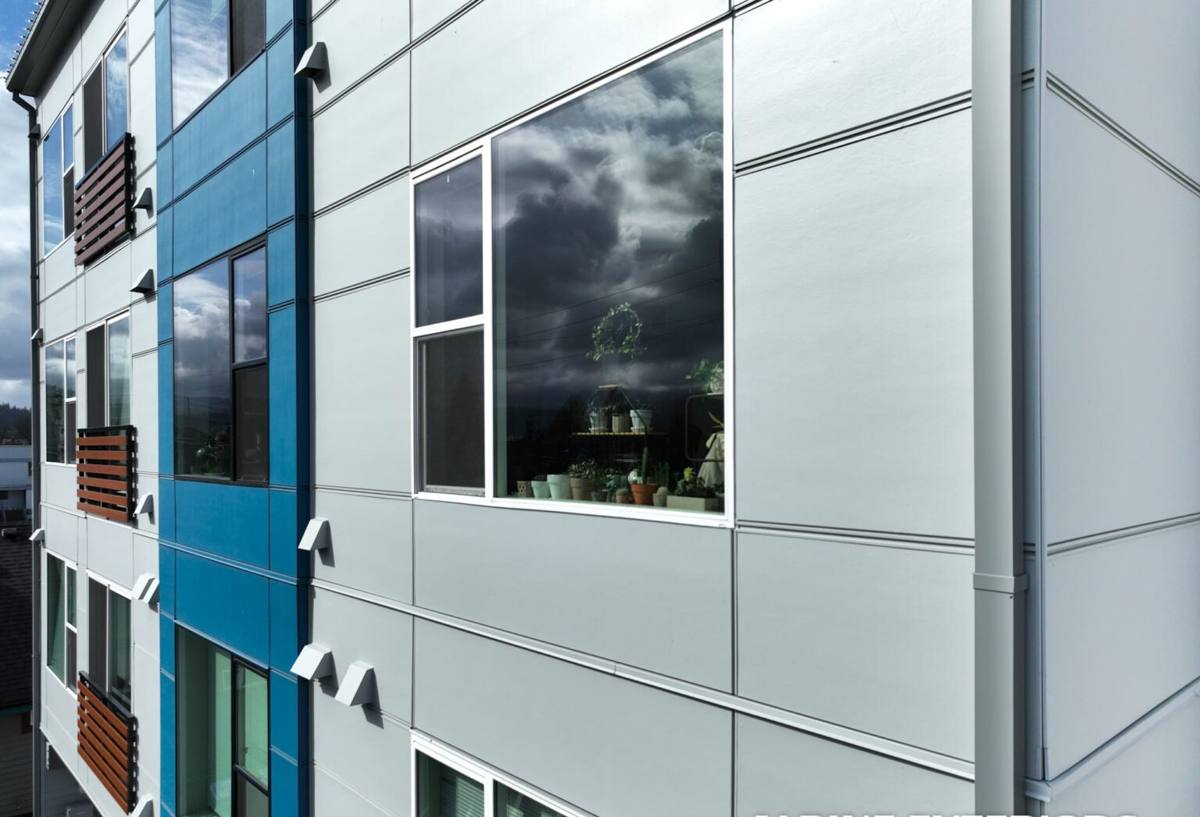
How Salt Air and Driving Rain Actually Damage Windows
Salt Air
Airborne salt is corrosive to metal hardware — hinges, locks, balance systems, and screen frames — well before most homeowners notice anything wrong with the glass itself. On older aluminum-frame windows, salt exposure accelerates pitting and oxidation. On any window, salt residue that isn't rinsed off periodically holds moisture against the frame longer than it otherwise would, which slowly breaks down finishes and seals.
Driving Rain
Wind-driven rain off the water doesn't just fall on glass — it gets pushed sideways and upward into any gap in flashing, trim, or sealant. A window that would stay bone-dry in a calm rain elsewhere can take on water in Blaine if the flashing details around it aren't done correctly. Once water gets behind a window frame, it doesn't dry out quickly in this climate, and that's when framing rot and interior damage start.
Moss and Constant Dampness
Whatcom County's long wet season keeps north-facing and shaded window sills and sashes damp for extended stretches. Moss and algae take hold on wood sills, painted trim, and even vinyl tracks, holding moisture against the surface and making the window harder to keep clean and weathertight over time.
Signs a Blaine Home Needs Window Replacement
- Wood sills or frames that feel soft, spongy, or show dark staining, especially on the side of the house facing the water
- Hardware — locks, hinges, cranks — that has visibly corroded, seized up, or feels gritty from salt residue
- Persistent fog or moisture between panes of double-glazed glass, a sign the seal has failed
- Drafts or a cold, damp feeling near the window even when it's fully closed and latched
- Paint or finish that's peeling or bubbling faster than it should, particularly on the exterior face
- Visible moss or green growth building up on sills, tracks, or the trim around the window
- Windows that are noticeably harder to open, close, or lock than they used to be
Any one of these can be a minor fix. Several showing up together, especially on the weather-facing side of the house, usually points to a window that's reached the end of what caulking and touch-ups can address.
What a Correct Window Replacement Job Involves
Window replacement looks simple from the outside — take the old one out, put the new one in — but the parts that determine whether it holds up in a place like Blaine happen where you can't see them once the job is done.
Removal Without Hidden Damage
Pulling the old window carefully, without tearing surrounding siding or trim more than necessary, lets us actually see the condition of the rough opening. In coastal homes this step matters more than usual — it's common to find some degree of moisture damage to the framing around an older window that's been dealing with driving rain for years.
Addressing the Opening Before the New Window Goes In
Any soft or water-damaged framing gets repaired before a new window is installed, not covered over. Installing a brand-new window into a compromised opening just guarantees a repeat problem a few years down the road.
Flashing and Weather Barrier Integration
This is the single most important step for a home exposed to wind-driven rain. Flashing has to be layered correctly — each piece overlapping the one below it — and tied properly into the home's existing weather-resistant barrier so water is directed out and down, never trapped behind the window.
Sealant Selection and Application
Not every caulk or sealant is rated for constant salt and moisture exposure. We use sealants suited to marine-adjacent climates and apply them at the joints that actually need them — not as a substitute for proper flashing, but as a second line of defense.
Insulation and Air Sealing
The gap between the new window frame and the rough opening gets properly insulated and air-sealed, which affects both energy performance and how much condensation forms on the frame during cold, damp stretches.
Interior and Exterior Finish Work
Trim, casing, and any siding disturbed during the install get finished cleanly, with attention to keeping exterior wood trim protected against the same moisture that affected the original window.
Choosing a Window Material for a Coastal Whatcom County Home
Material choice matters more here than in drier inland areas because of the combination of salt exposure and constant moisture. Here's how the common options generally hold up in this specific environment:
| Material | Salt Air Resistance | Moisture Behavior | Maintenance |
|---|---|---|---|
| Vinyl | Good — won't corrode or rust | Doesn't absorb moisture or rot | Low; occasional rinse to clear salt residue |
| Fiberglass | Very good — stable, non-corroding | Excellent; very low expansion/contraction | Low |
| Wood (unclad) | Poor unless finish is maintained closely | Prone to rot without diligent upkeep | High; regular refinishing needed near the water |
| Wood-clad (vinyl or aluminum exterior) | Good on the exterior face; interior wood still needs care | Exterior protected; interior wood vulnerable if seals fail | Moderate |
| Aluminum | Fair to poor without a marine-grade finish | Conducts cold, prone to condensation | Moderate to high near salt air |
Hardware finish is just as important as frame material. Standard hardware finishes can show corrosion within a few years this close to the water, so we point clients toward corrosion-resistant hardware options for anything installed on the water-facing side of the house. It's a small upcharge that saves a homeowner from replacing locks and cranks well before the window itself is due for attention.
Our Window Replacement Process
- On-site assessment: We look at every window being considered for replacement, note the condition of the framing and sill, and check for water intrusion or hidden damage.
- Honest recommendation: We tell you which windows genuinely need replacement now, which can wait, and which just need repair or better maintenance — we don't upsell a full-house job when it isn't warranted.
- Material and hardware selection: We walk through material options with your specific exposure to salt air and rain in mind, not a one-size-fits-all recommendation.
- Written estimate: Clear scope, materials, and pricing before any work starts.
- Careful removal and opening inspection: Old windows come out cleanly; any framing issues get flagged and addressed before the new unit goes in.
- Installation with proper flashing and sealing: Done to hold up against wind-driven rain, not just to pass a quick visual check.
- Finish work and cleanup: Trim, siding, and interior finish restored, site cleaned up.
- Walkthrough: We go over operation, hardware, and basic maintenance specific to a coastal setting before we call the job done.
Cost Factors for Window Replacement in Blaine
Every home is different, so we don't quote pricing without seeing the job, but the main factors that move the cost up or down are consistent:
| Factor | Why It Matters |
|---|---|
| Number and size of windows | Larger or more numerous openings mean more material and labor |
| Frame material chosen | Fiberglass and premium vinyl cost more upfront than basic vinyl, but hold up better to salt exposure |
| Condition of the existing opening | Framing repair from water damage adds time and material beyond the window itself |
| Access and location on the house | Upper-story or hard-to-reach windows take more labor time |
| Hardware upgrades | Corrosion-resistant hardware costs a bit more but reduces near-term maintenance near the water |
| Trim and siding condition | Rotted or damaged exterior trim discovered during the job adds scope |
Why a Crew That Already Works in Blaine Makes a Difference
We're based in Ferndale and work throughout Whatcom County, so Blaine isn't unfamiliar territory to us — we've seen firsthand how the combination of salt air, wind-driven rain, and a long moss season plays out on homes in this area over time. That matters in a few concrete ways: we know which framing and hardware choices tend to disappoint near the water and which hold up, we're not guessing at flashing details for the first time on your house, and we can spot early water damage that a crew unfamiliar with this specific coastal exposure might miss. A window replacement job done right the first time saves you from paying for the same repair twice.
Maintaining New Windows in a Salt Air Environment
- Rinse exterior frames and hardware periodically, especially after storms, to clear salt residue before it sits and does damage
- Keep weep holes on the exterior of the frame clear of debris and moss so water can drain as designed
- Check and refresh exterior caulking at trim joints every year or two rather than waiting for a visible gap
- Lubricate hardware — locks, cranks, hinges — periodically to keep salt from seizing moving parts
- Clean moss or algae off sills and tracks as soon as you notice it rather than letting it establish
- Keep gutters and downspouts near windows clear so overflow isn't adding extra water exposure at the frame
Get a Straight Answer on Your Windows
If you're not sure whether your windows need full replacement or just some attention, we're happy to take a look and tell you honestly which it is. We offer free, no-pressure estimates for homes in Blaine and throughout Whatcom County — fill out the form below and we'll set up a time to come assess your windows in person.