 Ferndale
 Roofing in Everson: What the Local Climate Demands
Everson sits inland from the coast but still lives under the same weather pattern that shapes every roof in Whatcom County: long, wet winters, a short dry stretch in summer, and a moss season that can run eight months or more. Add in the salt-tinged air that drifts in off the Strait and up the valleys, and you've got a roofing environment that punishes shortcuts. A roof that would hold up fine in a dry inland climate can fail early here if it's missing the right underlayment, ventilation, or flashing details.
We work throughout Ferndale and the surrounding Whatcom County communities, including Everson, and we build every replacement around what actually happens to a roof out here over ten, twenty, and thirty years — not just what looks good on installation day.
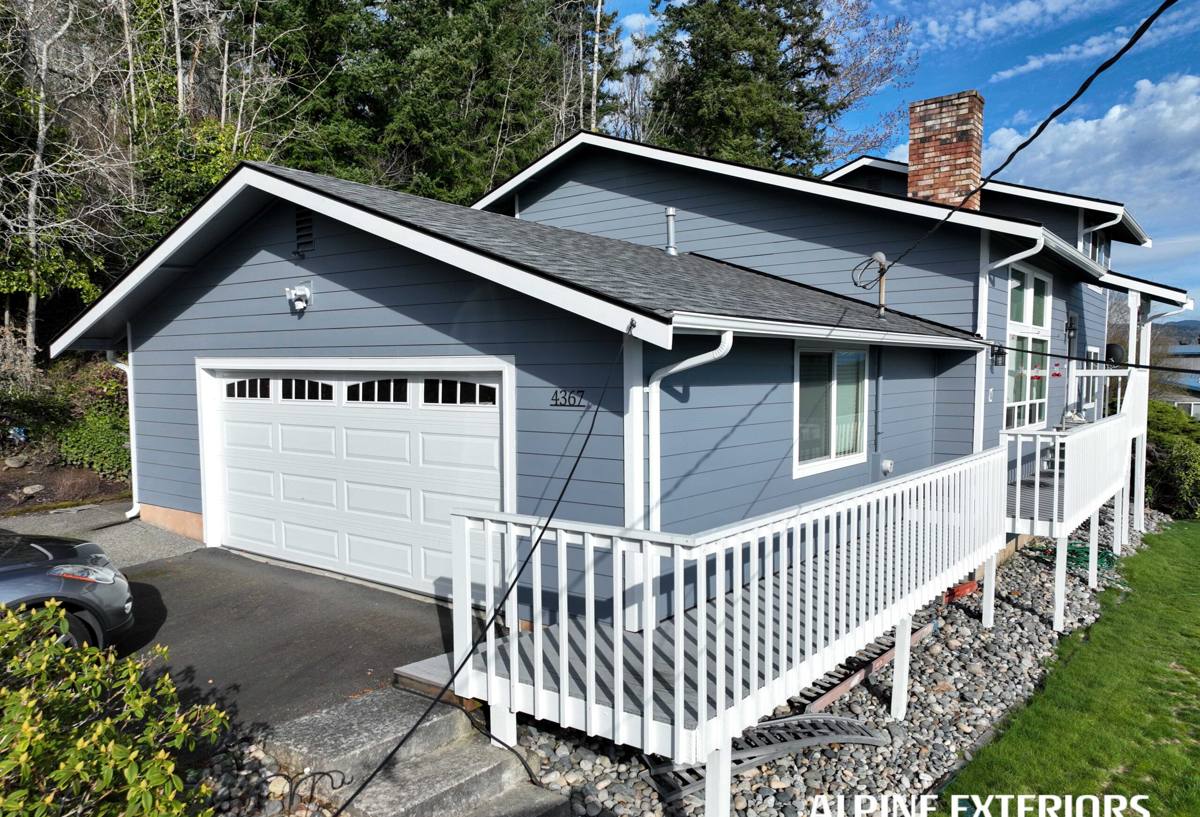
Signs an Everson Roof Is Due for Replacement
Roofs rarely fail all at once. They send signals first. If you're seeing any of the following, it's worth having someone look before a repair turns into water damage inside the house:
- Shingles that are cupping, curling at the edges, or missing granules in the gutters
- Moss or dark streaking that keeps coming back within a few months of cleaning
- Soft spots in the roof deck when walked on, or sagging along the ridge or eaves
- Daylight visible through the attic roof boards, or damp insulation after a storm
- Flashing around chimneys, skylights, or vent pipes that's rusted, lifted, or cracked
- Interior ceiling stains, especially ones that appear after wind-driven rain rather than a straight downpour
A roof in the 20-25 year range that's showing two or more of these signs is usually past the point where another round of spot repairs makes financial sense.
What a Correct Roof Replacement Actually Involves
It's Not Just Shingles
The shingles are the part everyone sees, but they're the last layer installed and the least important one for actual water protection. A roof replacement done right in this climate includes:
- Full tear-off down to the deck, not a layover on top of old shingles — layering traps moisture and voids most manufacturer warranties
- Deck inspection and repair — any plywood or sheathing that's soft, delaminated, or water-stained gets replaced before anything new goes down
- Ice-and-water shield at eaves, valleys, and any low-slope transitions, since these are the spots wind-driven rain and moss dams push water backward under standard felt
- Synthetic underlayment across the full deck as a second line of defense
- New flashing at every roof-to-wall intersection, chimney, and penetration — reused old flashing is one of the most common causes of "new roof, same leak" calls
- Balanced ventilation (intake at the eaves, exhaust at the ridge) so moisture from inside the house doesn't condense in the attic and rot the deck from underneath
- Shingles or metal panels rated for the wind and moisture exposure of the site
Skip any one of these and you haven't really replaced the roof — you've just put a fresh face on the same problems.
Why Ventilation Gets Overlooked
Ventilation is invisible once the job is done, so it's the step that gets skipped when a crew is trying to move fast or cut a bid. In a climate this wet, an under-ventilated attic traps humidity, and that humidity condenses on the underside of the deck. Over a few winters that shows up as soft sheathing, mold on the rafters, and shortened shingle life — all from the inside, all avoidable with correctly sized and placed vents.
Roofing Material Options for Everson Homes
Most homes in this area land on one of three roofing systems. Each has real trade-offs — none of them is wrong, but the right one depends on your roof's slope, your budget, and how long you plan to own the house.
| Material | Typical Lifespan | Moss & Moisture Behavior | Best Fit |
|---|---|---|---|
| Architectural asphalt shingle | 25-30 years | Moss-resistant granule options available; needs periodic cleaning | Most homes; best value-to-performance balance |
| Standing-seam metal | 40-50+ years | Sheds moss and moisture fastest; minimal maintenance | Steeper roofs, owners planning long-term hold |
| Basic 3-tab shingle | 15-20 years | Thinner profile, holds moisture and moss longer | Budget-limited jobs; less common on new installs now |
We don't install every product on the market. Where we steer people away from certain shingle lines or ultra-low-cost synthetic products, it's because of how they've performed for us in this specific climate over time — moisture behavior, how forgiving they are to install correctly, and how their warranty actually pays out — not brand loyalty either direction.
Cost Factors for a Roof Replacement
Every roof is priced on its own specifics, but the variables that move the number are consistent:
| Factor | Why It Matters |
|---|---|
| Roof size and number of planes | More squares and more cuts mean more material and labor |
| Pitch and access | Steep or hard-to-reach roofs require more safety setup and slow the crew down |
| Deck condition | Rotten or soft sheathing found during tear-off adds material and labor to replace |
| Number of penetrations | Each chimney, skylight, or vent stack needs its own properly flashed detail |
| Material choice | Standing-seam metal costs more upfront than asphalt but stretches the replacement cycle out decades |
| Layers to remove | Tearing off two layers of old shingles costs more than tearing off one |
We won't give you a real number without seeing the roof, but we'll always walk you through which of these factors are driving your specific price before we ask for a commitment.
Our Roof Replacement Process
- On-site inspection — we walk the roof and the attic, not just look from the ground, and check for deck damage, ventilation gaps, and flashing condition
- Written estimate — a clear breakdown of material, labor, and any deck repair allowance, so there are no surprise line items later
- Material selection — we go over the realistic options for your roof's pitch and your budget, including moss-resistant shingle lines where they make sense
- Scheduling around weather — we plan tear-off days around dry windows and keep the roof dried-in with underlayment the same day it's opened up, since leaving a deck exposed overnight in this climate is asking for trouble
- Tear-off and deck repair — old roofing comes off, damaged sheathing gets replaced, and the deck is inspected before anything new goes down
- Installation — underlayment, flashing, ventilation, and roofing material installed to manufacturer specs, not shortcuts
- Final walkthrough — we check the finished roof and gutters with you before calling the job done, and clean up nails and debris from the yard
Moss, Gutters, and Roof Life Between Replacements
A new roof still needs some upkeep in this climate. Moss growth is close to constant in Whatcom County shade, and left alone it lifts shingle edges and holds moisture against the roof surface year-round. Gutters clogged with fir needles and moss debris send water back up under the drip edge instead of away from the house. Neither of these requires major work — a yearly check and light cleaning goes a long way — but they're worth planning for, especially if your lot has mature trees overhanging the roof.
Why a Crew That Already Works Everson Matters
Roofing crews who mostly work drier inland regions sometimes underbuild for what this area actually throws at a roof — lighter underlayment, standard flashing details instead of the extra step at valleys and walls, ventilation sized for a different climate. We're based out of Ferndale and work Whatcom County routinely, so the decisions we make on your roof — where ice-and-water shield goes, how much ridge vent you actually need, which shingle lines hold up against the moss and moisture here — come from what we've seen fail and what's held up on roofs like yours, not from a generic spec sheet.
Being local also means a faster response if something needs a look after a wind event, and a crew that's still around in five or ten years if a warranty question comes up.
Getting Ready for Your Estimate
A few things speed up the visit and give you a more accurate number on the spot:
- Note when the current roof was installed, if you know it
- Mention any known leaks or interior stains, even small or old ones
- Let us know if you've had recent attic moisture, mold smell, or ice dam issues in winter
- Have any past roofing invoices or warranty paperwork handy if the roof was replaced by a previous owner
- Point out any skylights, solar panels, or satellite mounts that will need to be worked around
If you're in Everson or anywhere else in the Ferndale service area and your roof is showing its age, we're happy to come take a straightforward look. There's no pressure and no sales script — just an honest read on what your roof needs and what it would cost to do right. The estimate form below is the easiest way to get started.