 Ferndale
 Board & Batten Siding for Homes Near Lummi Nation
Board and batten has been a staple look on homes along the Whatcom County coastline for generations, and it's easy to see why. The vertical lines read as clean and modern on newer builds, but the same profile also sits comfortably on a farmhouse or a waterfront cottage. What most homeowners don't realize until it's too late is that board and batten is far less forgiving of a bad installation than lap siding. Every vertical seam, every batten strip, and every gap behind the boards is a place where water, salt, and moss can get a foothold. In a community like Lummi Nation, sitting right up against the water with constant exposure to marine air, that detail work isn't optional — it's the whole job.
This page covers what board and batten siding actually needs to hold up in this specific environment, what correct installation looks like, and why we only install it in one material: James Hardie fiber cement.
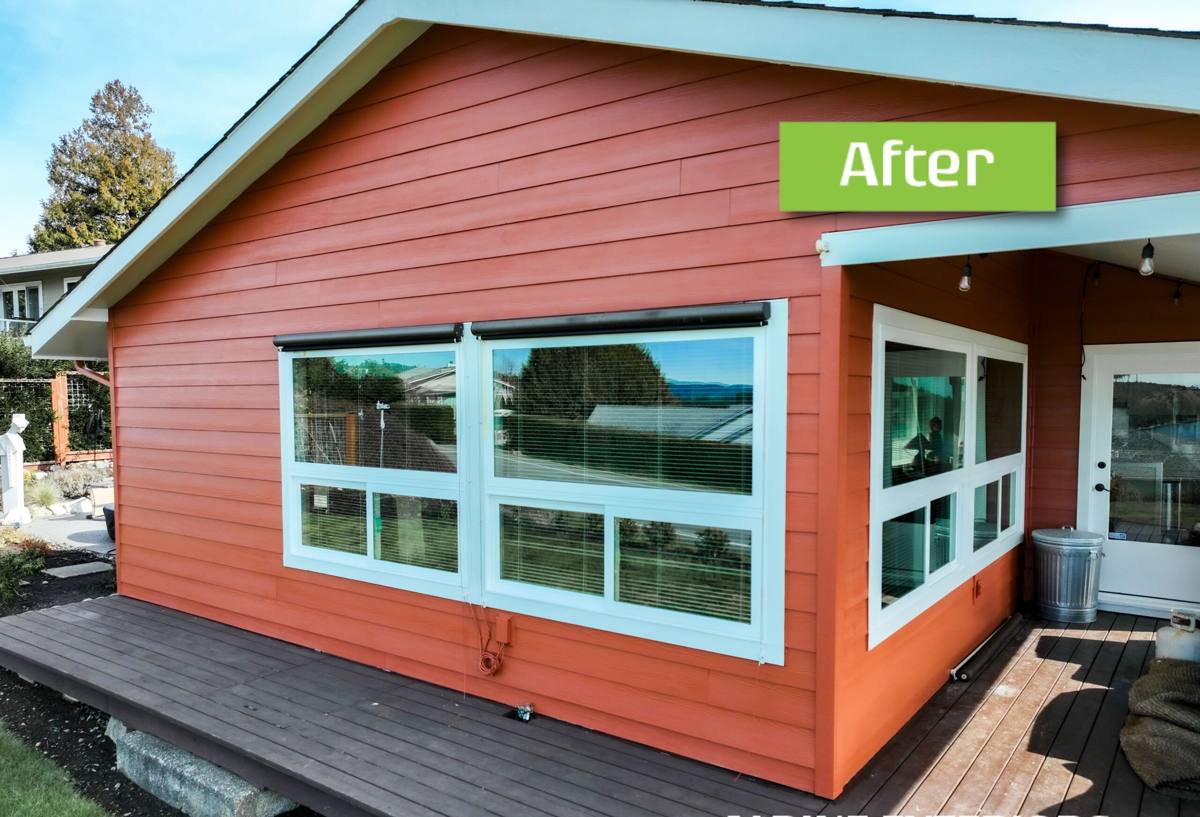
What Salt Air, Driving Rain, and Moss Season Do to Siding Here
Homes in and around Lummi Nation deal with a combination of stresses that inland Whatcom County properties don't see nearly as often:
- Salt air: Airborne salt from the surrounding waters accelerates corrosion on fasteners, flashing, and any metal trim. It also breaks down cheap paint finishes and raw wood surfaces faster than a typical inland exposure.
- Driving rain: Wind off the water doesn't just fall straight down — it pushes rain sideways into vertical seams and battens. On board and batten, that means the joints between boards see far more wind-driven moisture than a flat wall would.
- Long moss season: Cool, damp, shaded conditions for much of the year give moss and algae a long runway to establish themselves, especially on north-facing walls and anywhere tree cover keeps a wall from drying out between rain events.
None of these three problems are unique to Lummi Nation, but the combination — and the amount of time each year a wall stays wet — is more aggressive here than in most of Whatcom County. Siding that's marginal in Ferndale proper can fail outright closer to the water.
Why Board & Batten Is More Sensitive to This Than Lap Siding
Board and batten relies on a batten strip covering the seam between two vertical boards. If that seam isn't backed correctly, or if the fasteners holding the battens aren't sealed and spaced properly, water finds its way behind the boards instead of running off the face of them. Once moisture is trapped behind the siding, it doesn't matter how good the material looks from the street — the wall assembly behind it starts to suffer, and depending on the material, the boards themselves can start to suffer too.
What Correct Board & Batten Installation Actually Involves
A board and batten job that's going to hold up near the water isn't just "put up boards, nail battens over the seams." The details that separate a job that lasts from one that doesn't include:
- Proper weather-resistive barrier and flashing behind every board, with correct laps so water sheds outward at every seam, window, and penetration.
- Rain screen or drainage gap where conditions call for it, so any moisture that does get behind the siding has somewhere to go instead of sitting against the wall sheathing.
- Correct batten spacing and fastening — battens need to land on structural framing or proper backing, not just be face-nailed wherever is convenient.
- Corrosion-resistant fasteners throughout, given the salt exposure. Standard fasteners that would be fine 20 miles inland can start rusting and staining the siding within a few years here.
- Correct clearance at grade, decks, and roof lines so the bottom of the siding isn't sitting in standing water or snow load, and isn't shaded and starved of airflow.
- Factory-finished boards rather than field-painted raw material, so the finish is consistent and the manufacturer's warranty actually applies.
Skip any one of these and the siding might look fine for a year or two. In this climate, the problems it causes show up faster than they would somewhere drier.
The Only Material We Install: James Hardie Fiber Cement
We install James Hardie fiber cement board and batten exclusively. We don't install vinyl, LP SmartSide, primed spruce, cedar, or other fiber cement brands, and that's a deliberate standard, not a limitation of what we're capable of doing.
Fiber cement is non-combustible and doesn't rot, delaminate, or feed moss the way wood-based products can. James Hardie engineers its siding in climate-specific HZ (HardieZone) formulations, and the Pacific Northwest falls into the zone built to handle sustained moisture exposure rather than dry-heat conditions. The boards come with a factory-applied ColorPlus finish, which holds color and resists the fading and chalking that field-applied paint struggles with in a salty, damp environment. It also carries a strong transferable warranty when installed to the manufacturer's specifications — which is exactly why the installation details above matter so much. A warranty on the material doesn't help if the installation is what fails.
Why We Don't Install the Alternatives
We get asked fairly often why we don't offer vinyl or wood alternatives, since they're usually cheaper up front. The honest answer is maintenance and moisture behavior. Vinyl board and batten can work loose or warp under sustained wind exposure and doesn't hold up well to long-term UV and salt exposure without fading. Wood-based products, including engineered wood, need consistent maintenance to keep moisture out of cut edges and seams — maintenance that's a much bigger commitment in a climate where walls stay wet for long stretches of the year. Fiber cement isn't immune to a bad installation, but the material itself isn't the weak point the way it can be with these alternatives.
Board & Batten Material Options: A Straight Comparison
| Material | Moisture Behavior | Salt Air / Coastal Fit | Maintenance | Typical Lifespan |
|---|---|---|---|---|
| Vinyl | Doesn't rot, but can warp/loosen under wind load | Fades and chalks faster in salt exposure | Low, but limited repair options if damaged | 15-25 years |
| Cedar / primed spruce | Absorbs moisture at seams and cut edges | Needs vigilant sealing and repainting | High — regular refinishing required | 10-20 years with upkeep |
| LP SmartSide (engineered wood) | Resists moisture better than raw wood but still wood-based | Cut edges and seams need careful sealing | Moderate — periodic caulking/painting | 20-30 years |
| James Hardie fiber cement | Doesn't rot, swell, or feed moss growth | Engineered HZ formulation, factory finish holds up to salt exposure | Low — occasional wash-down | 30+ years to manufacturer spec |
Lifespan ranges are general industry figures and depend heavily on installation quality and site exposure — a poorly installed product in any category will underperform these numbers, and a well-installed one can exceed them.
Our Process for Lummi Nation Projects
Every board and batten job we take on near the water follows the same sequence, because skipping steps is where coastal siding jobs go wrong:
- On-site assessment: We look at wall orientation, tree cover, drainage at grade, and existing moisture damage before recommending anything.
- Tear-off and sheathing check: Once old siding is off, we inspect sheathing for hidden rot or moisture damage that needs to be addressed before new siding goes on — a step that's easy to shortcut and expensive to skip.
- Weather barrier and flashing: Proper house wrap, flashing, and drainage detailing go in before a single board is hung.
- Board and batten installation: Hardie boards and battens go up with corrosion-resistant fasteners, correct spacing, and attention to every seam, corner, and penetration.
- Final walkthrough: We check caulking, trim, and finish details with you before calling the job done.
Whether a home sits directly within Lummi Nation or in the surrounding Ferndale area, the process doesn't change — the exposure to salt air and driving rain is a factor across this whole stretch of the coastline, and the installation has to account for it either way. Any permitting or jurisdictional requirements specific to a property's location are something we confirm before work begins rather than assume.
Maintenance Checklist for Board & Batten Near the Water
Even correctly installed fiber cement benefits from a little attention in this climate. A short annual routine goes a long way:
- Rinse down siding once or twice a year to remove salt residue and slow moss/algae growth, especially on shaded and north-facing walls.
- Check caulking at trim, windows, and penetrations for cracking or separation and have it touched up before winter rains set in.
- Keep gutters clear so overflow isn't running down the face of the siding or pooling at the base of a wall.
- Trim back vegetation that's shading walls and keeping them from drying out between rain events.
- Have fastener heads and any exposed trim checked periodically for early signs of corrosion staining.
- Address any soft spots, staining, or gaps at seams promptly rather than waiting for a full inspection cycle.
Why a Crew That Already Works This Area Matters
Board and batten installed to spec in a dry, inland climate can tolerate small shortcuts that simply don't hold up along the Whatcom County coastline. A crew that hasn't spent real time on homes exposed to this level of salt air and wind-driven rain is more likely to under-detail flashing, skip a drainage gap that wasn't strictly required elsewhere, or use standard fasteners instead of corrosion-resistant ones. Those are the kinds of shortcuts that don't show up as a problem for a year or two — and then show up all at once.
Working this area regularly also means understanding how moss and algae actually behave on the walls here, which sides of a house need extra attention, and how long a wall assembly can expect to stay wet after a typical fall or winter storm system moves through. That's the kind of thing you learn from doing the work here repeatedly, not from a general siding background.
Get a Straight Answer on Your Home
If you're planning a board and batten project on a home in or near Lummi Nation, we're happy to take a look, walk the exterior with you, and give you a straightforward assessment of what your walls actually need — no pressure, no upsell. Reach out for a free estimate using the form below.