 Ferndale
 Composite Decking Built for Cordata's Weather, Not Against It
Cordata sits close enough to Bellingham Bay and the Salish Sea that homes here deal with a specific mix of conditions: salt-tinged air rolling in off the water, long stretches of driving rain from fall through spring, and a moss season that can run eight or nine months if wood surfaces stay damp. A deck in this part of Whatcom County isn't judged by how it looks on a dry August afternoon — it's judged by how it holds up in February, when the boards have been wet for six weeks straight and the sun barely clears the trees.
Composite decking exists largely to answer that problem. It doesn't absorb water the way wood does, it doesn't need annual staining to keep from graying, and it resists the kind of moss and mildew growth that turns a north-facing deck slick and green by mid-winter. But composite is not automatically low-maintenance or long-lasting — it's only as good as the substructure underneath it and the installation details around it. We've replaced plenty of composite decks in this area that failed early, not because the decking itself was bad, but because the frame, drainage, or fastening underneath it wasn't built for our climate.
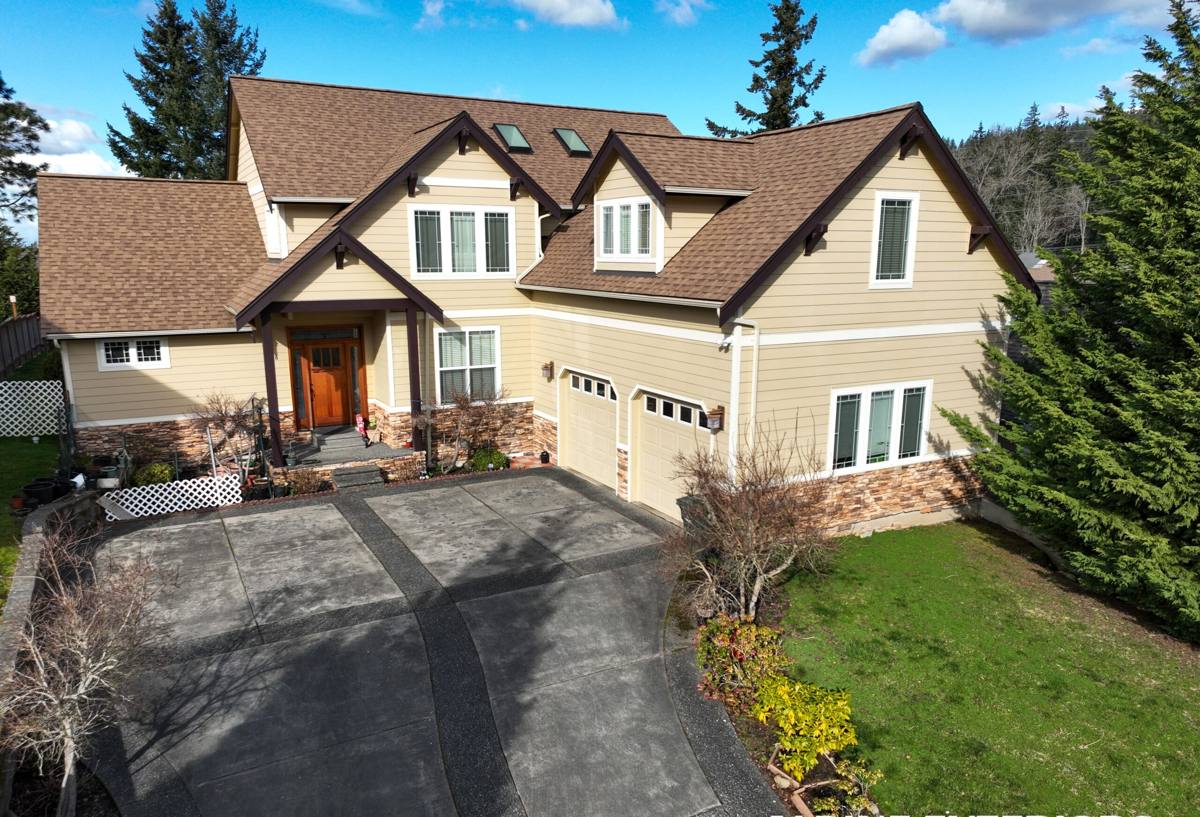
What Cordata's Climate Actually Does to a Deck
Three things drive most of the deck problems we see in this part of Whatcom County:
- Persistent moisture. Long rainy stretches mean deck surfaces, ledger boards, and joists can stay damp for days at a time, especially on shaded or north-facing decks.
- Salt-laden air. Proximity to the Sound means metal fasteners, brackets, and hardware corrode faster here than they would further inland, which is why fastener choice matters as much as board choice.
- Moss and organic buildup. Moss doesn't just look bad — it holds moisture against the deck surface and, on wood, accelerates rot. On composite, unmanaged debris and moss buildup in board grooves can still stain the surface and clog drainage gaps if the deck wasn't designed with airflow in mind.
None of this means composite is a bad fit for Cordata — it's a good one. It just means the installation has to account for all three, not just swap composite boards onto a wood-deck design and call it done.
What a Correct Composite Deck Installation Involves
The Substructure Comes First
The decking material gets all the attention, but the frame underneath is what determines whether a deck lasts 10 years or 25. In our climate, that means:
- Joists spaced to the manufacturer's spec for the board profile — composite typically needs tighter joist spacing than wood, especially at angles or on stairs.
- Pressure-treated or composite/PVC joists and beams, since standard framing lumber left exposed to Whatcom County's rain cycle will eventually rot even under composite decking.
- A ledger board attached and flashed correctly where the deck meets the house, with proper waterproofing behind it — this is one of the most common failure points on older decks we inspect.
- Corrosion-resistant, coated or stainless fasteners throughout, given the salt content in the air this close to the water.
Drainage and Airflow Underneath
A deck built tight to the ground or without ventilation traps moisture underneath, which shows up later as musty smells, mold on the underside of boards, or premature substructure failure. We build in ventilation gaps and, where grade allows, keep the frame elevated enough for air to move underneath and moisture to drain away rather than pool.
Hidden Fasteners and Board Gapping
Composite boards expand and contract with temperature more than most homeowners expect. Gapping between boards has to be set correctly for our seasonal temperature swings, and hidden fastener systems need to be installed per manufacturer spec — too tight and boards can buckle when they expand; too loose and boards can shift or squeak.
Capped vs. Uncapped Composite: What We Actually Recommend
Not all composite decking is built the same way, and the difference matters a lot in a wet climate. Uncapped composite (a wood-fiber and plastic blend with no protective outer layer) can absorb some moisture at the surface over time, which in a climate like ours can lead to swelling, staining, or mold growth on the surface faster than in drier regions. Capped composite — where the board core is wrapped in a PVC or polymer shell — sheds water and resists staining and mold far better, which is why it's what we recommend for nearly every Cordata project.
| Feature | Uncapped Composite | Capped Composite |
|---|---|---|
| Moisture resistance | Moderate — core can absorb some moisture over years | High — sealed shell blocks most surface moisture |
| Mold/moss resistance | Lower, especially in shaded, damp spots | Higher, easier to keep clean |
| Fading/staining | More prone to graying and staining over time | Better color retention, resists staining |
| Upfront cost | Lower | Higher |
| Typical warranty | Shorter, often prorated | Longer, often includes fade/stain coverage |
We'll walk through both options honestly during an estimate, including the real cost difference for your specific deck size — but for a shaded, north-facing, or ground-level deck in this area, capped composite almost always pays for itself in fewer problems down the road.
Our Process, Start to Finish
- On-site assessment. We look at grade, drainage, sun exposure, and the condition of any existing deck or ledger attachment before recommending a system.
- Design and material selection. We talk through board profile, color, and fastening system based on your home's exposure and budget, including whether a picture-frame border or stair details make sense.
- Permitting. Deck permits are handled based on your jurisdiction's requirements — we manage this so you're not chasing paperwork.
- Demo (if replacing an existing deck). Old decking, and any compromised framing underneath, gets removed and inspected rather than built over.
- Substructure build. Framing, ledger flashing, joist spacing, and fastener selection are all set to spec for our climate, not a generic install.
- Decking installation. Boards are laid with correct gapping and hidden fastening, with attention to drainage paths and airflow underneath.
- Final walkthrough. We go over care basics with you and confirm everything before we call the job done.
Cost Factors for a Cordata Composite Deck
Every deck is different, and we won't quote a number without seeing the site, but these are the factors that move the price most:
| Factor | Why It Matters |
|---|---|
| Deck size and shape | Complex angles, multiple levels, or wraparounds add labor and material |
| Substructure condition | Replacing rotted framing costs more than building on a sound existing structure |
| Board type (capped vs. uncapped) | Capped composite costs more upfront but resists moisture and staining better here |
| Height and railing requirements | Elevated decks need code-compliant railings and stairs, which add cost |
| Site access | Tight lots or difficult material access can add labor time |
As a general range, composite deck projects typically run from the mid-thousands for a small, simple ground-level deck up to well into five figures for larger, elevated, or multi-level decks with railings and stairs. We'll give you a firm number after seeing the site.
Maintenance: What Composite Actually Needs Here
Composite is lower-maintenance than wood, not maintenance-free — especially in a climate with a long moss season. A realistic maintenance routine for a Cordata deck includes:
- Sweeping regularly, especially in fall, to keep leaves and organic debris from sitting in board grooves and holding moisture.
- An occasional wash with soap and water (or a manufacturer-approved composite cleaner) to keep moss and mildew from getting a foothold, particularly on shaded sections.
- Keeping gutters and downspouts nearby clear so runoff isn't dumping extra water directly onto the deck surface.
- Checking railings, stair connections, and fasteners once a year for corrosion or looseness, given the salt content in our air.
- Avoiding pressure washing at high pressure directly into board grain, which can damage the cap layer on some composite products.
Mistakes We See on Existing Decks in This Area
When we're called out to inspect or repair a deck that isn't performing well, it's almost always one of these:
- Composite boards installed directly over old, untreated framing that was already retaining moisture.
- No ventilation gap underneath the deck, trapping moisture and leading to musty smells or mold on the underside.
- Standard (non-coated) fasteners used near the coast, showing rust staining within a few years.
- Ledger boards attached to the house without proper flashing, leading to water intrusion behind the deck.
- Board gapping set incorrectly, causing buckling after a hot stretch or gaps wide enough to catch heels and debris.
Every one of these is preventable with a correctly built substructure and attention to the details most homeowners never see until something goes wrong.
Why Hire a Crew That Already Works Cordata and Ferndale
Composite decking installation isn't exotic work, but doing it right in this specific climate takes local judgment — knowing which fastener grade to specify given our salt air, how much ventilation a shaded Whatcom County deck actually needs, and which board profiles hold up through our wet season versus which ones just look good in a showroom. A crew that works this area regularly has already seen what fails here and builds around it from the start, rather than learning it on your deck. We're not guessing at regional conditions — this is the climate we build in every week.
If you're planning a new composite deck or replacing an aging one in Cordata or the surrounding Ferndale area, we're happy to take a look and give you a straightforward, no-pressure estimate — just fill out the form below.