 Ferndale
 Why Decks in the Cordata Area Wear Out Faster Than You'd Expect
If you own a deck in the Cordata area near Ferndale, you already know it doesn't get much of a break. Whatcom County sits close enough to the water that salt-laden air reaches decks that are nowhere near the shoreline, working into fasteners, flashing, and any exposed end grain. Add in months of driving rain that comes sideways as often as it comes straight down, and a moss season that can stretch from October well into spring, and you've got a structure that's under near-constant moisture pressure for most of the year.
None of that means a deck is doomed — it means a deck needs to be built and repaired with that reality in mind. A lot of the deck damage we see isn't from one big failure. It's the slow accumulation of trapped moisture, UV-cracked sealant, and fasteners that were never rated for this kind of exposure in the first place. Understanding that pattern is the first step to fixing it correctly instead of patching it temporarily.
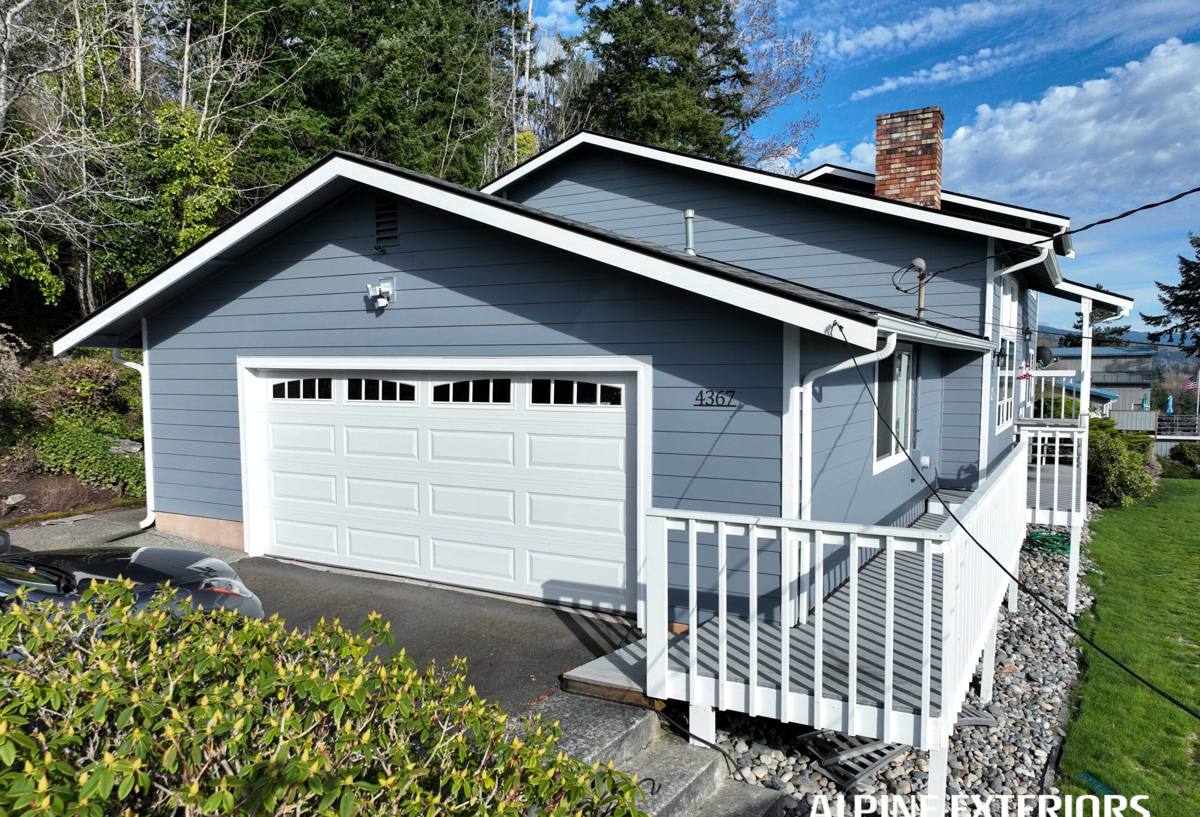
Signs Your Deck Needs Repair, Not Just a Cleaning
Moss and surface grime can make a perfectly sound deck look worse than it is, and a good pressure wash can make a failing deck look better than it is. Neither tells you what's actually happening structurally. Here's what we actually check for:
- Soft or spongy spots underfoot, especially near the house or at board ends
- Gaps opening up between decking boards where there weren't gaps before
- Rust streaking below screw heads or around joist hangers
- A ledger board (where the deck attaches to the house) that feels damp or shows staining behind it
- Railings that flex or wiggle more than a firm push should cause
- Green or black growth returning within weeks of cleaning, which usually points to a spot that never fully dries
- Stair stringers that show splitting or crumbling at the base
If you're seeing more than one or two of these, it's worth having someone look underneath the deck, not just at the walking surface. That's where the real story usually is.
What a Correct Deck Repair Actually Involves
Ledger Board and Framing
The ledger board is the single most important connection on most decks — it's also the part most likely to trap water against the house if the flashing was ever installed wrong or has failed over time. A proper repair means pulling boards back far enough to actually see the ledger and the rim joist behind it, not just caulking over a suspicious spot and calling it done. Rot here needs to be cut out and replaced, and the flashing needs to shed water away from the house, not into it.
Joists and Beams
Joists that have soaked and dried repeatedly can lose strength well before they show obvious rot on the surface. We check for checking (splitting along the grain), soft spots probed with an awl, and any sistered repairs from past work that may have been done without addressing the original moisture source.
Decking Boards
Individual board replacement only works if the framing underneath is sound. Replacing boards on top of a compromised structure just buys a little time before the same spots fail again.
Railings and Guards
Loose railings are a safety issue, not a cosmetic one. Post attachment to the framing — not just to the decking surface — is what actually holds a railing system under real load.
Fasteners and Hardware
This is where a lot of older Whatcom County decks show their age. Fasteners rated for interior use or basic exterior use corrode faster in salt-influenced coastal air than most homeowners expect, and corroded fasteners lose holding strength long before they visibly fail.
Repair or Replace? How We Actually Decide
Not every deck with problems needs to come down. The decision usually comes down to how much of the structural framing is still sound versus how much has to be cut out. Here's a general breakdown of how we think through it:
| Situation | Usually Points To | Why |
|---|---|---|
| Framing is solid; a few boards, railings, or fasteners are failing | Repair | The structure is doing its job; surface elements can be replaced individually |
| Rot is isolated to one area (a corner, a stair section, around one post) | Targeted repair | Cutting out and rebuilding one section is more cost-effective than a full rebuild |
| Ledger board or multiple joists show rot | Depends on extent — often larger repair | These are load-bearing; damage here affects the whole deck's safety |
| Deck is original to a much older home and multiple systems are failing at once | Replacement | Piecemeal repairs on an aging structure often cost more over time than starting fresh |
| Footings have shifted or heaved | Replacement or major structural rebuild | This affects the whole deck's foundation, not a repairable component |
We'll always tell you honestly which category your deck falls into, including when a repair is the right call even if a replacement would be a bigger job for us. A deck that just needs targeted work doesn't need to be torn out.
Materials: What We Use and Why
Material choice matters more here than in drier parts of the state, simply because everything gets wet more often and stays wet longer. There's no single right answer for every deck — it depends on your budget, how the deck is used, and how much upkeep you want to do.
| Material | Upkeep | Moisture Behavior | Honest Trade-off |
|---|---|---|---|
| Pressure-treated lumber | Needs periodic sealing/staining | Resists rot when maintained; can cup or check if neglected | Lower upfront cost, but moisture protection depends on you keeping up with sealing |
| Cedar | Needs regular sealing to hold color and resist weathering | Naturally rot-resistant but softer; more sensitive to standing moss and standing water | Attractive and workable, but not a "set it and forget it" material in this climate |
| Composite decking | Low — occasional cleaning | Doesn't rot, but can trap moisture underneath if airflow beneath the deck is poor | Higher material cost; performance depends heavily on correct installation and ventilation |
We're upfront that composite isn't automatically the "better" choice — it shifts the maintenance burden from surface care to making sure the substructure is built to let it breathe. Cedar and pressure-treated lumber are fine choices too, as long as whoever's maintaining the deck actually keeps up with sealing on the schedule the material needs, which matters more here than in a dry climate.
Our Repair Process
1. On-Site Inspection
We look at the deck from underneath as well as on top — walking surface, framing, ledger connection, post bases, and fastener condition. This is also when we probe any soft spots to find out how far damage actually extends.
2. Honest Scope and Estimate
You get a clear breakdown of what needs to be replaced, what can stay, and why. If a repair genuinely isn't worth doing compared to a rebuild, we'll say so — but we won't upsell a full replacement when a repair will hold up.
3. Removal of Failed Material
We remove only what needs to go, cutting back to solid, undamaged wood rather than stopping at the visible rot line, since damage often extends further than it appears on the surface.
4. Structural Repair
Ledger flashing, joists, hangers, and posts get addressed first, since everything else on the deck depends on this being right.
5. Decking, Railings, and Fasteners
New boards, railing components, and fasteners are matched to the rest of the deck and selected for this climate, not generic interior-grade hardware.
6. Final Walkthrough
We check for level, secure railings, properly seated fasteners, and drainage before we consider the job finished.
Maintenance That Actually Matters Here
A repair holds up longer when it's paired with the right upkeep, and the upkeep that matters most in Whatcom County is a little different from what you'd hear in a drier region.
- Keep gutters and downspouts clear so runoff isn't dumping directly onto or near the deck
- Sweep debris out of board gaps regularly — trapped leaves and needles hold moisture against the wood
- Address moss as soon as it appears rather than waiting until it's established; it holds moisture against the surface and accelerates decay underneath it
- Check underneath the deck once or twice a year, not just the top surface
- Reseal wood decking on the schedule the product actually needs in a wet climate, which is often more frequent than the label assumes for a drier region
- Make sure vegetation isn't growing up against the deck framing, which blocks airflow and keeps wood damp
Why It Matters to Hire a Crew That Already Works in Cordata
Deck repair isn't identical everywhere in Washington. A crew that regularly works in the Cordata area near Ferndale has already seen how the local combination of moisture, moss, and coastal air affects decks over time, which shapes real decisions on the job — fastener selection, how much ventilation to leave under a deck rebuild, and how aggressively to deal with moss in a repair rather than just cosmetically. A crew unfamiliar with this specific climate pattern may build to a generic standard that holds up fine somewhere drier but underperforms here.
Local familiarity also means fewer surprises with permitting expectations and inspection norms for the jurisdiction your home falls under, and a crew that can speak plainly about what's realistic for your specific deck rather than defaulting to the most expensive option.
What a Fair Deck Repair Estimate Should Include
Not all estimates are created equal, and it's reasonable to expect a certain level of detail before you commit to any work. A trustworthy estimate should walk through:
- What was actually found during the inspection, including areas checked underneath the deck
- A clear distinction between what will be repaired versus replaced, and why
- The specific materials and fasteners proposed, not just "decking" as a line item
- A realistic timeline that accounts for weather delays, which are common here
- Whether a permit is likely required for the scope of work
If an estimate is vague on any of these points, it's worth asking follow-up questions before signing anything.
If your deck in the Cordata area is showing soft spots, loose railings, rust stains, or moss that keeps coming back no matter how often you clean it, we're happy to take a look and give you a straightforward, no-pressure estimate on what it actually needs — repair or otherwise. Use the form below to get started.