 Ferndale
 Cordata's Climate Is Harder on Siding Than It Looks
Cordata sits close enough to Bellingham Bay and the broader Puget Sound to catch salt-laden marine air, but far enough inland to also get the tree cover and shade patterns typical of north Whatcom County neighborhoods. That combination is tougher on exterior siding than either factor alone. Salt air accelerates corrosion on fasteners and trim, driving rain during fall and winter storms pushes moisture sideways into seams and laps, and the shaded, damp conditions under mature trees extend moss and algae season well beyond what drier parts of the state deal with. A siding product that performs fine in eastern Washington or the Midwest can struggle here if it isn't matched to this specific mix of salt, rain, and shade.
Homeowners in this area also deal with a long wet season rather than a few heavy storms. Siding here isn't just rained on — it stays damp for days at a stretch, which is exactly the condition that rots wood, swells engineered wood products, and lets moss and mildew take hold on anything with texture or seams that trap moisture. Whatever goes on a Cordata home needs to shed water fast, dry out between storms, and resist organic growth without constant babysitting.
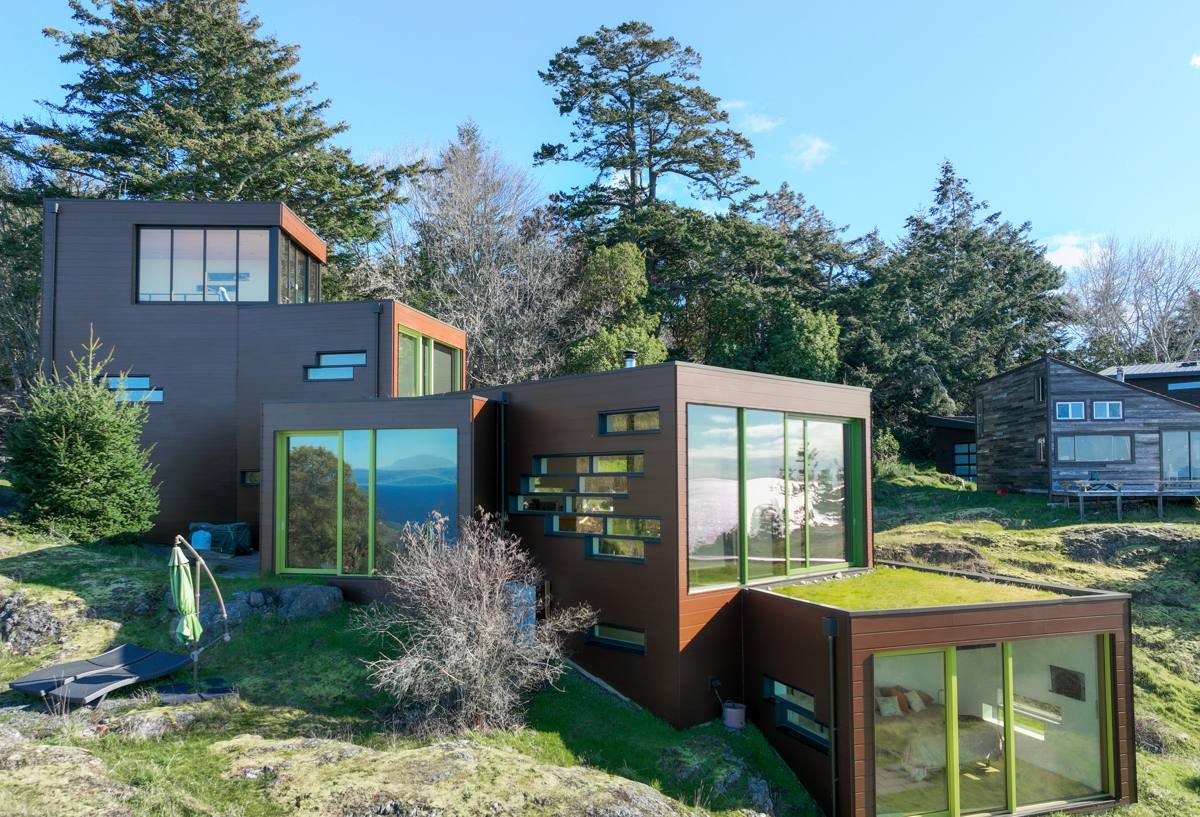
Why We Install Only James Hardie in This Climate
We install James Hardie fiber cement siding exclusively — not vinyl, not LP SmartSide, not cedar, not other fiber cement brands. That's not a marketing position, it's a standard we hold because of what we see happen to other products in exactly this kind of climate. Fiber cement is made from cement, sand, and cellulose fibers, so it doesn't absorb and swell the way wood-based products do, and it doesn't expand and contract with temperature the way vinyl does. In a marine climate with heavy, sustained moisture exposure, that stability matters more than almost anything else about a siding product.
James Hardie backs its products with ColorPlus Technology, a factory-applied finish that's baked on and warranted separately from the substrate, so the color coat isn't something a crew is guessing at on a ladder in variable weather. It also carries a strong transferable limited warranty, which matters to homeowners who may sell within the warranty period — not a small consideration in a growing area like this. We're not against every other product because it's inherently bad; we've simply seen which materials hold up to salt air, driving rain, and moss season without shortening the maintenance-free years homeowners are paying for, and Hardie has consistently been that product.
Non-Combustible Matters Here Too
Fiber cement is non-combustible, which is a real advantage anywhere wildfire smoke and ember exposure has become a summer concern in Washington. It's not the primary reason we chose Hardie for this climate, but it's a legitimate added benefit homeowners should know about.
Picking the Right Hardie Line and Colors for Cordata
James Hardie makes climate-engineered product lines under its HZ5 designation for regions like ours that see significant moisture and temperature swings. The formulation is built to resist moisture-related damage better than a generic national product, which is the right starting point for anything going on a home in this part of Whatcom County.
Beyond the engineering, the practical choice is about profile and color:
- Lap siding (the most common choice) comes in several exposure widths and a smooth or cedar-textured finish — texture shows less dirt streaking from driving rain but can hold slightly more surface moisture in deep shade, worth discussing if a home sits under heavy tree cover.
- Panel and board-and-batten systems work well for modern or farmhouse-style homes and give a cleaner, more contemporary look.
- Trim boards in ColorPlus finishes should match the body color system rather than being treated as an afterthought — mismatched trim is one of the more common regret points we hear about from homeowners who used a different installer previously.
- Darker ColorPlus colors hide the early stages of moss and mildew streaking better than very light colors on north- or shade-facing walls, though no color prevents growth — that comes down to installation and airflow, not paint.
What a Correct Installation Actually Involves
James Hardie siding performs to its rated lifespan only when it's installed to the manufacturer's specifications. This is where most of the real-world problems we get called out to fix actually originate — not with the product itself, but with shortcuts taken during installation.
Drainage Plane and Flashing
Behind the siding, a proper weather-resistive barrier and drainage plane need to be continuous, with flashing integrated at every window, door, and horizontal transition. In a climate with sustained driving rain, water will find any gap in this system eventually. This layer is invisible once the job is done, which is exactly why it's the part corner-cutting crews skip — nobody sees it until there's a problem years later.
Fastening and Gaps
Hardie specifies exact nailing patterns, fastener types, and minimum clearances from the ground, roofline, and other siding penetrations. Panels need proper gapping at butt joints and around penetrations to allow for moisture movement without caulk being asked to do a structural job it isn't built for. Fasteners that aren't corrosion-resistant will bleed rust stains through the finish over time, which is a bigger issue this close to salt air than it would be further inland.
Finish Details
Caulking, touch-up paint at cut edges, and proper sealing of any field-cut ends are small steps that determine whether moisture gets a foothold at the most vulnerable points on the wall. Cut edges that aren't sealed are one of the fastest ways moisture works its way into fiber cement, defeating the point of choosing a moisture-resistant material in the first place.
Where Installations Go Wrong Locally
The failure patterns we see on homes in this area are consistent enough to call out directly:
- Siding installed tight to grade or hardscaping with no clearance, wicking ground moisture during the wettest months.
- Butt joints and window flashing done with caulk alone instead of proper flashing tape and z-flashing.
- Fasteners driven too high or too low on the panel, or the wrong fastener type used, leading to rust streaking and reduced holding strength.
- No rainscreen gap on shaded walls, trapping moisture behind the siding exactly where moss and mildew already thrive.
- Cut ends left unsealed at corners and trim returns.
None of these show up on inspection day. They show up two, five, or ten years later as staining, soft trim, or paint failure — well after the crew that cut the corner is gone.
Our Process, Start to Finish
- On-site assessment. We look at existing siding condition, wall assembly, moisture exposure by elevation, and any rot or drainage issues before quoting anything.
- Tear-off and inspection. Once old siding comes off, we check sheathing for hidden moisture damage — this is often the first real look anyone's had at the wall in years.
- Weather barrier and drainage plane. A continuous water-resistive barrier and rainscreen system go on before a single piece of siding is hung.
- Flashing at every penetration. Windows, doors, and horizontal transitions get properly integrated flashing, not just caulk.
- Hardie installation to spec. Correct fasteners, gapping, and nailing patterns, following manufacturer installation requirements for our climate zone.
- Finish work. Sealed cut ends, matched trim, and touch-up paint where needed.
- Final walkthrough. We go over the finished job with the homeowner before calling it done.
Siding Options Compared
| Factor | James Hardie Fiber Cement | Vinyl | Cedar / Wood | LP SmartSide |
|---|---|---|---|---|
| Moisture behavior in driving rain | Stable, doesn't swell or warp | Doesn't absorb water but can bow/gap over time | Absorbs moisture, can rot without diligent upkeep | Engineered wood core, vulnerable if edges/seams aren't sealed |
| Moss and algae resistance | Resists growth well when installed with a rainscreen | Resists growth but shows dirt and staining | Prone to moss and mildew in shaded, damp spots | Susceptible if moisture reaches the wood substrate |
| Maintenance | Low — factory finish, occasional wash | Low but can crack and fade | High — regular staining/sealing needed | Moderate — finish and caulk upkeep matters |
| Fire resistance | Non-combustible | Melts/deforms under heat | Combustible | Combustible (wood-based core) |
| Typical lifespan when properly installed | 30+ years | 20-40 years, appearance degrades sooner | 15-25 years with consistent maintenance | 20-30 years with consistent maintenance |
This isn't a claim that every alternative fails — vinyl and LP SmartSide are legitimate, widely used products with their own trade-offs, and cedar has real aesthetic appeal for homeowners willing to keep up with staining and sealing. We simply standardized on James Hardie because, given this climate's specific mix of salt air, driving rain, and moss season, it's the product that lets us hand over a wall system we're confident will still look right a decade from now with the least ongoing homeowner effort.
What It Costs
Every home is different, so exact numbers depend on square footage, wall complexity, tear-off scope, and trim details. In broad terms, expect the total to be shaped by these factors:
| Cost Factor | Why It Moves the Price |
|---|---|
| Existing siding removal | Tear-off, disposal, and sheathing repair add labor beyond a simple re-side |
| Home size and wall complexity | More corners, dormers, and penetrations mean more cutting, flashing, and labor time |
| Siding profile chosen | Lap, panel, and board-and-batten systems price differently, and exposure width affects material quantity |
| Trim and accent detail | Custom trim packages and accent colors add material and labor over a basic trim-out |
| Sheathing or framing repair | Rot found during tear-off has to be addressed before new siding goes on, which is not always visible at bid time |
| Access and site conditions | Steep lots, tree cover, or tight setbacks affect staging and labor time |
We'd rather walk a property and give an honest number than guess with a range that doesn't reflect the actual home.
Hiring Checklist and Ongoing Care
Before hiring anyone for a James Hardie project in Cordata, it's worth confirming a few basics:
- Are they a James Hardie-focused installer, or is fiber cement one of a dozen products they touch occasionally?
- Will they show you the flashing and drainage plane plan before siding goes up, not just the finished look?
- Do they follow manufacturer-specified fastener types and nailing patterns, and can they explain why?
- Are they licensed and insured, with local references you can actually verify?
- Do they carry local, seasonal experience — have they installed through a wet Whatcom County fall and winter, not just in dry summer months?
Once the siding is up, upkeep is minimal but not zero. An annual rinse to knock off pollen, moss spores, and road film keeps ColorPlus finishes looking factory-fresh, and it's worth a quick visual check each fall for any caulking that's pulled away at trim joints before the wet season sets in. That's a fraction of the maintenance wood siding demands, but it's not "install and forget."
If you're weighing siding options for a home in the Cordata area, we're happy to walk the property, look at your specific exposure and shade conditions, and give you a straightforward, no-pressure estimate for a correctly installed James Hardie system — use the form below to get started.