 Ferndale
 Windows Built for Custer's Coastal Climate
Custer sits in that stretch of northern Whatcom County where the weather doesn't do things halfway. You get salt-laden air rolling in off the water, rain that comes in sideways more often than straight down, and a moss season that seems to stretch a little longer every year. Ordinary windows — the kind sold as a one-size-fits-all upgrade — start showing their age here faster than they would inland. Seals give out early, frames swell and stick, and condensation shows up between the panes long before the "20-year" warranty runs out.
We install windows for homes in and around Custer and Ferndale because we work this stretch of Whatcom County regularly, not as a one-off job between other territories. That matters more than most homeowners realize until they've already had a window fail on them twice.
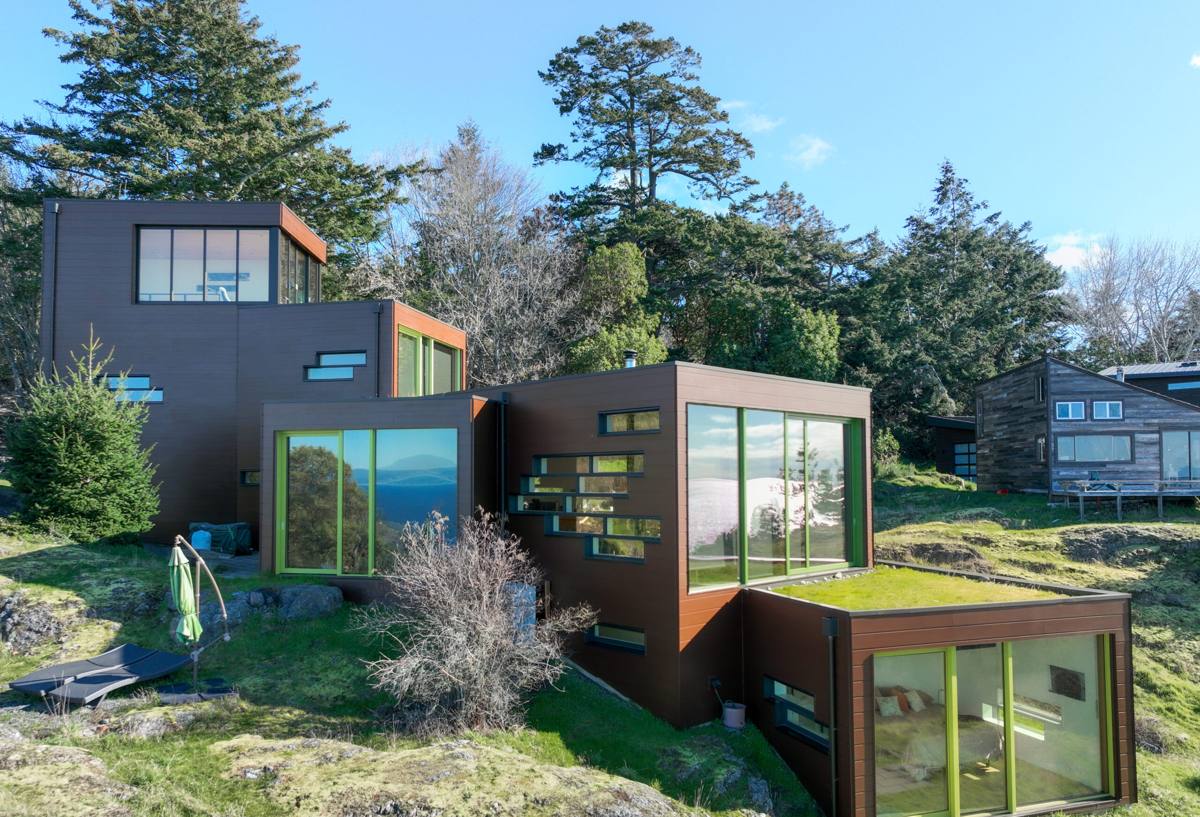
What Whatcom County Weather Does to Ordinary Windows
Salt Air and Hardware Fatigue
Proximity to the water means airborne salt finds its way onto every exterior surface, including window hardware. Cheaper aluminum components and low-grade fasteners corrode faster than their spec sheets suggest. Locks stiffen, cranks bind, and finishes chalk out well ahead of schedule. It's rarely dramatic — it's a slow degradation that owners notice only when they try to open a window that used to move freely.
Driving Rain and Sill Rot
Wind-driven rain doesn't just hit a window head-on — it gets pushed up and under trim, into gaps that would stay dry in a calmer climate. If a window wasn't flashed correctly when it went in, or if the sealant has aged past its useful life, water finds the sill and the framing behind it. That's where the real damage happens, often invisible until the drywall or the exterior trim starts to tell on it.
Moss and Prolonged Moisture
A long moss season means more weeks of the year where wood trim, sills, and the siding-to-window transition stay damp. Moss holds moisture against a surface far longer than open air would, which accelerates rot in any wood component and keeps humidity elevated right at the window opening. This is a bigger deal for windows than most people expect, because moisture management at the perimeter is at least as important as the glass itself.
Signs Your Custer Home Needs a Window Upgrade
Before recommending a full replacement, we look for a specific set of warning signs. If you're seeing more than one or two of these, it's worth having someone take a real look rather than waiting.
- Fogging or a hazy film between the panes — the seal has failed and the gas fill (if any) is gone
- Windows that are noticeably harder to open, close, or lock than they used to be
- Visible gaps, soft spots, or paint failure around the frame or sill
- Cold drafts near the window even with it fully closed and locked
- Condensation forming on the inside of the glass regularly during colder months
- A noticeable rise in heating costs without any other explanation
- Wood trim around the window that feels spongy or shows dark staining
What "Energy-Efficient" Actually Means Out Here
Energy-efficient windows get marketed with a lot of numbers — U-factor, SHGC, air infiltration ratings — and most of that is genuinely useful, but it needs to be read in the context of a Pacific Northwest coastal climate, not a generic national average. In Custer, the priority order looks a little different than it would in a hot, dry climate.
| Rating | What It Measures | Why It Matters Here |
|---|---|---|
| U-factor | How well the window resists heat loss | Our winters are mild but long and damp — a low U-factor keeps heating bills down over many months of use, not just a few cold snaps |
| SHGC (Solar Heat Gain Coefficient) | How much solar heat passes through the glass | Cloud cover limits solar gain most of the year, so this matters less here than in sunnier regions — moderate SHGC is usually fine |
| Air Leakage | How much air passes through the assembly under pressure | Driving rain and wind gusts off the water make a tight, well-sealed unit important for both comfort and moisture control |
| Condensation Resistance | How well the window resists interior condensation | High humidity and cooler indoor-outdoor temperature swings make this a practical concern, not just a spec sheet detail |
For most homes in this area, a well-built vinyl or fiberglass window with dual or triple glazing, a warm-edge spacer, and low-E coating hits the right balance without paying for features that don't add much value in our climate.
How We Install Windows the Right Way
The window unit itself is only part of the job. A quality window installed poorly will underperform and eventually fail at the perimeter — which is exactly where this region's weather does the most damage. Our installation approach is built around keeping water out of the wall assembly, not just filling the opening.
Flashing and Water Management
Every opening gets flashed in the correct sequence — sill pan first, then integrated with the weather-resistive barrier so water is directed out and down, never trapped behind the siding. This is the step that gets skipped or rushed most often on lower-bid jobs, and it's the one that determines whether the window lasts 25 years or needs attention in five.
Sealant Selection and Application
We use sealants rated for exterior exposure in a wet, salt-air environment, applied at the joints that actually see water — not just a bead around the visible trim. Sealant that looks fine from the ground can still be failing at the backside of the flange.
Integration With Existing Siding
Because we work on siding as much as windows, we pay close attention to how the new window ties into the surrounding cladding. A window replacement that ignores the condition of the siding around it — or leaves gaps at the transition — creates a weak point that shows up as a leak a year or two later, long after the crew that installed it is gone.
Our Process, Start to Finish
- On-site assessment — we look at your current windows, the condition of the surrounding trim and siding, and how your home is oriented to wind and rain exposure
- Honest recommendation — we tell you which windows make sense for your home and budget, and why, without pushing a premium product you don't need
- Written estimate — clear pricing with no vague allowances or surprise add-ons
- Installation — proper removal, sill pan and flashing work, air-sealing, and careful attention to the siding interface
- Cleanup and walkthrough — we clear debris and walk you through how the new windows operate and what to expect
Comparing Frame Materials for This Climate
| Frame Material | Moisture Performance | Maintenance | Notes for Coastal Whatcom County |
|---|---|---|---|
| Vinyl | Good — won't rot or corrode | Low | Solid value option; quality varies a lot between manufacturers, so we're selective about which lines we install |
| Fiberglass | Excellent — very stable in wet/dry cycling | Low | Handles temperature and moisture swings well; a strong choice for exposed elevations |
| Wood-clad | Depends heavily on cladding integrity | Higher | Attractive interior look, but the exterior cladding must stay intact — any breach lets moisture into the wood core, which is a real risk in a long wet season |
| Bare aluminum | Poor in salt air | Moderate to high | We generally steer clients away from bare aluminum frames here — the corrosion and thermal performance trade-offs aren't worth it this close to the water |
What Affects the Cost
Every home is different, so we don't quote sight unseen — but these are the factors that move the number most:
| Factor | How It Affects Price |
|---|---|
| Number and size of openings | More or larger windows means more material and labor |
| Frame material and glazing package | Fiberglass and triple-pane cost more upfront than standard vinyl dual-pane |
| Condition of existing framing | Rot or water damage found during removal adds repair work before the new window can go in |
| Access and window type | Second-story or hard-to-reach openings, or specialty shapes, take more time |
| Trim and siding tie-in | Matching or repairing surrounding trim and siding adds scope but protects the finished result |
We'd rather find rot or a bad flashing job during the estimate than have it surface as a surprise mid-project — that's part of why we look closely at the whole opening, not just the glass.
Why Hire a Crew That Already Works in Custer
A contractor who mostly works elsewhere and takes the occasional job out this way doesn't have the same working knowledge of how this specific stretch of coastline behaves. We know which elevations take the worst of the driving rain, how fast moss builds back up on north-facing trim, and what kind of flashing detail actually holds up against salt air over years, not just through the warranty period. That local pattern recognition shows up in fewer callbacks and windows that perform the way they're supposed to for the long haul — for Custer homes and everywhere else we work around Ferndale and Whatcom County.
Keeping New Windows Performing Long-Term
Even a well-installed window benefits from basic upkeep, especially in this climate:
- Rinse salt residue off frames and glass periodically, especially on wind-exposed sides
- Clear moss and debris from sills and surrounding trim before it holds moisture against the surface
- Check and re-lubricate hardware (locks, cranks, hinges) once or twice a year
- Inspect exterior caulking annually and have any cracked or separated sealant redone
- Watch for soft spots in nearby trim or siding, which usually show up before a window itself fails
If your windows in Custer are drafty, foggy, or just past their prime, we're happy to take a look and give you a straightforward, no-pressure estimate — use the form below to get started.