 Ferndale
 Metal Roofing in Custer: Built for What This Coastline Actually Does to a Roof
Custer sits close enough to the water and open farmland north of Ferndale that its roofs take a different beating than homes further inland. You get salt-laden air rolling off the Strait, long stretches of driving rain that comes in sideways more often than straight down, and a moss season that can run eight or nine months out of the year under the right (or wrong) shade and moisture conditions. A metal roof handles all three of these better than most other roofing materials, but only when it's specified and installed correctly for this exact climate. That's the part that gets skipped when a crew is used to working drier, calmer regions and treats a Whatcom County metal roof like any other job.
We install metal roofing for homes in and around Custer as part of our regular Ferndale-area work, not as an occasional add-on service. That matters more than it sounds like it should — the details that keep a metal roof performing here are specific to this coastline, and they're easy to miss if you don't see this weather pattern every week.
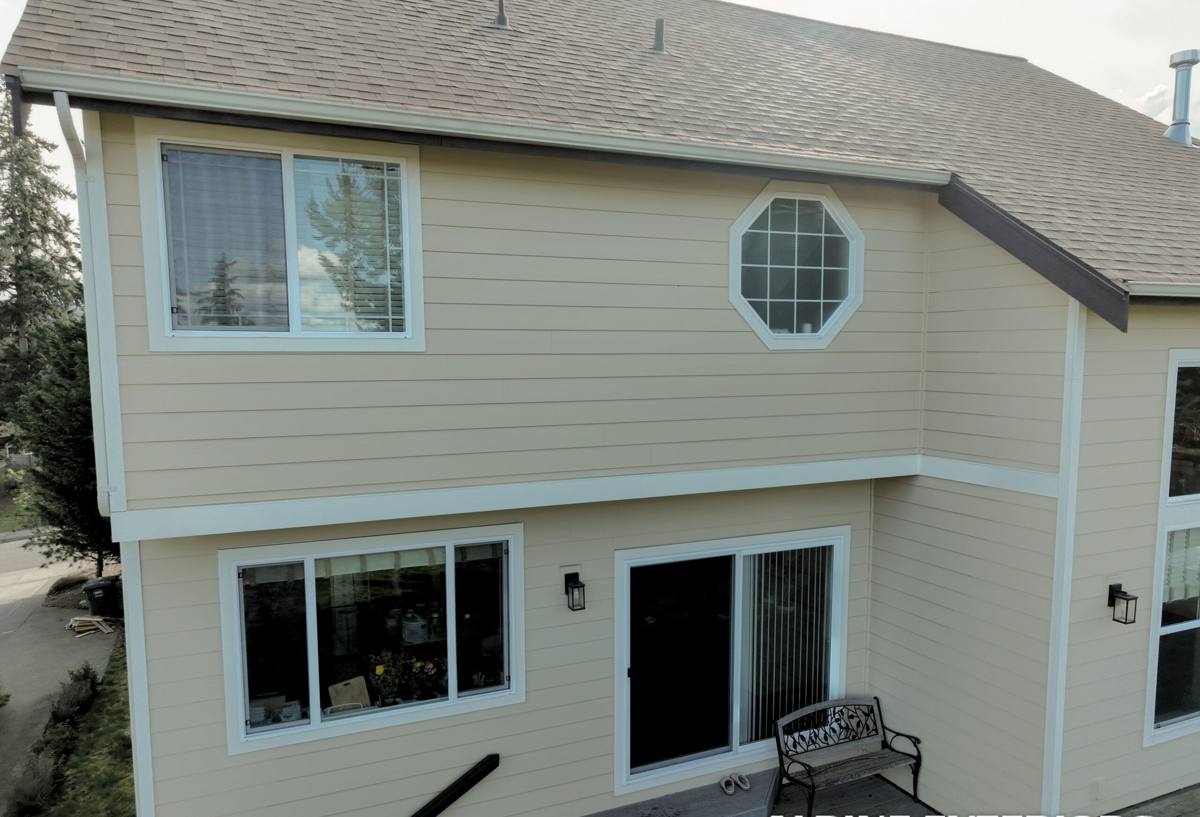
What Custer's Climate Actually Demands From a Roof
Salt Air and Corrosion
Homes closer to Birch Bay and the open water get direct salt exposure, but even set back from the coast, Custer air carries enough salt content to accelerate corrosion on the wrong metal or the wrong fasteners. This shows up first at cut edges, screw heads, and any spot where the protective coating has been scratched or ground during installation. A roof that looks fine for the first few years can start showing rust streaks at fastener lines once the coating is compromised — and once that starts, it doesn't stop on its own.
Driving Rain
Wind-driven rain off the water doesn't just fall on a roof, it gets pushed sideways and upward under laps, around penetrations, and into any seam that isn't properly sealed or overlapped. Standard nail-through panel systems can work here, but they lean harder on sealant and fastener integrity than a standing seam system does. Over time, sealant is the first thing to fail — which is why panel selection and fastener strategy matter more in Custer than in a drier inland town.
Moss and Sustained Moisture
Moss doesn't get real traction on bare metal the way it does on asphalt shingles or wood shakes, which is one of the genuine advantages of going metal here. But moss and organic debris still build up in valleys, around chimney flashing, and anywhere water sits longer than it should — and that trapped moisture is what eventually finds a weak seam or fastener. A metal roof reduces the moss problem; it doesn't eliminate the need to manage water flow and debris.
Metal Roofing Systems: What We Actually Recommend
Standing Seam
Standing seam panels use concealed fasteners and interlocking vertical seams, which means no exposed screw heads for salt air to work on and no reliance on sealant at the seams themselves. This is our default recommendation for anything within a few miles of the water or on a home with a history of ice dam or wind-driven rain issues. It costs more up front than exposed-fastener panel, but the maintenance burden over the life of the roof is meaningfully lower.
Exposed-Fastener Panel (Ag Panel / R-Panel)
This is a legitimate, lower-cost option and it's common on outbuildings, shops, and some homes throughout Whatcom County's rural areas. The tradeoff is honest: exposed screws mean exposed points of potential corrosion and leak risk over time, and those fasteners need periodic inspection and eventual replacement of washers as they age. We'll install this system when it fits the building and the budget, but we tell every customer up front what the long-term maintenance looks like compared to standing seam.
Stone-Coated Steel
For homeowners who want the profile of shingle or tile but the durability of steel, stone-coated panels are worth considering. They carry a heavier price tag and are a more specialized install, but they hold up well in this climate and give a different aesthetic option for homes where a visible metal panel look isn't the goal.
Comparing the Options
| System | Fastener Exposure | Typical Lifespan | Best Fit |
|---|---|---|---|
| Standing Seam | Concealed | 40-70 years | Coastal/high-wind exposure, long-term low maintenance |
| Exposed-Fastener Panel | Exposed screws | 25-40 years | Shops, outbuildings, budget-conscious homes |
| Stone-Coated Steel | Concealed under stone coating | 40-60 years | Homes wanting a shingle/tile look with metal durability |
Materials and Coatings That Matter Here
Not all steel or aluminum is equal, and in a salt-air environment the coating spec matters as much as the metal itself. We look at a few things before recommending a product for a Custer home:
- Substrate: Galvalume steel or aluminum, both of which resist salt-air corrosion far better than bare galvanized steel.
- Paint system: A quality PVDF (fluoropolymer) finish holds color and resists chalking longer than a basic polyester coating, especially under coastal UV and salt exposure.
- Gauge: Thicker gauge panels resist denting from hail and debris and hold their shape better under wind load — worth the modest upcharge on an exposed site.
- Fastener match: Fasteners and flashing metals need to be compatible with the panel metal to avoid galvanic corrosion where dissimilar metals touch.
What a Correct Installation Actually Involves
A metal roof is only as good as the details underneath it. This is where a lot of problems get baked in before the first panel ever goes down.
Deck Inspection and Prep
We check the existing deck for rot, soft spots, and proper ventilation before anything else. Whatcom County's moisture load means we find more deck issues here than a dry-climate crew would expect, especially around older homes with a history of moss or gutter neglect.
Underlayment
A high-temperature, self-adhering underlayment (not standard felt) goes down first, particularly at eaves, valleys, and penetrations. This is the roof's real waterproofing layer — the metal panel is the weather shield, but the underlayment is what protects you if wind-driven rain ever gets past a seam.
Flashing and Penetrations
Every chimney, vent pipe, and skylight is a potential entry point for driven rain. Flashing has to be formed and layered correctly, not just caulked and hoped for — sealant is a backup, never the primary defense.
Fastening and Seaming
Standing seam panels get mechanically seamed or snapped together per the manufacturer's spec, with proper clip spacing for our regional wind loads. Exposed-fastener systems get correctly torqued screws with intact rubber washers, spaced per manufacturer requirements — over-driven or under-driven screws are one of the most common causes of early leaks we see on other people's installs.
Ventilation
Metal roofs need proper ridge and soffit ventilation to manage condensation on the underside of the panel, especially in our humid climate. Skipping this step is a common shortcut that leads to underside condensation issues years down the road.
Our Process for a Custer Metal Roofing Project
- On-site assessment: We inspect the existing roof, deck condition, ventilation, and any problem areas specific to your home's exposure.
- System recommendation: Based on your home's exposure to wind, salt air, and moisture, we recommend the panel system and coating that fits both the building and your budget.
- Written estimate: A clear, itemized quote so you know what you're paying for and why — materials, labor, flashing, and any deck repair.
- Deck prep and repair: Any rot or soft decking gets addressed before a single panel goes on.
- Underlayment and flashing installation: The waterproofing layer and all penetration details go in first.
- Panel installation: Panels are installed to manufacturer spec with correct fastening or seaming for our wind and rain exposure.
- Final walkthrough: We walk the finished roof with you, covering maintenance basics and warranty coverage.
Cost Factors Homeowners Should Know
Metal roofing costs more up front than asphalt shingles, and the range varies widely based on system type, roof complexity, and material choice. Rather than quote a number that won't hold up across different homes, here's what actually drives the price:
| Factor | Why It Matters |
|---|---|
| Panel system | Standing seam runs higher than exposed-fastener panel due to labor and material |
| Roof complexity | More valleys, dormers, and penetrations mean more flashing work and labor time |
| Coating quality | PVDF finishes cost more than polyester but last significantly longer in salt air |
| Deck condition | Rot or ventilation problems found during tear-off add to the scope |
| Tear-off vs. overlay | Removing old roofing adds cost but is often the right call on an aging deck |
Maintenance: What Metal Roofing Still Needs
One of the appeals of metal roofing is lower maintenance, not zero maintenance. In Custer's climate, a bit of seasonal attention goes a long way toward getting the full lifespan out of the system.
- Clear valleys and gutters of moss, needles, and debris at least twice a year
- Check exposed fasteners (if applicable) every couple of years for backing out or washer wear
- Inspect flashing around chimneys and vents after major windstorms
- Trim back overhanging branches that drop debris and hold moisture against the roof
- Watch for any coating scratches from fallen branches or ladder contact and touch up promptly
Why Hiring a Crew That Already Works Custer Matters
Metal roofing is not a forgiving material to learn on. A crew that mostly installs asphalt shingles and takes the occasional metal job may not think about galvanic corrosion between dissimilar metals, may under-spec ventilation, or may not understand how wind-driven rain off the water behaves differently than a typical inland rainstorm. We work in Ferndale, Custer, and the surrounding Whatcom County communities regularly, which means we're accounting for this specific coastal and agricultural exposure as a matter of course, not as something we're figuring out on your roof.
We're also familiar with the practical side of working out here — permitting through Whatcom County, the realities of rural access and driveway conditions, and how local wind patterns off the water and across open fields affect staging and safety on a roofing job.
Get a Straightforward Estimate
If you're weighing metal roofing for a home in Custer, we're happy to come take a look, walk you through what your specific roof needs, and give you an honest, no-pressure estimate. There's a form below — reach out and we'll get a time on the calendar.