 Ferndale
 Building Decks for Sudden Valley's Specific Climate
Sudden Valley sits close enough to the water and the tree line that a deck here takes a different kind of beating than one in a drier inland neighborhood. Salt-laden air off the water corrodes hardware faster than most homeowners expect, driving rain gets pushed sideways into ledger boards and stair stringers, and the shoulder seasons bring weeks of damp shade that never quite dries out. We've built and repaired decks across this part of Whatcom County long enough to know which details matter here and which are just upsells.
A deck that's built the same way you'd build one in Spokane or Eastern Washington will fail here faster — not because the materials are bad, but because the assumptions behind the build don't match our weather. That's the gap we're trying to close on this page: what actually holds up in Sudden Valley, and what a properly built deck looks like from the ground up.
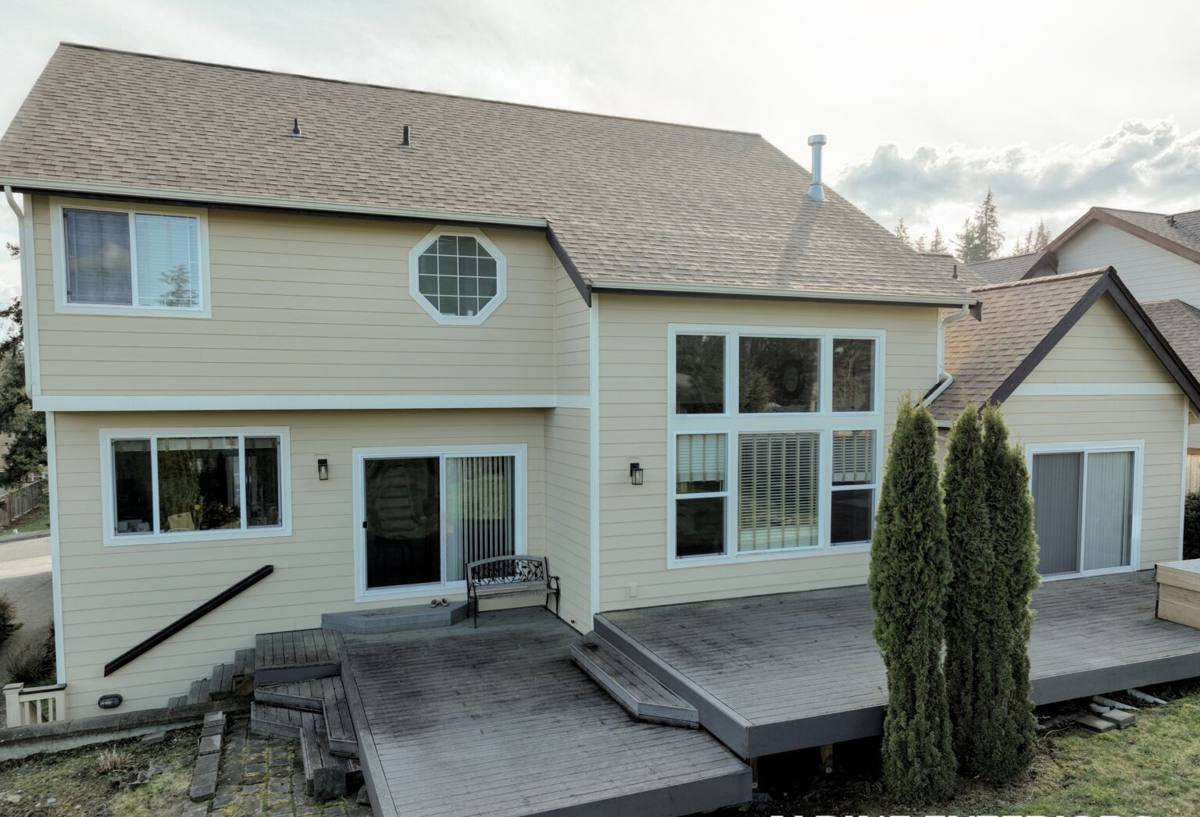
What the Local Climate Actually Does to a Deck
Salt Air and Metal Hardware
Any fastener, joist hanger, or bracket that isn't rated for coastal exposure will start showing rust streaks within a couple of seasons out here. It's not dramatic failure — it's slow, and it's easy to miss until a hanger is weak enough to matter. We spec stainless or heavy hot-dip galvanized hardware rated for coastal/treated-lumber contact on every Sudden Valley job, not just the fasteners that show.
Driving Rain and Standing Water
Wind-driven rain doesn't fall straight down here — it gets pushed under railings, into ledger connections, and along the tops of joists where flashing tape is often skipped. Standing water on horizontal ledger flashing or in joist notches is where rot starts, usually invisible from above until boards start to feel soft.
Moss and Shade
Decks tucked under trees or on the north/shaded side of a house stay damp for weeks at a stretch through fall and winter. Moss doesn't just look bad — it holds moisture against the decking surface and turns boards slick and dangerous underfoot. Surface texture, board spacing, and airflow underneath the deck all affect how fast moss takes hold.
What a Properly Built Deck Requires Here
- Ledger board flashing that sheds water outward, not just tape stuck over the joint
- Coastal-rated (stainless or heavy-duty galvanized) joist hangers, screws, and structural connectors throughout — not just at visible points
- Proper joist spacing and blocking so the deck doesn't flex or bounce under wet, heavier footing conditions in winter
- Board gapping sized for our humidity swings — too tight and boards cup or trap moisture, too wide and they feel unstable
- Adequate slope away from the house on any ledger-attached structure so water doesn't pool against siding
- Under-deck airflow or ventilation gaps where the structure sits low to grade, to keep moss and mildew from taking hold underneath
- Stair stringers and post bases kept off direct ground contact, set on proper footings or post bases rather than buried in soil
Decking Material Choices for Sudden Valley Conditions
There's no single "best" decking material — there's a right tradeoff for your budget, your sun exposure, and how much upkeep you want to do. Here's how the common options actually perform in this climate, honestly:
| Material | How It Handles Our Climate | Maintenance | Rough Lifespan |
|---|---|---|---|
| Pressure-treated wood | Solid if properly sealed and flashed; shaded areas need extra attention to moss and mildew | Annual cleaning, re-staining every 2-3 years | 15-20 years with upkeep |
| Cedar | Naturally rot-resistant and handles moisture well, but greys and needs sealing to hold its color and texture | Cleaning plus sealant/stain every 1-2 years | 20-25 years with upkeep |
| Composite decking | Resists rot and moss better than wood; still needs cleaning in shaded, damp spots where mildew can form on the surface | Periodic washing, no staining/sealing | 25-30+ years |
| PVC/capped composite | Best moisture resistance of the common options; performs well in shaded, salt-air conditions | Occasional washing | 30+ years |
Our general recommendation for shaded or salt-exposed Sudden Valley lots leans toward composite or capped composite decking for the walking surface, paired with pressure-treated or cedar for the substructure where it's not exposed to standing water. But budget and the specific spot on your lot matter — we'll walk your site and tell you honestly which tier fits your situation instead of pushing the most expensive option by default.
Railings, Fasteners, and the Details That Get Skipped
Most deck failures we get called out to inspect aren't decking board problems — they're connection problems. A few areas worth understanding before you hire anyone:
Railing Post Attachment
Railing posts need to be through-bolted to structural framing, not just lag-screwed into rim joists. This matters more here because damp wood loses grip strength on screws faster than dry wood, and a loose railing post is a safety issue, not just a cosmetic one.
Fastener Consistency
Mixing fastener metals (say, a standard galvanized screw next to a stainless hanger) sets up galvanic corrosion that accelerates rust at that exact connection point. Salt air makes this worse. Every fastener on the job should be rated to match, not just "close enough."
Ledger Flashing Detail
This is the single most common shortcut we see on decks that fail early. A ledger board bolted to the house without proper step flashing or a water-diverting cap will let water track behind the flashing and into the house rim joist over time — a much more expensive repair than the deck itself.
Our Process for a Sudden Valley Deck Project
- Site walk and honest assessment — we look at sun exposure, drainage, existing structure (for rebuilds/replacements), and how the specific spot on your lot handles rain and shade.
- Material and design discussion — we go over decking material options, railing style, and structural needs based on what we saw on-site, with real cost tradeoffs explained plainly.
- Permitting — decks over a certain height or attached to the house typically require a permit through the county or local jurisdiction; we handle that paperwork so you don't have to chase it.
- Demo and structural work — for replacements, we tear out and inspect the substructure and ledger connection before anything new goes up; hidden rot gets addressed, not covered over.
- Framing and flashing — proper ledger flashing, coastal-rated hardware, correct joist spacing and blocking.
- Decking and railing installation — surface material, board spacing, and railing attachment done to code and built for our weather, not a fair-weather climate.
- Final walkthrough — we go over the finished deck with you, including what maintenance (if any) the material needs going forward.
Why a Crew That Already Works Sudden Valley Matters
A contractor who mostly works dry, inland job sites will often default to standard hardware and standard flashing details because that's what works where they usually build. Those same defaults are exactly what fails early here. Working this neighborhood regularly means we already know which corners of a lot get hit hardest by wind-driven rain, which spots stay shaded and damp longest into summer, and which hardware specs actually hold up against the salt air coming off the water. That's not a marketing claim — it's just what happens when you build in one climate long enough to see what comes back with problems five years later.
It also means we're a known, findable crew if something needs a warranty check or a maintenance question years down the road — not a company that did one job in the area and moved on.
Questions to Ask Before You Hire Anyone for a Deck Here
- Is the hardware you're using rated for coastal or high-moisture exposure, not just standard galvanized?
- How will you flash the ledger board where it meets the house?
- What's your plan for drainage and airflow if the deck sits in a shaded or low spot?
- Are you pulling the required permit, and who's responsible for inspection sign-off?
- What's the realistic maintenance schedule for the decking material you're recommending, in this specific climate?
If a contractor can't answer these clearly and specifically, that's worth noting before you sign anything.
Get a Straight Estimate for Your Sudden Valley Deck
Whether you're planning a new deck, replacing an old one that's showing rot or moss buildup, or just want a second opinion on a quote you already have, we're happy to walk the site and give you an honest read — no pressure, no inflated scope. Fill out the form below and we'll get back to you with a real estimate based on what your property actually needs.