 Ferndale
 Why Point Roberts Puts Windows Through More Than Most Homes
Point Roberts sits out on its own point of land in Whatcom County, exposed to Boundary Bay and the Strait of Georgia on three sides. That exposure is what makes the location beautiful and what makes window systems age faster there than they do a few miles inland. Salt-laden air, wind-driven rain off the water, and a long stretch of gray, damp months every year all work on window hardware, seals, and trim in ways that a standard inland install doesn't have to account for.
We work throughout the Ferndale area and out to Point Roberts regularly, so this page isn't a generic "why replace your windows" pitch. It's specifically about what custom window work needs to look like on this stretch of Whatcom County coastline, and what to expect if you hire us to do it.
Salt Air and Hardware Corrosion
Even homes several blocks from the water pick up salt in the air, and it settles into window tracks, hinges, and locking hardware over time. Cheaper mill-finish aluminum components and unprotected steel fasteners corrode noticeably faster here than in a typical Whatcom County neighborhood further from the shoreline. When we spec hardware for a Point Roberts job, corrosion resistance is a real selection criterion, not an afterthought.
Driving Rain and Window Leaks
Rain that comes in sideways off the water finds every weak point in a window opening — a gap in the flashing, a sealant bead that's failed, a sill that wasn't pitched to shed water. Most window leaks we find in this area aren't caused by the window unit itself; they're caused by how the opening around it was flashed and sealed. That's the part of the job that determines whether a window lasts 25 years or starts showing water stains on interior trim within five.
Moss, Mildew, and Shaded Exposures
North- and east-facing walls, and anything shaded by trees or a neighboring structure, stay damp longer through the fall and winter. On older wood-frame windows that means paint failure, soft spots at the sill, and moss creeping into any horizontal surface that holds moisture. Custom window replacement is a chance to correct the water management around those openings, not just swap the glass.
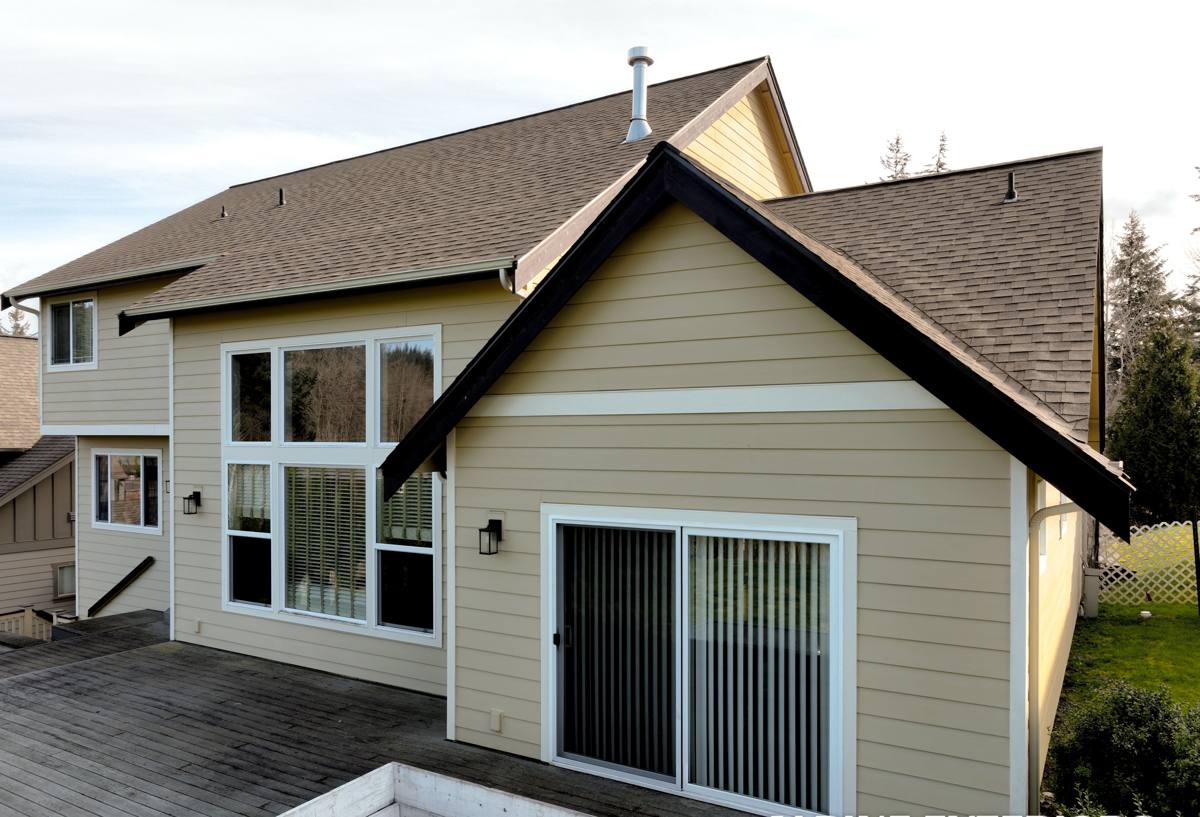
What "Custom" Actually Means on a Real Job
Custom doesn't mean expensive or unusual — it means the window is built and installed to fit the actual opening and the actual house, instead of forcing a stock size into a rough opening that doesn't match it. Most homes built before manufactured window standardization, and plenty built after, have openings that are slightly out of square, undersized, or oversized for off-the-shelf units.
Matching Existing Openings vs. Resizing
Where the existing opening is sound, we build to match it exactly, which keeps the job cleaner and less invasive to siding and interior trim. Where there's rot, an outdated egress size, or a homeowner wants a different sightline or a bigger view of the water, we resize the opening properly — new header if needed, correct framing, and flashing built for the new dimensions.
Older Homes and Character Trim
A number of homes in this area have original wood trim, casings, or window proportions worth keeping. Custom sizing lets us replace the window itself without tearing out trim that's still in good shape, which saves money and keeps the house looking like itself instead of like it got a generic upgrade.
Material and Glass Choices for This Climate
There's no single "best" window material — there's a best material for a given exposure, budget, and maintenance appetite. On a marine-exposed property, we weigh moisture behavior and hardware durability more heavily than we would on a sheltered inland lot.
| Material | Coastal Performance | Maintenance | Typical Trade-Off |
|---|---|---|---|
| Vinyl | Good — won't rust or rot, handles moisture well | Low — occasional cleaning | Fewer custom color/profile options than wood or fiberglass |
| Fiberglass | Very good — dimensionally stable, resists corrosion | Low | Higher upfront cost than vinyl |
| Wood-clad (exterior clad, wood interior) | Depends heavily on clad quality and installation detail | Moderate — interior wood needs periodic attention | Best interior appearance, more sensitive to installation errors near salt air and driving rain |
| Aluminum (uncoated/mill finish) | Poor near the water — prone to corrosion and condensation | Higher — hardware and finish need monitoring | We generally steer away from this option for this exposure |
We're not against wood-clad or aluminum-clad windows as a category — some very good products use them well. What we watch for is whether the cladding and installation detailing are actually suited to a marine exposure, because a good product installed with the wrong flashing detail will fail regardless of brand.
Glass Packages Worth Paying For
In this climate, the glass package matters more than most homeowners expect. A low-E coating tuned for the Pacific Northwest's mix of overcast winters and warm-but-not-scorching summers keeps heat in during the cold months without overheating rooms with west or south glass in July. Argon-filled double pane is the practical standard for most homes here; triple pane is worth discussing on north-facing rooms or homes right on the water where wind load and heat loss are both higher.
Installation Details That Matter More Here Than Elsewhere
The window unit is maybe half the job. The other half is how it's integrated into the wall assembly, and that's where coastal exposure changes what "good enough" means.
- Sill pan flashing under every opening, sloped to shed any water that gets past the window back to the exterior
- Proper head flashing with a drip edge, lapped correctly over the water-resistive barrier above it
- Compatible sealants and tapes — not every product pairs correctly with every siding type, and mismatched materials fail early
- Shimming and fastening that keeps the frame square without over-compressing weatherstripping
- Corrosion-resistant fasteners and hardware appropriate for salt air exposure
- Interior air sealing, not just exterior weatherproofing — gaps on the inside let humid indoor air condense inside the wall cavity
Skipping any one of these doesn't usually show up as a problem on install day. It shows up two or three winters later as a soft spot, a stain, or a window that's suddenly hard to operate.
How We Approach a Point Roberts Job
1. On-Site Assessment
We look at each opening individually — framing condition, existing flashing (or lack of it), sun and wind exposure, and whether the opening needs to be resized. Two windows on the same house can need different solutions.
2. Measuring and Ordering
Custom sizes get measured precisely and ordered to match. We build in a realistic lead time for special orders, and we tell you upfront what that timeline looks like rather than guessing.
3. Removal and Opening Prep
Old units come out carefully to protect interior finishes. Any rot, soft framing, or failed flashing found during removal gets addressed before the new window goes in — that's the point in the job where hidden problems are cheapest to fix.
4. Installation and Flashing
Sill pans, flashing, air sealing, and fastening are done to the standard described above, matched to your siding type and the wall assembly behind it.
5. Trim, Cleanup, and Walkthrough
Interior and exterior trim is finished, the site is cleaned up, and we walk the job with you so you know how the new hardware operates and what maintenance, if any, it needs.
Why a Crew That Already Works Point Roberts Matters
Point Roberts is a separate community connected to the rest of Whatcom County only by a border crossing through Canada, which means scheduling and material logistics take real planning — a crew that shows up once a year has to relearn that every time. We build it into our routine scheduling, so a Point Roberts job doesn't get treated as an inconvenience or quietly deprioritized behind easier-to-reach jobs.
Familiarity with the area also means we've seen how the local exposure — salt air, wind, and the long moss season common to this part of the Washington coast — actually plays out on real homes here, not just in a manufacturer's spec sheet. That shows up in small decisions: which side of the house gets extra attention on flashing, which hardware finish holds up, and which hardware doesn't.
Keeping New Windows Performing Long-Term
A correctly installed window still benefits from basic upkeep, especially in this climate:
- Rinse salt residue off frames and glass periodically, especially on wind-exposed elevations
- Clear debris and moss from sills and tracks before it holds moisture against the frame
- Check weep holes (the small drainage openings in the sill) to make sure they're not blocked
- Lubricate hardware per the manufacturer's recommendation to prevent salt-air stiffness
- Watch for soft spots in exterior trim or caulking that's separated, and address them early
What Affects Cost
We don't publish blanket pricing because it depends on real variables, but the main cost drivers on a Point Roberts custom window job are usually the same handful of things: how many openings need resizing versus a like-for-like swap, the material and glass package chosen, whether hidden rot or flashing repair turns up once we open the wall, and total number of units on the project. We'll walk through all of that with you before any work starts, in plain terms, so there are no surprises once the job is underway.
If your Point Roberts home has windows showing their age — foggy glass, hard-to-operate hardware, drafts, or visible water staining — we're happy to take a look and give you a straight, no-pressure estimate using the form below.