 Ferndale
 Sandy Point Roofs Deal With More Than Just Wind and Rain
Sandy Point sits out on the water, and that location is exactly what makes roof damage here different from a repair job three miles inland in Ferndale proper. Homes along this stretch of Whatcom County take a steady diet of salt-laden air off the Strait of Georgia, wind that has nothing to slow it down before it hits the roofline, and driving rain that comes in sideways during winter storms. None of that shows up on a roof as one dramatic event — it shows up as a slow accumulation of small failures that eventually let go all at once during a windstorm.
When we get a call after a storm in Sandy Point, we're rarely looking at damage caused purely by that one storm. We're looking at damage that a stressed roof finally couldn't hold together anymore. Understanding that difference matters, because it changes what an honest repair actually looks like.
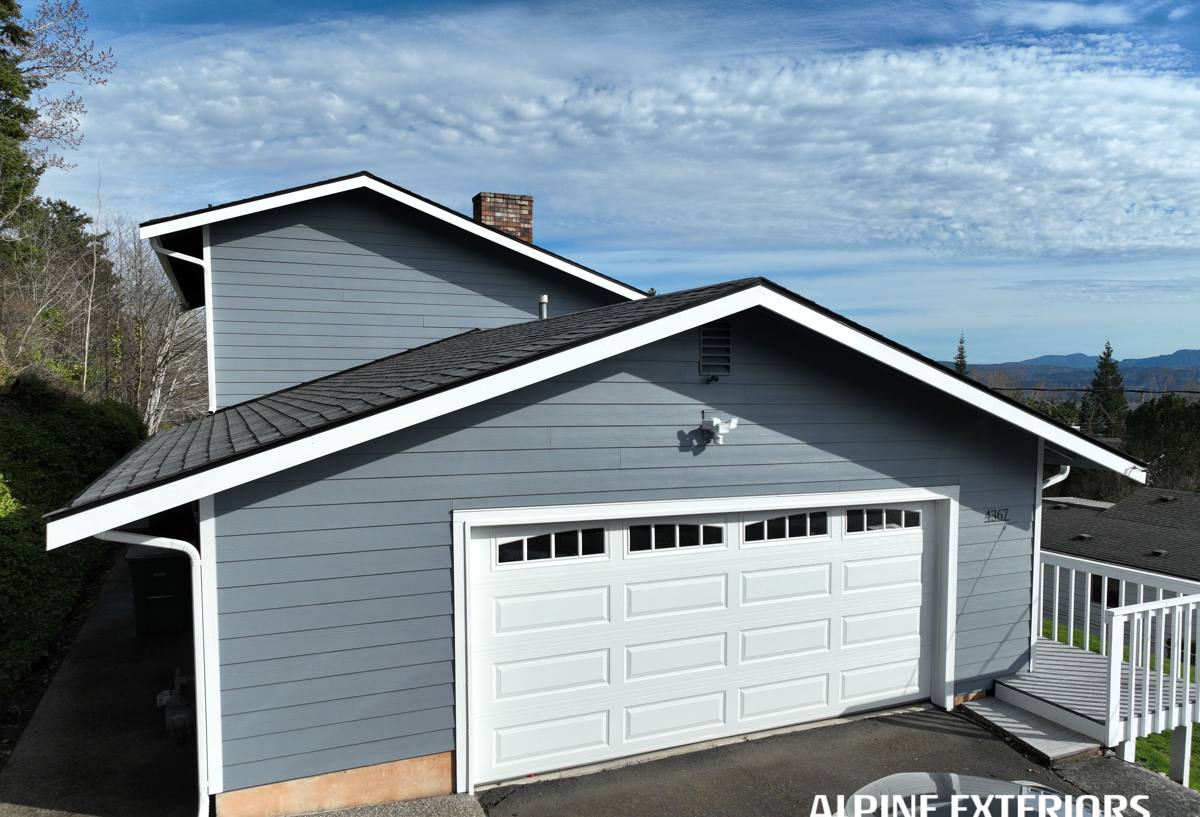
What Storm Damage Looks Like on a Salt-Air, High-Wind Roof
Wind-Lifted and Torn Shingles
Sustained wind exposure loosens shingle tabs and sealant strips over time, so it takes less force than you'd expect to tear shingles loose in a storm. On a Sandy Point roof, we often find lifted or missing shingles concentrated on the windward side and around ridge and hip lines, where wind uplift is strongest.
Flashing Failures
Flashing around chimneys, vents, skylights, and roof-to-wall transitions is usually the first thing to fail in salt air, because it's often thinner-gauge metal or has fasteners that corrode faster than the rest of the roof system. A storm doesn't have to be severe to work a weakened flashing seam loose enough to start leaking.
Moss-Related Rot and Granule Loss
Ferndale's long, wet moss season means moss gets a real foothold on any roof that isn't cleaned regularly, and Sandy Point's shaded, moisture-holding microclimates near the water make it worse. Moss holds water against the roof surface, which accelerates granule loss on asphalt shingles and can lead to soft, rotting decking underneath by the time a storm exposes the problem.
Corroded Fasteners and Hardware
Salt air corrodes exposed nail heads, screws, and metal trim faster than an inland environment would. Corroded fasteners back out or lose their grip, which is a quiet failure until a windstorm turns it into missing shingles or a lifted ridge cap.
Why a Correct Repair Isn't Just "Replace What Blew Off"
The most common mistake in storm repair — anywhere, but especially in a salt-air, high-wind location like Sandy Point — is replacing only the visibly missing or torn material and calling it done. That approach ignores the condition of everything around the damage, which is usually where the next failure starts.
A correct repair starts with figuring out why that section failed in the first place. If shingles blew off because sealant strips had already degraded from years of salt exposure, replacing just those shingles without addressing the surrounding sealant means the next storm takes the new ones too. If flashing leaked because a fastener corroded through, that flashing likely needs to be reset or replaced, not just re-caulked.
We also check the decking underneath any storm-exposed area. Wind and rain that get past torn shingles or a flashing gap can soak the plywood or OSB decking beneath. Soft, delaminating, or discolored decking has to be replaced before new roofing goes down — patching over compromised decking is a repair that fails again within a season or two.
Our Storm Damage Repair Process
1. Initial Assessment
We walk the roof (or inspect from a lift when conditions or pitch make that safer) and document every area of damage — not just the obvious spots. This includes checking flashing, ridge lines, valleys, and any areas with existing moss growth, since those are the places most likely to have hidden problems.
2. Temporary Protection
If a storm has left your roof exposed — torn underlayment, missing shingles, a compromised area over living space — we can install temporary weatherproofing to stop further water intrusion while the full repair is scheduled. This matters most during Whatcom County's wet season, when a delay of even a few days can mean a second round of water damage.
3. Decking Check
Any area with storm damage gets checked for water intrusion into the decking. We won't cover up soft or rotted decking — it gets replaced as part of the repair, not left for a future problem.
4. Matching Repair, Not a Patch
Where possible, we match existing shingle color and profile so the repair blends in rather than leaving a visibly different patch. When an exact match isn't available because of product age, we'll tell you that honestly upfront rather than after the work is done.
5. Flashing and Fastener Review
Since flashing and fasteners are usually the weak point in a salt-air environment, we address any corroded or failing hardware in the repair area, not just the shingles themselves.
6. Final Walkthrough
We show you what was found, what was repaired, and what — if anything — is worth keeping an eye on going forward.
Repair vs. Replacement: How We Make the Call
Not every storm-damaged roof needs full replacement, and not every roof that looks fine after a storm is actually fine. The decision comes down to a few honest factors:
| Factor | Favors Repair | Favors Replacement |
|---|---|---|
| Roof age | Under 12–15 years, otherwise in good condition | Nearing or past expected lifespan for the material |
| Extent of damage | Isolated to one section or slope | Spread across multiple sections or the whole roof |
| Decking condition | Solid, dry decking under damaged area | Widespread soft spots or rot found during inspection |
| Moss/granule history | Minimal prior moss damage | Long-term moss damage has already thinned granule coverage broadly |
| Prior repair history | First significant repair needed | Roof has needed repeated storm repairs in recent years |
We'll always give you the repair option when it's a sound, honest choice — not push replacement just because it's a bigger job. But if the inspection shows a roof that's failing broadly rather than in one storm-damaged spot, we'll tell you that plainly and explain why.
Materials That Make Sense for a Salt-Air Location
For Sandy Point homes, we pay particular attention to a few material choices that hold up better against salt exposure and wind:
- Fasteners and flashing metal: corrosion-resistant options hold up longer than standard-grade hardware in a salt-air environment.
- Sealant quality: proper, fresh sealant at flashing points and shingle tabs matters more here than inland, since UV, salt, and moisture all degrade sealant faster.
- Shingle wind rating: in an exposed wind location, a higher wind-rated shingle is worth the modest cost difference over a standard rating.
- Ventilation: proper attic ventilation reduces the moisture buildup that feeds moss growth and accelerates decking rot from the inside.
We won't oversell premium materials where they're not needed, but on a property that takes this much environmental stress, cutting corners on fasteners or sealant is a false economy — it just means the next storm does the same damage again.
Documentation for Insurance Claims
If your storm damage is being filed as an insurance claim, we document damage with photos and a written scope of work before repairs begin. This gives you a clear record for your adjuster and helps avoid disputes over what was storm-caused versus pre-existing wear. We're happy to walk your adjuster through our findings if that's useful, but the inspection and documentation are done for your benefit first.
What to Do Right After a Storm
If you've just been through a windstorm and are checking your Sandy Point property for damage, a few things are worth doing before you call anyone:
- Check the ground and gutters for shingle granules, torn shingle pieces, or flashing fragments.
- Look inside the attic (if accessible) for new water stains, damp insulation, or daylight coming through the decking.
- Note any ceiling stains or new drips inside the home, even small ones.
- Photograph visible roof damage from the ground if it's safe to do so — don't get on the roof yourself, especially in wet or windy conditions.
- Cover any obvious openings with a tarp only if you can do so safely; otherwise wait for a professional temporary fix.
- Call for an inspection promptly — a small leak left through a few more rain events becomes a much larger repair.
Why It Matters to Hire a Crew That Already Works Sandy Point
A roofer who mostly works drier, more sheltered parts of Whatcom County will look at a Sandy Point roof differently than a crew that works this specific stretch of coastline regularly. We know which flashing details tend to fail first out here, where moss tends to build up fastest given the tree cover and shade patterns near the water, and what wind exposure does to fastener life over time. That local pattern recognition is what keeps a repair from becoming a repeat visit.
We're a Ferndale-based crew, and Sandy Point is part of the territory we work regularly — not a one-off trip. That means we show up knowing what to expect from this environment, and we stand behind the repair with a crew you can reach again if something comes up.
If your roof took a hit in a recent storm — or you're just not sure whether what you're seeing is normal wear or storm damage — we're glad to take a look. Request a free, no-pressure estimate using the form below and we'll get you a straightforward assessment of what your roof actually needs.