 Ferndale
 Building Decks for Sandy Point's Waterfront Conditions
Sandy Point sits right up against the water north of Ferndale, and that location cuts both ways. It's part of what makes the neighborhood a great place to have a deck — and it's exactly why decks out there fail faster than decks built a few miles inland. Salt-laden air moves off the water and settles into every exposed surface, driving rain comes in sideways during fall and winter storms, and the shaded, damp stretches of many lots stay wet long enough each year to grow a steady crop of moss. None of that is unusual for Whatcom County. But Sandy Point gets a heavier dose of it than most of Ferndale, and a deck built without that in mind will show it within a few seasons — soft spots, rust streaks, slick boards, fasteners backing out.
We build and repair decks around Ferndale regularly, and Sandy Point is one of the areas where we adjust our approach rather than run the same standard build we'd use somewhere drier and more sheltered. This page covers what that adjustment actually looks like — the materials, the fasteners, the framing details, and the maintenance reality — so you know what a deck built for this specific spot should include.
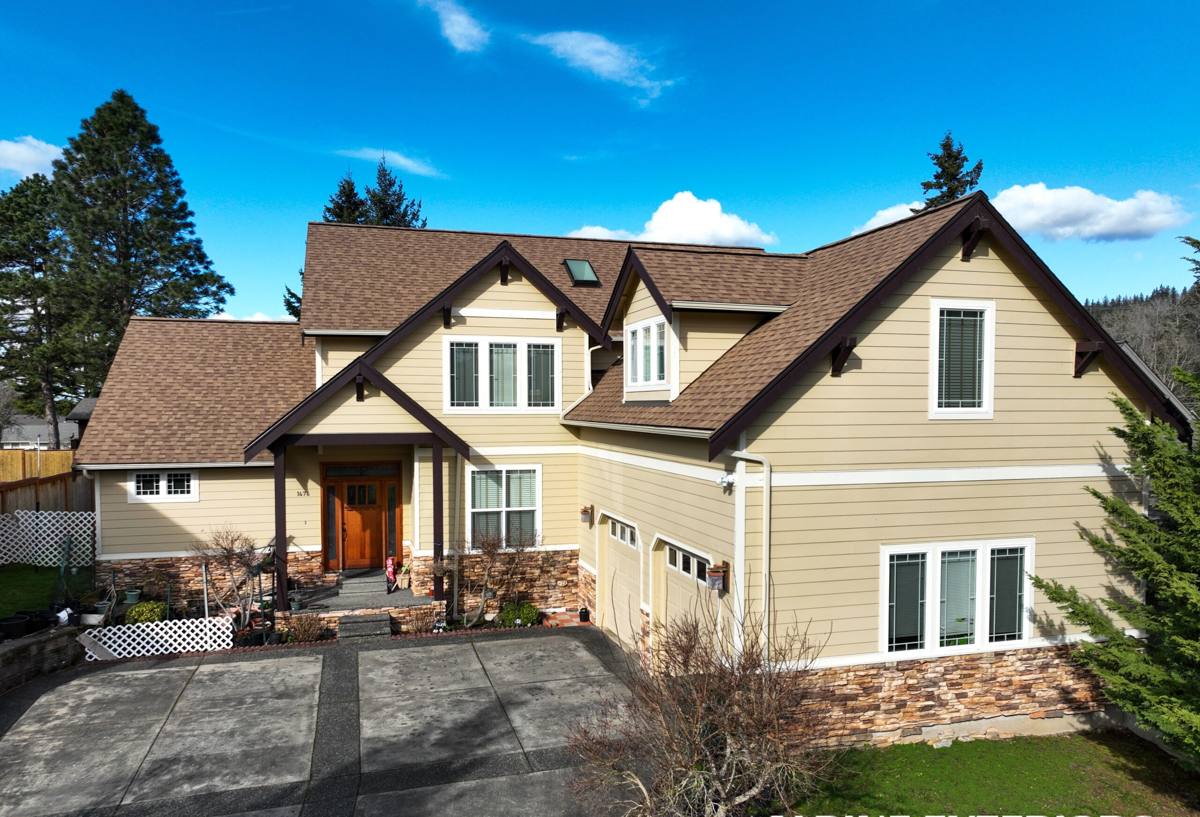
Why Salt Air and Moss Season Matter More Here
Salt Air and Corrosion
Airborne salt speeds up corrosion on anything metal — screws, joist hangers, bolts, railing brackets. On a deck a mile or two from the water this is a minor factor. Right on Sandy Point, it's one of the first things to go wrong on a deck that wasn't built with it in mind. Standard exterior-rated fasteners that hold up fine elsewhere can start showing rust streaks and losing grip well before the wood around them shows any wear.
Driving Rain and Moisture Intrusion
Storms off the water don't just fall straight down — they come in at an angle, which means ledger boards, fascia, and any place the deck meets the house take on more direct wetting than a typical inland deck sees. If flashing and ledger attachment aren't done correctly, water finds its way behind the board and into the rim joist or sheathing, and that's where rot starts — usually hidden until it's already gone too far.
Moss, Shade, and Slow-Drying Surfaces
Whatcom County's wet season runs long, and shaded or north-facing sections of a deck can stay damp for weeks at a stretch. That's exactly the condition moss and algae need. Beyond looking bad, a mossy deck surface is a real slip hazard, and moisture trapped under a layer of growth keeps wood decking wetter, longer, which shortens its life.
What a Deck Built for This Environment Needs
Fasteners and Hardware
For a Sandy Point deck, we treat corrosion resistance as a baseline requirement, not an upgrade. That means stainless steel or high-grade coated fasteners rated for coastal/salt exposure, hot-dip galvanized or stainless structural hardware, and hidden fastener systems where it makes sense to keep exposed metal off the walking surface. Cutting corners here is the single most common reason we see premature failures on decks in this area.
Framing and Ledger Details
The framing is where the structural integrity lives, and it's also the part that's hardest to fix later without tearing into the deck surface. That means proper ledger flashing where the deck meets the house, joist tape or cap protection on framing lumber, and enough airflow underneath the deck that wood can actually dry out between storms instead of staying saturated. On sites with less sun exposure, this ventilation detail matters even more.
Decking Material
There's no single right answer here — it depends on your budget, how the deck is used, and how much maintenance you want to sign up for. The comparison below reflects what we see actually hold up in Sandy Point's conditions versus what tends to struggle.
| Material | How it handles salt air & moisture | Maintenance | Typical lifespan here |
|---|---|---|---|
| Pressure-treated wood | Fair — needs sealing and can trap moisture at fastener points | Annual cleaning and re-sealing recommended | 10-15 years with upkeep |
| Cedar | Good natural rot resistance, but surface grays and softens faster in salt air | Periodic cleaning/oiling to slow weathering | 15-20 years with upkeep |
| Composite decking | Very good — doesn't absorb moisture like wood, resists rot | Occasional washing to prevent surface algae/moss | 25-30+ years |
| PVC/capped polymer decking | Excellent — fully sealed surface, best resistance to salt and standing moisture | Low — mainly rinsing off debris and moss buildup | 25-30+ years |
Wood costs less up front and has a natural look plenty of owners want, and we'll build it correctly if that's your choice. But if you want the lowest-maintenance option for a property that gets this much salt and rain exposure, composite or capped PVC decking is what we steer people toward — not because wood is a bad product, but because the upkeep burden is real and worth being honest about before you commit.
Railings and Guards
Metal railing systems need the same corrosion-resistant hardware as the deck frame, and cable or rod railing systems in particular need corrosion-rated components since they're under constant tension. Wood or composite railing posts should be through-bolted with stainless hardware rather than relying on standard exterior screws.
Signs an Existing Sandy Point Deck Needs Attention
If you already have a deck out here, a few warning signs show up earlier and more often than they would inland:
- Rust streaks running down from screw heads or joist hangers
- Green or black film on the walking surface, especially in shaded corners
- Boards that feel spongy or flex more than they used to
- Gaps opening up around the ledger where the deck meets the house
- Railing posts that wiggle or feel less solid than they used to
- Fasteners backing out or spinning loosely in their holes
Any one of these is worth a look before it turns into a structural repair instead of a maintenance fix.
How We Approach a Sandy Point Deck Project
Site Assessment
We start by walking the site and looking at sun exposure, drainage, wind direction relative to the water, and how the deck will tie into the house. A deck on a shaded, low-airflow side of a lot gets different framing and ventilation treatment than one that sees full sun most of the day.
Design and Material Selection
We talk through decking material, railing style, and layout based on how you actually use the space and what maintenance level you're comfortable with — not a one-size answer. This is also where we flag any structural concerns if we're replacing an existing deck.
Permitting
Deck projects above certain heights or attached to the house typically require a permit through Whatcom County or the City of Ferndale depending on the property's jurisdiction. We handle that process as part of the job so it's not something you have to chase down yourself.
Construction and Final Check
We build to the framing and fastener standards described above regardless of which decking material you choose, then walk the finished deck with you before we call the job done — railings, stairs, fastening, drainage, all of it.
Maintenance That Actually Matters Here
A well-built deck in Sandy Point still needs some seasonal attention — the environment doesn't let anyone skip that step. The realistic minimum is:
- Sweep and rinse the surface regularly, especially shaded areas prone to moss
- Clear debris out of gaps between boards so water and organic matter don't sit trapped
- Check railing posts and stair connections once a year for looseness
- Look at ledger and flashing areas after major storms for signs of water intrusion
- Re-seal or re-stain wood decking on the schedule the product calls for — don't stretch it
Composite and PVC decking cut this list down considerably, which is a big part of why they've become the more popular choice for waterfront and near-waterfront properties in this part of Whatcom County.
Why a Local Crew That Knows Sandy Point Matters
A deck built to a generic regional standard will get you through a few dry summers looking fine. It's the wet season after wet season — the salt air, the driving rain, the moss — that separates a deck built for this specific spot from one that wasn't. We work in Ferndale and the surrounding Whatcom County communities regularly enough to know which fastener grades hold up here, which decking materials are worth the extra cost on a waterfront lot, and where the common failure points show up first. That's not something you get from a crew doing one job in the area and moving on.
What Factors Affect Your Deck Project Cost
| Factor | Why it matters |
|---|---|
| Deck size and footprint | Straightforward material and labor scaling — bigger deck, more of both |
| Decking material | Wood costs less upfront; composite/PVC costs more but needs far less upkeep |
| Height and structure | Elevated decks need more substantial framing, stairs, and often engineering review |
| Railing style | Cable, glass, and metal systems cost more than standard wood or composite balusters |
| Site access and existing structure | Tear-off of a failing deck adds cost before rebuild can start |
| Permitting requirements | Attached, elevated, or larger decks generally require permit review and inspection |
Deck costs vary widely based on these factors, and we'd rather walk your specific property than throw out a number that doesn't mean much until we've seen the site.
Get a Straight Answer on Your Deck
If you're building new, replacing a deck that's showing its age, or just want an honest read on whether yours is holding up the way it should for a Sandy Point property, we're happy to come take a look. The estimate is free, there's no pressure, and you'll get a clear answer on materials, condition, and what it would take to get it right — use the form below to get started.