 Ferndale
 Why Fairhaven Decks Wear Differently Than Decks Inland
Fairhaven sits close enough to the water that its homes take on a different set of problems than a deck built twenty miles inland in Whatcom County. Salt-laden air corrodes fasteners and hardware faster than plain moisture does. Driving rain off Bellingham Bay finds its way sideways under flashing and into end grain that would otherwise stay dry. And the long, mild, wet stretch of fall through spring gives moss and algae months to get established on any board that doesn't drain and dry quickly. None of this means a deck in Fairhaven is doomed — it means the repair has to account for conditions a generic "deck fix" doesn't always consider.
We work on decks throughout Ferndale and the surrounding Whatcom County area, and Fairhaven jobs get treated differently from the start. The questions we ask before touching a board are about exposure: which direction does the deck face, how much of it sits under tree cover that holds moisture, and how close is it to salt spray. Those answers shape the repair.
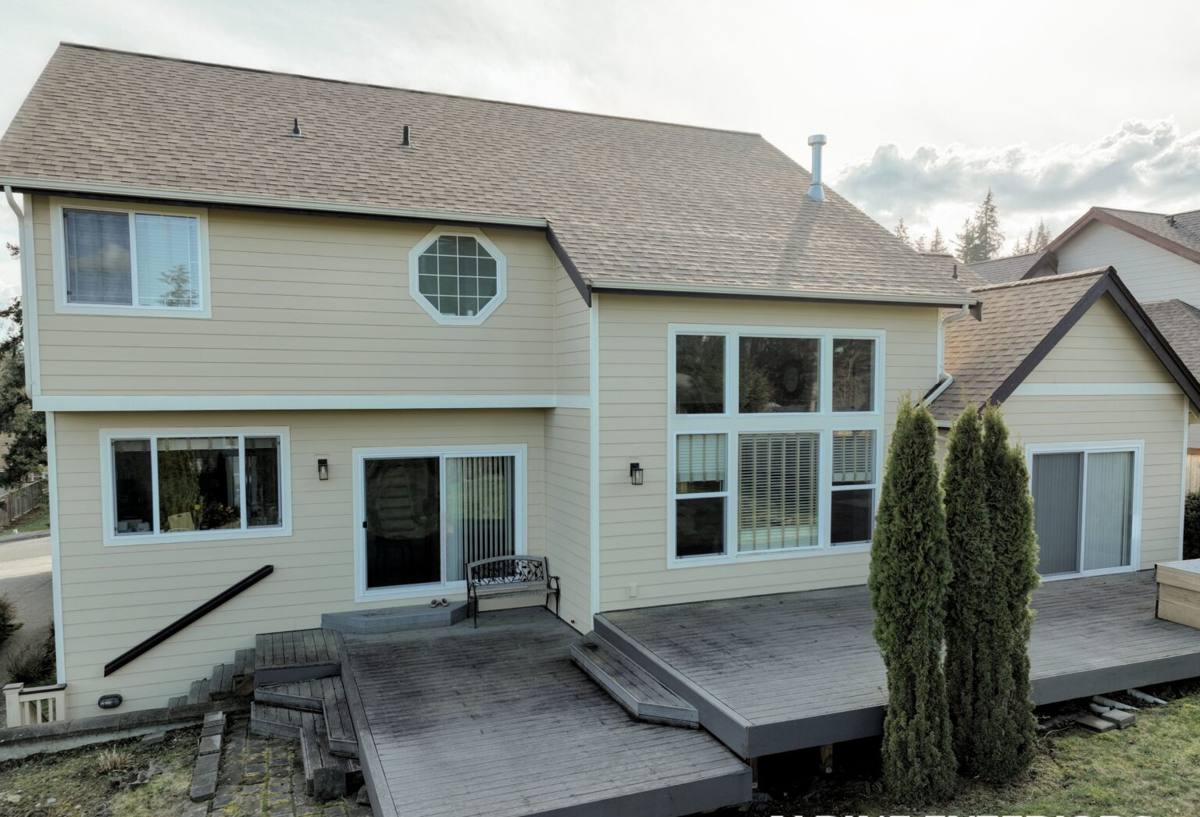
What Salt Air, Rain, and Moss Actually Do to a Deck
Corrosion You Can't Always See
Salt air accelerates corrosion on any metal it touches — joist hangers, structural screws, bolts, and nails. A fastener that would last two decades in a dry inland climate can start rusting and weakening years sooner near the water. The visible surface of a deck can look fine while the hardware holding it together is quietly failing underneath. This is the single biggest reason we insist on checking connections, not just decking boards, on every Fairhaven repair.
Water That Doesn't Drain
Driving rain doesn't fall straight down — it gets pushed under railings, behind ledger boards, and into any gap where flashing is missing or has failed. Once water gets behind a board or into a ledger connection, it stays wet far longer than the surface does, which is exactly the environment that causes rot to spread from the inside out.
Moss, Algae, and the Slip Hazard Nobody Talks About
Whatcom County's wet season runs long, and any deck surface that stays shaded or doesn't shed water well will grow moss. Beyond looking bad, moss holds moisture against the wood surface and creates a genuinely dangerous walking surface when wet. Pressure washing moss off without addressing why it's growing there (poor drainage, low airflow, wrong finish) just means it comes back within a season.
Repair or Replace? How We Make That Call
Not every deck problem needs a full rebuild, and not every deck should be patched. The honest answer depends on what's failing and where.
| Condition Found | Usually Repairable | Usually Needs Replacement |
|---|---|---|
| Surface graying, mild moss, minor splintering | Yes — cleaning, sanding, refinishing | No |
| A few soft or cracked deck boards | Yes — board-by-board replacement | No, unless widespread |
| Rusted or loose joist hangers and fasteners | Sometimes — hardware swap if framing is sound | If corrosion has spread through multiple connections |
| Soft or spongy framing, joists, or beams | Rarely — depends on extent | Yes, if structural members are compromised |
| Ledger board separating from the house | Sometimes — reflash and refasten | Yes, if rot has reached the rim joist or sheathing |
| Railing posts loose or rotted at the base | Yes — post and connection repair | If rot has traveled into the deck framing |
The general rule: if the problem is at the surface — boards, railings, finish — repair almost always makes sense. If the problem has reached the framing that carries structural load, we tell you plainly, because a deck that looks solid but flexes or bounces underfoot isn't something we'll patch over cosmetically.
What a Correct Deck Repair Actually Involves
Framing and Structural Checks First
Before we replace a single board, we check the framing underneath — joists, beams, and especially the ledger board connection to the house, since that's the point most exposed to water intrusion and the point that carries the most load. A repair that skips this step and only replaces what's visible on top can leave a hidden problem to keep growing.
Decking Boards and Surface
Boards get replaced individually where they're damaged rather than assuming the whole surface needs to go. We match spacing and fastening to allow proper drainage and airflow underneath, since tight, poorly ventilated decking is what invites moss and slow rot in the first place.
Railings and Guards
Railings take abuse from weather and use, and a loose or rotted post is a safety issue, not just a cosmetic one. We check post connections down to the framing, not just at the surface, since a railing can look tight while its base connection has already failed.
Fasteners and Hardware
Given the corrosion risk from salt air, we don't reuse compromised hardware just to save a step. Fasteners and connectors get matched to the exposure the deck actually faces.
Flashing and Water Management
Flashing at the ledger board and any point where the deck meets the house is what keeps driving rain from working its way into the structure. A repair that replaces boards but ignores failed or missing flashing is treating a symptom, not the cause.
Our Deck Repair Process
- On-site assessment. We walk the full deck, check the surface, get underneath to look at framing and connections, and check the ledger board and flashing.
- Honest scope and estimate. You get a clear breakdown of what's cosmetic, what's structural, and what your realistic options are — repair, partial rebuild, or full replacement.
- Structural repairs first. Any framing, ledger, or hardware issues get corrected before surface work begins, since building new decking on top of a compromised frame just wastes material.
- Board and railing repair or replacement. Damaged boards and railing components are replaced with attention to spacing and drainage.
- Finish and protection. Depending on the material, this means sealing, staining, or another protective step suited to the exposure your deck actually gets.
- Walkthrough. We show you what was done and what to watch for going forward.
Materials: What We Use and Why
| Material | Strengths | Trade-offs in This Climate |
|---|---|---|
| Pressure-treated wood | Cost-effective, easy to repair board-by-board | Needs regular sealing/staining to resist moisture and moss; fasteners must be rated for treated lumber |
| Cedar | Naturally rot-resistant, attractive finish | Still needs finish maintenance near salt air; softer surface can show wear faster |
| Composite decking | Low maintenance, resists rot and moss buildup on the surface | Higher upfront cost; framing underneath still needs the same moisture protection as any deck |
We don't push one material as universally "best." The right choice depends on your budget, how much upkeep you want to do, and how exposed the deck is. What we won't do is install any decking material over framing or flashing that hasn't been properly addressed — that's a maintenance and warranty problem waiting to happen, regardless of what's on top.
Maintenance Checklist for Fairhaven Homeowners
- Sweep debris and standing moisture off the deck surface regularly during the wet months
- Check for moss buildup in shaded or low-airflow areas and clean it before it spreads
- Inspect railings and posts for looseness at least once a year
- Look underneath the deck periodically for rust streaks or corrosion on hardware
- Check the ledger board and flashing at the house connection for gaps or staining
- Reseal or restain wood decking on the schedule appropriate to the product used
- Address soft or discolored boards promptly rather than waiting for them to worsen
Why a Crew That Already Works Fairhaven Matters
A deck repair done by a crew unfamiliar with this specific coastal exposure can end up under-specifying hardware, missing a flashing detail, or recommending a finish schedule that doesn't hold up to the moss season here. We work throughout Ferndale and greater Whatcom County, and Fairhaven's proximity to the water means we treat these jobs with the corrosion resistance and drainage detail that inland repairs don't always require. That local pattern-recognition — knowing which failure points show up first in this specific setting — is part of what a correct repair depends on.
Understanding Cost Factors
Deck repair costs vary widely based on scope, and we won't quote a number without seeing the deck. Broadly, a few board replacements and hardware swaps cost far less than addressing rot that's reached the framing or ledger connection. Material choice, deck size, and how much of the structure is affected all factor in. What we can tell you honestly: catching problems at the surface-and-hardware stage is almost always less expensive than waiting until framing is compromised.
If your deck in Fairhaven is showing moss, soft spots, loose railings, or you're just not sure what shape it's in after another wet Whatcom County season, we're happy to take a look. Request a free, no-pressure estimate using the form below and we'll give you a straight answer about what it actually needs.