 Ferndale
 Roof Repair Built for Everson's Weather, Not a National Average
Everson sits in the Nooksack River valley just inland from Ferndale, and that low, tree-shaded setting holds moisture longer than open ground does. Add in the marine air that pushes inland off Bellingham Bay and the Strait of Georgia, and you get a combination most roofing guides written for drier climates never account for: driving rain that hits shingles sideways, a moss season that can run eight months or more, and a fine, salt-tinged air that slowly works on exposed metal. A roof repair that ignores those three things doesn't hold. It looks fixed for a season and then fails again in the same spot.
We work on roofs across Whatcom County, and Everson homes tend to share a few traits: mature tree cover that keeps sections of the roof shaded and damp well after a storm passes, older fascia and flashing details that were fine when installed but have had decades of wet-dry cycling since, and roof lines that catch windblown rain from more than one direction depending on the season. None of that means Everson roofs fail faster — it means repairs here have to account for water that doesn't behave the way it does on a roof in a dry climate.
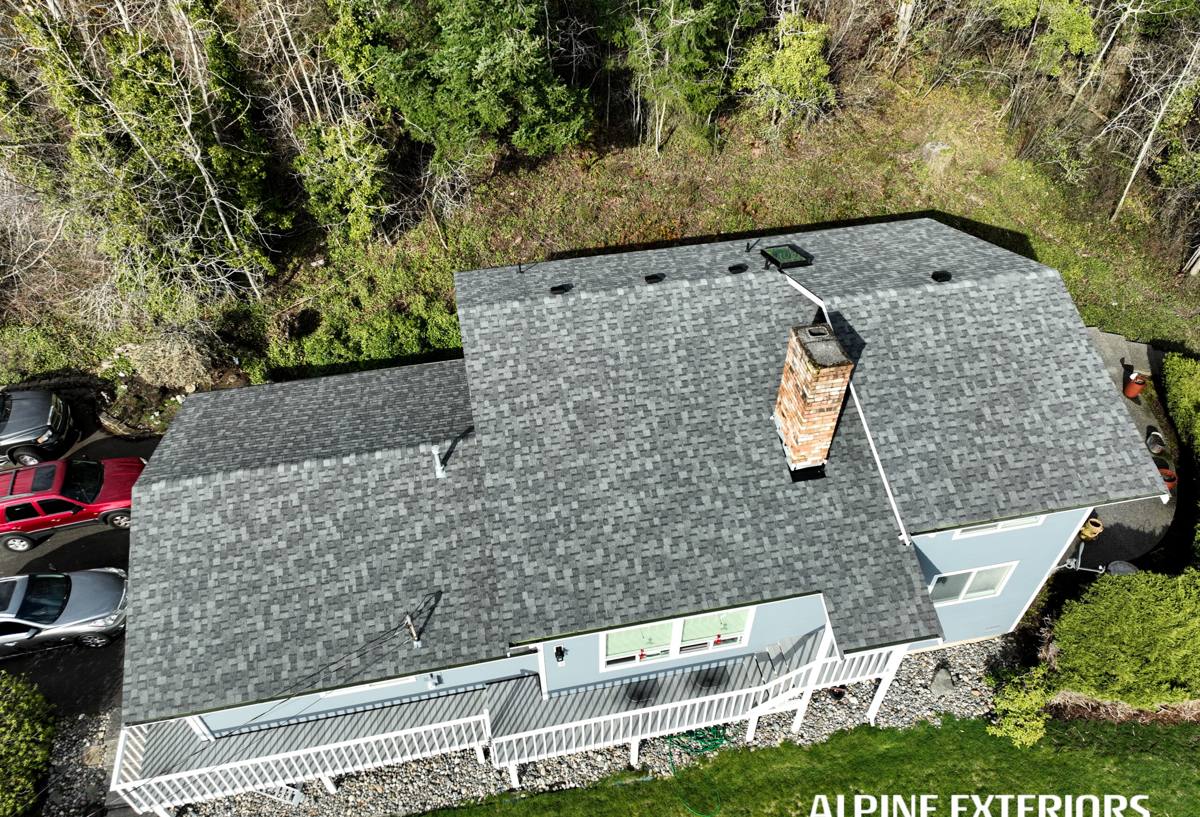
Signs an Everson Roof Needs Repair — Not a Full Replacement
Most roofs don't fail all at once. They fail in one spot first, and if that spot gets addressed early, the rest of the roof can go on doing its job for years. Here's what we're actually looking for when a homeowner calls us out:
- Granules collecting in gutters or downspouts, or bald patches on composition shingles where the granule layer has worn through
- Shingles that are curling, cupping, or lifting at the edges — often on the side of the roof that takes the most direct wind-driven rain
- Dark streaking or thick moss mats, especially on the shaded, north-facing sections
- Rust staining or gaps at metal flashing around chimneys, skylights, and roof-to-wall transitions
- Soft, spongy decking felt underfoot in the attic, or daylight visible through the roof deck
- Water stains on interior ceilings that show up during or right after a heavy rain, then seem to disappear
Any one of these by itself is usually a repair, not a tear-off. It's when several of them show up together, or when the decking underneath is already soft, that replacement starts to make more financial sense than another round of patching.
Why "It's Just a Small Leak" Is Misleading
A ceiling stain the size of a dinner plate can trace back to a failed flashing detail three feet away, because water travels along the underlayment and rafters before it finds a gap to drip through. This is especially true on Everson roofs with complex rooflines or additions, where two roof planes meet. Chasing the visible stain instead of the actual entry point is the single most common reason a "repaired" roof leaks again the next season.
What an Honest Roof Repair Actually Involves
A correct repair starts above the visible damage and works outward, not just down through the hole. That means:
- Tracing the water path from the interior stain or attic evidence back to its actual entry point, which is often uphill from where the damage shows
- Removing enough material around the damaged area to see the underlayment and decking condition, not just the top layer of shingles
- Replacing compromised decking if it's soft, delaminated, or stained through — patching over bad decking just relocates the problem
- Rebuilding flashing details correctly, with proper laps and step-flashing where the roof meets walls, chimneys, or skylights, rather than relying on caulk or sealant to bridge a gap
- Matching materials as closely as possible in type, weight, and where reasonable, color, so the repair sheds water the same way the surrounding roof does
- Checking attic ventilation near the repair, since poor airflow traps moisture against the underside of the deck and shortens the life of any repair done on top
Skipping any of those steps is how you end up paying for the same repair twice.
Materials on Everson Roofs and How They Age Here
| Roofing Material | Common Issue in This Climate | Typical Repair Approach |
|---|---|---|
| Composition (asphalt) shingle | Granule loss, curling, moss lifting tabs | Section replacement matched to existing shingle weight and exposure; moss removal and treatment |
| Metal panel or standing seam | Fastener backing out, sealant failure at penetrations, minor surface corrosion near coastal air | Re-fasten and reseal penetrations; spot-replace corroded trim; check panel laps |
| Cedar shake | Moss and moisture retention, splitting shakes, slower drying in shaded areas | Replace split or rotted shakes individually; improve airflow and reduce moss buildup |
| Low-slope / torch-down or membrane | Ponding water, seam separation over time | Reseal or patch seams; correct minor drainage issues where slope allows |
The right repair approach depends on which of these you have, how old it is, and how the rest of the roof is holding up — not a one-size-fits-all patch kit.
Moss, Debris, and the Long Wet Season
Moss doesn't just look bad — it holds water directly against the roofing material for months at a time, which is exactly the condition that ages shingles and shakes fastest. On shaded lots common around Everson, moss can establish itself in one wet season and start lifting shingle edges within a year or two if it's left alone. Once tabs are lifted even slightly, driving rain gets underneath them instead of running off, and that's when a moss problem turns into a leak.
Needles, leaves, and small branches from surrounding trees make it worse by damming water at valleys and behind chimneys, so it sits instead of draining. Part of a proper repair visit is clearing that debris and addressing moss at the source — not just scraping the surface, but treating it so it doesn't come back within a month.
How Our Roof Repair Process Works
1. Inspection and Diagnosis
We look at the roof from the ground and, where it's safe and useful, up close — checking the suspected trouble spot along with flashing, valleys, and any areas showing wear. We're diagnosing the cause, not just confirming the symptom you called about.
2. A Written, Specific Scope
You get a clear explanation of what's actually wrong, what we're going to do about it, and roughly what it will cost — before any work starts. No vague "we'll see once we're up there" pricing.
3. The Repair Itself
We remove and replace only what needs it, rebuild flashing details properly rather than caulking over them, and match materials so the repair blends and performs like the rest of the roof.
4. Cleanup and Walkthrough
Debris and old material leave the site with us. We'll walk you through what was done and what to keep an eye on going forward.
Roof Repair vs. Roof Replacement: What Actually Drives the Decision
| Factor | Leans Toward Repair | Leans Toward Replacement |
|---|---|---|
| Roof age | Under roughly 15 years, within expected material lifespan | Near or past the material's typical service life |
| Extent of damage | Isolated to one section or detail | Spread across multiple slopes or repeated leak points |
| Decking condition | Solid, no soft spots found | Soft, delaminated, or stained through in multiple areas |
| Number of past repairs | First or second repair on this roof | Repeated patching in the same general area |
| Underlying ventilation | Adequate, no chronic moisture signs | Poor airflow contributing to widespread deck damage |
Costs for a straightforward, isolated repair are often a fraction of a full replacement — but if a roof is already near the end of its service life, spending repair money on it repeatedly can end up costing more than replacing it once. We'll tell you honestly which side of that line your roof is on.
Before You Call: A Homeowner's Roof Repair Checklist
- Note when the leak or damage first appeared, and whether it shows up only during heavy or wind-driven rain
- Check the attic (if accessible) for staining, soft decking, or daylight, and note the approximate location
- Look at gutters for granule buildup, which can indicate shingle wear even before a leak starts
- Take note of any moss or debris buildup, especially on shaded roof sections
- Have a rough idea of your roof's age and material, if known — it speeds up an accurate diagnosis
- Avoid climbing onto a wet or mossy roof yourself; it's one of the more dangerous surfaces to walk in this climate
Why a Crew That Already Works Everson Matters
Roofing crews that mainly work drier regions tend to under-detail flashing and underlayment work, because it holds up fine where they usually build. In Whatcom County's wet season, those shortcuts show up fast. A crew that regularly works Everson and the surrounding area already knows how the local rain patterns push water sideways, how long moss season really runs, and which flashing details tend to fail first on roofs built to older standards. That familiarity means fewer surprises during the repair and a better chance the fix holds through the next wet season, not just the next dry spell.
It also means faster response. When a leak shows up during a storm, a crew already working in the area can typically get to you sooner than one dispatching from farther out — and timing matters when water is actively getting into a home.
If you're dealing with a leak, missing shingles, or a roof that just doesn't look right anymore, we're happy to take a look and give you a straight answer. Reach out below for a free, no-pressure estimate — we'll tell you what we actually find, not just what's easiest to sell.