 Ferndale
 Siding Repair Built for Everson's Wet, Green Climate
Everson sits along the Nooksack River in Whatcom County, and that low-lying river valley holds onto moisture longer than higher, more exposed ground. Add in the marine-influenced weather that moves through the whole county — driving rain for much of the year, heavy dew, and a moss and algae season that can run nine months or more — and siding here works harder than siding almost anywhere else in the state. A small crack, a gap at a seam, or a soft spot behind a downspout doesn't stay small for long. It becomes a path for water, and water behind siding is what turns a $300 repair into a $3,000 one.
We repair siding on Everson homes regularly, and the patterns repeat: north-facing walls that never fully dry out, trim boards near grade that wick up moisture, and butt joints that were caulked once, years ago, and never looked at again. None of that is unusual for this part of Whatcom County. It's just what happens to a house over time in a climate like this, and it's exactly why siding repair needs to be treated as a moisture-diagnosis job, not a cosmetic patch.
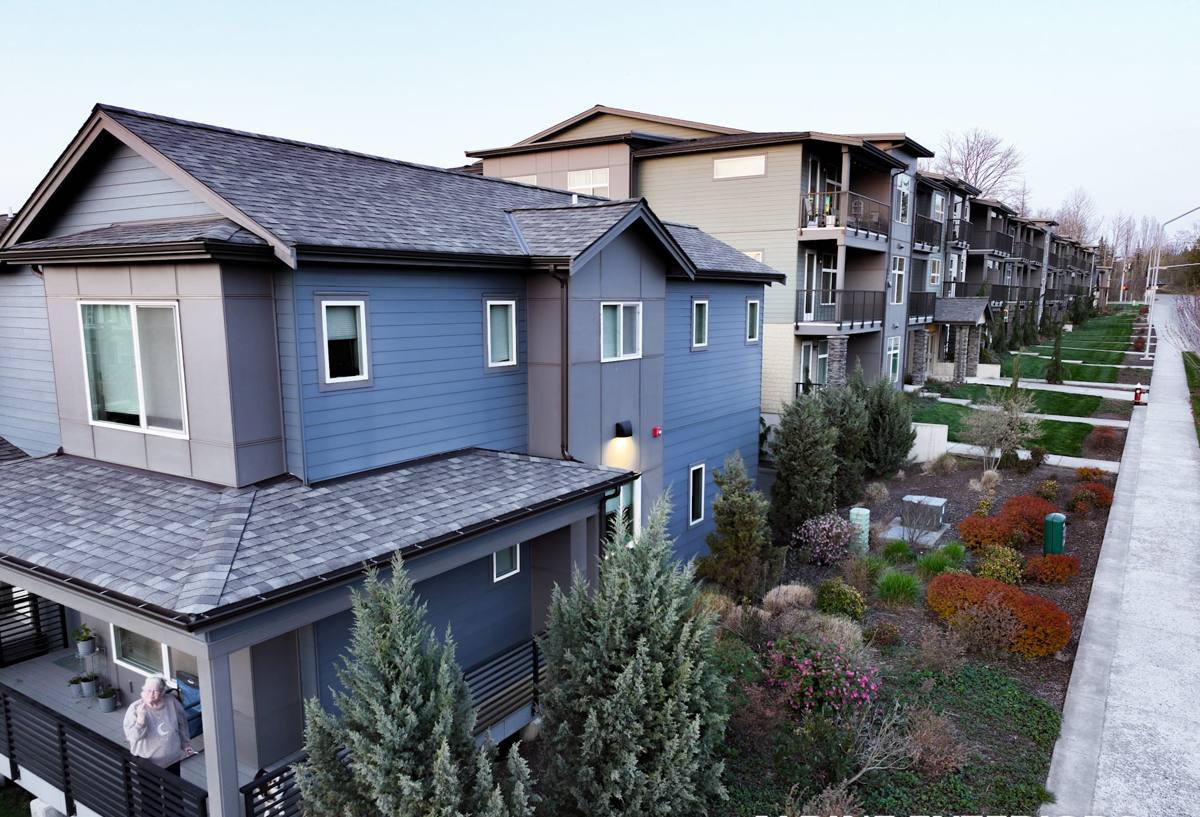
Signs an Everson Home Needs Siding Repair
Some damage is obvious. Some isn't visible until you know where to look. Both matter.
- Boards that are soft, spongy, or crumble slightly when pressed
- Visible cracking, splitting, or warping in individual boards or panels
- Paint that's peeling, bubbling, or failing faster than it should between coats
- Dark streaking, green or black growth, or persistent moss buildup in the same spots every year
- Gaps opening up at seams, corners, or where siding meets trim, windows, or doors
- Siding that feels cool and damp to the touch even on a dry day
- Interior clues: a musty smell along an exterior wall, or a faint stain on interior drywall near an outside corner
- Insects — carpenter ants especially — showing up near the base of exterior walls
Any one of these on its own might be minor. Two or three in the same area, especially on a wall that gets driving rain or stays shaded most of the day, usually means water has already gotten past the surface.
Why Hidden Damage Is the Real Risk
The siding itself is rarely the expensive part of a repair. The expensive part is what's behind it — sheathing, framing, and insulation that have been sitting wet without anyone knowing. In a climate that stays damp as long as Whatcom County's does, that hidden decay can spread for a full season or two before it ever shows up as a visible problem on the surface. That's the real argument for catching siding issues early rather than waiting for them to become obvious.
What a Correct Siding Repair Actually Involves
A repair that's done right isn't just "replace the bad board and caulk the edges." It starts with figuring out why that board failed in the first place, because if the underlying cause isn't fixed, the replacement piece will fail the same way, on the same timeline.
Diagnosis Before Demolition
Before we pull a single board, we're looking at what's driving the moisture: a missing or damaged flashing detail, a downspout dumping water against the wall, a caulk joint that's failed, grade that's too close to the bottom of the siding, or a ventilation gap that's been blocked. Repairing the siding without correcting the cause is the single most common shortcut in this trade, and it's why some "repaired" walls fail again within a year or two.
Removing Only What Needs to Come Out
We open up enough of the wall to see the actual extent of the damage — not just the board that's visibly failing, but the sheathing and house wrap behind it. Sometimes the damage stops right where it looks like it stops. Sometimes it's traveled further along a seam than expected. Either way, you want that answered before new siding goes back on, not after.
Rebuilding the Water Management, Not Just the Surface
Flashing, house wrap, and drainage details get repaired or upgraded as part of the job — not skipped to save time. This is the part of a repair that never shows once the siding is back on, and it's also the part that determines whether the repair lasts five years or twenty.
Matching the Existing Siding
Whenever possible, we match the profile, exposure, and color of what's already on the house so a repair doesn't stand out as a patch. With factory-finished fiber cement, color matching is straightforward because the finish is consistent from the factory. With older wood siding or siding that's been repainted multiple times, getting a clean match takes more care, and we'll be upfront with you about what to expect before the work starts.
How Different Siding Materials Hold Up to Repair in This Climate
What we're repairing on an Everson home depends on what's already on the house, and different materials behave very differently once moisture gets involved.
| Material | Common Failure Mode Here | How Repairable It Is |
|---|---|---|
| Vinyl siding | Cracking in cold snaps, warping near heat sources, water tracking behind panels at seams | Individual panels can be swapped, but exact color/profile matches get harder to find as products age off the market |
| Cedar / wood siding | Rot at butt joints and lower courses, checking, paint failure feeding moisture intake | Repairable but labor-intensive; repainting and caulk maintenance never really stops |
| Engineered wood (OSB-based) siding | Swelling and delamination at edges and fastener points once water gets in | Damage often spreads underneath before it's visible; sections usually need full replacement rather than a patch |
| James Hardie fiber cement | Rare when installed correctly; issues usually trace back to a caulk or flashing detail, not the board itself | Individual planks or panels replace cleanly; ColorPlus finish keeps new pieces matching old |
We'll repair whatever material is currently on your home. But if a repair reveals damage extensive enough that a full wall or elevation needs to come off, that's the point where we'll talk with you honestly about what goes back on. We install James Hardie fiber cement exclusively for that kind of work — not because every other product is bad, but because we've made a professional decision about what holds up best, repairs most predictably, and carries the strongest factory finish for a climate like Whatcom County's. We'd rather explain that reasoning up front than sell you something we don't fully stand behind.
Our Siding Repair Process in Everson
- Inspection. We walk the full exterior, not just the spot you called about — related trouble often shows up nearby.
- Diagnosis. We identify the moisture source or mechanical cause, not just the visible symptom.
- Written scope and estimate. You'll know what's being repaired, why, and what it costs before anything is opened up.
- Removal and inspection behind the siding. We confirm the extent of damage to sheathing, wrap, and framing before closing anything back up.
- Repair of the water management layer. Flashing, house wrap, and drainage get corrected, not just covered.
- Siding replacement and matching. New material goes in, matched as closely as possible to the surrounding siding.
- Final walk-through. We show you what was found and what was done, in plain language.
Repair or Replace? How to Tell the Difference
Not every problem calls for a full re-side, and not every problem is worth patching indefinitely. A few honest guidelines:
- If damage is limited to one or two isolated areas and the rest of the siding is sound, repair is usually the right call
- If the same failures keep showing up in multiple places across the house, that's often a sign of an installation issue affecting the whole exterior, not a series of unrelated problems
- If your siding is wood or an older engineered product nearing or past its expected service life, a repair may buy a few years but won't solve the underlying aging
- If more than roughly a third of a wall needs to come off to fix the damage, full-wall replacement is often more cost-effective than patchwork repair
- If you're planning to repaint or refinish soon anyway, it's worth weighing repair against replacement at the same time, since labor and access costs overlap
What Affects the Cost of a Siding Repair
We don't quote a job until we've actually looked at it, but these are the factors that move the price up or down:
| Factor | Why It Matters |
|---|---|
| Extent of hidden moisture damage | Rotted sheathing or framing behind the siding adds carpentry work beyond the siding itself |
| Siding material | Sourcing matching wood, vinyl, or older discontinued products can cost more than the labor to install it |
| Height and accessibility | Second-story work, steep roof lines, or tight side yards affect equipment and time on site |
| Number of separate repair areas | Several small repairs across a house often cost more in total than one larger, consolidated repair |
| Underlying cause | A repair that also requires new flashing, corrected grading, or gutter work adds scope beyond the siding |
Why It Matters That We Already Work in Everson
Whatcom County isn't one climate — the coastal edge, the river valleys, and the higher ground each hold moisture and shed rain a little differently, and a crew that's only worked in one part of the county can misjudge how a house in another part actually dries out. We've done siding repair work throughout the area, and that experience shapes how we diagnose a problem the first time instead of guessing. Local knowledge also means we're not learning Whatcom County's permitting requirements or typical construction practices on your job — that's already settled before we show up.
It also means accountability. A contractor who's driving in from somewhere else for a one-off repair has less reason to stand behind the work five years down the road than one who's still doing business in Everson and Ferndale year after year.
Maintenance That Prevents the Next Repair
A good repair should also reduce how often you need another one. Once the work is done, a few habits go a long way in this climate:
- Keep gutters clear so overflow doesn't run down the face of the siding
- Trim back vegetation and tree limbs that shade siding and keep it from drying between rains
- Rinse off moss and algae buildup before it has time to hold moisture against the surface
- Re-caulk seams and joints on schedule rather than waiting for a visible gap
- Walk the exterior once or twice a year, especially after a hard windstorm, and catch small issues early
If you're seeing damage, damp spots, or recurring moss on your Everson home's siding, we're happy to take a look and give you a straight answer about what's actually going on — no pressure, no upsell, just an honest assessment. Reach out for a free estimate using the form below.