 Ferndale
 Building a Deck That Can Handle Fairhaven's Marine Climate
A custom deck in Fairhaven has to do more than look good for one summer. Homes in and around this part of Whatcom County sit close enough to the water that salt-laden air is a constant, rainfall is heavy for much of the year, and shaded, damp stretches of the calendar give moss and algae a long runway to take hold. A deck built the same way you'd build one in a dry inland climate will show its age fast here — loose fasteners, soft spots at the ledger, black streaking on the decking, and railings that start to wobble within a few seasons. A deck built for this specific environment does the opposite: it stays tight, drains properly, and keeps its finish for years instead of months.
This page is about custom deck building specifically for Fairhaven and the surrounding Ferndale area — not decks in general. The framing, fastener, and material decisions below are chosen with this coastline and this climate in mind.
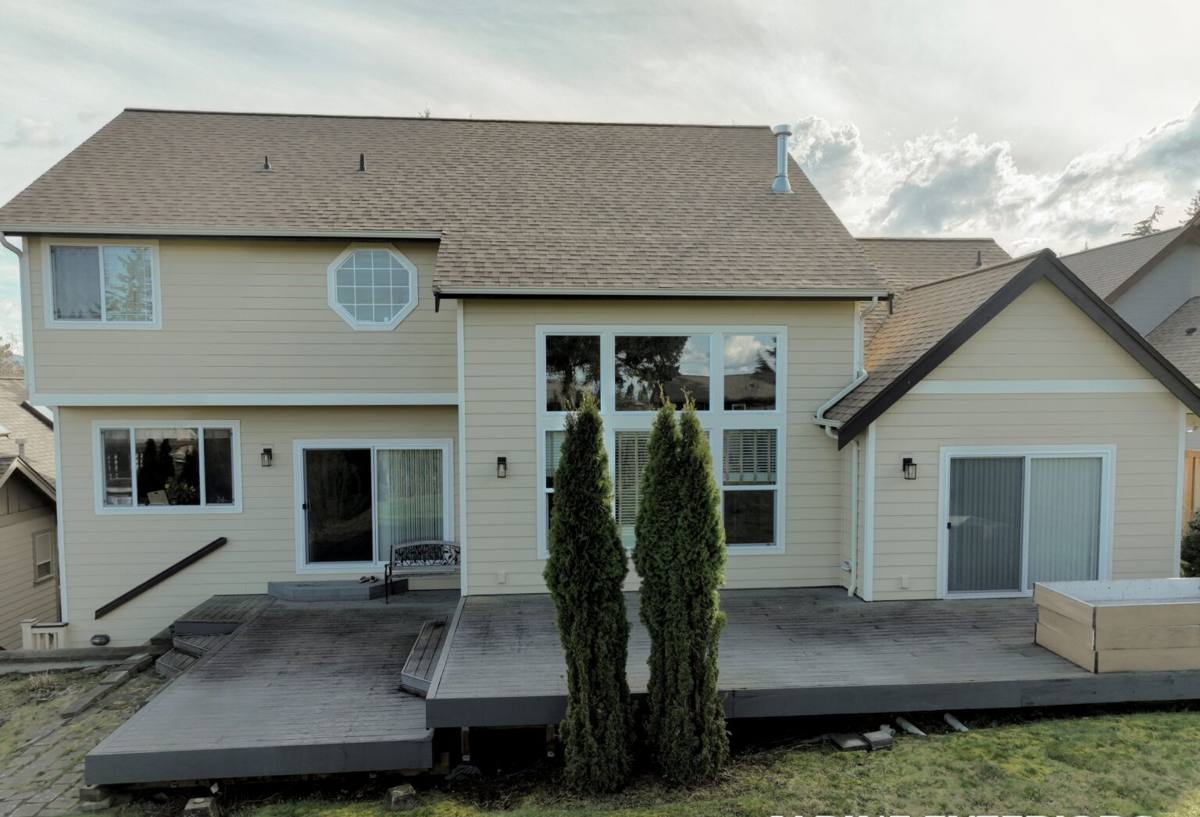
What Salt Air, Driving Rain, and Moss Season Do to an Ordinary Deck
Salt-laden air and hardware
Airborne salt accelerates corrosion on any metal it touches — nails, screws, joist hangers, post bases, and railing brackets. On a deck built with standard, uncoated or low-grade coated fasteners, that corrosion shows up as rust streaks bleeding through the decking, weakened connections at the framing, and eventually hardware that fails structurally before the wood around it does. This is one of the most common reasons an older deck near the water starts to feel spongy or loose well before the boards themselves are worn out.
Driving rain and end-grain
Whatcom County gets a lot of rain, and much of it doesn't fall straight down — wind-driven rain finds its way into joints, screw holes, and cut ends of boards that would stay dry in a calmer climate. Wood (and even some composites) absorb moisture fastest through cut, unsealed end-grain. Without proper sealing and detailing at every cut, board ends swell, checking cracks open up, and moisture works its way into the framing underneath.
Moss, algae, and shade
A long, wet moss season means any deck surface that stays damp and shaded for extended stretches will eventually grow something on it. Beyond looking bad, moss and algae hold moisture against the decking surface, which speeds up rot in wood and can make composite and even some capped boards slippery and harder to clean over time. Deck orientation, gap spacing, and airflow underneath all affect how much of a problem this becomes.
Choosing Decking Material for This Climate
There's no single "best" decking material — there's a best material for a given budget, look, and tolerance for maintenance. In a marine climate like Fairhaven's, moisture behavior and how a material ages matter more than they would somewhere drier.
| Material | Moisture & Salt Air Behavior | Moss/Algae Resistance | Maintenance |
|---|---|---|---|
| Pressure-treated fir/hem-fir | Budget-friendly; needs sealing and re-sealing to resist swelling and checking | Low — needs regular cleaning and treatment | Annual cleaning, periodic sealing |
| Cedar | Naturally moisture-resistant, but still benefits from sealing near the coast | Moderate | Cleaning and re-oiling every 1–2 years |
| Composite decking | Doesn't absorb water like wood; stable in wet/dry cycles | Moderate to good, varies by brand and cap type | Periodic washing, no sealing needed |
| PVC/capped composite | Fully sealed surface, very stable in wet climates | Good | Occasional washing |
For a home this close to the water, we generally steer people away from uncoated, budget-grade composite blends with no cap layer — in a climate this wet, an uncapped or poorly capped board tends to hold moisture at the surface and stain faster than a properly capped one. That's a maintenance and appearance trade-off, not a claim that any composite product is unsafe — it's a matter of matching the product to how much upkeep you want to do.
What a Correctly Built Deck Involves Here
Footings and ledger flashing
The ledger board — where the deck attaches to the house — is the single most important place to get flashing right. In a high-rainfall area, water that gets behind an improperly flashed ledger doesn't just damage the deck; it can work its way into the house's wall assembly. Correct flashing (and proper fastening into structural framing, not just siding) is non-negotiable here, regardless of what decking material sits on top.
Drainage and slope
A deck surface should have a slight slope away from the house so water sheds instead of pooling. Under the deck, joists need enough airflow and, where the space is enclosed or low to the ground, a plan for where water goes instead of sitting against framing. Standing water under a deck is one of the biggest drivers of both rot and moss growth.
Fasteners and hardware
Given the salt air, we treat corrosion-resistant fasteners and hardware as standard, not an upgrade — stainless steel or heavy hot-dip galvanized fasteners and connectors, matched to whatever decking and framing material is used. Mixing incompatible metals (for example, certain fasteners with certain treated-lumber chemicals) can accelerate corrosion, so hardware selection has to match the whole system, not just look right on its own.
Railings and code
Railing height, baluster spacing, and guard strength requirements are set by building code and apply whether the deck is six inches or six feet off the ground once it crosses the height threshold that requires a guard. We build to the applicable code requirements as a baseline, not a suggestion, and design the railing style around that.
Our Process for Fairhaven Deck Projects
- On-site walkthrough — we look at the specific spot: sun/shade exposure, existing drainage, grade, and how exposed the location is to wind-driven rain.
- Design and material selection — we talk through decking material, railing style, and layout based on how you'll use the space and how much upkeep you want long-term.
- Permitting — most custom decks of any real size require a permit; we handle that process rather than leaving it to you.
- Build — footings, framing, flashing, decking, and railings, in that order, with inspections at the required stages.
- Final walkthrough — we go over the finished deck with you, including basic care specific to the material you chose.
Keeping a New Deck Looking Good Through Moss Season
A well-built deck still needs some seasonal attention in this climate. A short annual routine keeps most problems from starting in the first place.
- Sweep leaves and debris off the deck surface regularly, especially in fall — trapped organic matter holds moisture and feeds moss.
- Rinse or wash the deck surface at least once a year to clear early moss and algae growth before it takes hold.
- Check that gaps between boards haven't filled with debris, which blocks drainage and airflow.
- Inspect railings and stair connections once a year for looseness — a good early warning sign of a hardware issue.
- Re-seal wood decking on the schedule appropriate to the product (typically every 1–2 years, more often on high-exposure surfaces).
- Confirm the area under the deck is draining and not holding standing water after heavy rain.
What Drives the Cost of a Custom Deck
Every deck is priced around a handful of factors, and knowing what moves the number helps you plan a project that fits your budget without cutting corners in the wrong places.
| Factor | Why It Affects Cost |
|---|---|
| Size and shape | More square footage and complex shapes (multiple levels, angles) mean more framing and labor |
| Decking material | Pressure-treated wood, cedar, composite, and PVC all sit at different price points |
| Height and substructure | Taller decks need more footings, posts, and structural bracing |
| Railing style | Cable, glass, and custom railings cost more than standard baluster railings |
| Site access and grading | Sloped or hard-to-access lots add labor for footings and material staging |
| Permitting and engineering | Larger or taller decks may require engineered plans in addition to standard permits |
Custom decks in this area typically run somewhere in the low-to-mid tens of thousands for a mid-size project, with the final number shaped heavily by material choice and structural complexity. We'll always give you a real number for your specific project rather than a rough guess.
Why a Crew That Already Works Fairhaven Matters
Building decks in Whatcom County's marine climate is a different job than building them somewhere dry and inland — the flashing details, fastener choices, and drainage planning all change because of the salt air, rainfall, and moss season described above. A crew that regularly works in Fairhaven and the greater Ferndale area already knows which details matter most for a given lot's sun exposure and wind exposure, has a working relationship with the local permitting process, and isn't learning coastal construction on your project. That familiarity shows up later as a deck that stays solid and doesn't need early repairs.
If you're planning a custom deck in Fairhaven, we're glad to walk your property, talk through material options for your specific site, and put together a straightforward estimate — no pressure, no obligation. Use the form below to get started.