 Ferndale
 Why Decks Near the Water Fail Faster Here
Fairhaven sits close enough to Bellingham Bay that homes there deal with a different set of conditions than decks built further inland in Whatcom County. Salt-laden air corrodes fasteners and hardware faster than it does even a few miles east. Driving rain off the water gets pushed sideways under railings and against ledger boards instead of falling straight down, which finds gaps that a standard installation wouldn't normally have to worry about. And the long, wet moss season here means any horizontal surface that doesn't shed water well becomes a growing surface within a year or two, not a decade.
None of this means a deck near Fairhaven is doomed — it means it has to be built with those specific stresses in mind. A deck that would hold up fine in a drier part of the county can fail early here if the fasteners, flashing, and ventilation weren't chosen for a marine-influenced climate.
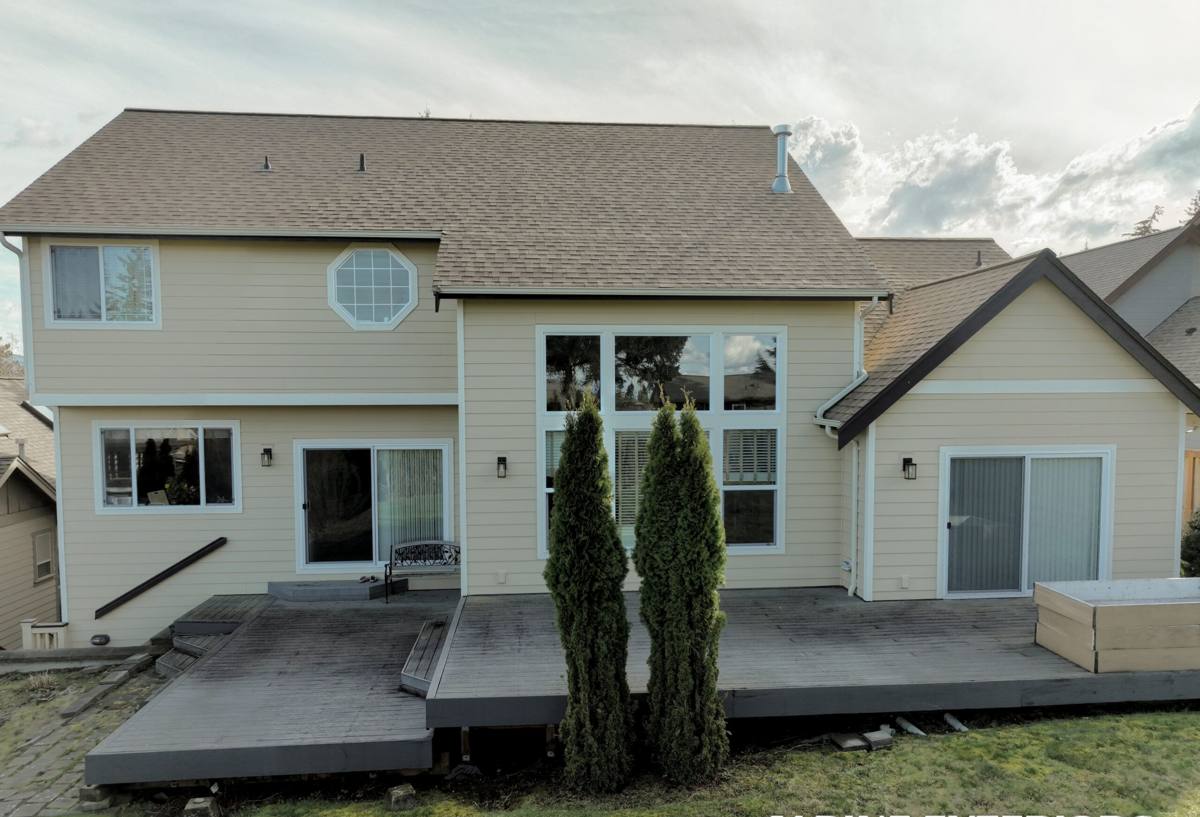
Signs a Deck Needs Replacing, Not Just Repair
Homeowners often call us asking for a repair quote and end up learning the deck is past the point where patching makes sense. A few honest markers we look for:
- Soft or spongy spots in the decking boards, especially near the house or along the rim
- Rust streaks or corroded fastener heads — a sign the hardware is failing, not just the wood surface
- Ledger board separation or gaps where the deck meets the house siding or wall
- Persistent moss or algae growth that comes back within weeks of cleaning
- Wobble in the railing posts or stairs, which usually points to post rot below the surface
- Visible sagging between joists when you walk across the deck
One or two of these on their own might mean a repair. Several together, especially combined with a deck over 15-20 years old, usually means the structure underneath has been compromised long enough that replacement is the more honest recommendation.
Why "It Looks Fine From the Yard" Isn't Enough
Surface boards can look presentable while the framing underneath — joists, beams, ledger connection, footings — has been quietly absorbing moisture for years. This is especially true close to the water, where humidity stays elevated even on dry days. A proper inspection means getting underneath the deck and checking connection points, not just walking the surface.
What a Correct Deck Replacement Actually Involves
A deck replacement isn't just pulling up old boards and screwing down new ones. Done right, it touches every layer of the structure:
Structure and Footings
Footings get inspected or replaced to current code depth and bearing requirements. In areas with a higher water table or heavier clay soils near the coast, footing drainage matters more than it does further inland — standing water around a footing is one of the most common causes of early post failure.
Ledger Attachment and Flashing
The ledger board — where the deck attaches to the house — is the single most common source of hidden rot on any deck, and it's the point most exposed to driving rain in a coastal-influenced climate. Correct flashing here, integrated with the house's water-resistive barrier rather than just caulked over it, is non-negotiable in our process.
Joists and Framing
Pressure-treated framing lumber rated for ground contact where applicable, proper joist spacing for the decking material chosen, and joist tape or flashing on top of each joist to keep moisture from wicking into the wood from above.
Decking Surface and Fasteners
Stainless steel or coated fasteners rated for coastal/marine exposure — standard hardware corrodes noticeably faster this close to salt air. Board spacing set to allow airflow and drainage rather than a tight, moss-trapping gap.
Railings and Stairs
Rebuilt to current code for height and baluster spacing, with the same attention to fastener quality and water shedding at post bases, which are a common early failure point.
Decking Material Options: Honest Trade-Offs
There's no single "best" decking material — there's a best material for a given budget, maintenance appetite, and exposure. Here's how the common options actually compare for a home in this climate:
| Material | Upfront Cost | Maintenance | Moisture/Moss Behavior |
|---|---|---|---|
| Pressure-treated wood | Lowest | Annual cleaning, periodic re-staining/sealing | Needs regular sealing to resist moss and rot; most sensitive to neglect |
| Cedar | Moderate | Regular oiling/sealing to maintain color and resist decay | Naturally rot-resistant but still absorbs moisture without upkeep |
| Composite decking | Higher | Occasional washing, no staining/sealing needed | Sheds water well; some early-generation composites held moisture at the core — modern boards are much improved |
| PVC/capped composite | Highest | Lowest — soap and water | Fully sealed surface, best moss and moisture resistance of the group |
We don't push one material on every job. A wood deck that gets sealed on schedule can look and perform great for years. The honest trade-off is that wood asks more of the homeowner over time, while composite and PVC ask more up front and less afterward. Given the moss season here, we do walk most Fairhaven clients through the maintenance-versus-upfront-cost conversation directly, because it changes based on how much upkeep someone actually wants to commit to.
Our Replacement Process
- On-site assessment — we get under the existing deck, check the ledger, footings, and framing, and tell you honestly whether it's a repair or full replacement situation.
- Design and material selection — sizing, layout, railing style, and decking material discussed against your budget and maintenance preference.
- Permitting — deck replacements of most sizes require a permit; we handle the paperwork with the local building department rather than leaving that on you.
- Demolition — full removal of the old structure down to (or including) the footings, with debris hauled off site.
- Framing and ledger work — new footings or footing repair, ledger flashing tied into the house's water barrier, joists set and taped.
- Decking, railing, and stairs — installed per manufacturer spec for whichever material was chosen, with fastener selection appropriate to the coastal exposure.
- Final walkthrough and inspection — code inspection where required, plus our own final check before we call the job done.
Timeline
Most straightforward deck replacements run one to two weeks from demo to finished structure, weather and permitting timelines depending. Wetter stretches of the year can add delay days for concrete curing and safe working conditions — something to plan around if you're aiming for a specific season to use the deck.
Local Factors That Change the Job
A few things specific to building near the water in Whatcom County that affect how we plan a Fairhaven deck job:
- Soil drainage around footings tends to matter more this close to the bay — poor drainage is a common root cause of early post failure we find on tear-outs
- Wind exposure on more open lots means railing and post connections get extra attention, not just code-minimum hardware
- Permit and setback requirements can vary by lot and by how close the structure sits to property lines or shoreline-adjacent regulations, so we confirm specifics with the local building department rather than assuming
- Longer wet stretches mean we schedule concrete and framing work around weather windows more conservatively than a contractor working a drier inland site would
Why Hiring a Crew That Already Works This Area Matters
A deck built by someone unfamiliar with coastal Whatcom County conditions can still pass a basic inspection and fail early anyway — because code minimums don't always account for salt air corrosion rates or how driving rain actually behaves against a specific exposure. A crew that's done this work in and around Fairhaven and greater Ferndale already knows which fastener grades hold up, which flashing details actually keep the ledger dry through a wet winter, and how the local building department wants permits submitted. That familiarity shows up later as a deck that's still solid in year fifteen instead of one that's soft by year eight.
After Your Deck Is Replaced
A new deck built correctly for this climate still benefits from basic seasonal upkeep:
- Clear leaves and debris from between boards before wet weather sets in each fall
- Rinse off moss and algae buildup before it gets a foothold rather than after
- For wood decking, keep to a sealing schedule rather than waiting until it visibly needs it
- Check railing post connections annually for any looseness
- Keep gutters and downspouts near the deck clear so runoff isn't dumping extra water onto or under the structure
A properly built deck in this climate isn't maintenance-free, but it shouldn't be a fight either. If the upkeep starts feeling like a losing battle, that's usually a sign something in the original build — drainage, flashing, or material choice — wasn't suited to the exposure in the first place.
If your deck is showing its age or you're not sure whether it needs a repair or a full replacement, we're happy to take a look and give you a straight answer. Reach out for a free, no-pressure estimate using the form below.