 Ferndale
 Fairhaven sits close enough to the water that homes here take a different kind of weather beating than houses just a few miles inland. Salt-laden air, wind-driven rain that hits windows sideways instead of straight down, and a moss season that seems to stretch longer every year all work on window frames, sills, and seals in ways that generic window-buying advice doesn't account for. If you're looking at replacing windows in this area, it helps to understand what the local climate actually does to a window over time, and what separates a correct installation from one that looks fine for a year or two before problems show up.
What Salt Air, Driving Rain, and Moss Actually Do to Windows
Each of these three factors attacks a window differently, and most window failures near the water are a combination of all three rather than one dramatic event.
Salt Air
Airborne salt is corrosive to exposed metal hardware — hinges, cranks, locks, and especially aluminum or steel fasteners that weren't rated for coastal exposure. It also accelerates the breakdown of some sealants and finishes faster than the manufacturer's inland-climate warranty testing assumes. Over years, this shows up as pitted hardware, stuck cranks on casement windows, and caulk lines that fail sooner than expected.
Driving Rain
Wind off the water pushes rain sideways into wall assemblies, not just straight down onto sills. A window that would stay dry in a calm rain can take on water at the same opening when wind-driven rain hits it at an angle, especially if the flashing wasn't detailed for that scenario. This is less about the window unit itself and more about how it's integrated into the wall — which is where most leaks near the water actually originate.
Moss and Constant Damp
A long damp season means wood trim, sills, and any exposed fasteners stay wet longer between drying periods. Moss and algae don't just grow on roofs — they take hold on north-facing sills and shaded trim, holding moisture against the surface and, on wood components, encouraging rot from the outside in if the finish isn't maintained.
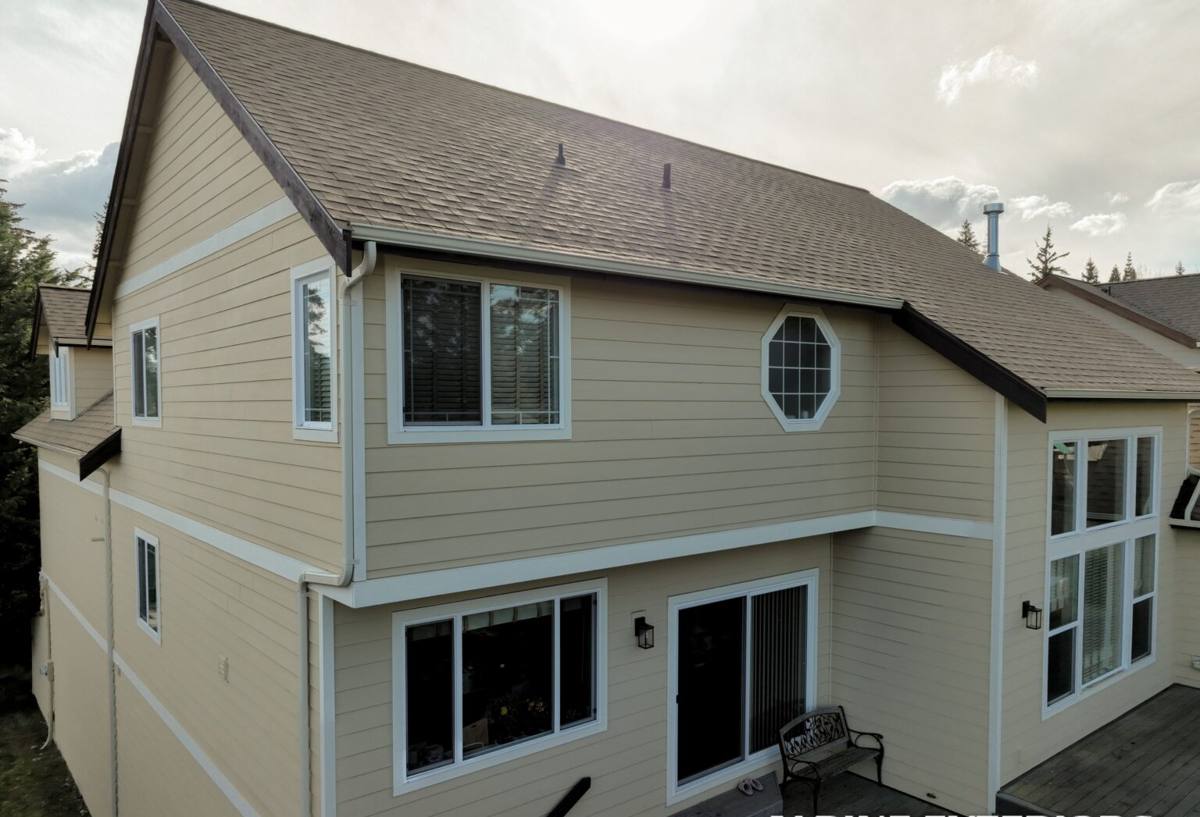
Signs a Fairhaven Home May Need New Windows
- Visible fogging or a permanent haze between double-pane glass — the seal has failed and the insulating gas is gone
- Soft or discolored wood trim around the window, especially on the sill or lower corners
- Drafts you can feel with a hand near the frame on a windy day
- Cranks, locks, or balances that stick, grind, or no longer hold the sash in place
- Paint or finish that keeps failing in the same spot no matter how often it's touched up
- Noticeably higher heating bills compared to similar-sized homes with newer windows
- Condensation forming on the inside of the glass regularly through fall and winter
Any one of these can be a minor fix. Several together, especially combined with visible wood damage, usually mean the window and its surrounding flashing have reached the point where repair is a temporary patch rather than a real solution.
What a Correct Window Installation Actually Involves
The window unit itself gets most of the attention, but in a climate like this the installation details matter as much as the product. A poorly flashed high-end window will leak. A well-flashed mid-range window usually won't.
Removing the Old Window Correctly
This means checking the framing, sill, and sheathing underneath for hidden water damage before anything new goes in. Installing a new window over rotted or damp framing just hides the problem for a while.
Flashing Built for Wind-Driven Rain
Proper flashing at the sill, jambs, and head — layered so water is always directed outward and downward, never trapped behind the siding — is the single biggest factor in whether a window stays dry through a coastal storm. This includes sill pans that catch and redirect any water that does get past the sash, rather than letting it sit against bare wood.
Sealing That Accounts for Salt and Movement
Sealants near the water need to handle both moisture and the slight expansion and contraction that comes with temperature and humidity swings. Cutting corners here is one of the most common reasons a window that was installed fine still leaks a few years later.
Insulation Around the Frame
Gaps around the window frame should be filled with an appropriate low-expansion foam or backer rod and sealant — not stuffed with fiberglass insulation alone, which does little to stop air and moisture movement.
Frame Material Options for a Coastal Climate
Every frame material has trade-offs. What matters is picking one that matches how much maintenance you're willing to do and how close to the water the home sits.
| Material | How It Handles Salt Air & Rain | Maintenance |
|---|---|---|
| Vinyl | Doesn't corrode or rot; handles damp and salt exposure well | Low — occasional cleaning |
| Fiberglass | Very stable in temperature swings and moisture; strong long-term option near water | Low |
| Wood | Needs a well-maintained exterior finish or cladding to resist rot and moss in a damp climate | High — regular refinishing |
| Wood-clad (exterior aluminum or vinyl over wood) | Exterior handles weather well; interior keeps a wood look | Moderate — cladding seams need periodic inspection |
| Aluminum | Can corrode faster in salt air unless specifically rated for coastal use, and conducts cold | Moderate |
For homes closer to the water in and around Fairhaven, we generally steer customers toward vinyl or fiberglass frames — not because other materials are bad products, but because they hold up with the least ongoing maintenance in salt air and constant damp. If a homeowner wants a wood interior look, wood-clad options let them get that without exposing solid wood to the exterior weather.
Glass Package Considerations
Beyond the frame, the glass package affects both comfort and how the window performs in wind-driven rain.
- Double-pane, low-E glass is the standard baseline for this climate — it manages heat loss and condensation reasonably well.
- Triple-pane adds insulation value and can help with sound from wind, at added cost and weight — worth it for homes with more direct wind exposure.
- Impact-resistant or laminated glass is worth discussing for homes with unobstructed exposure to storm winds, though it's not a requirement most Whatcom County homes need.
- Argon or krypton gas fill between panes improves insulation but will eventually diminish over the life of the window as seals age — a normal, gradual process, not a defect.
Our Installation Process
- On-site assessment — we look at existing windows, framing condition, and any visible water or rot damage before recommending anything.
- Measurement and product selection — exact sizing and a frame/glass package matched to the home's exposure and your budget.
- Removal and inspection — old units come out carefully so we can check the framing and sheathing underneath.
- Repair of any hidden damage — rotted framing or sheathing gets addressed before the new window goes in, not covered up.
- Flashing and sill pan installation — detailed for wind-driven rain, not just a straight-down rain assumption.
- Window installation and leveling — set plumb, level, and square so the sash operates correctly for years.
- Sealing and insulating — appropriate sealant and low-expansion foam around the full perimeter.
- Interior and exterior trim finish — matched to the home and sealed against moisture entry.
- Final walkthrough — every window opens, closes, locks, and seals properly before we consider the job done.
What Affects Window Installation Cost
| Factor | Why It Matters |
|---|---|
| Number of windows | Per-window cost usually drops on larger jobs due to shared setup and labor |
| Frame material | Vinyl is typically the most budget-friendly; fiberglass and wood-clad cost more upfront |
| Window size and type | Large picture windows or complex shapes (bay, bow, custom) cost more than standard double-hungs |
| Existing damage | Rotted framing or sheathing found during removal adds repair cost but prevents a bigger problem later |
| Glass package | Triple-pane or impact-resistant glass adds cost over standard double-pane low-E |
| Access and site conditions | Upper-story windows or tight access can add labor time |
We give straightforward, itemized estimates rather than a single vague number, so you can see where the cost is actually going and make decisions about where to spend more or save.
Why a Crew That Already Works Fairhaven Matters
A window installer who mostly works drier, inland areas can still do competent work, but crews who regularly install windows in Whatcom County's wetter, saltier microclimates tend to default to the flashing details, sealant choices, and material recommendations that actually hold up here — because they've seen what happens when those details get skipped. That familiarity shows up less in the sales pitch and more in the parts of the job you don't see once the trim is back on: the sill pan, the flashing layers, the sealant bead at the corners. It's also worth asking any contractor directly how they detail flashing for wind-driven rain — a straight answer is a good sign.
Keeping New Windows Performing Long-Term
- Rinse salt residue off frames and glass periodically, especially after storms
- Check and clear moss or algae buildup on sills and lower trim before it holds moisture against the surface
- Lubricate hardware (cranks, locks) occasionally to prevent salt-related sticking
- Re-caulk exterior trim joints if you notice cracking or gaps — small gaps let water in long before a leak is obvious
- Watch for condensation patterns each winter — a sudden change can be an early sign of a failing seal
If your windows in Fairhaven are showing their age, or you're planning ahead before the next wet season, we're happy to take a look and give you a straightforward, no-pressure estimate. Use the form below to get started.