 Ferndale
 Metal Roofing Built for Kendall's Conditions
Kendall sits in the wetter, more heavily wooded stretch of Whatcom County, where tree cover is thick, driveways are long, and roofs go weeks at a time without a full day of direct sun. That combination of shade, standing moisture, and wind-driven rain off the Salish Sea is hard on asphalt shingles, but it's exactly the kind of environment where a properly installed metal roof earns its keep. We install metal roofing across Ferndale and out into Kendall, and the specification we recommend out here is shaped by what actually happens to a roof under fir and cedar cover through a long Whatcom County winter.
This page covers metal roofing specifically for Kendall properties — what the local climate demands, what a correct installation looks like, and how our process works from first look to final walk-through.
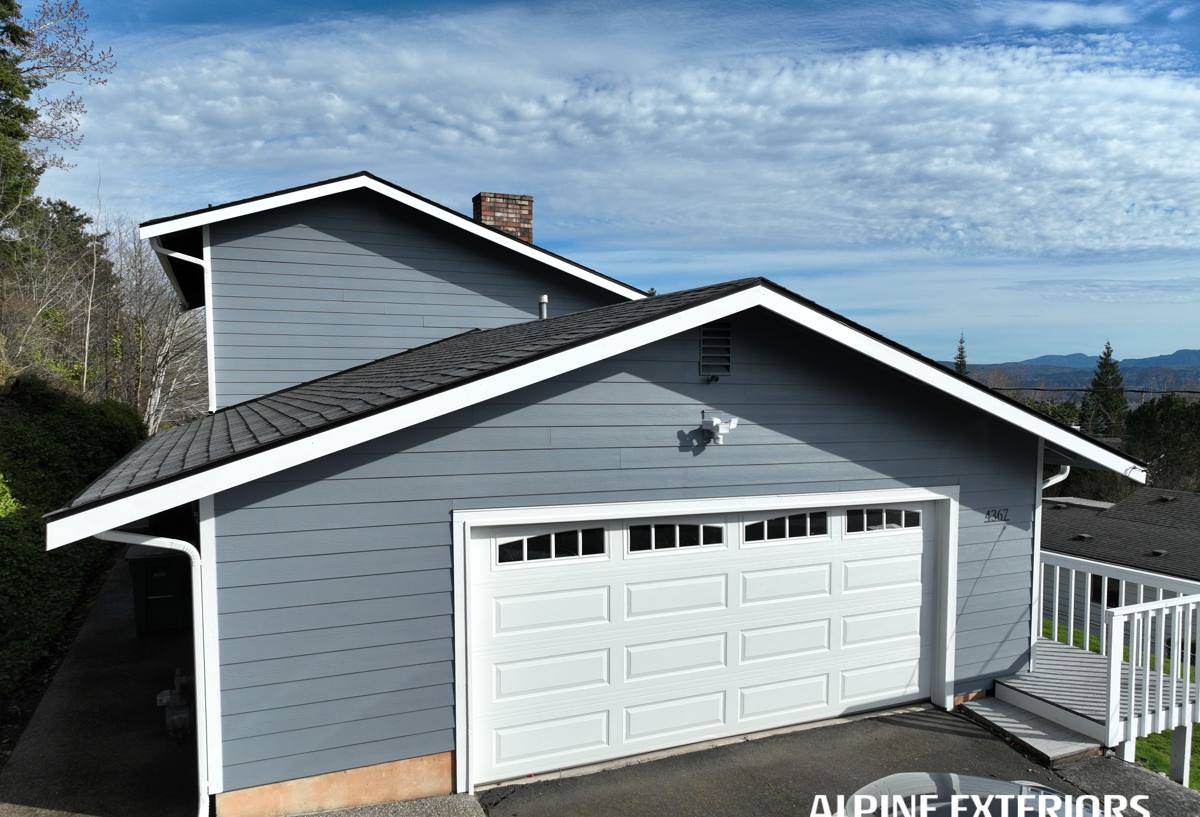
What Kendall's Climate Does to a Roof
A few things define roofing conditions in this part of the county, and they compound rather than acting alone:
- Shade and moisture retention. Wooded lots keep roof surfaces damp longer after rain, which is the single biggest driver of moss and algae growth.
- Moss season that runs long. In shaded, tree-lined areas, moss can establish itself nearly year-round, working under shingle tabs and lifting fasteners over time.
- Driving rain and wind. Storms moving through Whatcom County often bring rain sideways, which pushes water up under laps and around penetrations rather than just down the slope.
- Debris load. Needles, cones, and branches collect in valleys and behind chimneys and dormers, holding moisture against the roof surface exactly where you don't want it.
- Salt-tinged marine air. Storm systems pulling in off the water carry a mild salt content that, over decades, affects fastener and flashing metals if they aren't correctly specified.
None of this is unique to Kendall specifically, but the tree cover and moisture retention are more pronounced here than on more open, exposed lots closer to town. A roofing system that ignores that reality will show problems years before it should.
Why Metal Handles This Environment Well
Metal roofing doesn't stop moss from landing on a roof — nothing does, in a shaded lot — but it changes how much damage that moss can do. Shingles have a rough, granular surface and countless small seams that moss can root into. A properly installed metal panel has a hard, smooth, continuous surface with far fewer places for organic growth to gain a foothold, and moss that does form sits on top of the panel rather than working its way underneath it.
Metal also sheds wind-driven rain more reliably than a shingle field, since the concern with shingles in sideways rain is water finding its way under a tab; a correctly lapped and fastened metal panel doesn't give it that opportunity. And where debris load is a factor, metal's smoother surface makes it easier for needles and cones to wash off rather than mat down and hold moisture.
Where Metal Isn't Automatically the Right Call
Metal roofing is a strong fit for Kendall's climate, but it isn't the right answer for every roof or every budget, and we'll say so plainly during an assessment. Complex rooflines with many small planes, dormers, and valleys cost more to detail correctly in metal than in shingles. If a roof deck has existing damage or the budget doesn't support doing the underlayment and flashing correctly, we'd rather have that conversation upfront than install a system that isn't set up to perform.
Standing Seam vs. Exposed-Fastener Metal
Most metal roofing decisions on Kendall homes come down to one of two systems. Both can perform well when installed correctly; the right choice depends on the roof's slope, budget, and how long you want to go before any maintenance.
| Factor | Standing Seam | Exposed-Fastener |
|---|---|---|
| Fasteners | Concealed under the seam | Visible, driven through the panel face |
| Long-term maintenance | Minimal — no exposed fasteners to fail | Fastener washers age and need periodic checking |
| Upfront cost | Higher | More moderate |
| Best fit | Long-term ownership, lower-slope or complex roofs | Simpler rooflines, tighter budgets |
| Moss/moisture resistance | Excellent — fewer surface interruptions | Good, provided washers are inspected periodically |
In a shaded, wet environment like Kendall's, the concealed-fastener advantage of standing seam matters more than it would on an open, dry lot, because exposed fasteners under a tree canopy see more sustained moisture and are more prone to washer degradation over the decades. That said, exposed-fastener panels installed with quality fasteners and maintained on a normal inspection schedule hold up well and remain a reasonable, more affordable option for many homes.
What a Correct Installation Actually Involves
The panels themselves get the attention, but most metal roof failures we're called out to inspect trace back to what's underneath or around them, not the panel material itself.
Deck and Underlayment
We check the roof deck for soft spots or rot before anything goes down — common on older Kendall homes where a previous roof held moisture longer than it should have. A high-temperature, self-adhered underlayment goes down as the moisture barrier, since metal panels need underlayment that can handle sustained condensation on the panel's underside, not just standard felt.
Fastening and Panel Layout
Panel layout accounts for prevailing wind and rain direction so laps shed water the way they're supposed to, rather than being laid out purely for convenience. Fastener spacing and torque matter — overdriven screws crush the washer seal and underdriven ones back out over time.
Flashing and Penetrations
Every chimney, vent pipe, and valley is a place water wants to find a way in. Flashing has to be formed and lapped correctly for the specific panel profile — generic trim that "mostly fits" is where most leaks start.
Ventilation
Metal roofs need proper intake and exhaust ventilation in the attic to prevent condensation from forming on the panel underside. This is easy to overlook and is one of the most common shortcuts we see corrected on re-roofs.
Our Process for Kendall Metal Roofing Projects
- On-site assessment. We look at the existing roof, deck condition, ventilation, and how the property's tree cover and drainage patterns affect the roof specifically.
- Honest system recommendation. We'll tell you whether standing seam, exposed-fastener, or a different roofing approach entirely fits the roof and the budget — not just what we'd prefer to sell.
- Written scope and estimate. Deck repair allowances, underlayment spec, flashing details, and panel profile are all spelled out before work starts.
- Installation. Deck repair first, then underlayment, panels, and flashing detailing, with attention to the ventilation path throughout.
- Final walk-through. We go over the completed roof with you, including what routine maintenance (if any) it needs going forward.
Living with a Metal Roof Under Tree Cover
A metal roof in a wooded Kendall lot still needs occasional attention — it just needs less of it than shingles, and what it needs is simpler.
- Clear needles and debris from valleys and behind chimneys once or twice a year, more often under heavy conifer cover.
- Keep gutters clear so water has somewhere to go once it sheds off the panel.
- Trim back branches that overhang the roof to reduce debris load and moss spore contact.
- Do a visual check after major windstorms for lifted flashing or dislodged debris.
- On exposed-fastener systems, have fastener washers checked every few years as part of routine upkeep.
What Affects the Cost of a Kendall Metal Roof
| Factor | Why It Matters |
|---|---|
| Roof complexity | More valleys, dormers, and penetrations mean more flashing labor |
| Panel system chosen | Standing seam runs higher upfront than exposed-fastener |
| Deck condition | Rot or soft decking found during tear-off adds repair cost |
| Access | Long driveways, steep grades, or heavy tree cover affect staging and crew time |
| Existing roofing | Tear-off vs. install over an existing layer, where code allows it |
We don't quote metal roofing off a phone call or a satellite photo — every estimate for a Kendall property comes from an actual on-site look at the roof, the deck, and the access, because those are the things that actually move the price.
Why Local Experience with Kendall Properties Matters
A crew that's worked wooded Whatcom County lots knows what to check for before it becomes a problem — where moisture tends to sit longest on a shaded roof plane, how much debris load a given tree canopy actually produces, and which flashing details hold up against sideways rain coming off a storm system rather than just looking right on a dry day. That local pattern recognition is the difference between a roof that's technically installed correctly and one that's installed correctly for Kendall.
If you're weighing a metal roof for a Kendall property, we're happy to take a look and give you a straight assessment — no pressure, no hard sell. Request a free estimate through the form below and we'll schedule a time to walk the roof with you.