 Ferndale
 Building Decks for Lummi Nation's Marine Climate
A deck built in Lummi Nation lives a harder life than a deck built twenty miles inland. This part of Whatcom County sits close to the water, which means salt-laden air moves through the area regularly, rain comes in sideways more often than straight down, and the moss season stretches from fall well into spring. A deck that's framed, fastened, and finished the same way you'd build one in a dry inland town will show problems here years earlier than it should — corroding hardware, soft spots at the ledger, moss creeping across boards that never fully dry out. Building correctly for this specific stretch of Ferndale and the surrounding Lummi Nation area isn't about using fancier materials across the board; it's about knowing which components actually take the abuse and treating those differently.
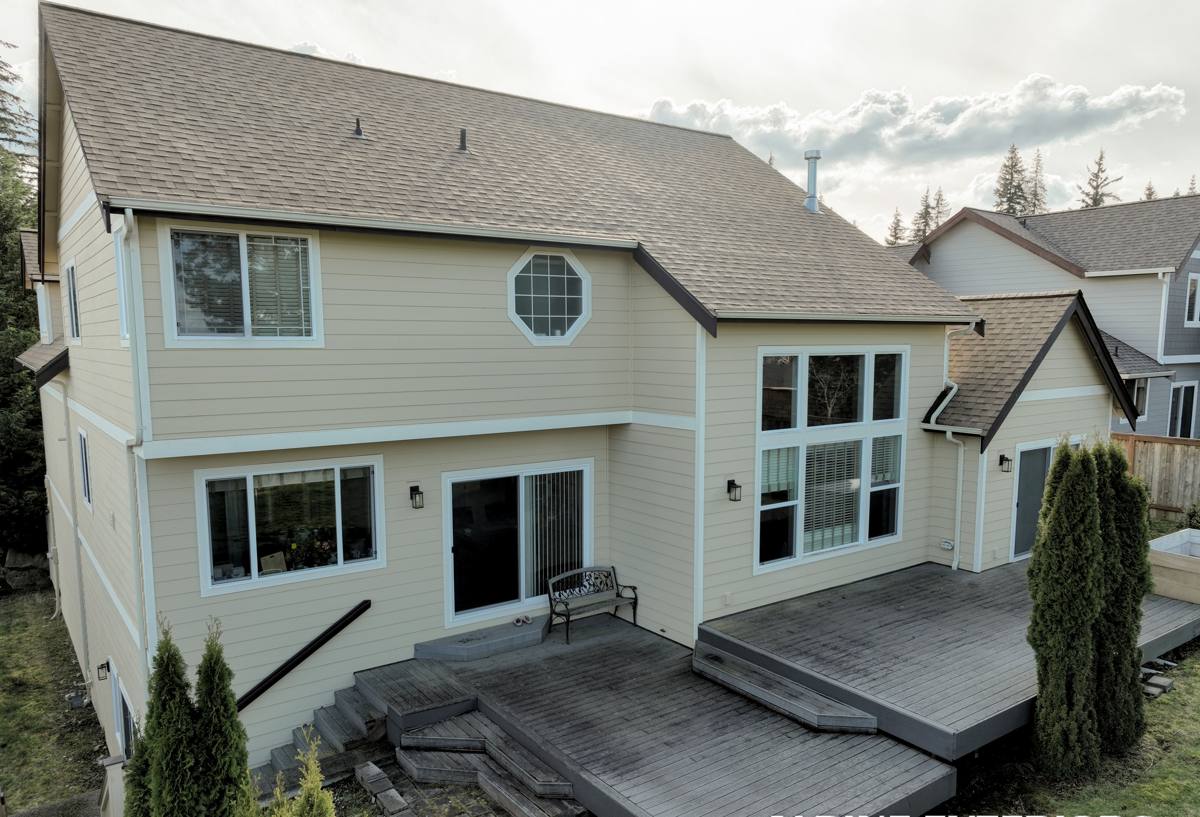
What Salt Air, Rain, and Moss Actually Do to a Deck
Each of these three conditions attacks a deck in a different way, and understanding the mechanism matters more than knowing the general threat.
Salt Air
Airborne salt accelerates corrosion on anything metal — screws, joist hangers, post bases, railing brackets. Standard hot-dip galvanized hardware holds up reasonably well inland but can start showing rust streaks and pitting within a few seasons this close to the water. Once a fastener starts corroding, it loses holding strength long before it looks obviously failed, which is part of why deck hardware needs to be inspected, not just assumed sound because the deck still feels solid underfoot.
Driving Rain
Rain that comes in at an angle gets pushed into places vertical rain never reaches — under railing caps, behind ledger boards, into end grain on stair stringers. Water sitting in these hidden spots is what rots framing lumber from the inside while the surface boards still look fine. The ledger connection (where the deck attaches to the house) is the single most common point of hidden rot on decks in this climate, because it's the hardest spot to keep water out of and the hardest spot to inspect without pulling boards.
Moss
Moss needs shade, moisture, and time — and this area supplies all three for months at a stretch. Moss holds water against the deck surface long after a sunnier, drier location would have dried out, which softens wood fibers and makes boards slicker and more slip-prone. Moss growth is also a strong indicator of poor airflow underneath or between boards, so a heavily mossed deck is often telling you something about the build, not just about the weather.
Decking Material Options for This Climate
There's no single "correct" decking material for every project — the right choice depends on budget, how much upkeep the homeowner wants to take on, and how exposed the deck is to weather. Here's how the common options actually perform under Lummi Nation conditions:
| Material | How It Handles Rain & Moisture | Moss Resistance | Maintenance |
|---|---|---|---|
| Pressure-treated fir/hem-fir | Good if sealed and re-sealed on schedule; end grain and cut edges are the weak point | Low — porous surface holds moisture and organic debris | Annual cleaning and re-sealing recommended |
| Western red cedar | Naturally rot-resistant, but the finish still needs upkeep to keep water from graying and cupping the boards | Moderate — better than fir but still needs cleaning | Sealing every 1–2 years, regular cleaning |
| Capped composite | Excellent — the cap layer doesn't absorb water the way wood or uncapped composite does | High — smooth, non-porous surface sheds moss much more easily | Occasional washing, no sealing or staining |
| Uncapped composite (older style) | Fair — earlier composites absorb some moisture at cut edges and can mold in shaded, damp spots | Moderate | Low, but not as low as capped composite |
We don't push composite on every job — a well-built and properly maintained cedar deck holds up fine in this area, and plenty of homeowners prefer the look and the lower upfront cost. But for a deck that's shaded most of the day, close to the water, or belongs to someone who doesn't want a yearly sealing chore, capped composite earns its higher price tag here more than it does in a drier climate.
Framing and Structural Details That Matter Most Here
Ledger Attachment and Flashing
Where the deck meets the house is where we spend the most care. Proper flashing — installed so water is directed out and away from the ledger board rather than trapped behind it — is non-negotiable in a climate with this much wind-driven rain. We also use structural screws or through-bolts rated for the load, not just nails, since the ledger connection carries a significant share of the deck's weight.
Footings and Post Bases
Footings need to sit below frost depth and be sized for the soil they're going into, which can vary noticeably across this area depending on how close a lot sits to the water table. Post bases should hold the post above the concrete and above standing water, not embedded directly in it — wood in constant contact with wet concrete is one of the fastest ways to rot a post from the bottom up.
Fasteners and Hardware
Given the salt air, we specify stainless steel or high-grade coated fasteners and connectors for anything structural, especially joist hangers and ledger bolts. It costs more than standard galvanized hardware up front, but replacing corroded structural hardware later means tearing into a finished deck — far more expensive than getting it right the first time.
Railings, Fascia, and Finish Details
Railings take a lot of direct weather exposure and a lot of hand contact, so we pay attention to cap design — a cap that sheds water instead of pooling it lasts longer and stays less slippery. Fascia boards along the deck's edge are highly visible and highly exposed at the same time, so we treat cut ends and back-prime boards before installation rather than relying on a single coat applied after the fact. These are small details, but they're the ones that separate a deck that still looks good in five years from one that already needs refinishing.
Our Build Process
1. Site Assessment
We start by looking at sun and shade patterns, wind exposure, drainage, and how close the deck sits to the water, since all of that shapes material and design recommendations specific to that lot.
2. Design and Material Selection
We walk through decking, railing, and finish options honestly, including trade-offs — cost, maintenance, and appearance — rather than steering every homeowner toward the most expensive option.
3. Permitting
Deck projects often require permitting depending on size, height, and attachment to the structure. We handle this step so the homeowner isn't chasing paperwork mid-project.
4. Construction
Framing, flashing, and fastening are done to the standards outlined above, with inspection points built into the schedule rather than left until the end.
5. Final Walkthrough
We go over the finished deck together, including basic care instructions specific to the material installed, so the homeowner knows what upkeep is actually needed versus optional.
Maintenance Checklist for Local Conditions
Whatever material a deck is built from, a few habits matter more here than they would somewhere drier:
- Sweep debris off the deck regularly — trapped leaves and needles hold moisture and speed up moss growth
- Rinse salt residue off railings and hardware periodically, especially after storms
- Check fastener heads and visible hardware once or twice a year for early rust staining
- Keep gutters and downspouts near the deck clear so runoff isn't dumping extra water onto it
- Re-seal wood decking on the schedule recommended for the specific product used — don't wait until it looks dry and gray
- Address moss at the first sign of it rather than letting it establish, since established moss is harder to remove without damaging the surface
- Confirm underdeck airflow isn't blocked by stored items, plantings, or skirting that traps moisture
Repair vs. Replace: When an Existing Deck Can Be Saved
Not every aging deck needs to be torn out. If the framing and ledger connection are still structurally sound and the damage is limited to surface boards or railings, targeted repair or a decking replacement over solid framing is often the more cost-effective route. The deciding factor is almost always the framing and the ledger — if those are compromised by rot or corroded hardware, patching the visible surface just delays a bigger problem. We'll always tell a homeowner honestly whether we're looking at a repair, a partial rebuild, or a full replacement, and why.
Why Local Experience Matters for This Job
A deck contractor who mostly works drier, inland jobs can still build something that looks right on the day it's finished. The difference shows up two or three years later, when hardware choices, flashing details, and material selections either hold up to this area's salt air and rain or don't. We work in Ferndale and across Whatcom County, including Lummi Nation, regularly enough to know which shortcuts fail first here and which upgrades are actually worth the money versus which ones are overkill for a given project.
If you're planning a new deck or dealing with an aging one in Lummi Nation, we're happy to take a look and give you a straightforward, no-pressure estimate — just fill out the form below.