 Ferndale
 Why Decks Near Lummi Nation Wear Out Faster
Homes in and around Lummi Nation sit close to Bellingham Bay and the Strait of Georgia, which means decks here take on a combination of stresses that inland Whatcom County properties don't deal with in the same way. Salt-laden air corrodes fasteners and hardware faster than it would twenty miles inland. Driving rain off the water pushes moisture sideways into joints, railings, and ledger connections instead of just falling straight down. And the long, wet moss season here means any horizontal wood surface that doesn't drain and dry quickly becomes a growing surface within a year or two, not five or ten.
None of that means a deck can't last decades in this area. It means the materials, fasteners, and construction details have to be chosen with that specific exposure in mind — not just built to a generic decking spec pulled from a catalog.
What "Salt Air" Actually Does to a Deck
Salt air doesn't just affect waterfront homes directly on the shoreline. Airborne salt travels well inland on prevailing winds, settling on metal surfaces and slowly accelerating corrosion. On a deck, that shows up first in the fasteners — screws, joist hangers, post bases — long before the visible wood or composite surface shows any damage. A deck can look fine on top while the hardware holding it together is quietly failing underneath.
Signs a Deck Needs Replacement, Not Just Repair
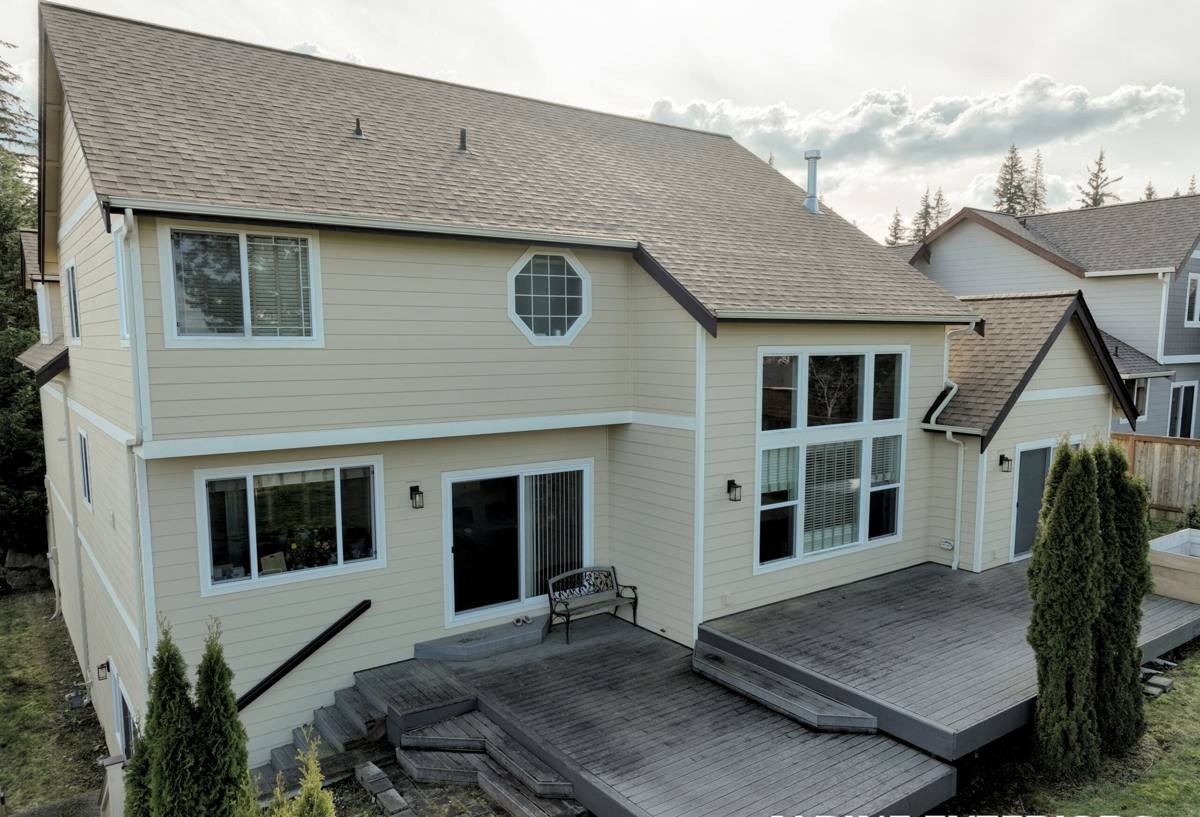
Not every tired-looking deck needs a full tear-off. But there are specific signs that point to replacement rather than patching, especially in this climate:
- Soft or spongy spots in the decking boards, especially near the house or around posts
- Rust streaks running down from screw heads or metal connectors
- A ledger board (where the deck attaches to the house) that's dark, swollen, or separating slightly from the siding
- Persistent moss or algae that comes back within weeks of cleaning, no matter how you scrub it
- Railings or posts that flex or wiggle when you lean on them
- Footings or posts you can see are cracked, heaving, or sitting in standing water after rain
If you're only seeing surface graying or minor board cupping, that's often a refinishing or partial-board job. If you're seeing structural give, hardware failure, or a ledger connection you're not confident in, that's a safety issue, not a cosmetic one — and it's the point where replacement is the honest recommendation.
Choosing the Right Decking Material for This Climate
There's no single "best" decking material for every home — it depends on budget, how much upkeep you want to do, and how close you are to the water. Here's how the common options actually perform under the salt-air-and-rain conditions typical of the Lummi Nation area:
| Material | Moisture & Salt Resistance | Moss Resistance | Upkeep |
|---|---|---|---|
| Pressure-treated pine | Good if hardware is corrosion-rated; treatment protects against rot but not corrosion of fasteners | Needs regular cleaning and sealing to slow moss growth | Highest — annual cleaning, periodic sealing |
| Cedar | Naturally rot-resistant, but still needs sealing near salt air to prevent graying and checking | Moderate — still grows moss without maintenance | High — sealing every 1-2 years |
| Composite decking | Excellent — doesn't absorb moisture or rot | Better, but not immune; still needs periodic washing | Low — no sealing or staining |
| PVC decking | Excellent — fully synthetic, no wood fiber to hold moisture | Best of the options, though surface film can still build up | Lowest — occasional washing only |
For homes with direct water exposure or heavy shade (both common in this area, which slows drying and worsens moss), composite or PVC decking is usually the better long-term investment even though the upfront material cost is higher. For homes set back from the water with good sun exposure, a well-built and properly maintained wood deck can still be the right call, especially if budget is the deciding factor.
What a Correct Deck Replacement Actually Involves
A deck replacement is more than swapping old boards for new ones. Done right, it's a structural project, and in this climate the details below are where a deck either lasts decades or starts failing again in five years.
Ledger Board and Flashing
The ledger board — where the deck attaches to the house — is the single most common failure point on any deck, anywhere, but especially in a climate with driving rain. It needs proper flashing that directs water away from the house wall, not just caulk or paint covering a gap. This is also the point where deck failures can turn into siding and framing damage on the house itself, so it's worth doing correctly the first time.
Footings and Posts
Footings need to sit below the frost line and be sized correctly for the load and soil conditions on your specific lot. Soil composition varies across this area, and a footing that was adequate decades ago under older code may not meet current standards. We evaluate existing footings during replacement rather than assuming they're fine just because the old deck stood on them.
Hardware and Fasteners
Given the salt air, we use corrosion-resistant fasteners and connectors rated for coastal or treated-lumber exposure — not standard interior-grade hardware. This is one of the cheapest parts of a deck to get right and one of the most expensive to fix later, since replacing failed hardware usually means pulling up decking to reach it.
Drainage and Airflow Under the Deck
Moss and rot both thrive where air can't move and water can't drain. Proper board spacing, joist spacing, and grading underneath the deck all affect how quickly the structure dries out after rain — which, in this area, is often.
Our Deck Replacement Process
We keep the process straightforward and communicate clearly at each stage, since a deck replacement affects how you use your outdoor space for the duration of the project:
- On-site assessment — we inspect the existing deck, ledger connection, footings, and framing to determine what's structural versus cosmetic
- Written estimate — a clear scope of work and price before anything starts, no surprise add-ons mid-project
- Permitting — we handle the paperwork required for your specific property and jurisdiction
- Demolition and disposal — full removal of the old structure, including hauling debris off-site
- Framing and footings — new or reinforced structural elements built to current code
- Decking and railing installation — using the material you've chosen, installed with corrosion-rated hardware
- Final walkthrough — we go over the finished deck with you before calling the job done
Permitting Near Lummi Nation
Deck replacement in Washington generally requires a building permit, and the specific requirements can vary depending on jurisdiction. Homes on Lummi Nation land may fall under tribal building authority rather than standard Whatcom County permitting, while homes nearby but outside the reservation boundary typically go through the county process. We verify which authority applies to your specific property before pulling permits, so you're not stuck guessing or dealing with a permit rejection mid-project. If you're unsure which process applies to your home, that's a normal question to ask early — not something you're expected to already know.
Maintaining a New Deck in a Wet, Salt-Air Climate
Whatever material you choose, a little regular maintenance goes a long way toward getting the full lifespan out of a new deck in this environment:
- Sweep debris and standing leaves off the deck regularly — trapped organic matter is what moss and mildew feed on
- Rinse salt residue off with fresh water a few times a year if you're close to the water
- Check hardware and railings for looseness once a year, ideally before the wet season ramps up
- Reseal wood decking on the manufacturer's recommended schedule — don't wait until it's visibly gray and dry
- Keep gutters and downspouts clear so roof runoff isn't dumping extra water directly onto or under the deck
Why Hire a Crew That Already Works This Area
Deck construction standards that work fine in a dry inland climate can fall short here. A crew that regularly works in and around Lummi Nation and the greater Ferndale area already understands which fasteners hold up to salt air, how much drainage a deck actually needs given the local rainfall, and which permitting authority applies to a given property. That local familiarity shows up in fewer callbacks and a deck that's still solid well past when a generic build would start showing problems.
We're a Ferndale-based siding and exterior contractor, and decks are part of how we think about a home's whole exterior envelope — how water moves around the house, where it drains, and where it doesn't belong. That's the same thinking that goes into a deck built to last in this climate.
If your deck is showing its age or you're planning a replacement, we're happy to take a look and give you a straightforward, no-pressure estimate. Use the form below to get started.