 Ferndale
 What Lynden's Weather Does to a Roof Over Time
Lynden sits inland from Bellingham Bay, but the marine air off the Strait of Georgia doesn't stop at the coastline. It moves across Whatcom County carrying moisture and a measure of salt with it, and it settles into roofs the same way it settles into everything else outdoors here — slowly, quietly, and mostly on the surfaces homeowners never look at. Add the long, low-angle rains that define a Pacific Northwest fall and winter, and a roof in Lynden spends a large share of the year wet or damp rather than dry.
That combination — driving rain plus a mild, humid climate that rarely gets hot or dry enough to fully dry things out — is exactly what moss and algae need. North-facing slopes, roofs shaded by mature trees, and any spot where debris collects will grow moss faster here than in drier parts of the state. Moss holds water against the roof surface, works into seams and fastener points, and accelerates whatever corrosion or rot is already trying to happen. It's not a cosmetic issue by the time it's visible — it's already doing work underneath.
None of this means a roof in Lynden is doomed. It means the roofing system, the fasteners, the flashing details, and the maintenance plan all need to be chosen with this specific weather pattern in mind, not a generic one.
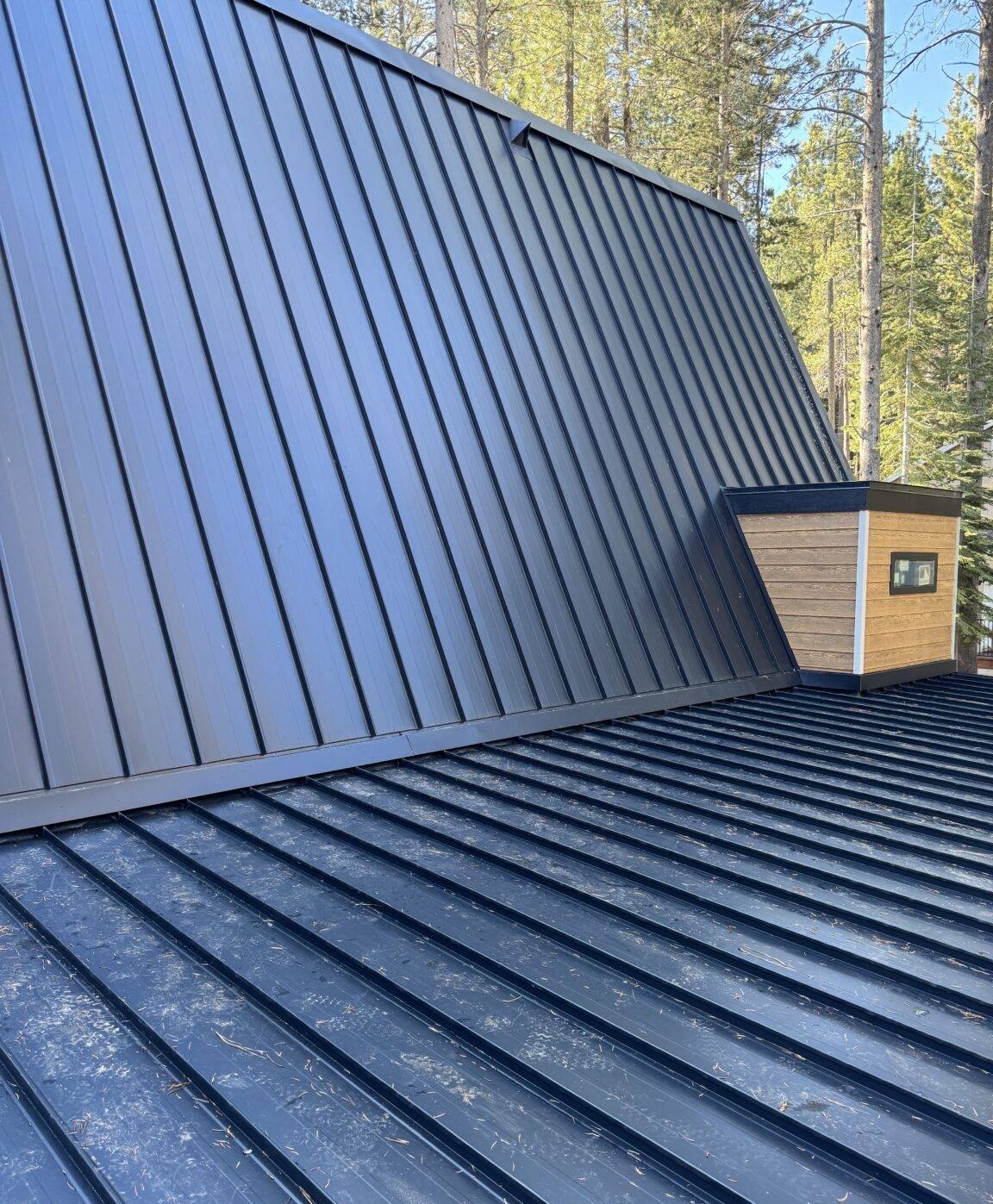
Why Metal Roofing Holds Up Well Here
Metal roofing isn't the right material for every home or every budget, but for Whatcom County's climate specifically, it has real advantages over other roofing types:
- Steep water shed: Standing seam and most metal panel profiles move water off the roof faster than shingles, leaving less time for moisture to sit and work into seams.
- Moss resistance, not moss immunity: Bare metal gives moss and algae a much harder surface to establish on than shingle granules do. It doesn't stop moss from growing where debris and shade allow it, but it slows it down and makes it easier to clean off without damaging the roof surface.
- Wind performance: Properly fastened metal panels handle the gusty fall and winter storms that come through this part of the county better than lighter roofing materials.
- Longevity: A correctly installed metal roof with a good coating system is a decades-long investment, which matters in a climate that never really gives a roof a break.
The trade-off is that metal roofing is unforgiving of shortcuts. Every advantage above depends on the installation being done correctly — the wrong fastener, the wrong underlayment, or a rushed flashing detail can undo most of the benefit.
Where Metal Roofing Makes the Most Sense in Lynden
We see the strongest case for metal roofing on homes with steeper rooflines (which get the full benefit of fast water shed), on properties with heavy tree cover where moss pressure is highest, and on homes where the owner plans to stay long-term and wants to stop dealing with roofing every 15–20 years.
What a Correct Metal Roof Installation Actually Involves
A metal roof is only as good as the layers underneath it and the details at every edge, valley, and penetration. This is where installs succeed or fail long before anyone notices from the ground.
Underlayment
Given how much of the year a Lynden roof stays damp, we don't treat underlayment as an afterthought. A high-temperature synthetic underlayment, with self-adhered ice-and-water membrane at eaves, valleys, and around penetrations, gives the roof deck a real second line of defense if wind-driven rain ever gets past the panel seams.
Fasteners and Metal Compatibility
Corrosion at fastener points is one of the most common failure points on metal roofs in humid, salt-influenced air. Fasteners and flashing need to be matched to the panel metal — mixing incompatible metals sets up galvanic corrosion that can eat through a fastener or panel edge years before the rest of the roof would fail. We match fastener and flashing metal to the panel system on every job, not just when it's convenient.
Panel Seams and Fastening Method
Standing seam systems use concealed clips rather than exposed fasteners, which removes one of the most common water-entry and corrosion points altogether. Exposed-fastener panels can perform well too, but the fasteners themselves become a maintenance item over the life of the roof, since their washers eventually harden and need attention.
Flashing and Penetrations
Valleys, chimneys, plumbing vents, and skylight curbs are where most roof leaks actually start, on metal roofs and every other kind. Correct step flashing, properly lapped valley metal, and boots or flashing rated for the local temperature swings matter more than the panel choice itself.
Ventilation
A roof deck that can't breathe traps moisture underneath the metal, which leads to condensation problems that have nothing to do with rain getting in from outside. Balanced intake and exhaust ventilation is part of a correct install, not an upgrade.
Comparing Metal Roofing Systems for a Lynden Home
| System | Fastening | Best fit | Maintenance note |
|---|---|---|---|
| Standing seam | Concealed clips | Steeper roofs, long-term owners, higher moss/rain exposure | Lowest long-term maintenance; higher upfront cost |
| Exposed-fastener panel | Through-panel screws | Simpler rooflines, tighter budgets, outbuildings and additions | Fastener washers need periodic inspection and eventual replacement |
| Metal shingles/shakes | Interlocking, concealed | Homes wanting a traditional look with metal's durability | Moderate; detail-heavy installation matters more than material |
Our Process on a Lynden Metal Roofing Job
The process doesn't change much whether a roof is a straightforward re-roof or a more complex home with multiple valleys and dormers — the steps stay the same, just with more attention paid on the complicated ones.
- On-site assessment: We look at the existing deck, ventilation, moss and moisture patterns, and roof geometry before recommending a system — not before we've seen the actual conditions.
- System and color selection: We walk through standing seam versus exposed-fastener versus metal shingle options based on the roof's pitch, exposure, and your budget.
- Tear-off and deck inspection: Old roofing comes off and the deck gets checked for rot or soft spots before anything new goes down — this is often where hidden moisture damage from years of moss and rain gets found.
- Underlayment and flashing installation: Ice-and-water membrane at vulnerable points, synthetic underlayment across the field, and properly matched flashing metal at every penetration and valley.
- Panel installation: Panels and fasteners installed to manufacturer specification and matched for metal compatibility.
- Site cleanup and walkthrough: Magnetic sweep for stray fasteners, debris removal, and a walkthrough of the finished roof and any maintenance recommendations specific to your property.
Cost Factors on a Metal Roofing Project
Metal roofing costs more upfront than asphalt shingles, and the range within metal roofing itself is wide depending on system and roof complexity. Rather than quote a number that won't mean much without seeing your roof, here's what actually moves the price:
| Factor | Why it matters |
|---|---|
| Panel system | Standing seam runs higher than exposed-fastener panel or metal shingle due to labor and material |
| Roof pitch and complexity | Multiple valleys, dormers, and steep pitches add labor time and flashing detail |
| Existing roof layers | Tear-off of multiple old layers adds cost versus a single-layer removal |
| Deck condition | Rot or soft decking found during tear-off requires repair before new roofing goes down |
| Coating and gauge | Heavier gauge metal and premium coatings (like PVDF/Kynar-based finishes) cost more but hold color and resist corrosion longer |
We give a firm number after seeing the roof, not a range pulled from a phone call — every one of these factors changes the estimate.
Keeping a Metal Roof Performing Long-Term
A well-installed metal roof needs less maintenance than shingles, but "less" isn't "none," especially with Lynden's moss season and the amount of rain the roof sees every year.
- Clear debris from valleys and around penetrations before fall rains set in — trapped debris is where moss gets its start.
- Trim back overhanging branches where practical; shade and leaf litter are the two biggest drivers of moss growth on any roof type.
- Check gutters and downspouts are clear so water isn't backing up under the drip edge during heavy rain events.
- Have exposed-fastener systems inspected periodically — fastener washers are the one wear item on that system and are cheap to address early.
- Rinse visible moss growth gently rather than pressure-washing, which can damage panel coatings and force water under seams.
Why a Crew That Already Works in Lynden Matters
Roofing work is local work in a way that's easy to underestimate. A crew that regularly works in Lynden and the surrounding Whatcom County area already knows how the fall storm pattern moves through, how quickly a weather window closes once rain sets in, and how to schedule tear-off and dry-in so a roof isn't sitting open when the forecast turns. That's not something you can fully plan for from a spreadsheet — it comes from having done the work here, in this weather, repeatedly.
A local crew is also easier to hold accountable. If a flashing detail needs a second look after the first hard rain of the season, or a warranty question comes up years down the road, you're dealing with a business that's still working in your area, not tracking down a crew that moved on to a different region.
If you're weighing metal roofing for a home in Lynden, we're glad to come take a look and walk you through what your specific roof needs — no pressure, no obligation. The form below gets you a free estimate.