 Ferndale
 Building a Deck That Actually Holds Up in Marietta
Marietta sits close to the water, where the air carries salt, the rain comes sideways more often than straight down, and moss has a longer growing season than almost anywhere else in Whatcom County. A deck built here has to do more than look good on a sunny afternoon in July. It has to shed water fast, resist corrosion in its fasteners, and stay stable through months of wet, low-light conditions where everything that can grow moss, will. Most deck problems we see in this area aren't design failures — they're the result of a deck being built to a generic spec instead of to the conditions it actually sits in.
This page covers what a deck built for Marietta needs, what a correct build looks like from the ground up, and how we approach the work when we're already familiar with the area.
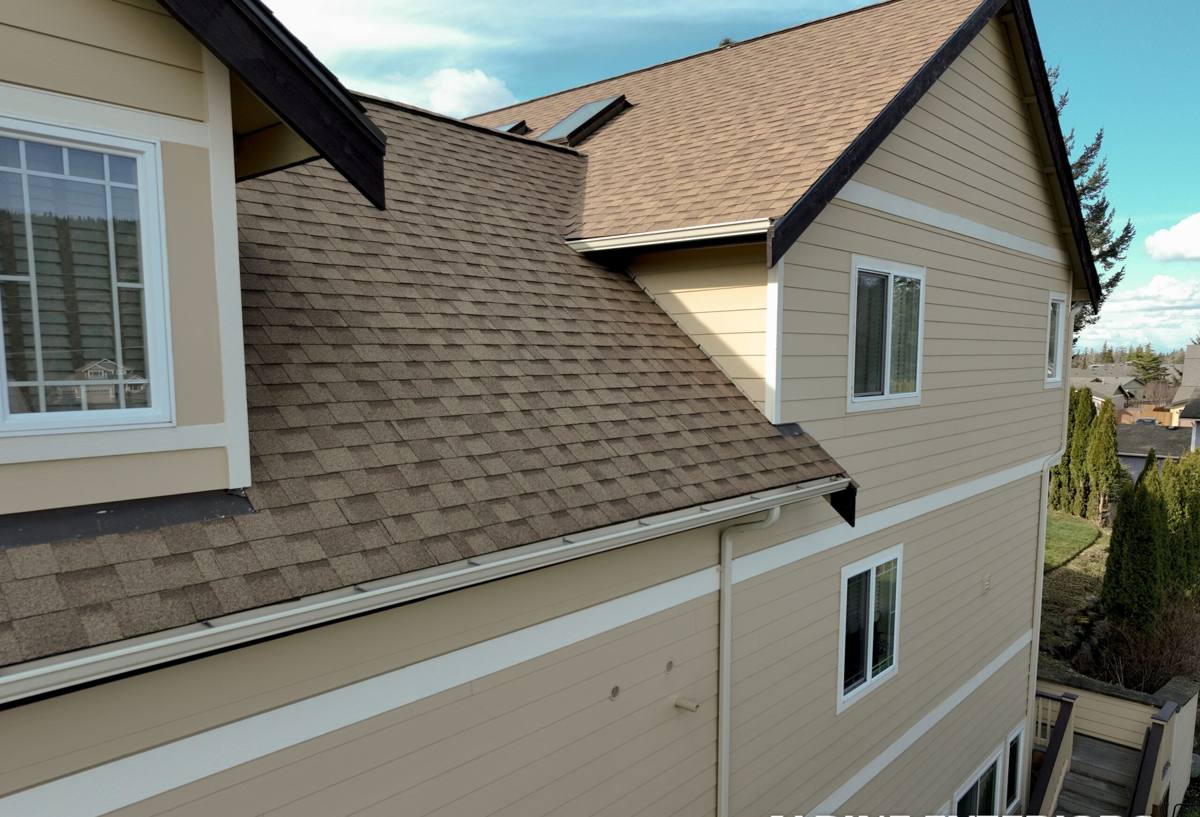
What Marietta's Location Does to a Deck Over Time
Being near open water and the Nooksack lowlands means a few things happen to exterior structures here that don't happen as much a few miles inland:
- Salt-laden air accelerates corrosion on any exposed metal — nails, screws, joist hangers, and railing hardware all age faster than the manufacturer's rating usually assumes.
- Driving rain — rain pushed sideways by wind off the water — gets into joints and end grain that a straight-down rain would never reach, which is why flashing and gaps matter more here than in drier parts of the county.
- Extended moss season means any flat or shaded deck surface that doesn't drain and dry quickly will host moss and algae for a good chunk of the year, not just a few weeks in late winter.
None of this means a deck can't last decades in Marietta. It means the details — fastener grade, board spacing, drainage slope, footing depth — need to be chosen for this specific environment, not copied from a spec sheet written for a drier climate.
Choosing Decking Material for This Climate
There's no single "best" decking material — there's a best material for a given budget, maintenance appetite, and exposure. Here's how the common options actually perform in Marietta's conditions:
| Material | Moisture/moss behavior | Maintenance | Typical lifespan here |
|---|---|---|---|
| Pressure-treated wood | Absorbs water, needs airflow underneath to dry; moss grows readily on shaded, damp boards | Annual cleaning and re-sealing recommended | 15-20 years with upkeep |
| Cedar | Naturally more rot-resistant than treated fir, but still absorbs moisture and needs finish | Periodic sealing to hold color and resist checking | 20-25 years with upkeep |
| Capped composite | Doesn't absorb water into the core; moss can still grow on the surface film if it stays wet and shaded, but it wipes off easily | Occasional washing, no sealing or staining | 25-30+ years, manufacturer-warrantied |
| Uncapped composite (older generation) | Can absorb moisture at the surface over time; more prone to mold staining in shaded, damp spots | Requires more frequent washing than capped composite | Variable — we're selective about which of these we install |
We're honest with clients about the trade-off: wood costs less upfront but asks for real annual maintenance to stay ahead of moss and rot in this climate. Capped composite costs more upfront but is far less work over the life of the deck. We install both — the right call depends on your budget and how much yearly upkeep you actually want to do.
A note on uncapped composite
Older-style composite decking without a protective cap layer has a real maintenance sensitivity in wet, shaded climates like ours — it can hold surface moisture longer than capped products, which shows up as staining or mildew if it doesn't get regular cleaning. We'll still install it if that's what a client wants, but we always walk through this trade-off before ordering material, not after.
What's Underneath Matters More Than What's on Top
A beautiful deck surface on a poorly built frame is a short-term fix. In Marietta's wetter soil conditions, the substructure is where we spend the most attention:
Footings
Footings need to be sized and set to local frost depth and soil-bearing requirements, and set below grade far enough that seasonal ground saturation doesn't shift them. Skipping proper footing depth to save a day of digging is the single most common shortcut we see on decks that end up sagging or heaving within a few years.
Joists and framing
Joist spacing should match the decking manufacturer's spec for wet-climate installs — composite manufacturers in particular often call for tighter spacing than the minimum lumber code allows, because the material behaves differently than wood when saturated and drying repeatedly. We also leave real airflow gaps under the deck so the frame can dry between rain events instead of staying damp for weeks at a time.
Fasteners and hardware
This is where salt air does the most damage over time, and it's the detail that's easiest to cut on without anyone noticing until the hardware starts staining or failing. We use stainless steel or heavy hot-dip galvanized fasteners and joist hangers rated for coastal or high-moisture exposure, not the standard-grade hardware that's fine 20 miles inland but corrodes faster this close to salt air.
Drainage and Moss Prevention Start in the Design
You can't caulk your way out of a bad drainage design after the fact. The decks that stay moss-free the longest in Marietta are the ones where drainage was designed in from the start:
- A slight slope built into the frame so water runs off the surface instead of pooling between boards.
- Board gapping sized correctly for the material — too tight and water sits on top; too wide and debris packs into the gaps and holds moisture against the frame.
- Flashing where the deck ledger meets the house, so driving rain doesn't work its way behind the band board and into the wall framing — one of the most common hidden rot points on older decks here.
- Keeping the underside of the deck ventilated rather than boxed in tight, so it can actually dry between storms instead of staying damp through the whole moss season.
- Positioning stairs and low points so runoff has somewhere to go besides sitting against the house foundation.
Our Deck Building Process
The steps don't change much project to project — what changes is how carefully each one gets done.
- On-site assessment. We look at grade, drainage, sun/shade exposure, and how close the site is to open water or persistent dampness, since that affects material and hardware choices.
- Design and material selection. We walk through wood versus composite trade-offs honestly, including what each one will actually ask of you in year five and year ten, not just at installation.
- Permitting. Most deck projects above a certain height or size require a permit through the local jurisdiction. We handle that paperwork so you're not left guessing about what's required.
- Footings and framing. This is the stage we don't rush — footing depth, joist spacing, and hardware grade all get set here, and they're the hardest things to fix later.
- Decking, railing, and finish work. Boards, railings, stairs, and any built-ins go in last, with attention to gapping and drainage details discussed above.
- Final walkthrough. We go over maintenance expectations for the material you chose so there are no surprises about upkeep.
Maintenance Checklist for Marietta Homeowners
Whatever material you choose, a little seasonal attention goes a long way in this climate. A basic yearly routine:
- Sweep debris out of board gaps before it packs down and holds moisture against the frame
- Rinse or scrub moss and algae off the surface as soon as it appears, rather than waiting until it's established
- Check the ledger board flashing where the deck meets the house for any signs of staining or soft wood
- Inspect railing hardware and fasteners for rust streaks, which usually show up before the hardware actually fails
- Re-seal wood decking on the schedule the finish product calls for — skipping a year in this climate shows up fast
- Confirm underdeck ventilation isn't blocked by stored items, planters, or added skirting
Why a Crew That Already Works in Marietta Makes a Difference
Deck-building fundamentals are the same everywhere, but the details that actually matter change with the site. A crew that regularly works Marietta and the rest of the Ferndale area already knows which fastener grades hold up here, how far footings need to go given the local soil and moisture conditions, and how much drainage slope actually keeps a deck moss-free through a Whatcom County winter. That's knowledge you don't get from a national franchise crew rotating through on a job-by-job basis — it comes from building and maintaining decks in this exact environment over time.
We also know the local permitting process, so that part of the project doesn't become a bottleneck or a surprise cost later.
Getting Started
Every deck project starts differently depending on the site, the grade, and what you actually want to use the space for. If you're planning a new deck in Marietta or replacing one that's showing its age, we're happy to take a look and give you a straightforward, no-pressure estimate — just fill out the form below.