 Ferndale
 Marietta's Climate Puts Real Stress on Siding
Marietta sits close to the water on the edge of Whatcom County, and that location shapes what siding has to survive here. Salt air off the bay works its way into fasteners, trim joints, and painted finishes year-round, slowly breaking down anything that isn't built to resist corrosion and moisture absorption. Add in driving rain that comes in sideways off the water during winter storms, and siding gets tested in ways that inland homes never see — wind-driven rain doesn't just run down a wall, it gets forced up under laps and into seams that were never designed to handle water moving the wrong direction.
Then there's moss. Whatcom County's long, wet, overcast stretch from fall through spring gives moss and algae months to establish themselves on north-facing walls, shaded siding, and anywhere air doesn't move freely. Once moss takes hold, it holds moisture directly against the siding surface long after the rain has stopped, which is exactly the condition that rots wood-based products and stains everything else. None of this is unique to one street or one house in Marietta — it's the baseline climate every exterior on this side of Ferndale has to deal with, and it's why siding replacement here needs to be approached differently than it would be in a drier part of the state.
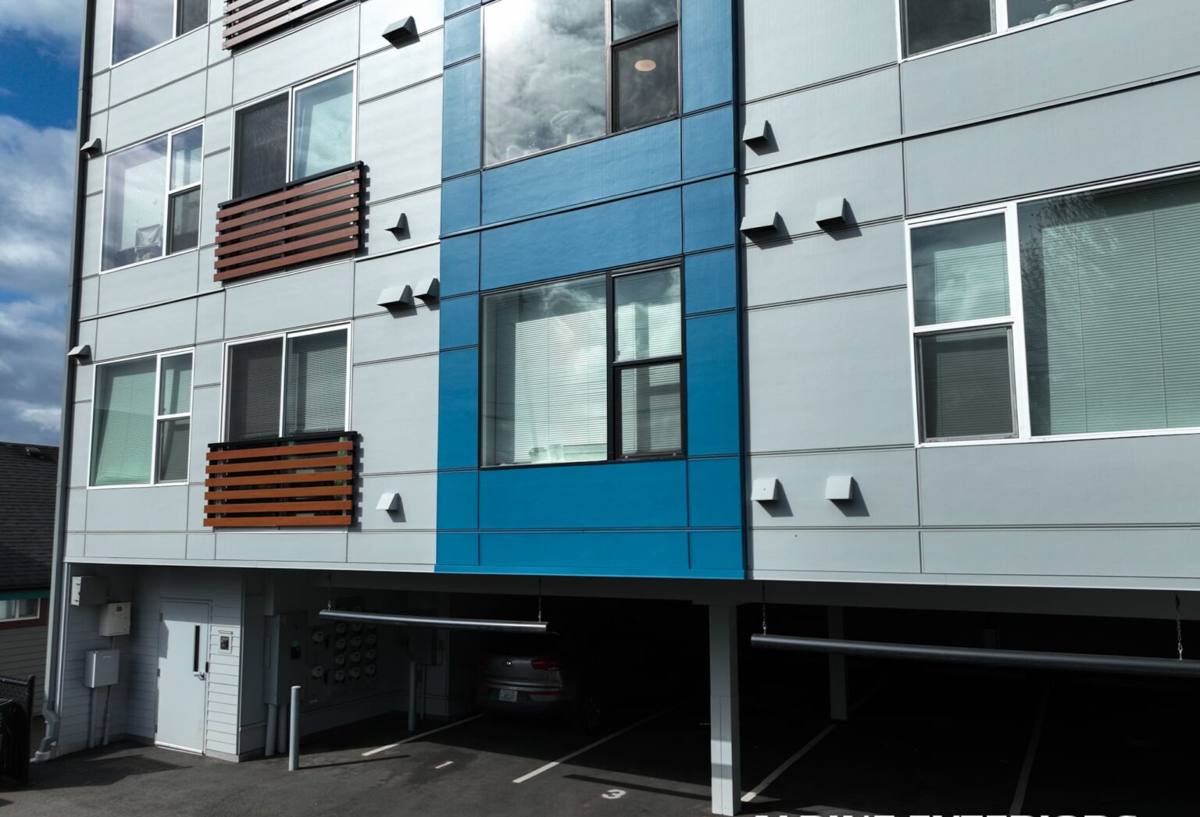
Signs a Marietta Home Needs Replacement, Not Just Repair
Not every siding problem calls for a full tear-off. But there's a point where patching individual boards stops making sense and a full replacement becomes the more honest recommendation — both for the homeowner's budget and for the long-term health of the wall behind the siding. Some signs to watch for:
- Boards that feel soft, spongy, or give slightly when pressed — a sign moisture has already reached the wood fiber
- Paint that won't hold anymore even after prep and a fresh coat, especially on walls that get direct rain exposure
- Moss or dark staining that comes back within a season or two of cleaning
- Visible cupping, warping, or separation at panel edges and seams
- Gaps opening up around trim, corners, or window and door casings
- A wall that feels noticeably colder or damp to the touch compared to the rest of the house
- Rising heating bills that don't match any other change in the home
- Original siding that's 20-25+ years old, particularly if it's a wood-based or wood-composite product
If more than one or two of these show up at once, especially on the sides of the house that face prevailing wind and rain, that's usually a sign the damage has moved past what spot repair can fix.
What a Correct Siding Replacement Job Involves
Tear-Off and What's Underneath
A proper replacement starts with pulling the old siding off entirely, not just installing new material over what's there. That's the only way to actually see the sheathing underneath — and in a climate like this, it's common to find soft spots, hidden rot, or compromised areas around windows and penetrations that were invisible from the outside. Any damaged sheathing gets cut out and replaced before anything new goes on the wall. Skipping this step is one of the most common ways a siding job looks fine for a year or two and then fails from the inside out.
Moisture Barrier, Flashing, and Ventilation Details
Underneath the new siding, the house needs a continuous water-resistive barrier, correctly lapped so water sheds downward and outward instead of finding a seam to work into. Flashing around windows, doors, and any wall penetrations has to be integrated with that barrier in the right order — flashing behind the barrier at the top, over it at the bottom — so water is always directed out, never trapped. A drainage gap behind the siding lets any moisture that does get in dry out instead of sitting against the wall. These details don't show up in a finished photo, but they're the difference between siding that lasts decades in a coastal climate and siding that fails from behind while still looking fine on the surface.
Installing to the Manufacturer's Spec
Correct fastener type, placement, and spacing; proper clearance at grade and at roof lines; caulking only where the manufacturer calls for it and not as a substitute for good flashing — all of this matters more in a wet, salt-air environment than it would somewhere drier, because there's less margin for error before a shortcut turns into a callback.
Why We Install Only James Hardie Fiber Cement
We standardized on James Hardie fiber cement siding and don't install vinyl, LP SmartSide, Cemplank, Allura, primed spruce, or cedar. That's a deliberate call based on what this climate does to exterior materials over time, not a knock on every homeowner who has one of those products currently on their house.
Fiber cement doesn't feed moss and mildew the way wood and wood-composite products can, because it isn't an organic material for fungus to break down. It's non-combustible, which matters in a state that takes wildfire exposure seriously even on the wet side of the Cascades. Hardie's ColorPlus factory-applied finish is baked on under controlled conditions and backed by its own finish warranty, which holds up to sun and salt air more consistently than paint applied on site after installation. And Hardie's HZ5 product line is specifically engineered for climates with heavy moisture exposure — which describes Whatcom County about as well as any region in the country.
Vinyl can crack and fade in UV and temperature swings and it isn't a matched system with the flashing and moisture-barrier detailing we rely on. Cedar and primed spruce are wood — they need ongoing painting, sealing, and vigilance against exactly the moss and rot cycle described above, and they carry that maintenance burden for as long as they're on the house. LP SmartSide is an engineered wood product with a different moisture tolerance profile than fiber cement and a different set of installation sensitivities at cut edges and seams. None of these are unusable products in the right hands and the right climate. We just don't think any of them are the right call for homes exposed to Marietta's combination of salt air, wind-driven rain, and a moss season that runs most of the year.
How the Materials Compare
| Material | Moisture / Moss Behavior | Ongoing Maintenance | Fire Rating |
|---|---|---|---|
| James Hardie Fiber Cement (HZ5) | Does not absorb and swell like wood; engineered for wet climates | Occasional wash; factory finish holds color | Non-combustible |
| Vinyl Siding | Doesn't rot, but can trap moisture behind it; prone to UV fading | Low, but limited repair options if cracked or faded | Combustible |
| Cedar / Wood Siding | Absorbs moisture; feeds moss and rot without upkeep | Regular painting/sealing required | Combustible |
| LP SmartSide (Engineered Wood) | Better than raw wood but still moisture-sensitive at cut edges and seams | Periodic inspection and touch-up painting | Combustible |
Our Siding Replacement Process
- Free on-site estimate. We walk the house, look at current siding condition, and check for signs of hidden moisture damage before quoting anything.
- Scope and material selection. Plank profile, exposure width, trim details, and ColorPlus color are locked in up front so there are no surprises mid-project.
- Weather-aware scheduling. Tear-off exposes the wall, so we plan around forecasted rain rather than starting a section we can't close up the same day.
- Tear-off and substrate inspection. Old siding comes off, sheathing is checked, and any rot or damage is repaired before anything new goes up.
- Barrier, flashing, and installation. Water-resistive barrier, flashing, and Hardie siding go on to manufacturer spec, including proper fastening and clearances.
- Final walk-through. We review the finished job with the homeowner and go over warranty paperwork before considering the project complete.
What Siding Replacement Costs Depend On
We don't quote pricing without seeing the house, but the factors that actually move the cost are consistent from project to project:
- Total square footage and the number of stories being sided
- How much hidden sheathing repair the tear-off uncovers
- Amount of trim, corner detail, and architectural complexity around windows and rooflines
- Site accessibility — trees, fencing, and tight setbacks common on lots close to the water
- Removal and disposal of the old siding material
- Color and finish selection within the Hardie ColorPlus lineup
The honest way to get a real number is a walk-through estimate rather than a phone quote, since the two biggest cost drivers — hidden substrate damage and site access — usually can't be judged from the street.
Why a Crew That Already Works Marietta Matters
A contractor who works this part of Whatcom County regularly knows what to expect before the tear-off even starts: where moss tends to build up on a wall facing the water, how much wind-driven rain a given exposure typically takes, and how to sequence a job so an open wall isn't left exposed when weather turns. That familiarity also extends to permitting and inspection expectations in Ferndale and the surrounding county, which keeps a project moving instead of stalling on paperwork. It's the difference between a crew applying a generic process to your house and a crew applying what actually works on homes like yours, in this specific location.
If your Marietta home's siding is showing its age or you just want a straight answer about whether it needs repair or replacement, we're glad to take a look. Reach out for a free, no-pressure estimate using the form below.