 Ferndale
 New-Construction Windows for Sudden Valley Homes
Sudden Valley sits inland from Ferndale along Lake Whatcom, but it shares the same weather systems that move through the rest of Whatcom County — long stretches of driving rain, heavy fall and winter moisture, and enough shaded, damp exposure on tree-lined lots to grow moss on anything that stays wet too long. Whether your lot is close to the shoreline or set back in the trees, the windows going into a new build need to be installed with that reality in mind from the very first day of framing, not treated as an afterthought once the siding crew shows up.
New-construction window installation is a different job than swapping out an old window in an existing wall. It happens earlier, it involves more trades, and it sets the water-management standard for the entire building envelope. Get it right and the windows will perform quietly for decades. Get it wrong and you won't see the problem until there's already rot, mold, or a warranty dispute behind the wall.
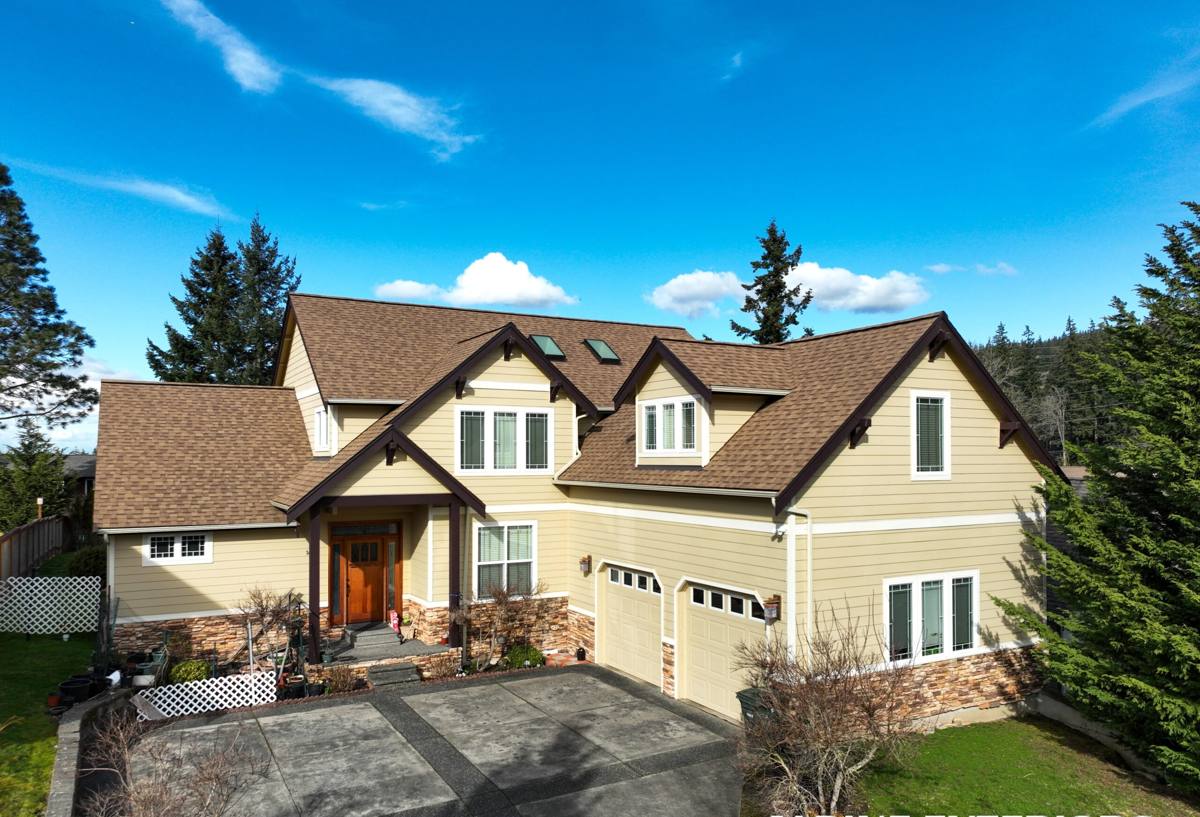
New-Construction vs. Replacement: Why the Distinction Matters
A "new-construction" window has a nailing fin (also called a flange) around the perimeter of the frame. That fin gets integrated directly into the wall's water-resistive barrier — the housewrap or building paper — before siding goes on. A "replacement" or "pocket" window, by contrast, is designed to slide into an existing opening without disturbing the surrounding wall finish.
On a new build, you always want the new-construction style. It gives us full access to flash the opening correctly in layers, which is the single biggest factor in whether a window leaks five or fifteen years down the road.
- New-construction (flange) windows: installed during framing, flashed into the WRB, siding laps over the flange
- Replacement (pocket) windows: installed into a finished wall, rely on the existing flashing and exterior trim
- Why it matters here: a properly flanged and flashed window is the best defense against the sustained wet-season exposure this area gets
Why Sudden Valley's Setting Adds a Few Wrinkles
Many Sudden Valley lots are wooded, sloped, or close to the lake, which means more shade, slower drying times after rain, and in some spots, wind-driven rain funneling along the water. None of that changes the fundamentals of window installation, but it raises the stakes for doing the details right — sloppy flashing that might dry out fine on an open, sunny lot elsewhere in the county can stay wet for days on a shaded, timber-framed Sudden Valley property.
What a Correct New-Construction Window Install Actually Involves
There's a specific order of operations that keeps water moving out and down, never in and up. Skipping steps or doing them out of sequence is how "invisible" leaks get built into a brand-new house.
- Rough opening is checked for square, level, and correct dimensions before the window ever arrives on site
- Sill pan flashing goes in first, sloped slightly to the exterior so any water that gets past the window has somewhere to go
- Window is set, shimmed for level and plumb, and fastened through the nailing fin per the manufacturer's schedule — not just where it's convenient
- Jamb and head flashing is layered in shingle-fashion (bottom piece first, each layer overlapping the one below it) so water is always directed outward, never trapped
- Housewrap is integrated over the flashing, not just taped flat over the flange
- Interior sealant and insulation are addressed separately from exterior sealant — these are two different jobs with two different purposes
- Exterior trim and siding are installed to shed water away from the window, with a drainage gap where the siding type calls for one
That sill pan step in particular gets skipped more often than it should be, because it doesn't show once the window is set. It's also the single most important piece for a wall that's going to see decades of Whatcom County rain.
Choosing the Right Window for a Sudden Valley Build
Frame material matters less than correct installation, but it's still worth choosing deliberately based on how the home is oriented, how much sun exposure it gets, and how much upkeep you want to take on.
| Frame Material | Moisture Behavior | Maintenance | Typical Fit |
|---|---|---|---|
| Vinyl | Won't rot; seams and welds are the main failure point if installed poorly | Low — occasional cleaning | Budget-conscious builds, rental or spec homes |
| Fiberglass | Very stable, minimal expansion/contraction in wet-dry cycles | Low | Homes wanting durability without the wood upkeep |
| Wood (clad exterior) | Excellent look, but any exterior finish failure exposes wood to rot risk | Higher — exterior finish needs monitoring | Custom or higher-end builds where appearance is a priority |
| Aluminum | Durable but a poor thermal performer and prone to condensation without a thermal break | Low | Limited use in this climate; we typically steer clients elsewhere for residential work |
We don't push a single brand or material on every job. What we do insist on is a product with a documented installation instruction sheet we can follow to the letter, because that's what keeps the manufacturer's warranty intact if there's ever a question later.
How We Handle a New-Construction Window Job
Before Windows Arrive
We confirm rough openings against the approved window schedule, check the WRB is installed and lapped correctly, and flag any framing issues before they turn into installation problems.
Install Day
Each opening gets sill pan flashing, a set window, and shingle-lapped jamb and head flashing before we move to the next one. We don't batch-set every window in a house and flash them all at the end — sequencing matters.
Quality Check
Every window gets checked for level, plumb, square, and smooth operation before we sign off. We also verify fastener count and placement against the manufacturer's schedule, since under-fastened windows are a common warranty issue that's easy to avoid.
Handoff
We document what was installed and how, so you or your builder have a record if a warranty question comes up years down the road.
Working With Your Builder or GC
Most of our new-construction window work happens as a subcontracted trade on someone else's build schedule, and we're used to coordinating around framing crews, siding crews, and inspection windows. A few things make that go smoothly:
- Confirm the WRB is installed and dry before we schedule the window crew
- Have the final window schedule locked before ordering — mid-build swaps cause delays and rough-opening mismatches
- Coordinate flashing sequencing with the siding installer ahead of time so there's no gap where water can find a way in
- Loop us in early if the design includes anything unusual — large picture windows, corner units, or windows near a roofline transition — since those need extra flashing detail
What Affects Cost
| Factor | Why It Matters |
|---|---|
| Window count and size | More openings and larger units mean more labor and material per house |
| Frame material | Vinyl, fiberglass, and clad-wood price differently, both for the unit and the trim work around it |
| Wall complexity | Multiple siding transitions, corner windows, or unusual rooflines add flashing detail and time |
| Site access | Sloped or wooded Sudden Valley lots can add setup and staging time compared to an open, flat site |
| Timeline coordination | Tight build schedules that require sequencing around other trades can affect scheduling but not typically the install itself |
We'll always walk the plans or the framed shell with you and give a straight number before work starts — no surprise change orders for flashing that should have been scoped from the beginning.
A Quick Checklist Before You Order Windows
- Confirm every window on the schedule is a new-construction (nailing fin) style, not a replacement/pocket unit
- Verify rough openings match the window schedule before ordering
- Ask your installer how sill pan flashing will be handled — it should never be skipped
- Decide on frame material based on maintenance tolerance, not just upfront price
- Get installation documented, including fastener schedule compliance, to protect the manufacturer's warranty
- Confirm siding sequencing with your window installer so flashing laps are done in the right order
Built for the Long Term, Not Just the Inspection
A new-construction window install can pass a rough-in inspection and still be flashed wrong — inspectors are checking for code compliance, not necessarily every detail of water management. The real test is how the wall behaves after a few wet Whatcom County winters. We install to that standard, not just to the minimum that gets a sign-off, because a callback for a leak behind finished siding is a far bigger job than doing it right the first time.
If you're building in Sudden Valley or planning a build there, we're happy to walk your plans or your framed shell and give you a straightforward, no-pressure estimate for the window installation. Fill out the form below and we'll get back to you.