 Ferndale
 Roof Replacement in Nooksack: Built for Whatcom County Weather
A roof in Nooksack works harder than a roof almost anywhere else in the state. It sits under a marine-influenced climate that stays damp for most of the year, takes on wind-driven rain that doesn't just fall straight down but pushes sideways under shingle tabs and flashing, and spends months at a time shaded and wet enough for moss to take hold. When we replace a roof out here, we're not just swapping old material for new — we're building a system that's meant to shed water, resist salt-laden air, and stay ahead of moss for the long haul.
This page is about one job, done right, in one area: full roof replacement for homes in and around Nooksack. Not a repair. Not a patch job. A proper tear-off and rebuild that accounts for what this specific corner of Whatcom County does to a roof year after year.
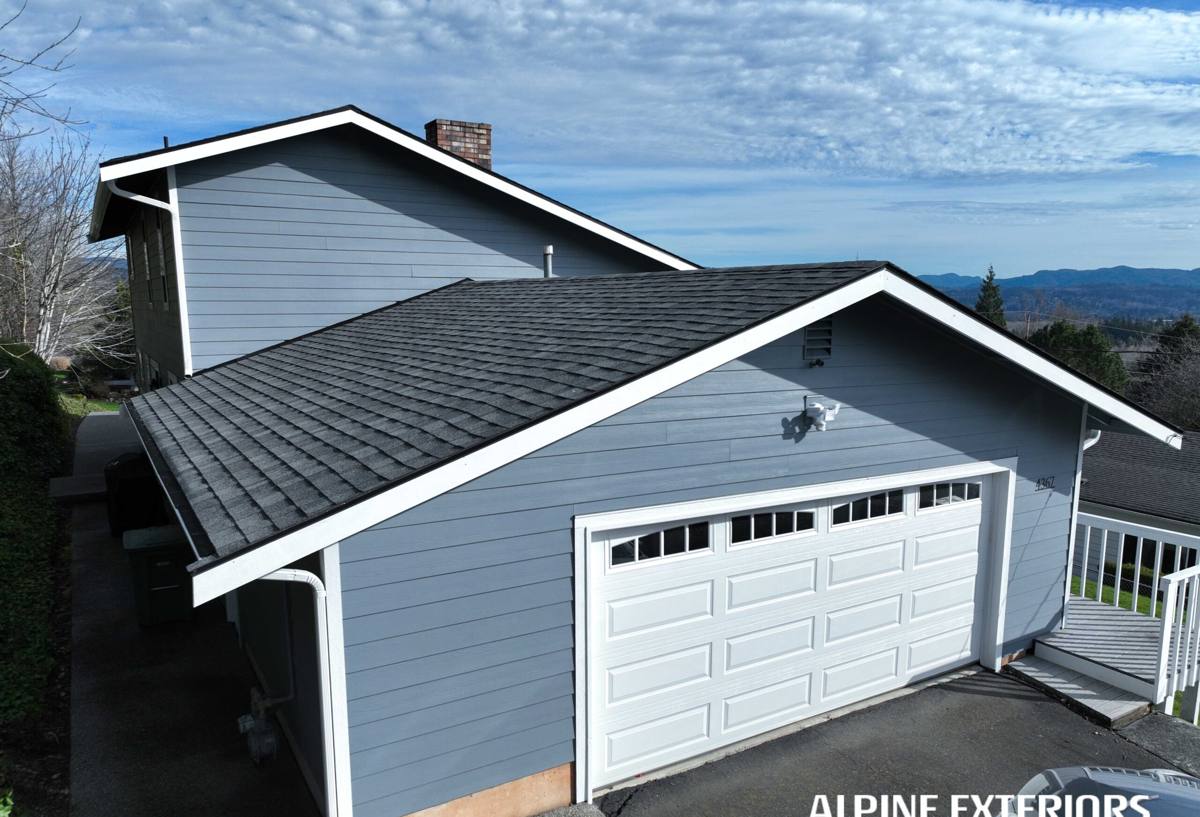
What Salt Air, Rain, and Moss Do to a Nooksack Roof
Every roofing material has a weak point, and in this region the weak points get found fast. Three conditions do most of the damage.
Salt Air and Metal Fatigue
Whatcom County sits close enough to the Salish Sea that moisture-laden, salt-tinged air reaches inland areas like Nooksack, especially on the wind patterns that come through in fall and winter. That air is hard on exposed metal — nail heads, flashing, vents, and gutter fasteners corrode faster here than they would in a dry inland climate. Roofs built with standard-grade fasteners or unprotected flashing show rust and pitting years before they should.
Driving Rain and Water Intrusion
This isn't a light-drizzle climate. Rain here often comes in sideways, driven by wind off the water, and it finds any gap in a roofing system that wasn't built for it — an underlayment lap installed backward, a valley without enough protection, flashing that relies on caulk instead of proper lapping. Once water gets under the roofing material, it doesn't dry out quickly in a climate this humid, and rot sets in at the deck level where you can't see it until it's expensive.
Moss, Shade, and Roof Decay
Nooksack's tree cover and the region's long wet season together give moss almost ideal growing conditions for much of the year. Moss isn't just cosmetic — it holds moisture against the roofing surface, lifts shingle edges as it grows, and breaks down the granule surface of asphalt shingles over time. Left unchecked, a mossy roof ages faster than a clean one, sometimes by several years.
Signs Your Nooksack Roof Needs Replacing, Not Patching
Not every roof problem calls for a full replacement, but in this climate certain signs mean patching is just delaying a bigger repair bill.
- Granule loss heavy enough that you're finding grit in the gutters every time it rains
- Shingles that are cupping, curling, or cracking across large sections rather than one isolated spot
- Moss growth that comes back within weeks of cleaning, especially on north-facing slopes
- Soft spots or sagging when walked on, which usually points to deck rot underneath
- Daylight visible through the attic sheathing, or consistent staining on interior ceilings
- A roof approaching or past the manufacturer's expected service life for asphalt shingle roofing (typically 20–30 years depending on the product)
- Repeated leak calls to the same area even after past repairs
If you're seeing two or more of these at once, it's usually a sign the roofing system as a whole — not just one section — has reached the end of its useful life.
What a Correct Roof Replacement Actually Involves
A roof replacement is more than removing old shingles and nailing down new ones. In a climate like this, the layers underneath the visible roofing material matter as much as the shingles themselves.
Tear-Off and Deck Inspection
We remove the existing roofing down to the deck rather than layering over it. That's the only way to find hidden rot, soft sheathing, or past water damage before it's sealed under a brand-new roof. Any damaged decking gets replaced, not patched over — plywood or OSB that's absorbed moisture over the years won't hold fasteners properly and will keep failing underneath the new roof.
Underlayment and Ice-and-Water Protection
The underlayment is the backup waterproofing layer between the deck and the visible roofing material, and it's especially important here because of how often wind-driven rain pushes water uphill under shingle tabs. We use synthetic underlayment across the field of the roof and self-adhering ice-and-water membrane at vulnerable points — eaves, valleys, and around penetrations like chimneys and skylights — where standard underlayment alone isn't enough protection against this region's rain patterns.
Ventilation
Proper intake and exhaust ventilation keeps the attic space at a temperature and humidity level that discourages moss growth from the underside and prevents moisture buildup that leads to deck rot and mold. A lot of older Nooksack-area homes were built with minimal or blocked ventilation, and correcting that during a replacement is one of the most effective long-term moves for roof longevity in this climate.
Flashing and Fasteners
Given the salt-air exposure this area gets, we use corrosion-resistant flashing and fastener materials rather than the cheapest available option. Flashing is properly lapped and integrated with the underlayment — not just caulked in place — at every roof-to-wall transition, valley, and penetration.
Choosing Materials for This Climate
There's no single "best" roofing material for every home — it depends on the roof's pitch, the home's style, budget, and how much moss and moisture resistance matters to the homeowner. Here's how the common options stack up for a property in the Nooksack area.
| Material | Moss Resistance | Salt-Air Durability | Typical Lifespan | Notes |
|---|---|---|---|---|
| Asphalt composition shingle (standard) | Moderate | Good with proper flashing | 20–30 years | Most common, cost-effective, wide style range |
| Asphalt shingle (algae/moss-resistant) | Higher | Good with proper flashing | 25–30 years | Copper or zinc granules built in; worth it under heavy tree cover |
| Standing seam metal | High | Very good if properly coated/fastened | 40–50+ years | Sheds moss and water fast; higher upfront cost |
| Synthetic/composite shake | Moderate to high | Good | 30–50 years | Mimics cedar look without the moisture-absorption issues of real wood shake |
We generally steer clients away from untreated wood shake and shingle roofing in this specific climate. It's not that the material is inherently bad — it's that wood shake requires consistent maintenance to resist moisture absorption and moss colonization in a place this wet and shaded, and that upkeep burden is more than most homeowners want to take on long-term. That's a maintenance and moisture-behavior trade-off, not a knock on the product itself.
Our Process From Estimate to Cleanup
- On-site inspection. We walk the roof and attic, check the deck condition, ventilation, and flashing points, and identify problem areas specific to your property.
- Written estimate. You get a clear scope of work and pricing before anything is scheduled — no surprise line items added mid-project.
- Material selection. We go over the options that make sense for your roof's pitch, your budget, and how much moss and salt-air resistance matters to you.
- Tear-off and deck repair. Old roofing comes off, the deck is inspected, and any damaged sheathing is replaced before anything new goes down.
- Underlayment, flashing, and ventilation install. The protective layers go in first and get done right, since they're the part you won't see once the job is finished.
- Roofing material installation. Installed to manufacturer spec, which keeps the warranty valid and the roof performing as intended.
- Site cleanup and final walkthrough. Debris and fasteners are cleared from the property, and we walk the finished roof with you.
Typical Cost Factors for a Nooksack Roof Replacement
Every roof is different, and we don't quote pricing without seeing the property, but these are the main variables that move the cost up or down.
| Factor | Why It Matters |
|---|---|
| Roof size and number of planes | More square footage and complexity means more material and labor |
| Roof pitch and accessibility | Steep or hard-to-access roofs take longer and require more safety setup |
| Deck condition | Rotted or soft sheathing found during tear-off adds material and labor to replace |
| Material choice | Standard asphalt costs less upfront than metal or moss-resistant shingle lines |
| Layers of existing roofing | Multiple old layers mean more tear-off and disposal work |
| Ventilation upgrades needed | Adding or correcting intake/exhaust vents adds labor but improves long-term performance |
As a broad range, a straightforward asphalt shingle replacement on an average-sized home typically runs from the high thousands into the low tens of thousands of dollars, with metal roofing and larger or more complex roofs running higher. We'll give you an exact number after seeing the roof in person.
Why a Crew That Already Works in Nooksack Matters
Roofing crews that mostly work drier, inland climates don't always default to the underlayment coverage, flashing details, and ventilation choices that this area actually needs — because they don't have to, most of the time, where they usually work. A crew that regularly works Whatcom County properties already knows which valleys and roof-to-wall transitions tend to leak in driving rain, which north-facing slopes hold moss the longest, and which fastener and flashing materials hold up against the salt air this region gets. That local pattern recognition shows up in fewer callbacks and a roof that performs the way it's supposed to in year five, not just on install day.
It also matters for permitting and code — local jurisdictions have their own requirements for ventilation, ice-and-water shield coverage, and inspections, and a crew that already works in the area knows that process instead of learning it on your job.
Keeping Your New Roof Performing
A correctly installed roof still benefits from basic upkeep, especially in a climate this wet and shaded. A few habits go a long way:
- Clean gutters at least twice a year so water doesn't back up under the roof edge
- Keep overhanging branches trimmed back to cut down on shade and debris buildup that feeds moss
- Have moss growth treated or removed early rather than letting it spread across a slope
- Check attic ventilation isn't blocked by insulation or storage after any attic work
- Schedule a roof inspection after major windstorms to catch lifted shingles or flashing early
- Keep any manufacturer warranty paperwork on file in case a claim is ever needed
If your Nooksack-area roof is showing its age, or you just want an honest read on how many years it has left, we're happy to take a look. Request a free, no-pressure estimate using the form below and we'll walk the roof with you and lay out your options plainly.